Letter recognition Letter Q Worksheets
4 filtered results
-
From - To
Discover enjoyable and educational Letter Q recognition worksheets tailored for young learners at Kids Academy. These expertly designed activities help children identify, trace, and write the letter Q through fun and engaging exercises. Perfect for preschool and kindergarten students, each worksheet builds essential early literacy skills while keeping your child's interest piqued. Explore coloring, matching, and tracing tasks that enhance hand-eye coordination and boost letter recognition. Our carefully curated worksheets lay a strong foundation for reading and writing success, making learning the alphabet an exciting adventure. Access these invaluable resources and watch your child thrive!
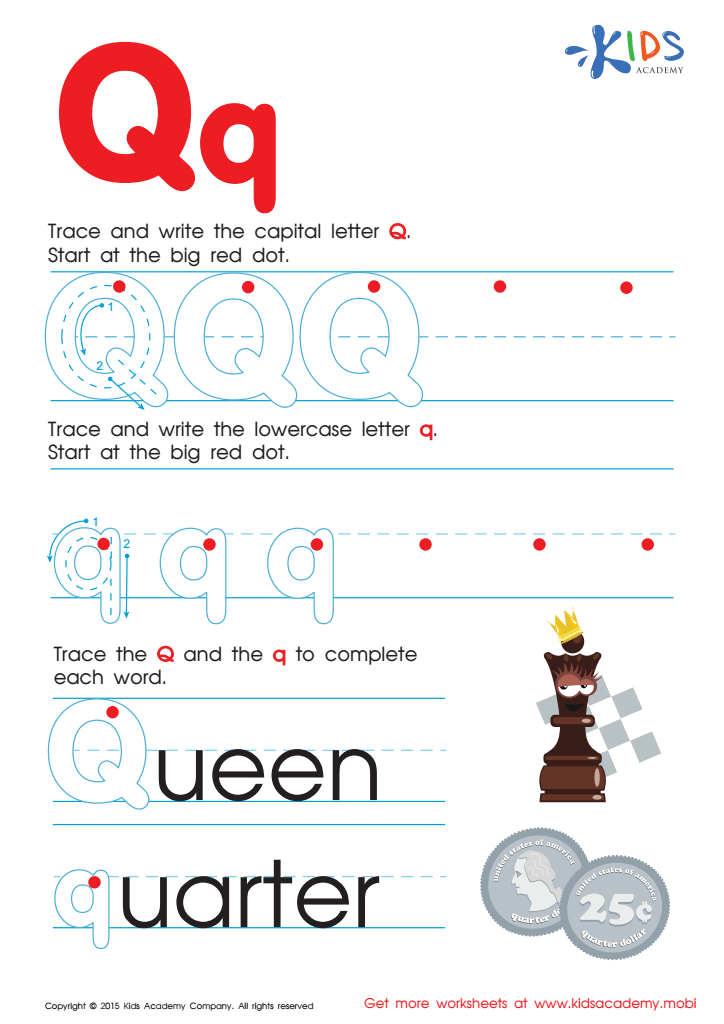
Letter Q Tracing Page
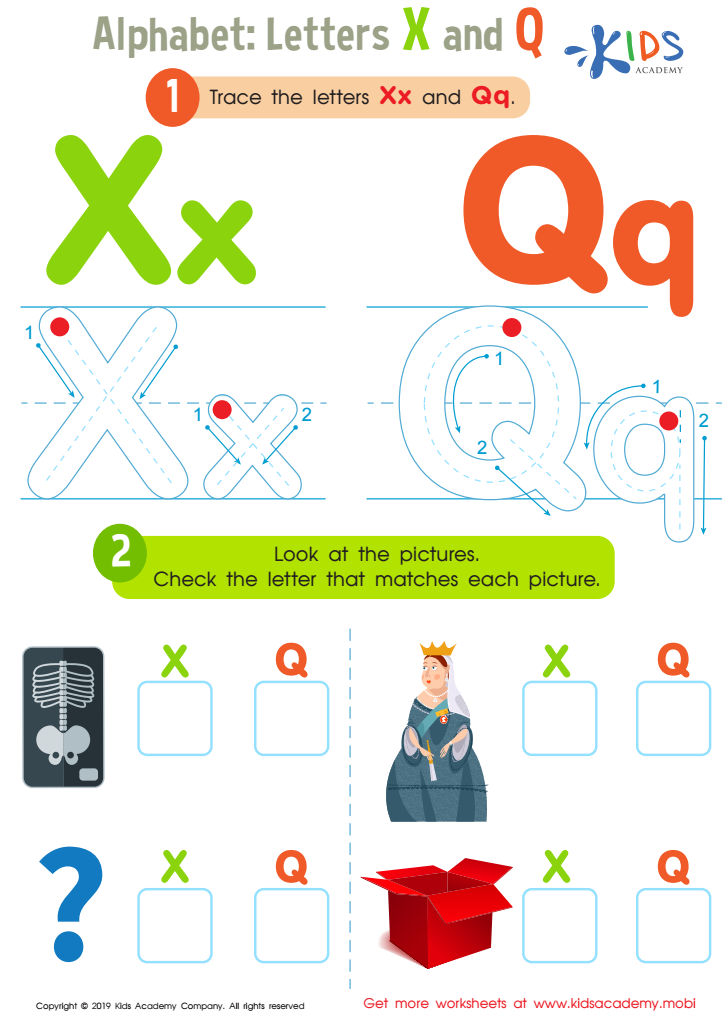
Letters X and Q Tracing Worksheet
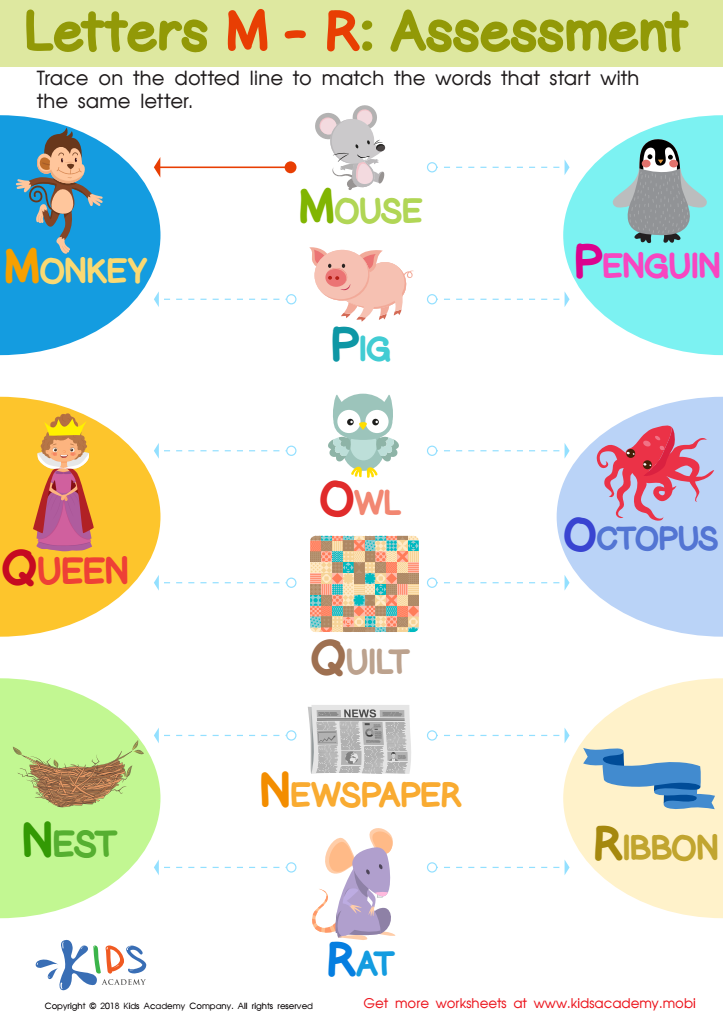
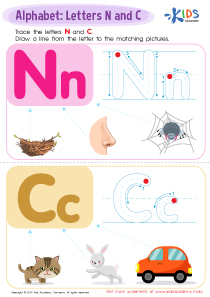
Letters M-R Tracing Worksheet
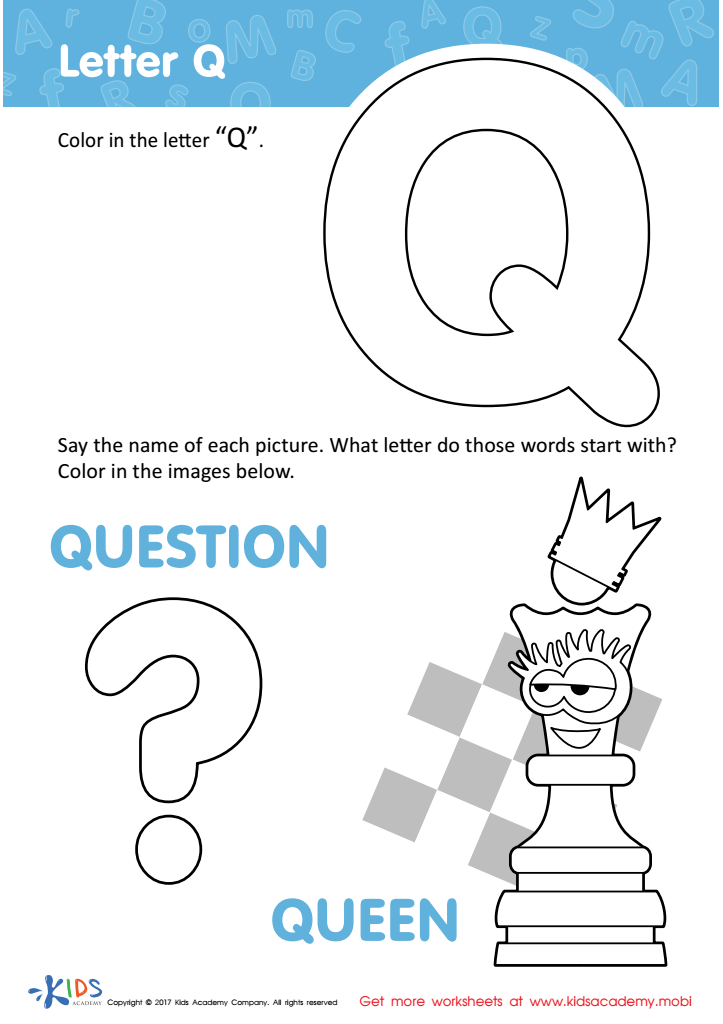
Letter Q Coloring Sheet
 Assign to My Students





Letter recognition is a fundamental skill in early literacy development, and paying attention to letters like "Q" is essential for several reasons. Firstly, recognizing the letter "Q" helps children understand the alphabet more comprehensively. Each letter contributes to the building blocks of reading and writing, and skipping over less frequently used letters like "Q" can create gaps in a child's knowledge.
Moreover, "Q" often pairs with "U," teaching children about letter combinations and phonemes. This pairing is seen in common words such as "quick" and "quiet." Understanding this relationship enhances their ability to spell and decode words, which strengthens overall literacy.
Next, attention to all letters, including "Q," enforces phonemic awareness. For example, "Q" contributes to developing sounds that children will use when constructing and deciphering words. This auditory skill is crucial for reading fluency and comprehension.
Additionally, recognizing "Q" can boost a child’s confidence. Tackling and mastering more challenging or less common letters shows achievement, reinforcing their interest and enthusiasm for learning.
Finally, teaching the alphabet holistically prepares children for more complex literacy activities. Knowing every letter's name and sound—even challenging ones—lays a strong foundation for future academic success. Therefore, parents and teachers should indeed care about the recognition of the letter "Q."