
Alphabetical understanding Letter Recognition Worksheets
3 filtered results
Difficulty Level
Grade
Age
-
From - To
Subject
Activity
Standards
Enhance your child's foundational literacy skills with our Alphabetical Understanding Letter Recognition Worksheets! Designed for early learners, these engaging resources help children identify and differentiate letters, aiding them in their reading and writing journey. The worksheets emphasize visual recognition and sound association, fostering a deeper understanding of the alphabet. With fun activities like matching letters and filling in missing ones, children can enjoy the learning process while building confidence. Perfect for parents and teachers, these printable worksheets offer a structured approach to letter recognition, setting the stage for lifelong literacy success. Explore our collection and watch your child's skills flourish!
Favorites
With answer key
Interactive
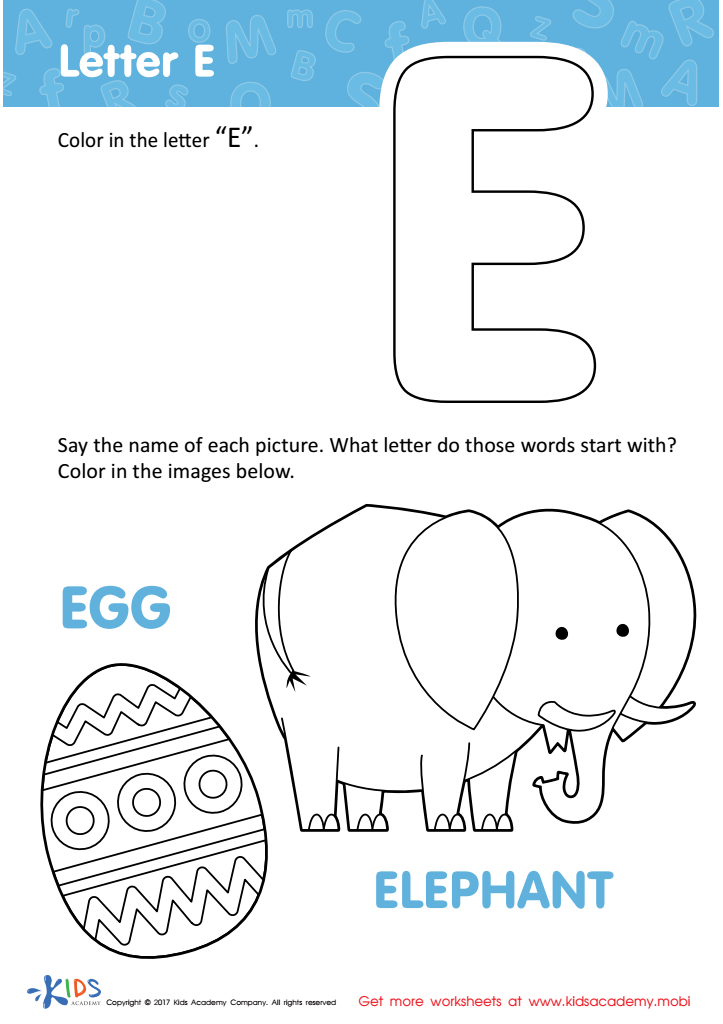
Letter E Coloring Sheet
Coloring pages are great for teaching kids the alphabet and words! This "E" page features a cute elephant and Easter egg. Kids will love it and learn the letter "E" at the same time. 80 words
Download (PDF)
 Assign to My Students
Assign to My Students
Letter E Coloring Sheet
Worksheet
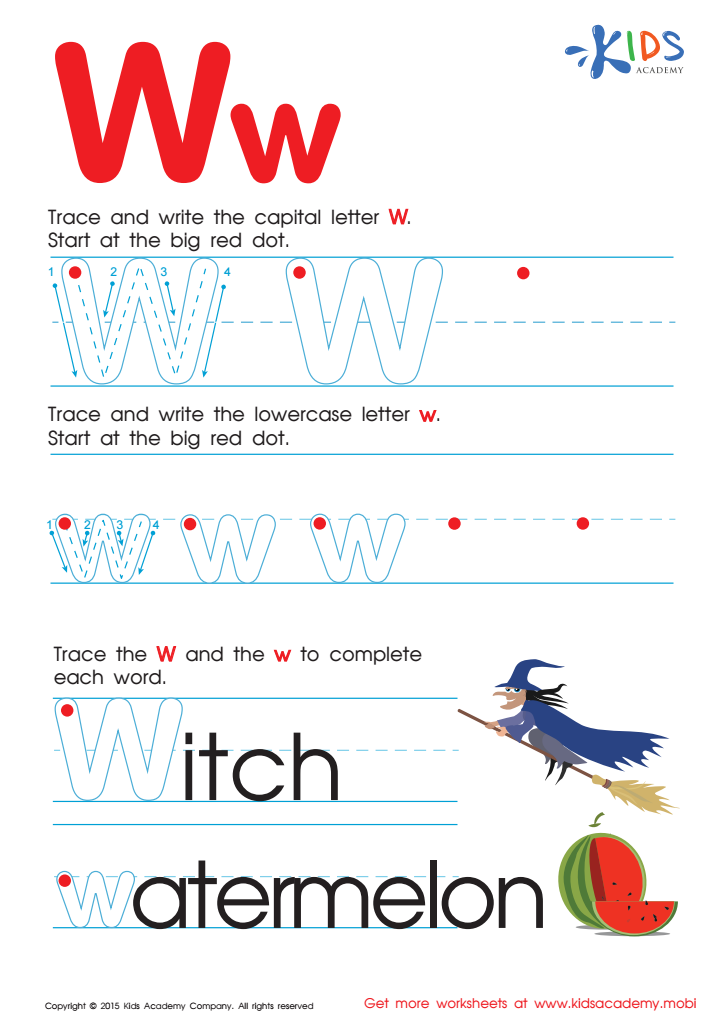
Letter W Tracing Page
Trace and write the capital and lowercase letter W with this free letter tracing worksheet by Kids Academy. Complete the words "Witch" (capital) and "watermelon" (lowercase). Check out our other kindergarten alphabet worksheets!
Letter W Tracing Page
Worksheet
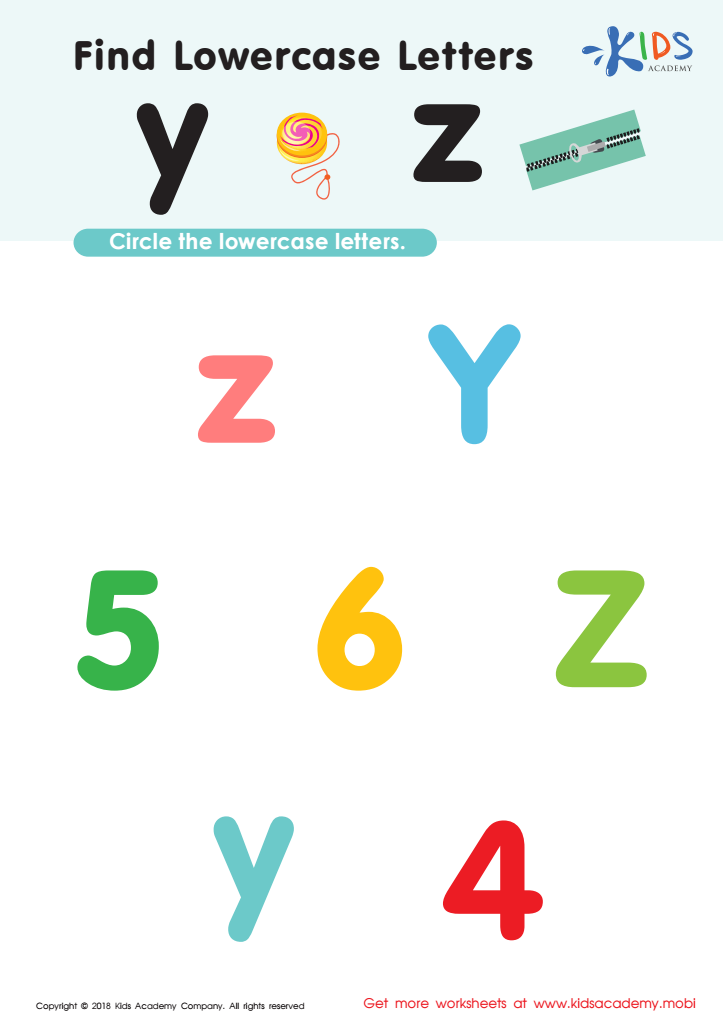
Find Lowercase Letters y z Worksheet
Help your kid learn the alphabet. Before they can move on to words and reading, they must first know the lower and uppercase letters. Show them how to find the letters y and z in this worksheet, which is filled with uppercase letters and numbers. Together, find and circle them.
Find Lowercase Letters y z Worksheet
Worksheet
Join Kids Academy for Free
Who is primarily going to use this learning content?








Alphabetical understanding and letter recognition are foundational skills critical for early literacy development. Parents and teachers should prioritize these skills, as they serve as the building blocks for reading and writing. When children recognize letters and understand their corresponding sounds, they can decode words, which is essential for reading comprehension.
Letter recognition also fosters confidence and motivation in young learners. As children gain familiarity with the alphabet, their ability to form words and sentences improves, leading to improved communication skills. Additionally, this skill enhances the child's ability to engage with texts, laying the groundwork for future reading success.
Moreover, promoting alphabetical understanding can bridge gaps in literacy for young learners. Children from varied backgrounds may have different exposure to letters and literacy activities. By prioritizing these skills, educators and parents can ensure equitable learning opportunities, helping all children become proficient readers.
Finally, early mastery of letter recognition correlates with overall academic achievement. Sounds, letters, and words tie into broader learning areas such as critical thinking and problem-solving. Fostering these skills early on becomes a crucial investment in children’s educational journeys, setting a strong foundation for lifelong learning.







