Uppercase identification Letter Recognition Worksheets
5 filtered results
-
From - To
Discover our engaging Uppercase Identification Letter Recognition Worksheets designed to help young learners master their uppercase letters! Tailored for preschool and early grade students, these worksheets feature fun activities that promote letter recognition through tracing, coloring, and matching exercises. With vibrant illustrations and interactive challenges, kids will enhance their alphabet skills while enjoying the learning process. Our resources make teaching letter identification a breeze, ensuring that children not only recognize but also differentiate between uppercase letters. Perfect for classroom or home use, these worksheets are an essential tool for laying a solid foundation in reading and writing. Start the learning journey today!
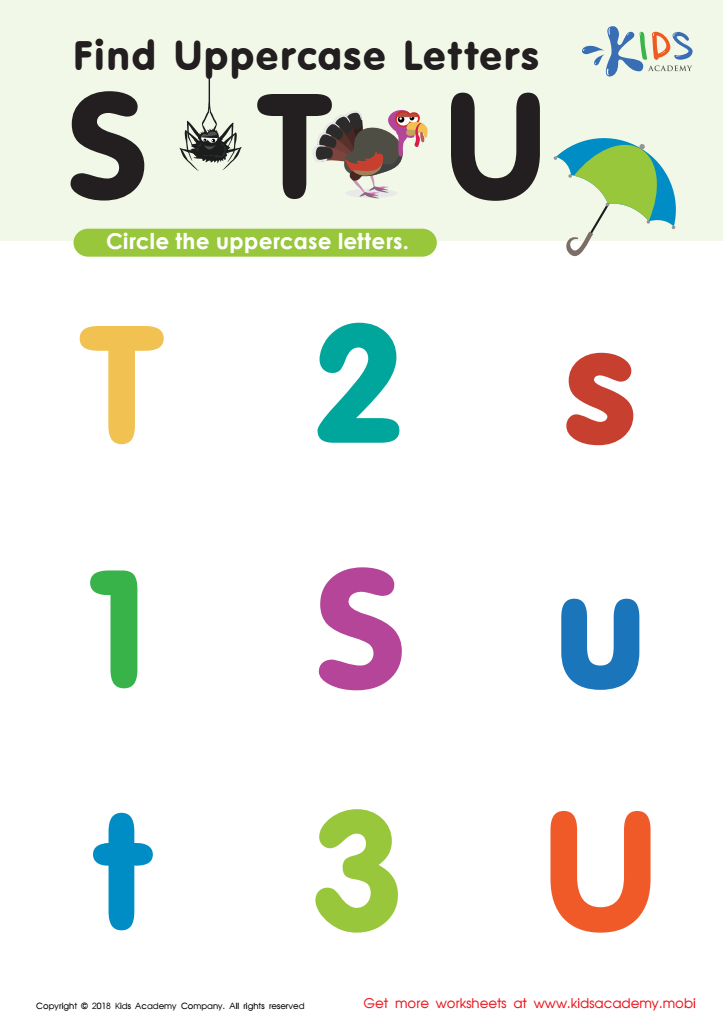
Find Uppercase Letters Worksheet
 Assign to My Students
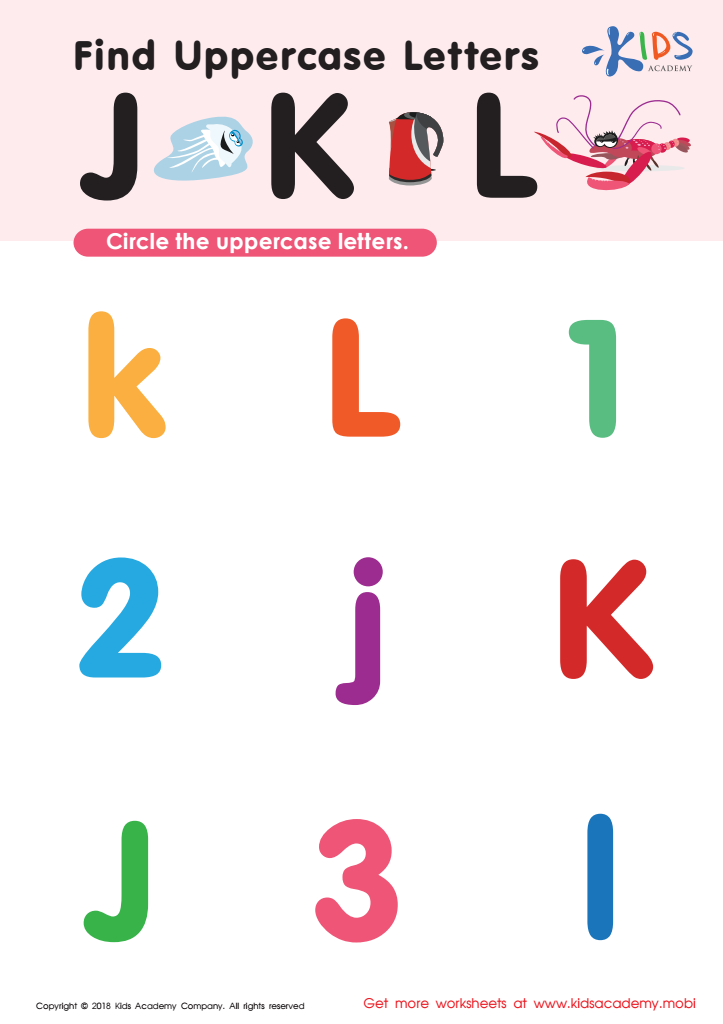
Find Uppercase Letters J, K, and L Worksheet
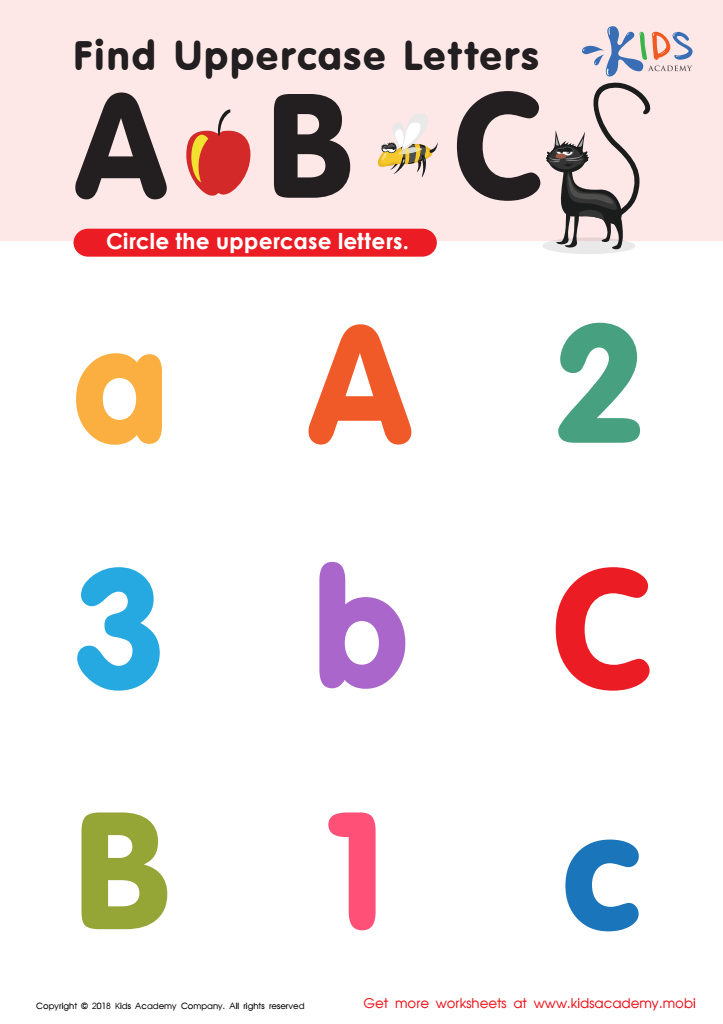
Find Uppercase Letters A, B, and C Worksheet
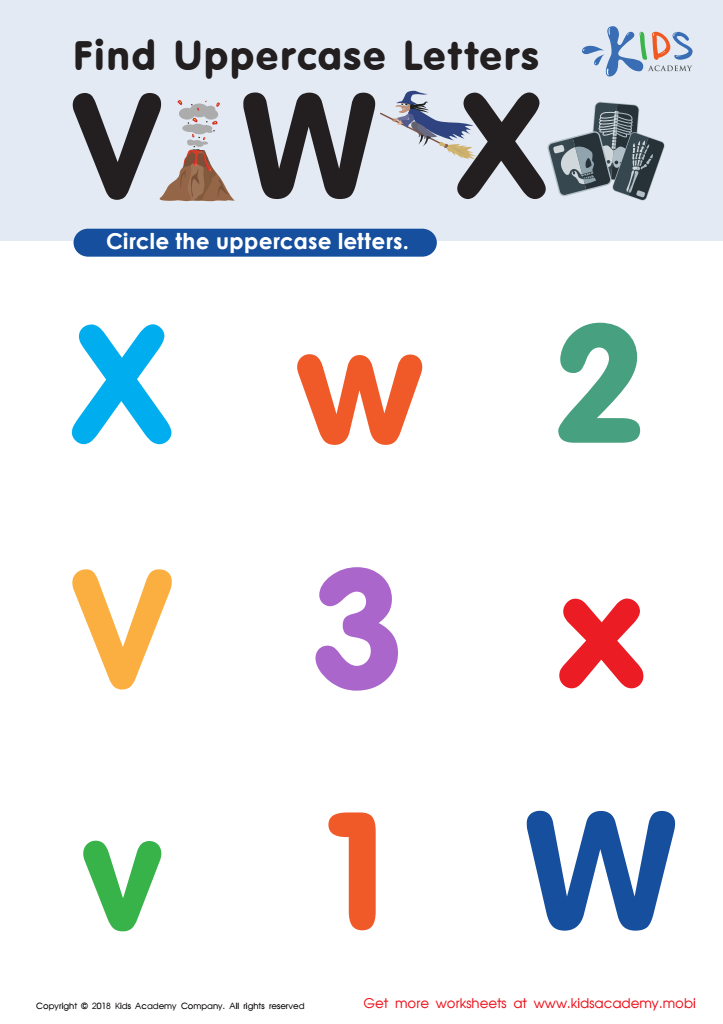
Find Uppercase Letters V, W, X Worksheet
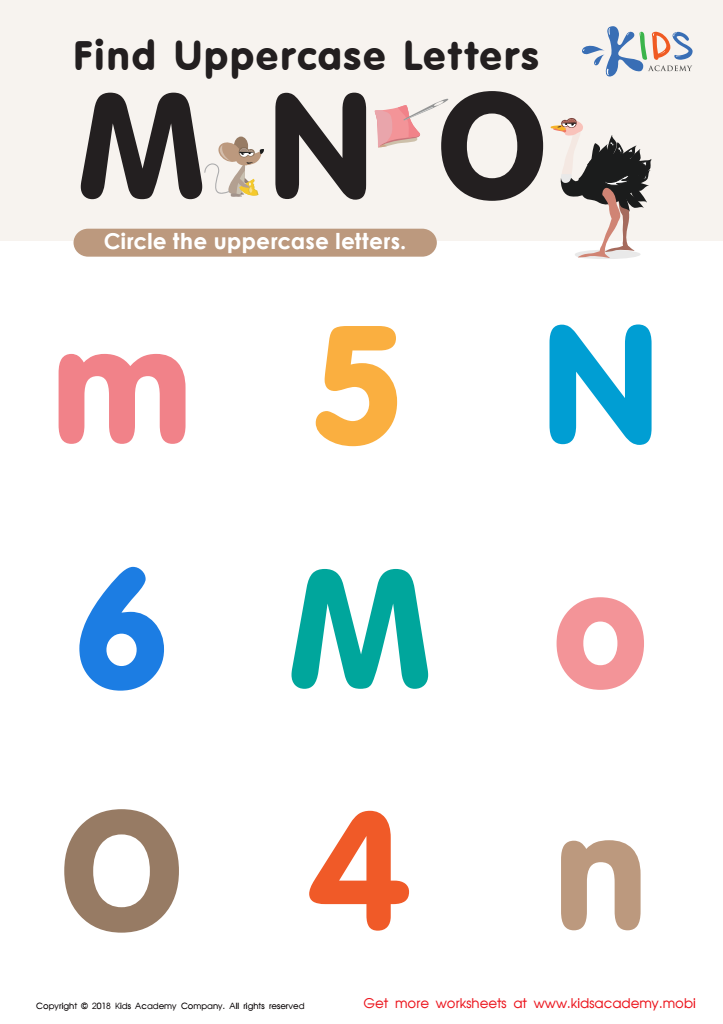
Find Uppercase Letters M, N, and O Worksheet








Uppercase letter identification is a crucial foundational skill in early literacy development, making it essential for parents and teachers to prioritize this learning. Recognizing uppercase letters is the first step in helping young children understand the alphabet and develop their reading and writing skills. Unlike lowercase letters, uppercase letters are often used at the beginning of sentences and names, making their recognition vital for comprehension and proper writing conventions.
When children acquire uppercase letter recognition, they enhance their ability to decode words, which is key to becoming proficient readers. This skill also aids in building their confidence, as they will engage with books and written materials more readily. Moreover, many children encounter uppercase letters first in educational contexts, from classroom displays to storybooks, making it imperative that caregivers reinforce this knowledge at home.
Furthermore, early mastery of uppercase letters can significantly affect a child's overall academic performance. Teachers can use various interactive strategies, such as games and hands-on activities, to make learning engaging and enjoyable. Parents can supplement these efforts with everyday practices, like reading together and pointing out uppercase letters in their environments. Ultimately, fostering uppercase letter recognition early on lays a thriving groundwork for successful literacy development in children.







