
Visual discrimination Letter Recognition Worksheets
5 filtered results
Difficulty Level
Grade
Age
-
From - To
Subject
Activity
Standards
Boost your child's reading and writing foundation with our Visual Discrimination Letter Recognition Worksheets. Designed for young learners, these engaging and educational activities help kids distinguish between different letters and shapes, enhancing their visual recognition skills. Ideal for early grade teachers and parents, our worksheets support literacy development through fun and interactive exercises. By practicing with these tools, children can improve their letter identification, focus, and attention to detail. Visit Kids Academy to download our quality resources that make learning enjoyable and effective, assisting children in building a strong alphabet mastery.
Favorites
With answer key
Interactive
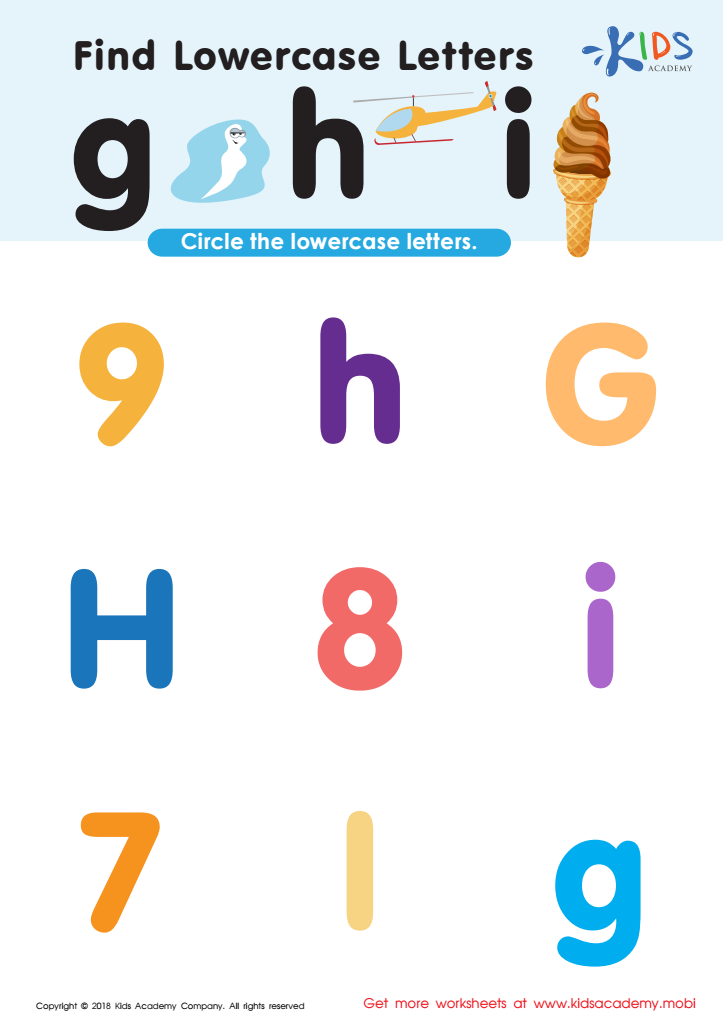
Find Lowercase Letters g h i Worksheet
Turn learning into a fun journey with your child! Use this free worksheet to find and circle the lowercase letters hidden amongst uppercase letters and numbers. Your child will understand what you're teaching them as they enjoy the search.
 Assign to My Students
Find Lowercase Letters g h i Worksheet
Worksheet
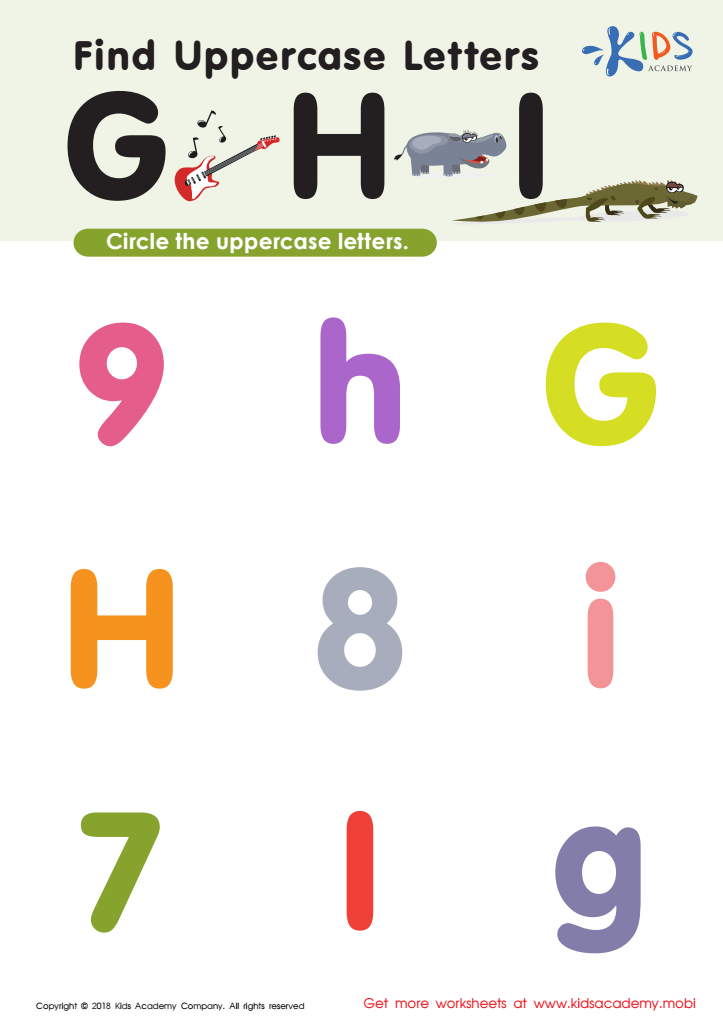
Find Uppercase Letters G, H, and I Worksheet
Find G, H, and I in uppercase with this downloadable worksheet! Numbers are included to challenge your kindergartener's letter recognition skills. Plus, practice G, H, and I sounds using the cute graphics. Perfect for learning letter case recognition!
Find Uppercase Letters G, H, and I Worksheet
Worksheet
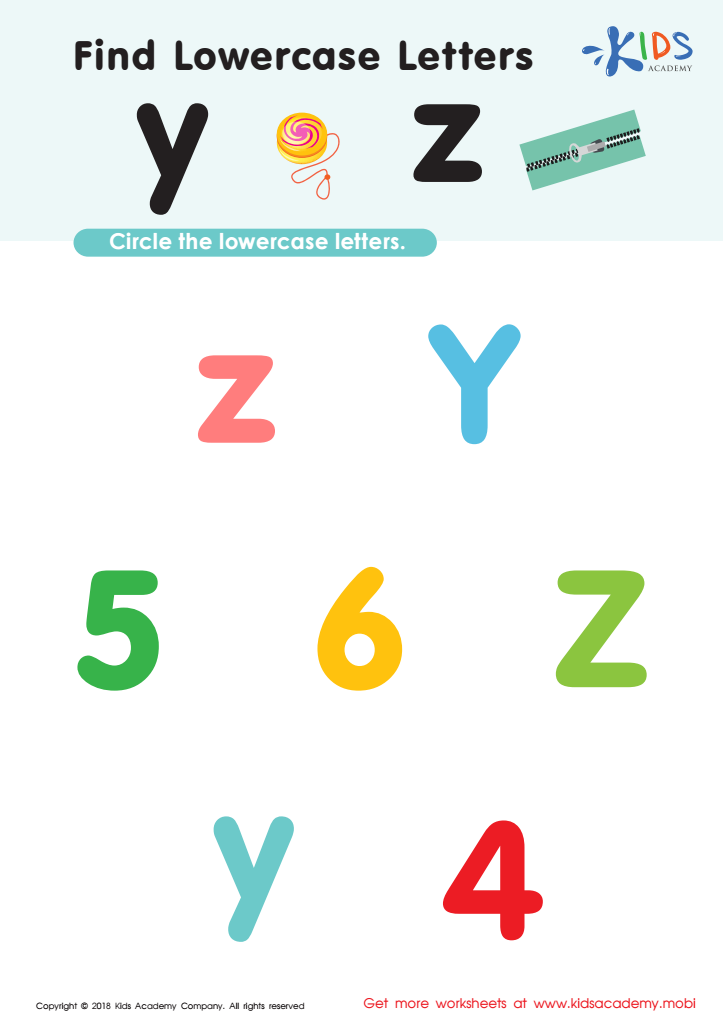
Find Lowercase Letters y z Worksheet
Help your kid learn the alphabet. Before they can move on to words and reading, they must first know the lower and uppercase letters. Show them how to find the letters y and z in this worksheet, which is filled with uppercase letters and numbers. Together, find and circle them.
Find Lowercase Letters y z Worksheet
Worksheet
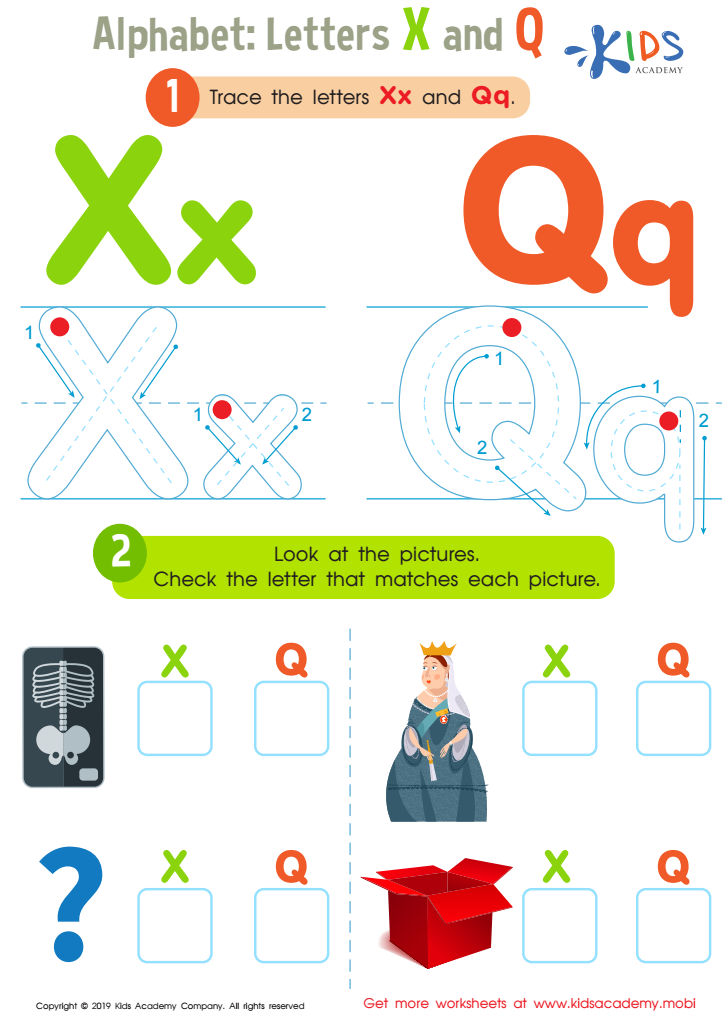
Letters X and Q Tracing Worksheet
Do you want your students to improve writing and letter recognition? This worksheet is a great place to start! Kids can trace the letters «X» and «Q» and identify pictures that match each letter. With a little encouragement, they'll do a great job!
Letters X and Q Tracing Worksheet
Worksheet
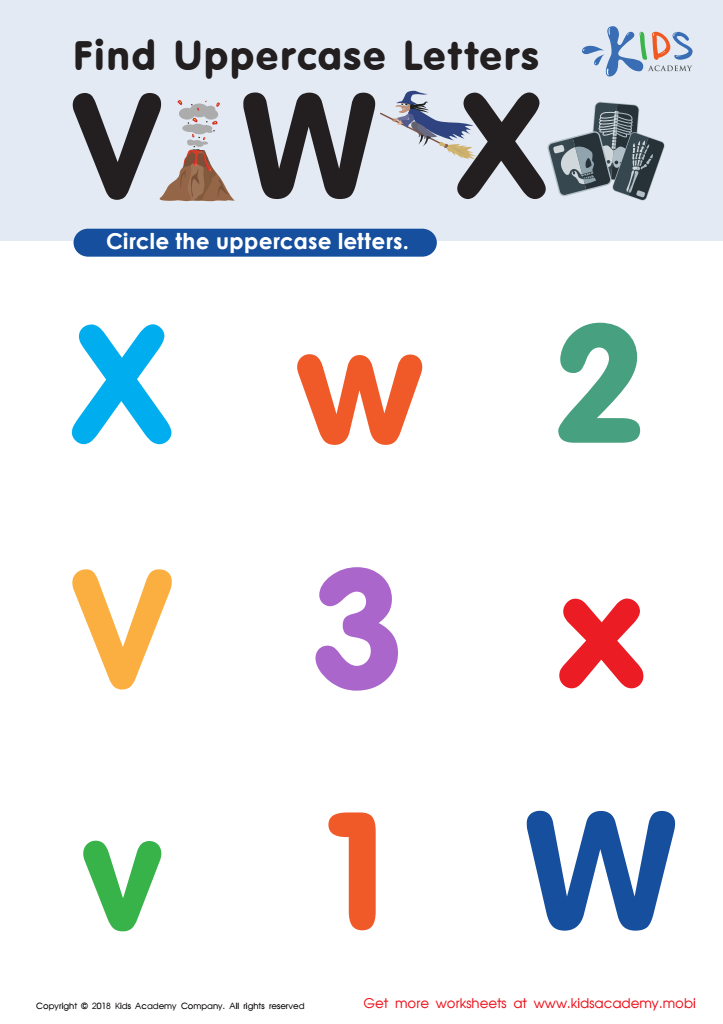
Find Uppercase Letters V, W, X Worksheet
Ask your kids if they can spot the uppercase letters V, W and X hidden in the lowercase letters and numbers, then have them circle them. After that, ask them to give you examples of words beginning with those letters. This worksheet will help them get started.
Find Uppercase Letters V, W, X Worksheet
Worksheet
Join Kids Academy for Free
Who is primarily going to use this learning content?








Visual discrimination letter recognition is a foundational skill in early literacy that significantly influences a child's reading and writing abilities. This skill involves the ability to distinguish between different letters and recognize their distinct features. Parents and teachers should prioritize this aspect of learning primarily because it lays the groundwork for effective reading comprehension and fluent communication.
When children can reliably identify and discern letters, they develop phonemic awareness, allowing them to grasp the alphabetic principle – the understanding that letters correspond to specific sounds. This fundamental comprehension aids in decoding words during reading, thereby improving word recognition and vocabulary.
Further, robust visual discrimination enables children to not only recognize letters in isolation but also in varied handwriting and typeface, fostering greater adaptability in reading diverse text formats. Without strong visual discrimination skills, children may confuse letters like b/d or p/q, leading to reading difficulties and frustration, which can impede their overall academic progress.
Long-term, the ability to rapidly and accurately recognize letters contributes to smoother reading experiences and enhances learning across subjects. Consequently, the nurturing of these skills from an early age sets children on a path of academic success and greater confidence, reinforcing a lifelong love for learning and reading.







