Vocabulary Building Letter Recognition Worksheets
3 filtered results
-
From - To
Enhance your child's literacy skills with our Vocabulary Building Letter Recognition Worksheets! Designed for early learners, these engaging worksheets promote letter identification and vocabulary development. Through interactive activities, children will recognize letters while associating them with corresponding words, ensuring a fun and educational experience. Our resources are perfect for teachers and parents looking to support reading readiness in preschool and kindergarten. With colorful visuals and easy-to-follow exercises, these worksheets cater to various learning styles, making early literacy both enjoyable and effective. Foster a love for words and boost your child's confidence in their reading journey with our comprehensive worksheets today!
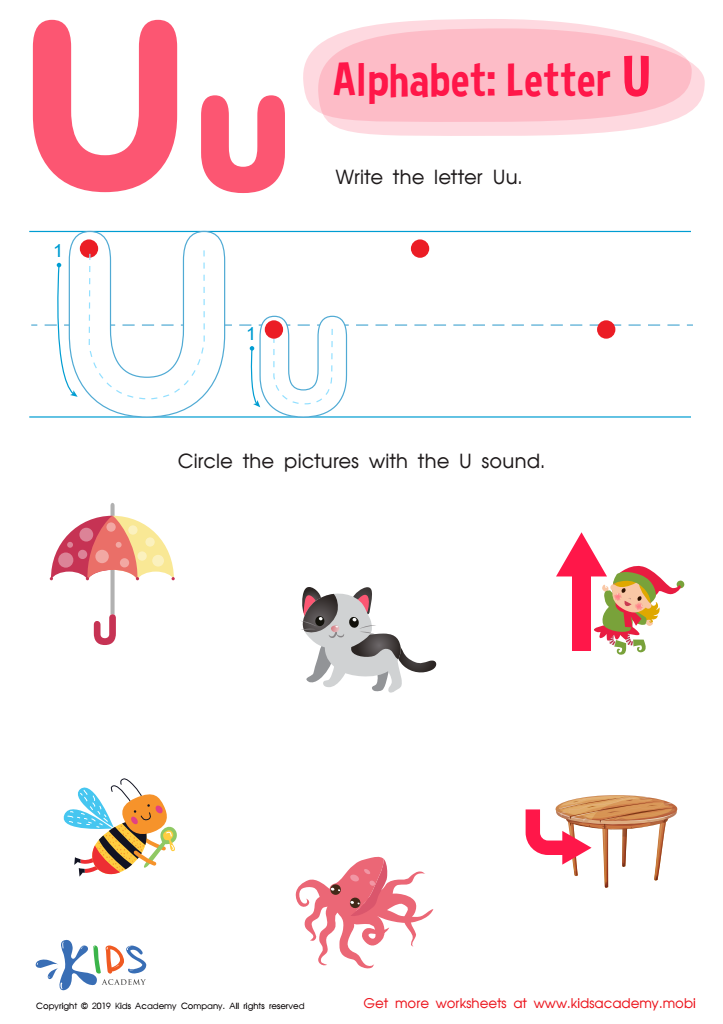
Letter U Tracing Worksheet
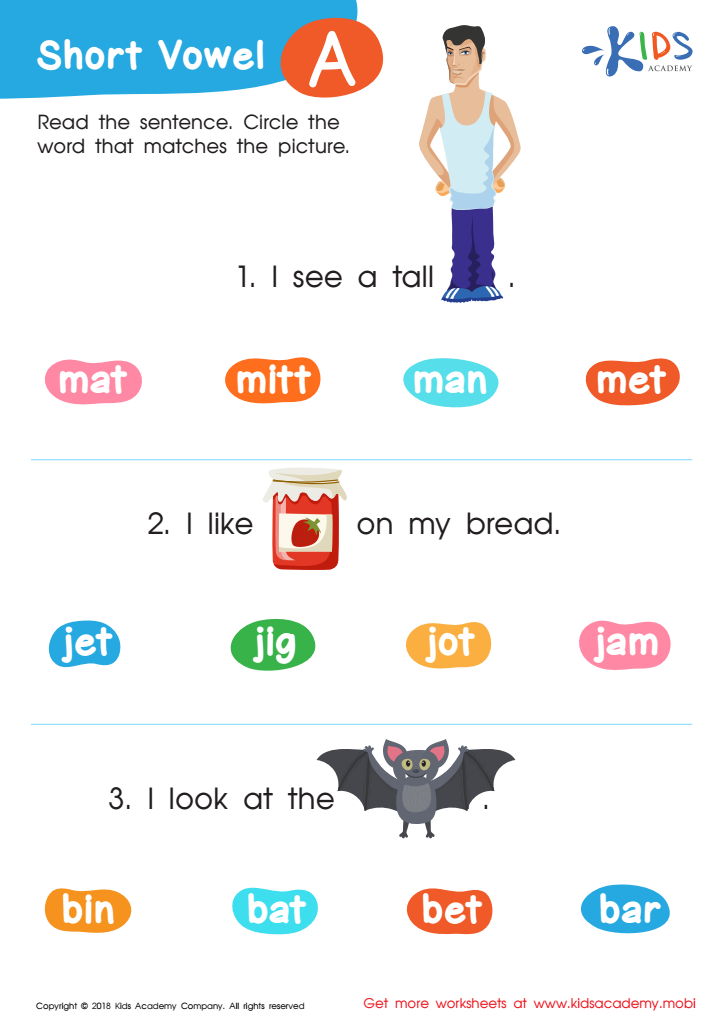
Short Vowel /a/ Worksheet
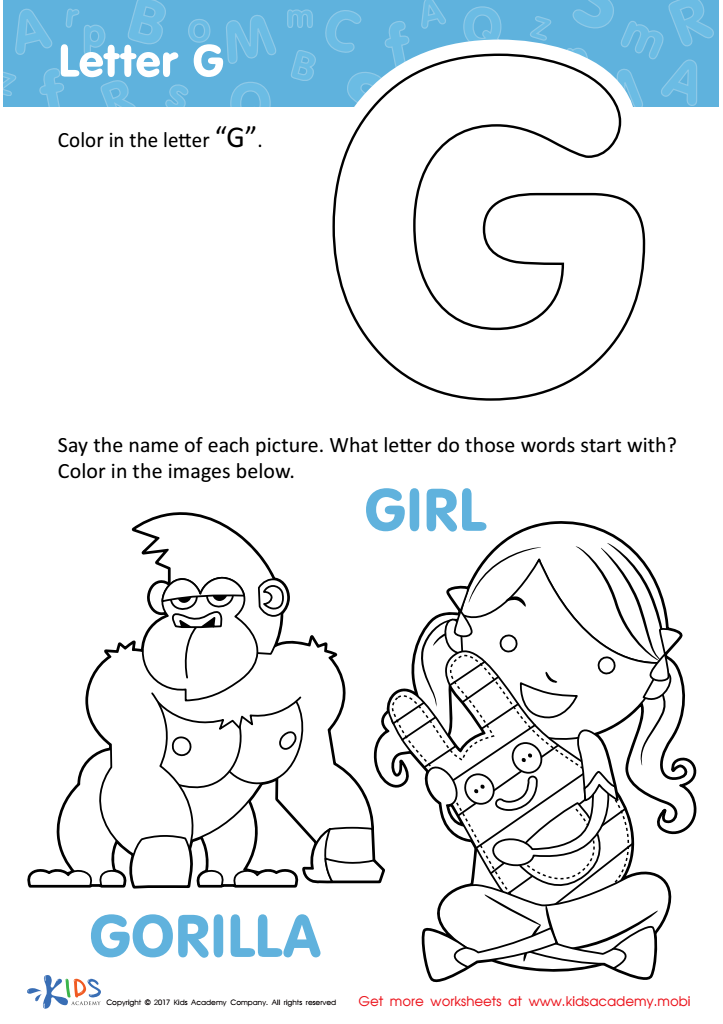
Letter G Coloring Sheet
 Assign to My Students








Vocabulary building and letter recognition are foundational for early literacy development, crucial for children’s success in reading and writing. Parents and teachers should prioritize these skills because they form the building blocks for effective communication and comprehension. Early exposure to vocabulary enhances children's ability to express themselves and understand the world around them. A rich vocabulary correlates with better reading comprehension skills, aiding academic performance across all subjects.
Teaching letter recognition lays the groundwork for phonics, phonemic awareness, and eventually reading fluency. Recognizing letters helps children decode words, supporting them in their journey to becoming independent readers.
Moreover, children with strong vocabulary and letter recognition skills often experience increased confidence in their linguistic abilities, facilitating more engagement in classroom discussions or social interactions. Parents can support this learning through fun activities—like reading together, playing word games, or engaging in storytelling—which create a positive association with literacy.
In essence, emphasizing vocabulary building and letter recognition is vital for helping children develop critical thinking skills, creativity, and a love for learning—skills that will benefit them throughout their educational journeys and beyond. By nurturing these abilities, parents and teachers foster well-rounded, literate individuals prepared for future success.







