Listening skills Letter Sounds Worksheets
4 filtered results
-
From - To
Enhance your child's literacy development with our "Listening Skills Letter Sounds Worksheets"! Designed for early learners, these engaging resources help children improve their listening skills while exploring letter sounds. Through fun activities, kids will practice identifying letters and the sounds they make, paving the way for better phonemic awareness and reading readiness. Ideal for classroom settings or at-home learning, our printable worksheets promote auditory discrimination and reinforce the connection between sounds and letters. Encourage your young learners to embark on a sound adventure that combines listening and literacy in an interactive and enjoyable way! Start their educational journey today!
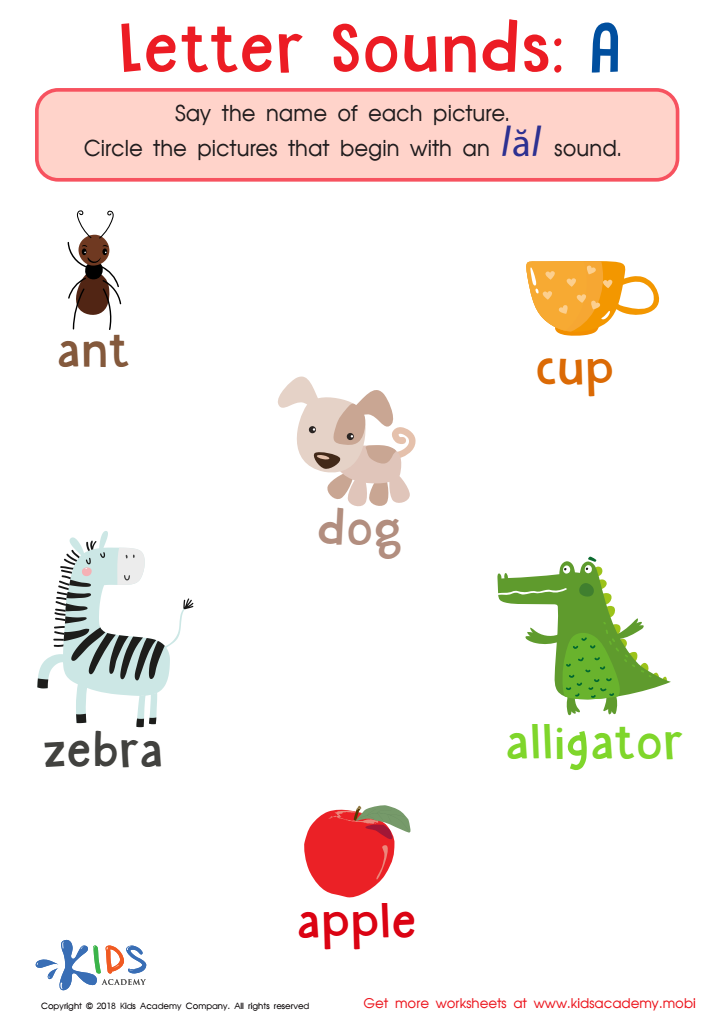
Letter A Sounds Worksheet
 Assign to My Students
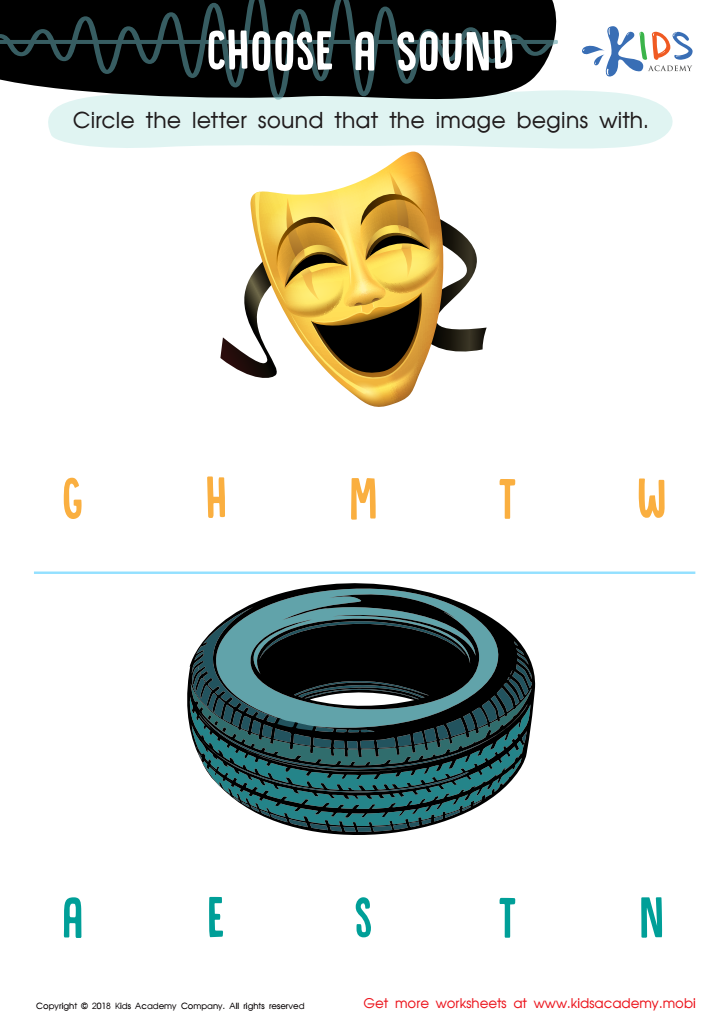
Choose a Sound Worksheet
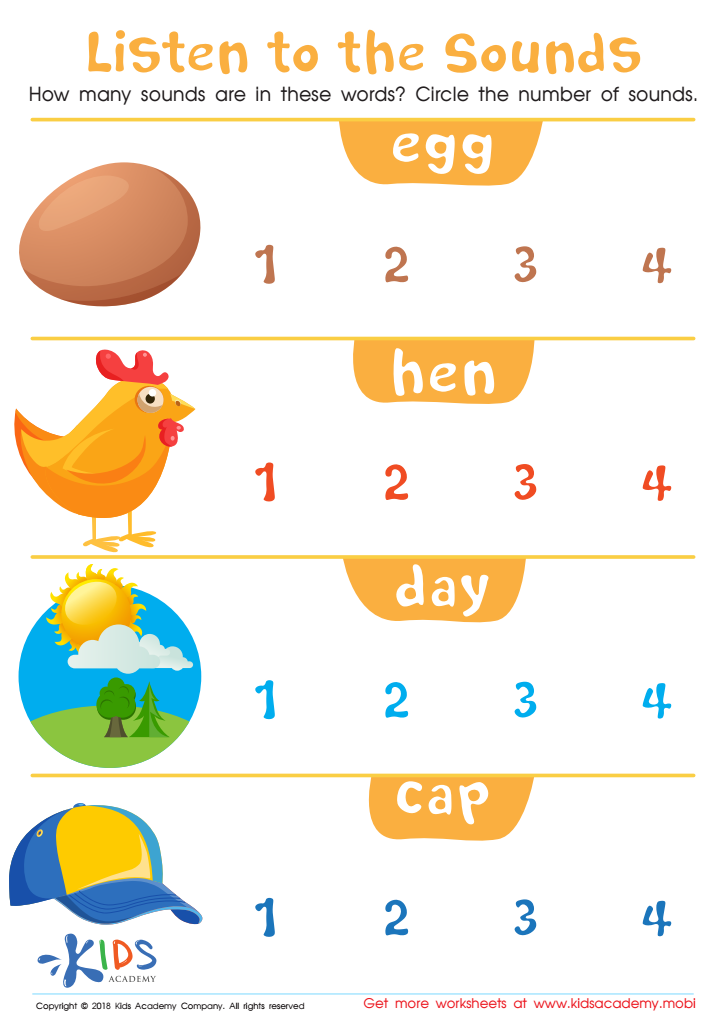
Listen to the Sounds Worksheet
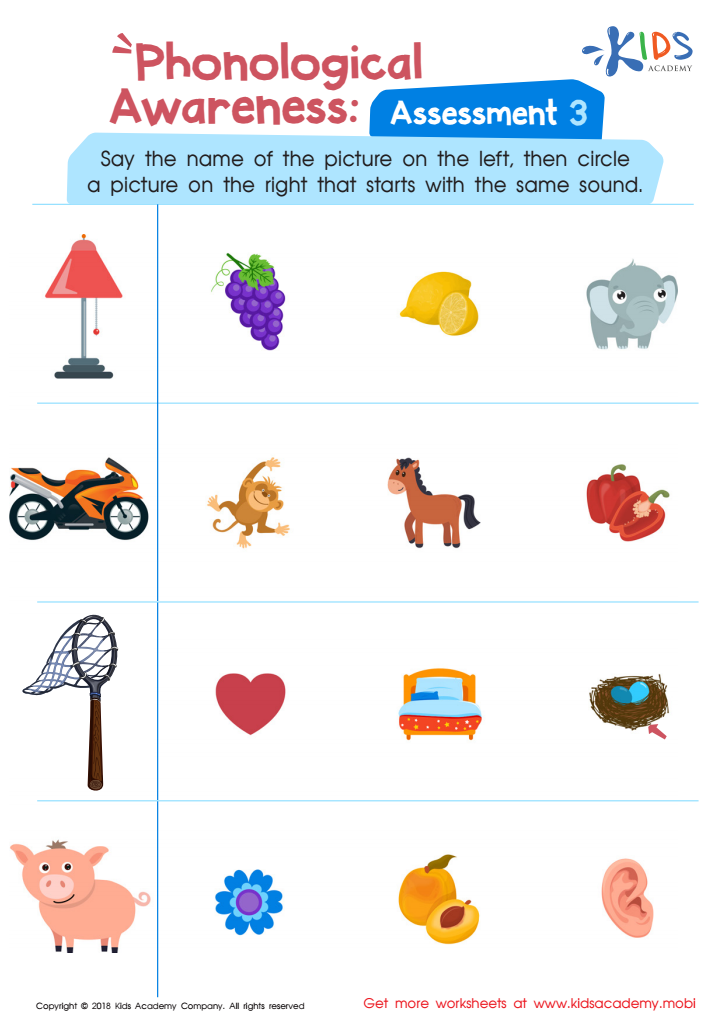
Phonological Awareness: Assessment 3 Worksheet








Listening skills and letter sounds are fundamental elements in a child’s early literacy development. Parents and teachers should prioritize these skills because they form the foundation for reading and writing. Proficient listening helps children distinguish between different sounds, a critical step in understanding phonics—the relationship between letters and their sounds.
When children learn letter sounds, they can decode words, leading to improved reading fluency and comprehension. Developing these skills enhances their ability to follow instructions, engage in conversations, and participate in classroom activities, fostering better communication and social skills.
Moreover, strong listening skills contribute to effective learning overall. Children who can listen attentively are more likely to absorb information, retain knowledge, and engage with the material presented, which can inspire a love for reading and learning that lasts a lifetime.
Parents can support this development at home through reading aloud and engaging in phonemic games, while teachers can incorporate listening activities in the classroom. By working together to enhance listening skills and understanding of letter sounds, adults can provide a solid foundation for children’s academic success and instill confidence as they progress in their education.







