Rhyming skills development Rhyming Worksheets
4 filtered results
-
From - To
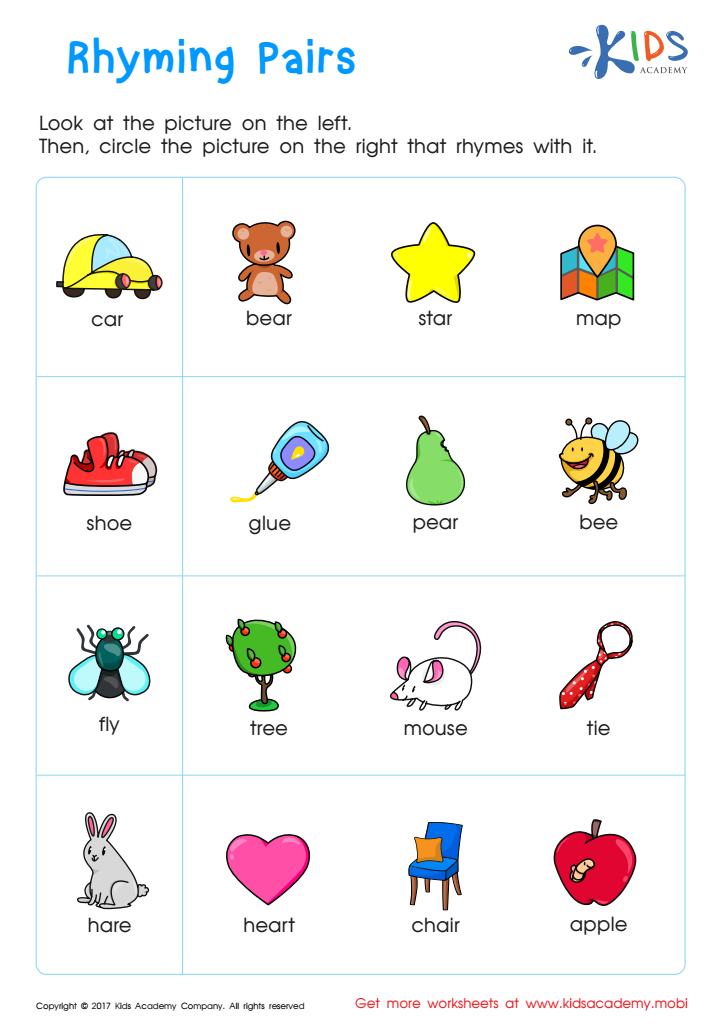
Enhance your child's phonemic awareness with our Rhyming Skills Development Worksheets from Kids Academy! These engaging, educational activities are designed to help young learners identify and create rhyming pairs through fun and interactive exercises. By incorporating colorful illustrations and playful themes, our worksheets make learning to recognize sound patterns enjoyable. Rhyming skills are crucial for developing early reading abilities, as they aid in the understanding of word families and language structure. Perfect for classroom use or at-home practice, these worksheets will inspire a love for language and improve your child's literacy foundation. Start rhyming and boost your child's reading journey today!
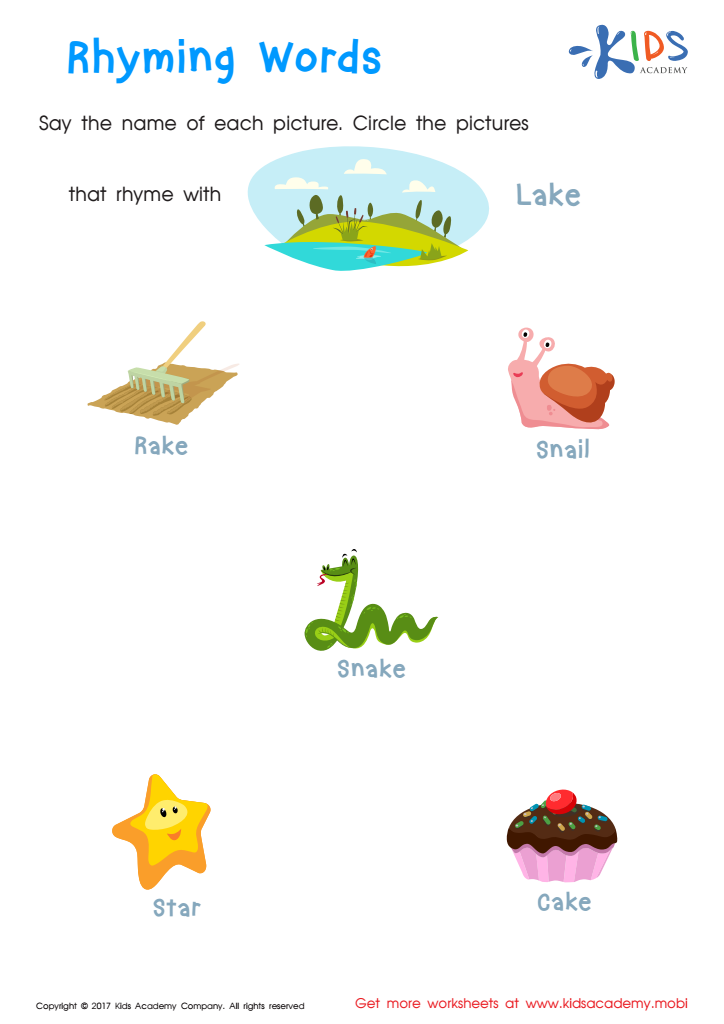
Rhyming Words Rhyming Worksheet
 Assign to My Students
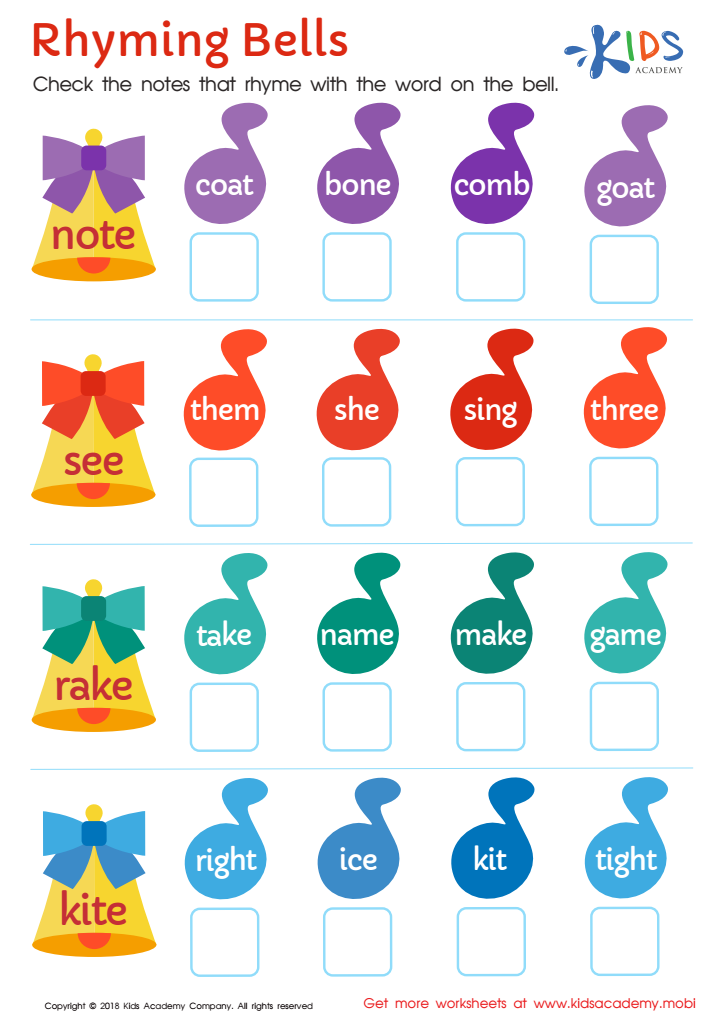
Rhyming Bells Worksheet
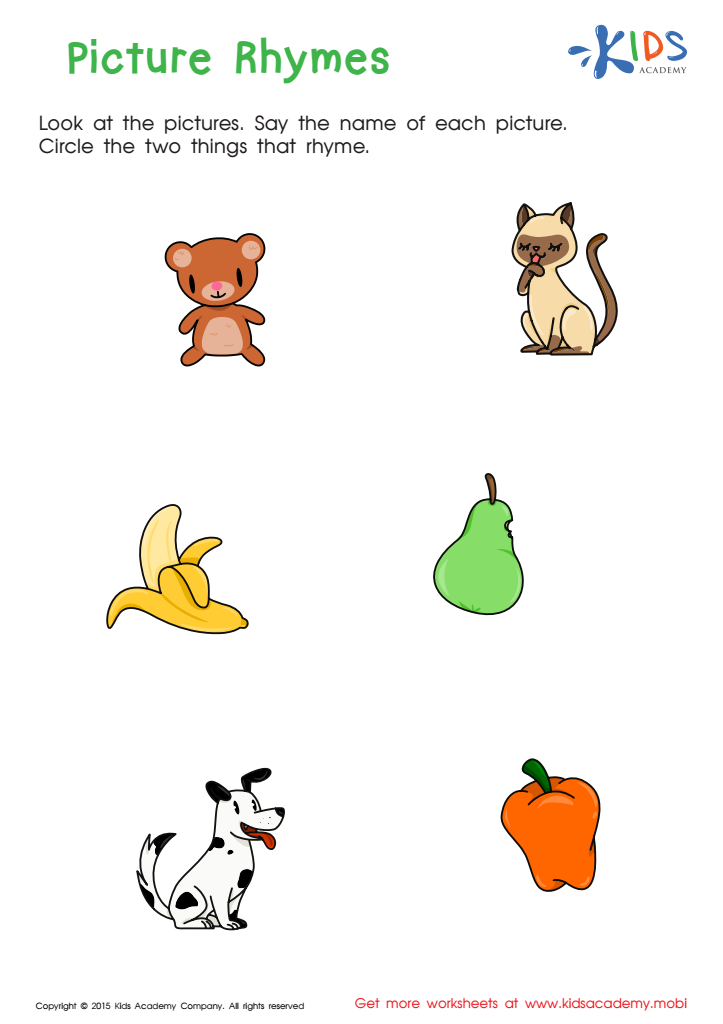
First Words: Picture Rhymes Worksheet







Rhyming skills are a crucial foundation for early literacy development in children. Understanding and recognizing rhyme helps children grasp the concept of phonemic awareness, which is the ability to hear, identify, and manipulate individual sounds in spoken words. This skill is essential for reading readiness and is a strong predictor of future reading success. When children practice rhyming, they learn to detect patterns in words, enabling them to decode new words more effectively.
Moreover, rhyming is engaging and fun, providing a playful way to explore language. Nursery rhymes, songs, and poetry captivate young learners, making the learning process enjoyable and memorable. Through repetition and rhythm, these activities enhance children's listening skills, improve their vocabulary, and aid memory retention.
Parents and teachers play a vital role in fostering these skills by integrating rhyming activities into daily interactions. Reading rhyming books, singing rhyming songs, and encouraging children to come up with their own rhymes can significantly contribute to their language development. As a result, investing time in developing rhyming skills sets a strong groundwork for children's academic journey, boosts their confidence, and cultivates a lifelong love for reading and learning.







