Letter-sound association Upper & Lowercase Letters Worksheets
3 filtered results
-
From - To
Enhance your child's phonics skills with our “Letter-sound Association Upper & Lowercase Letters Worksheets” from Kids Academy. These engaging, printable resources are designed to help kindergarten and early grade students reinforce the crucial connection between letters and their respective sounds. Each worksheet focuses on both uppercase and lowercase letters to boost recognition, blending, and reading abilities. Fun, interactive activities ensure that learning becomes a delightful experience, supporting your child’s path to literacy. Perfect for both classroom and at-home practice, these worksheets lay a solid foundation for future reading and writing success. Start your child’s phonics journey today!
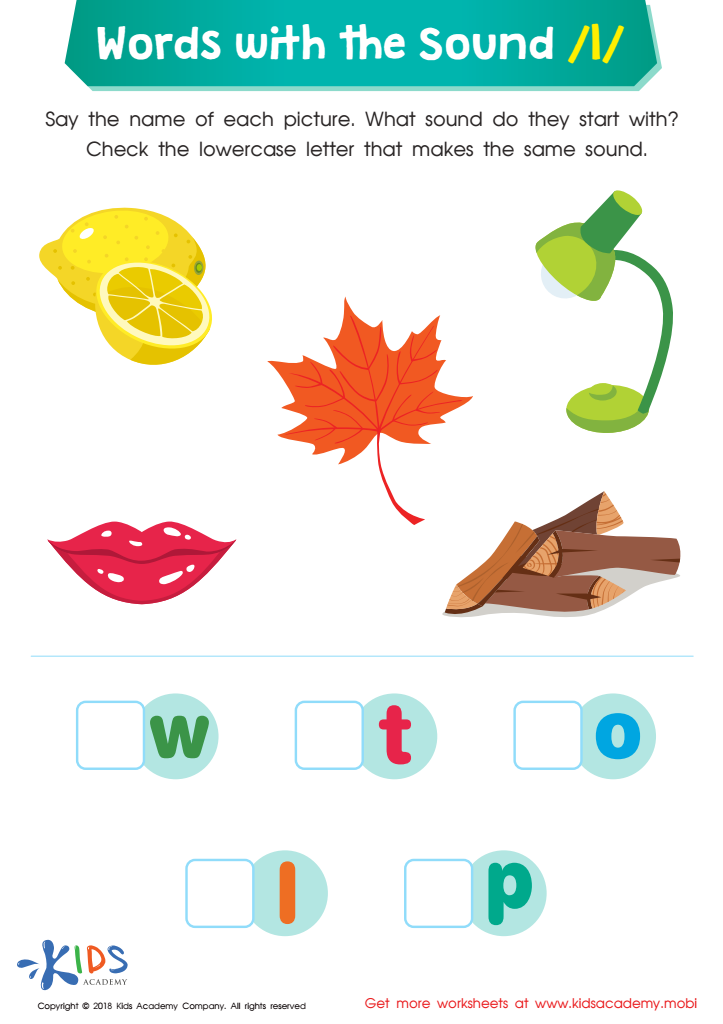
Words with Sound L Reading Worksheet
 Assign to My Students

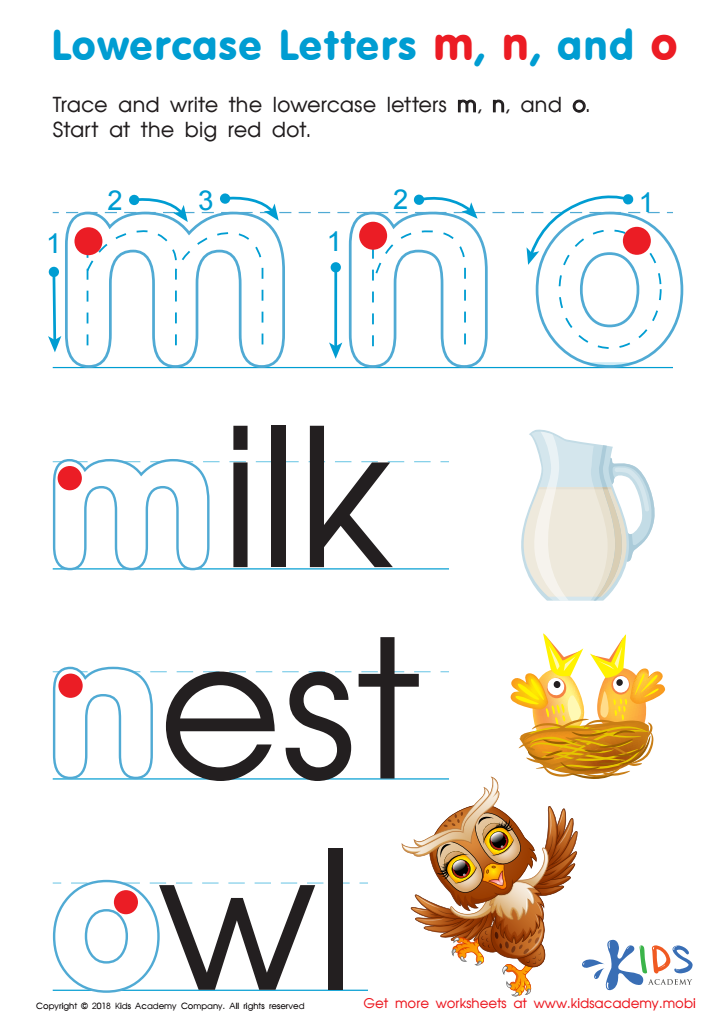
Lowercase Letters m n o Worksheet
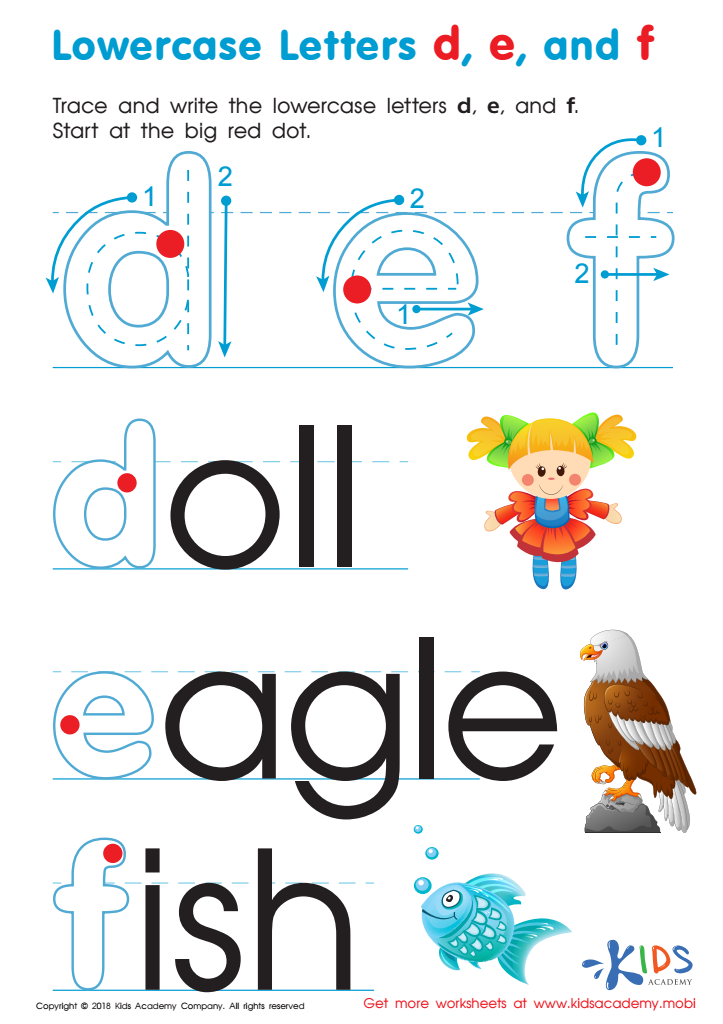
Lowercase Letters d e f Worksheet






Understanding letter-sound associations and recognizing both uppercase and lowercase letters are foundational skills for early literacy development. When parents and teachers emphasize these concepts, they enable children to more easily connect spoken language with written text. This foundational knowledge serves as a building block for reading and writing proficiency.
Letter-sound association helps children decode new words and understand the phonetic structure of the language. By associating specific sounds with corresponding letters or groups of letters, children can begin to "sound out" unfamiliar words, thereby enhancing their reading fluency and comprehension.
Additionally, recognizing both uppercase and lowercase letters is crucial because they appear differently in various contexts. For instance, while uppercase letters frequently signify the beginning of sentences and proper nouns, lowercase letters constitute the bulk of written text. Familiarity with both forms ensures that children can read and write with greater ease and accuracy.
Moreover, early proficiency in these areas can boost a child’s confidence and interest in reading. When reading becomes enjoyable rather than frustrating, children are more likely to develop a lifelong love for learning. Therefore, parents and teachers should prioritize teaching letter-sound associations and the distinctions between uppercase and lowercase letters to lay a strong foundation for future academic success.







