Lowercase letter writing Upper & Lowercase Letters Worksheets
3 filtered results
-
From - To
Enhance your child’s handwriting skills with our engaging Upper & Lowercase Letters Worksheets! Designed for early learners, these worksheets focus on lowercase letter writing, helping children practice proper letter formation and improve their fine motor skills. Each worksheet features fun activities and clear guidelines to encourage confidence in writing. With ample space for repeated practice, kids can explore the world of letters while enjoying interactive exercises. Perfect for home or classroom use, these resources provide a comprehensive approach to mastering lowercase letters, ensuring your little ones succeed in their early literacy journey. Download now and watch them flourish!
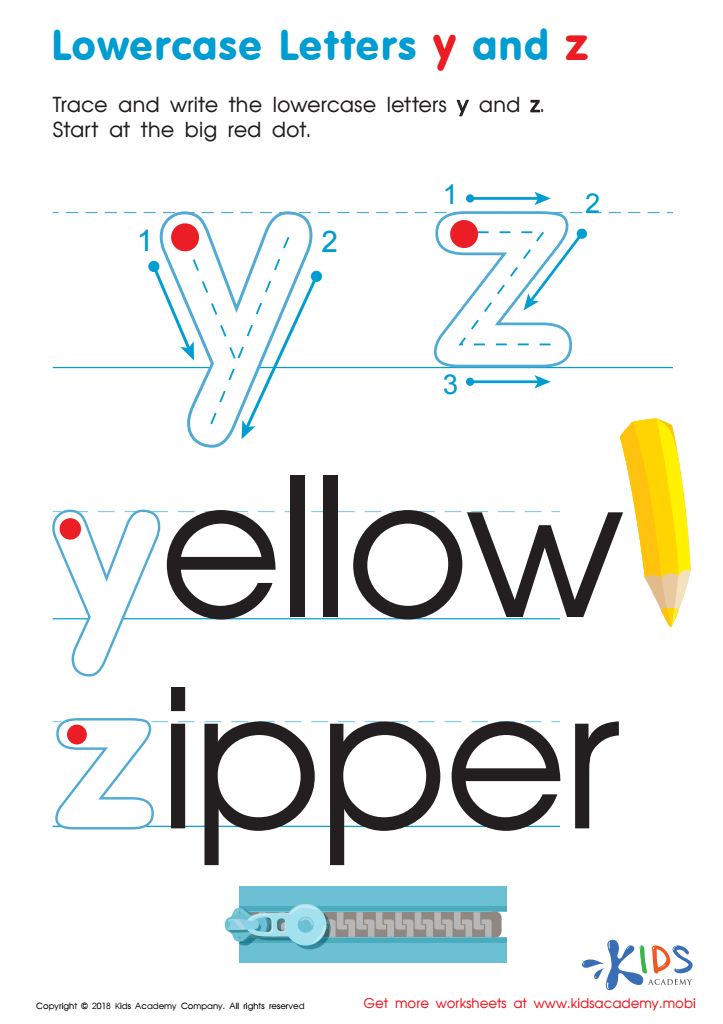
Lowercase Letters y z Worksheet
 Assign to My Students

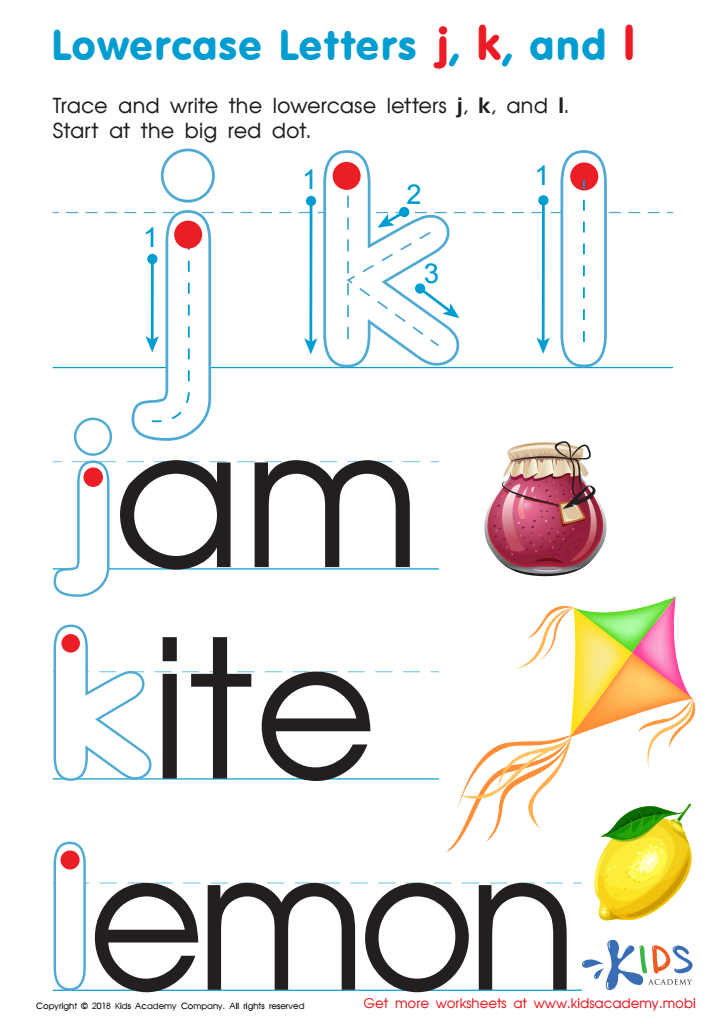
Lowercase Letters j k l Worksheet

Lowercase Letters m n o Worksheet






Understanding lowercase and uppercase letters is crucial for early literacy development, and both parents and teachers play vital roles in this process. First, lowercase and uppercase letters have distinct purposes in writing and communication. Uppercase letters are primarily used at the beginning of sentences and for proper nouns, while lowercase letters form the majority of written text. Teaching children to recognize and produce both forms strengthens their reading and writing skills, enabling them to improve fluency and comprehension.
Additionally, handwriting practice helps develop fine motor skills essential for overall literacy. Perfecting the formation of letters aids children in making the connection between spoken and written language. When both parents and teachers emphasize the importance of accurate letter formation, it fosters a love for writing and boosts confidence.
Moreover, familiarity with correct letter casing enhances children's ability to read effectively. Since most reading materials they encounter will involve both uppercase and lowercase letters, being comfortable with both sets allows for a smoother transition into more complex written language.
Ultimately, when parents and teachers collaborate to emphasize lowercase and uppercase letter writing, they equip children with foundational skills that support their educational journey, encouraging effective communication and literacy development.







