Uppercase identification Upper & Lowercase Letters Worksheets
5 filtered results
-
From - To
Explore our engaging Uppercase Identification worksheets designed to help young learners master uppercase and lowercase letters! These interactive activities encourage kids to recognize and differentiate between uppercase letters through fun exercises like tracing, matching, and coloring. Tailored for early grade students, our worksheets promote essential literacy skills while keeping learning enjoyable. Perfect for teachers and parents, these printable resources facilitate guided practice at home or in the classroom. Build confidence in letter recognition with our thoughtfully crafted worksheets, ensuring that children develop the foundation needed for successful reading and writing. Dive into the world of letters and watch your child’s reading skills flourish!
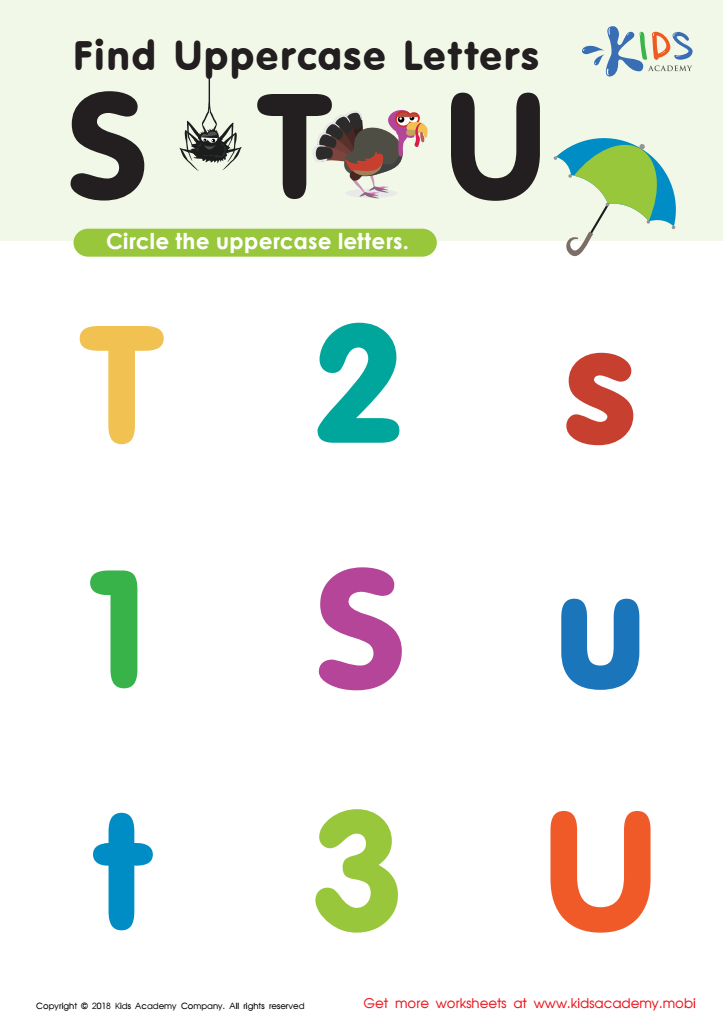
Find Uppercase Letters Worksheet
 Assign to My Students


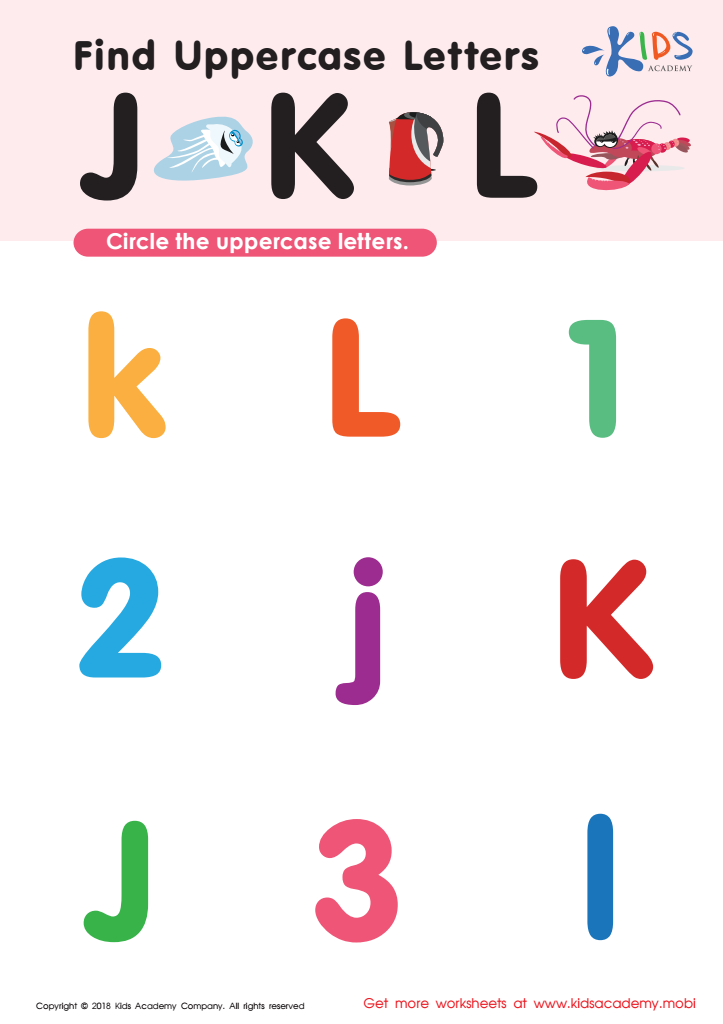
Find Uppercase Letters J, K, and L Worksheet

Find Uppercase Letters A, B, and C Worksheet
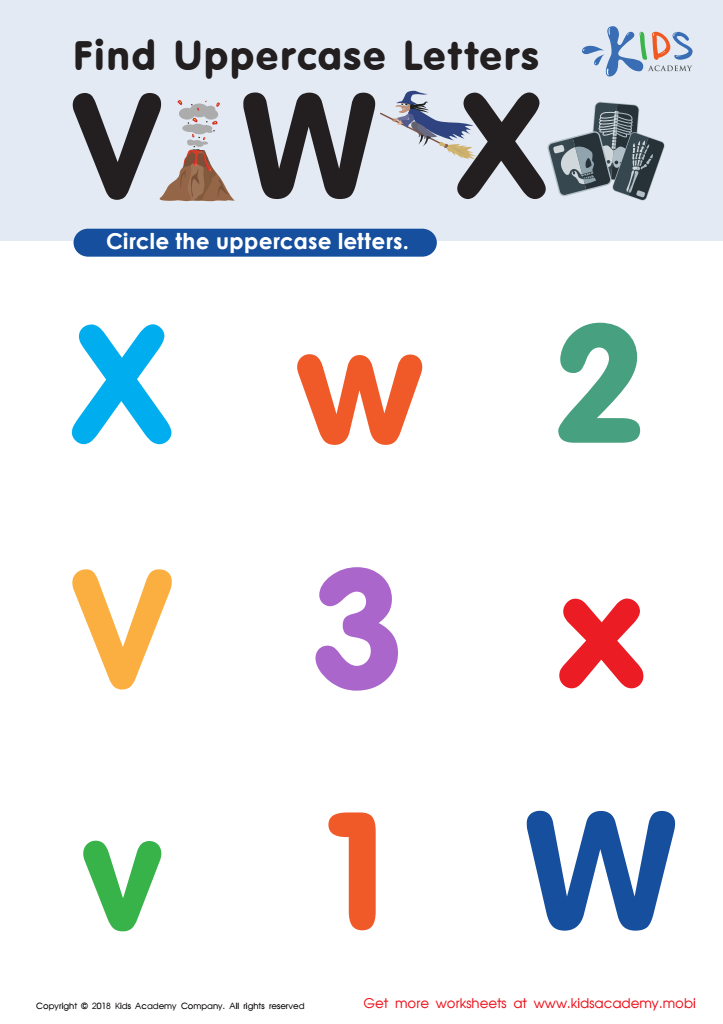
Find Uppercase Letters V, W, X Worksheet
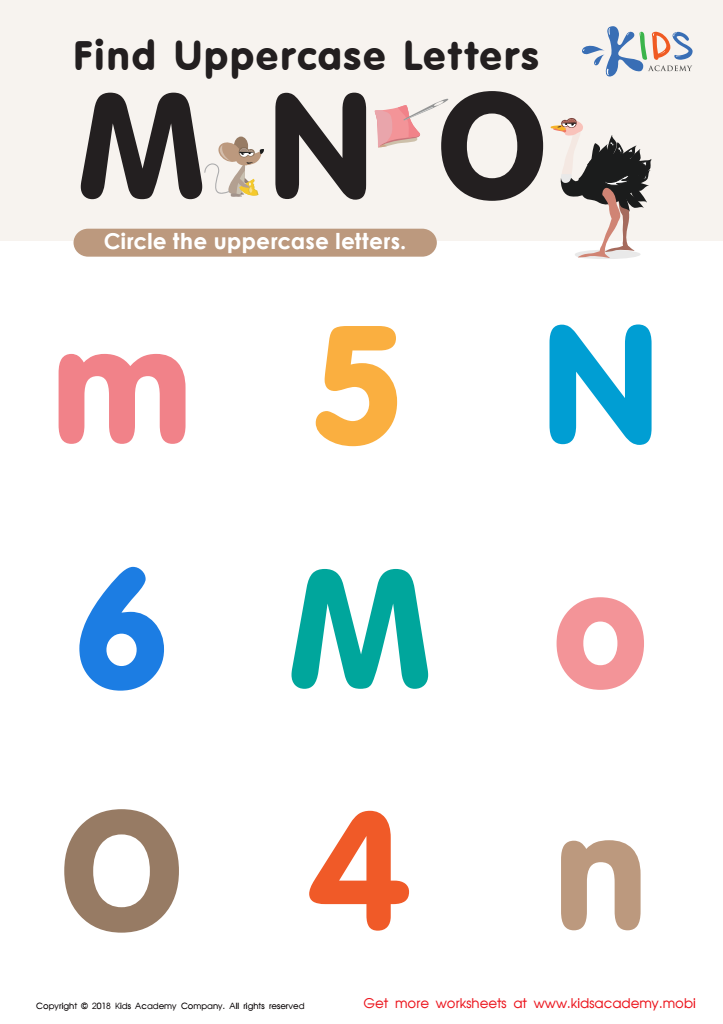
Find Uppercase Letters M, N, and O Worksheet






Understanding uppercase and lowercase letters is crucial for young children as they develop literacy skills. Parents and teachers play a pivotal role in fostering this knowledge, as it sets the foundation for reading and writing proficiency.
Firstly, uppercase letters signal the beginning of sentences and proper nouns, helping children grasp essential grammar rules. When students can identify these letters, they enhance their reading comprehension and ability to navigate written text.
Secondly, distinguishing between uppercase and lowercase letters supports handwriting development. Familiarity with both letter cases contributes to clearer writing and better overall communication skills.
Moreover, teaching the distinctions also encourages phonemic awareness. Recognizing the different shapes and sizes of letters aids in phonics instruction, enabling children to decode words more effectively.
Additionally, reinforcing this skill aids in building confidence in young learners. When children are adept at recognizing letters, they feel more accomplished, promoting a positive attitude towards reading.
Ultimately, parents and teachers should pay close attention to uppercase and lowercase letter identification to develop foundational literacy skills, boost reading comprehension, empower effective communication, and instill confidence in young learners. This competence directly influences their future academic success and love for learning.







