Long vowel recognition Vowels Worksheets
3 filtered results
-
From - To
Discover engaging Long Vowel Recognition Vowels Worksheets designed to enhance your child's reading skills! These printable worksheets provide a fun and interactive way for children to learn the significance of long vowels in words. Featuring colorful visuals and varied activities, your students will enjoy identifying, practicing, and mastering long vowel sounds. Perfect for early grade learners, our worksheets cater to different learning styles, ensuring every child grasps the concept effectively. Whether in the classroom or at home, these resources are an excellent tool for building a strong foundation in literacy. Download now and watch your child's reading confidence soar!
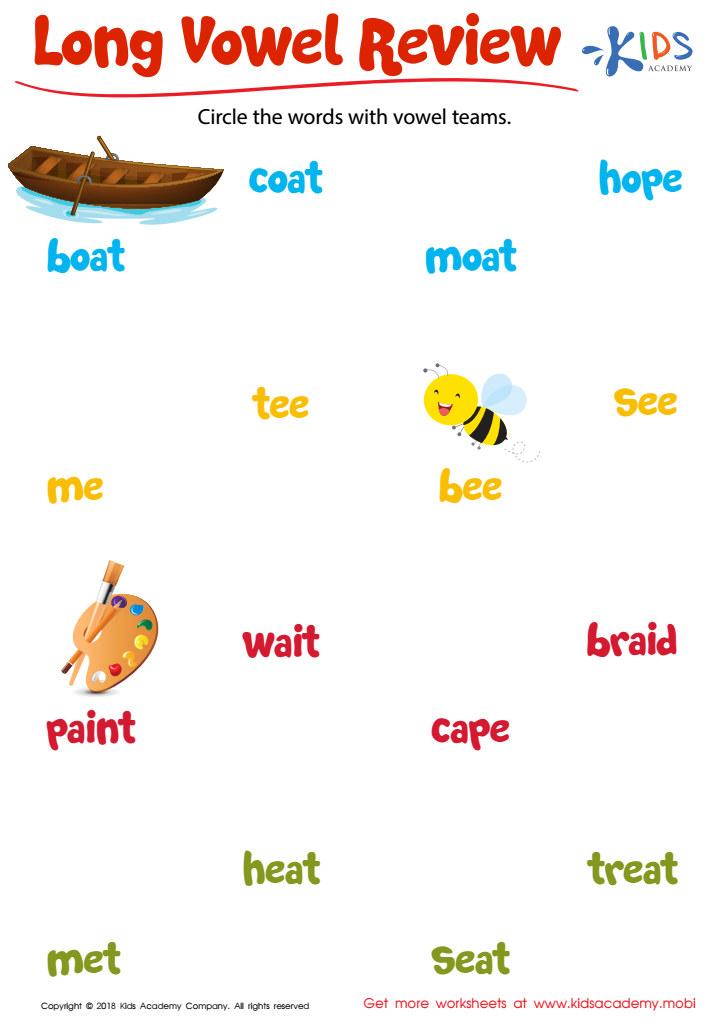
Long Vowel Review Worksheet
 Assign to My Students
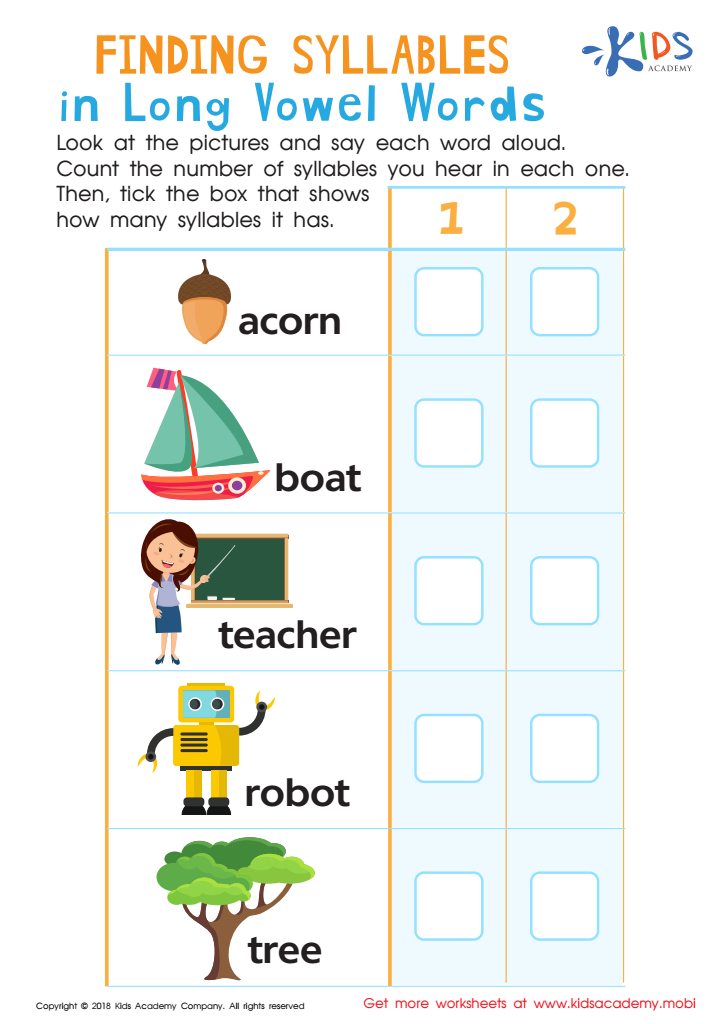
Finding Syllables in Long Vowel Words Worksheet
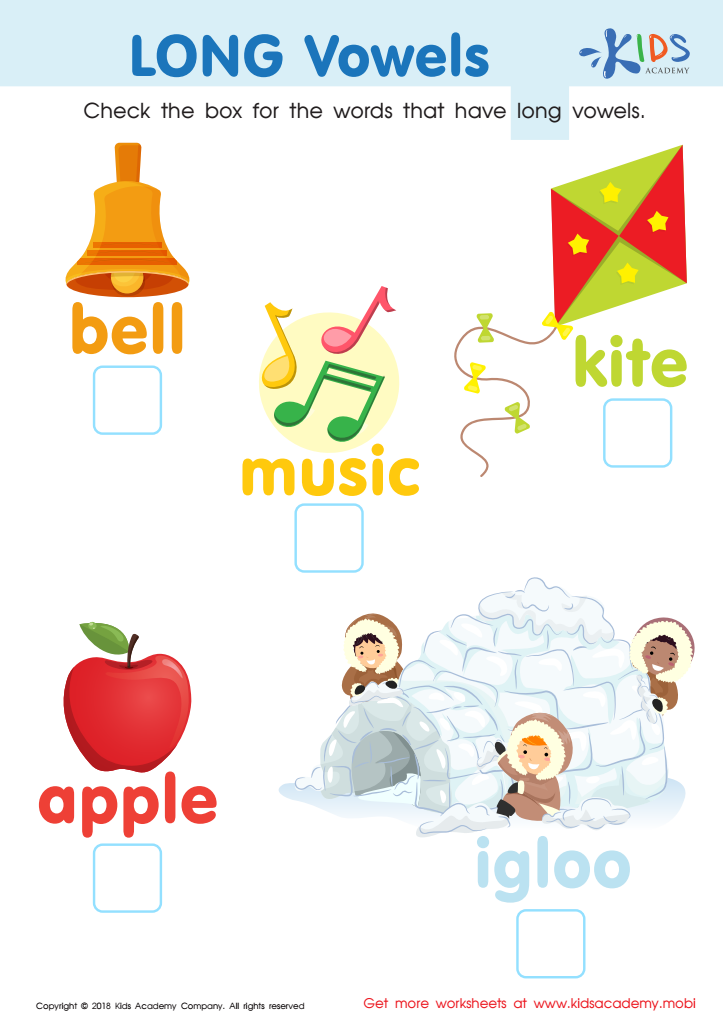
long vowels Worksheet





Long vowel recognition is critical in early literacy development, making it essential for parents and teachers to prioritize it in education. Long vowels are pronounced the same way as their names—like "a" in "cake," "e" in "beet," "i" in "bike," "o" in "cone," and "u" in "mule." Recognizing and understanding long vowels can significantly enhance a child's reading and writing skills.
When children can identify and pronounce long vowels, they decode words more effectively, improving their reading fluency and comprehension. Additionally, this understanding supports spelling development, as many spelling patterns use long vowels. For instance, children can better apply rules of phonics to spell words correctly.
Moreover, mastering long vowel sounds lays a foundation for more complex language skills, including vocabulary growth and phonemic awareness. It also strengthens a child’s confidence in reading, empowering them to tackle more advanced texts as they progress.
By fostering an environment where long vowel recognition is emphasized, parents and teachers equip children with essential tools for academic success. This foundational skill is key to becoming proficient readers and writers, ultimately enhancing their overall communication and literacy abilities. Therefore, promoting long vowel recognition in early education should be a priority for all caregivers and educators.