Addition & Subtraction Worksheets Activities With Answers for Ages 4-9 - Page 2
26 filtered results
-
From - To
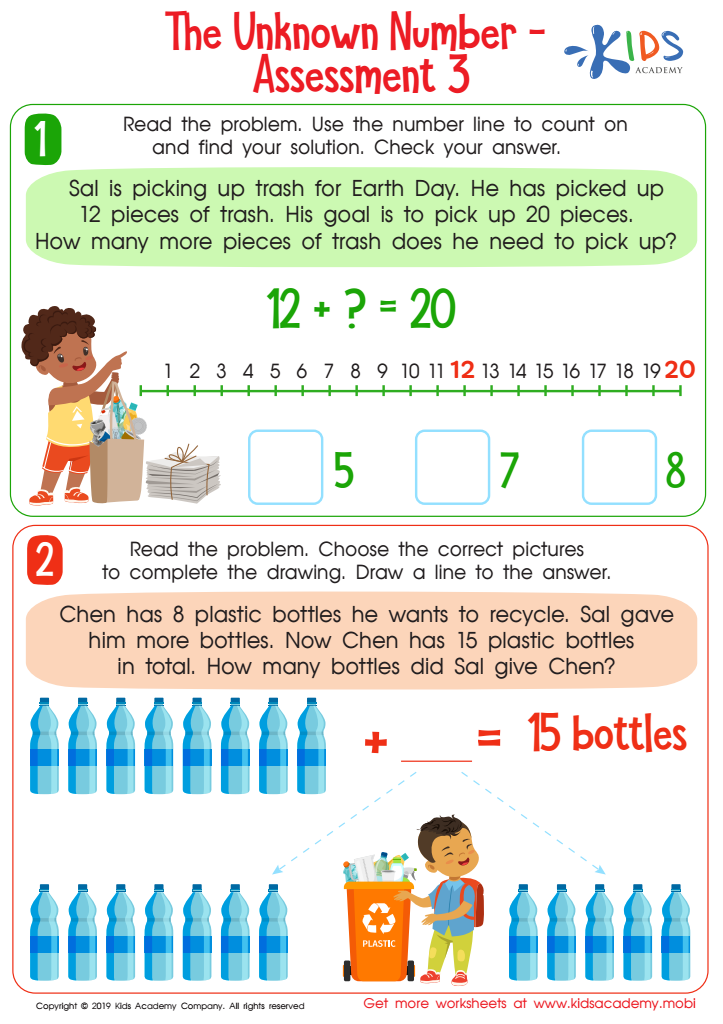
The Unknown Number - Assessment 3 Worksheet
 Assign to My Students
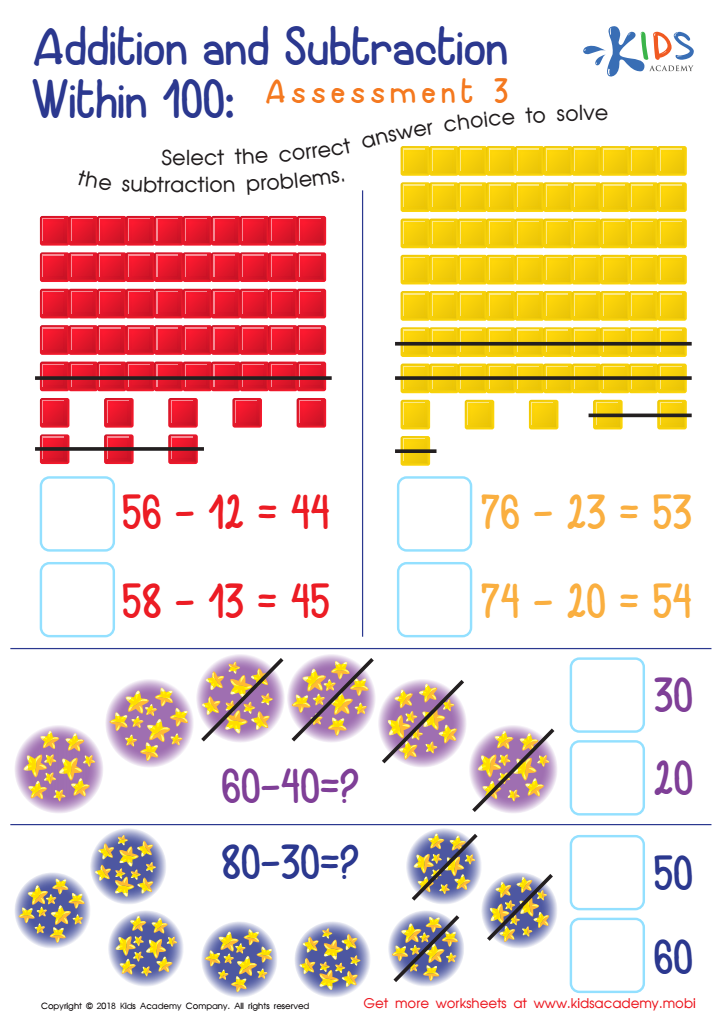
Addition and Subtraction Within 1: Assessment 3 Worksheet








Parents and teachers should particularly care about Addition and Subtraction activities for children aged 4-9 because these foundational skills are critical for a child’s overall mathematical development. Mastering these basic arithmetic concepts early on lays the groundwork for all future math learning, fostering confidence and competence in students. Engaging activities provide a stimulating and interactive context for learning, making math more enjoyable and relevant.
Moreover, these activities can help identify a child’s learning style and preferences, enabling caregivers and educators to tailor educational approaches accordingly. They also promote cognitive skills such as problem-solving, critical thinking, and logical reasoning, which are essential in various aspects of life, not just in academics.
When activities come with answers, they provide immediate feedback, allowing parents and teachers to track progress and address areas where a child may struggle. This reinforces understanding and supports self-directed learning.
Lastly, incorporating fun games and hands-on activities during this crucial developmental stage can lead to a lifelong positive attitude toward math, transforming a potentially daunting subject into an exciting and engaging experience. For all these reasons, fostering strong addition and subtraction skills in young learners should be a top priority for both parents and teachers.








