Division Worksheets Activities With Answers for Ages 4-9
3 filtered results
-
From - To
Discover engaging division worksheet activities designed specifically for children ages 4 to 9! Our resources focus on making learning fun and interactive, helping young learners grasp division concepts through colorful and imaginative worksheets. Each activity is tailored to reinforce foundational math skills while developing critical thinking. Our worksheets come with comprehensive answers, enabling easy progress tracking and ensuring children stay motivated. Perfect for classroom use or home study, these division activities will spark enthusiasm for math and make mastering division concepts enjoyable. Browse our collection today to find age-appropriate resources that cater to your child's learning needs!
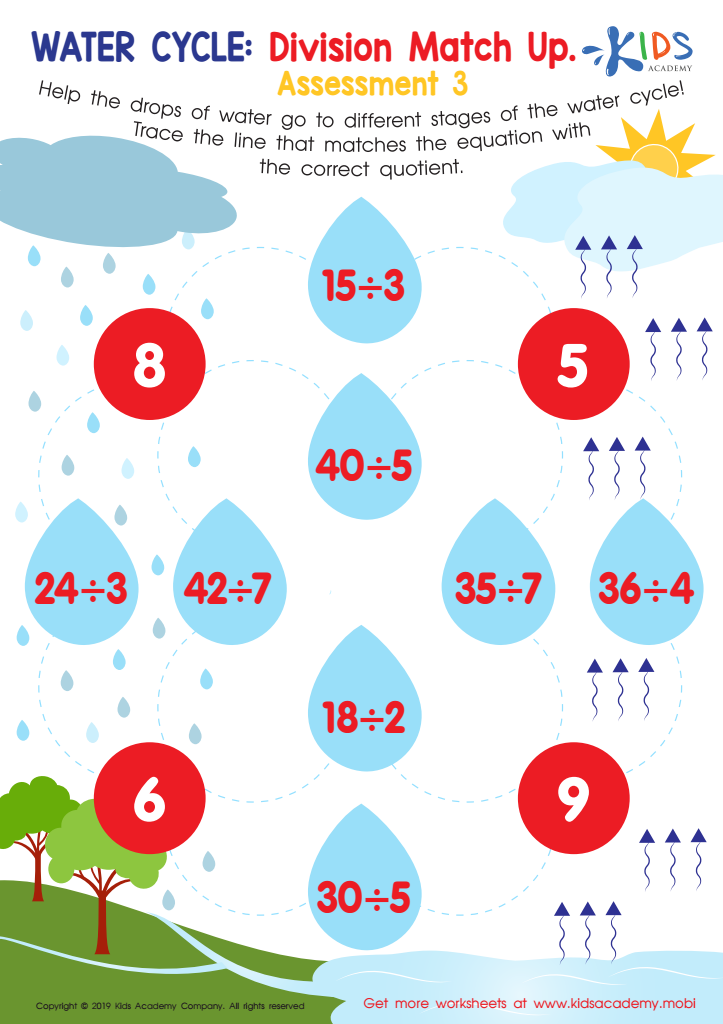
Water Cycle Division Match Up Assessment 3 Worksheet
 Assign to My Students
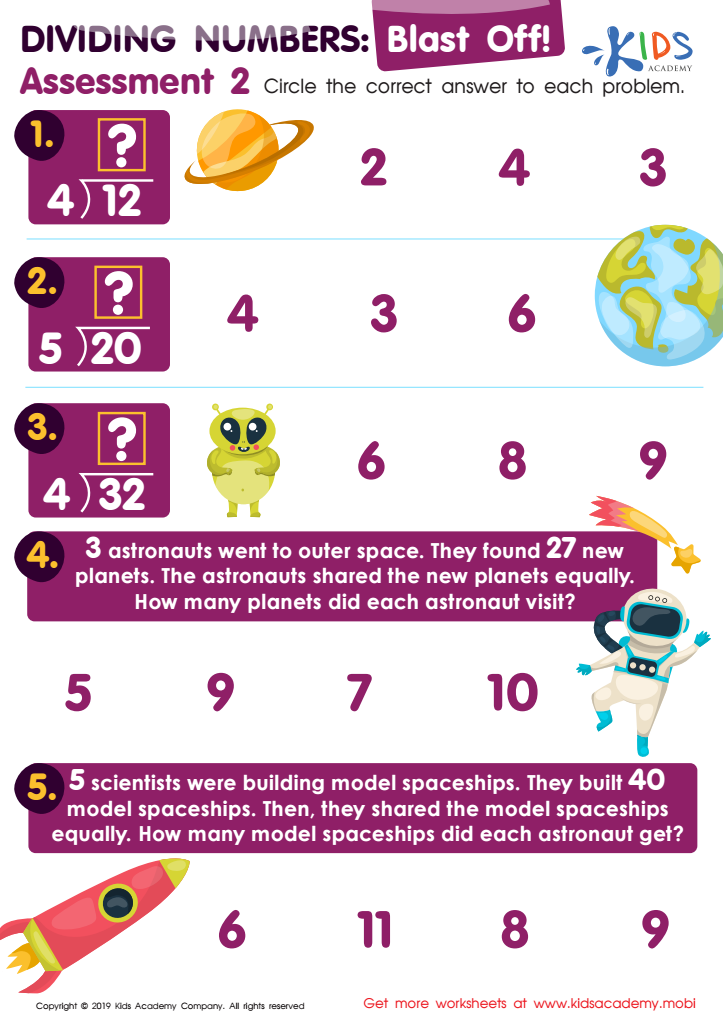
Dividing Numbers Assessment 2 Worksheet
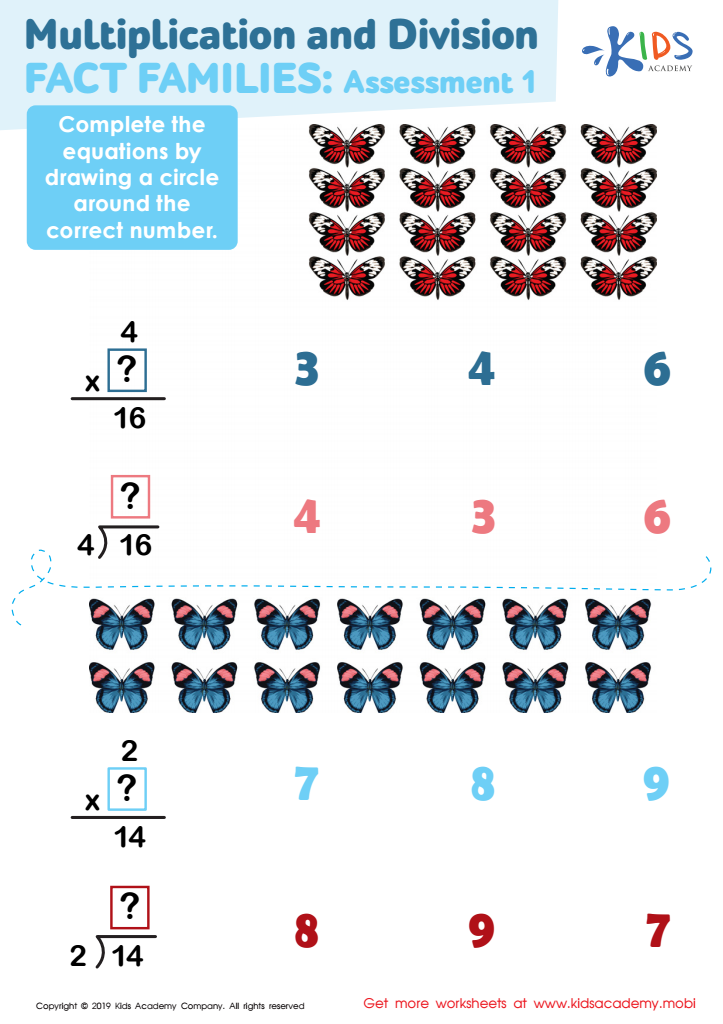
Multiplication and Division Fact Families Assessment 1 Worksheet







Parents and teachers should emphasize division activities for ages 4-9 because they lay the foundation for critical mathematical skills essential for future learning. At this developmental stage, children are honing their ability to grasp basic concepts like sharing and grouping, which naturally translate into an understanding of division. Engaging in fun, age-appropriate activities makes learning both enjoyable and effective, encouraging a positive attitude towards math.
Division activities also foster essential cognitive skills. Young children learn problem-solving, patience, and critical thinking as they work through challenges. Such activities improve their ability to collaborate with peers, enhancing social skills and communication.
Moreover, early exposure to division helps prevent math anxiety later in life. When children approach math playfully and confidently, they are more likely to develop a lifelong affinity for learning. Dividing objects into equal groups, whether through games or hands-on exercises, makes the abstract concept of division tangible and relatable.
Involvement in these activities supports parents and teachers working together to create a meaningful learning atmosphere. Ultimately, focusing on division at a young age equips children with valuable skills that will benefit them in more complex mathematical concepts as they progress through their education.








