Vowels Worksheets Activities With Answers for Ages 5-7
3 filtered results
-
From - To
Discover a variety of engaging vowels worksheets and activities designed specifically for children ages 5-7. Our resources include colorful and interactive exercises that help young learners master the fundamental concepts of vowels. Each worksheet comes complete with answer keys for easy assessment and reference. Children will enjoy activities such as identifying vowels, completing words, and practicing vowel sounds through fun exercises that enhance their reading and writing skills. Perfect for classroom use or additional practice at home, these worksheets make learning vowels enjoyable and effective. Explore our diverse collection and watch your child's confidence soar in language skills!
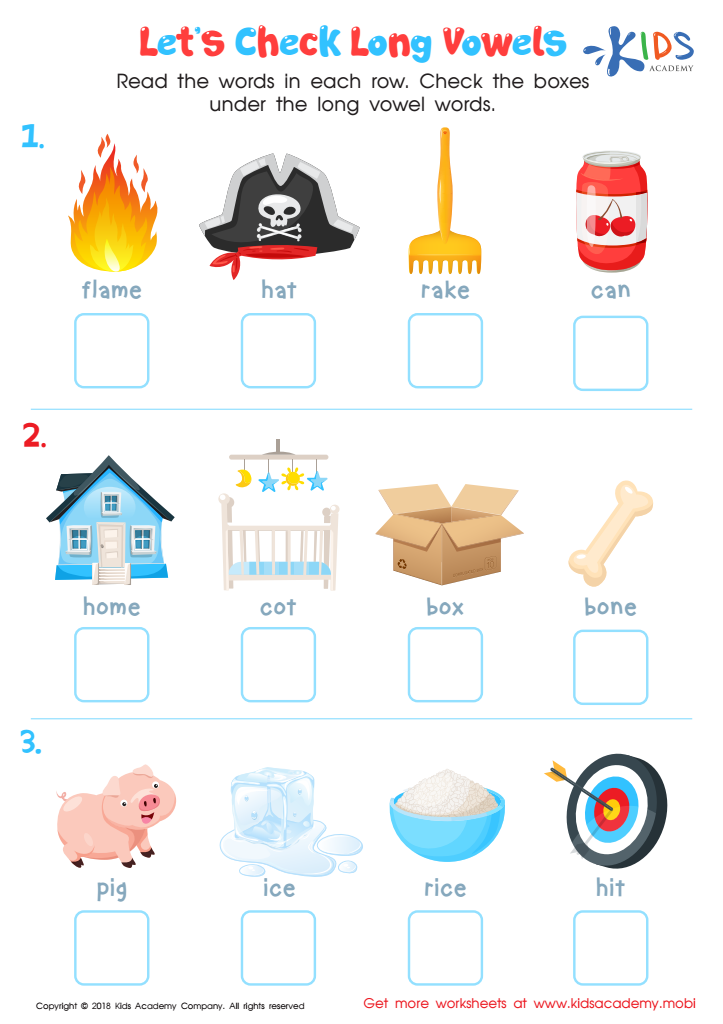
Let's Check Long Vowels: Assessment Worksheet
 Assign to My Students
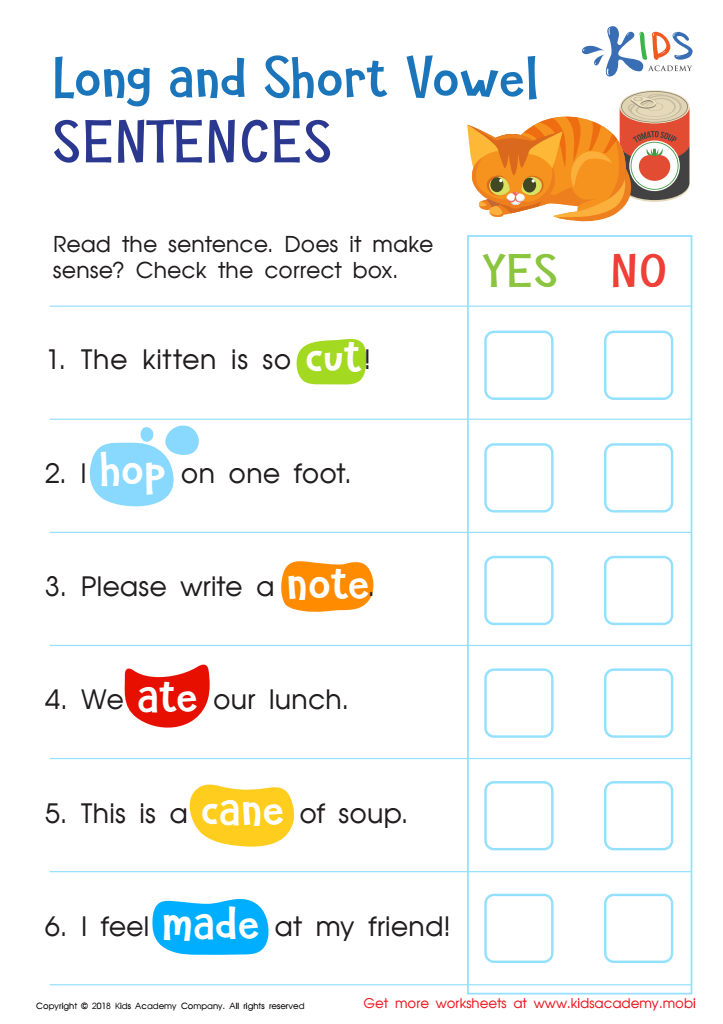
Long and Short Vowel Sentences: Assessment Worksheet
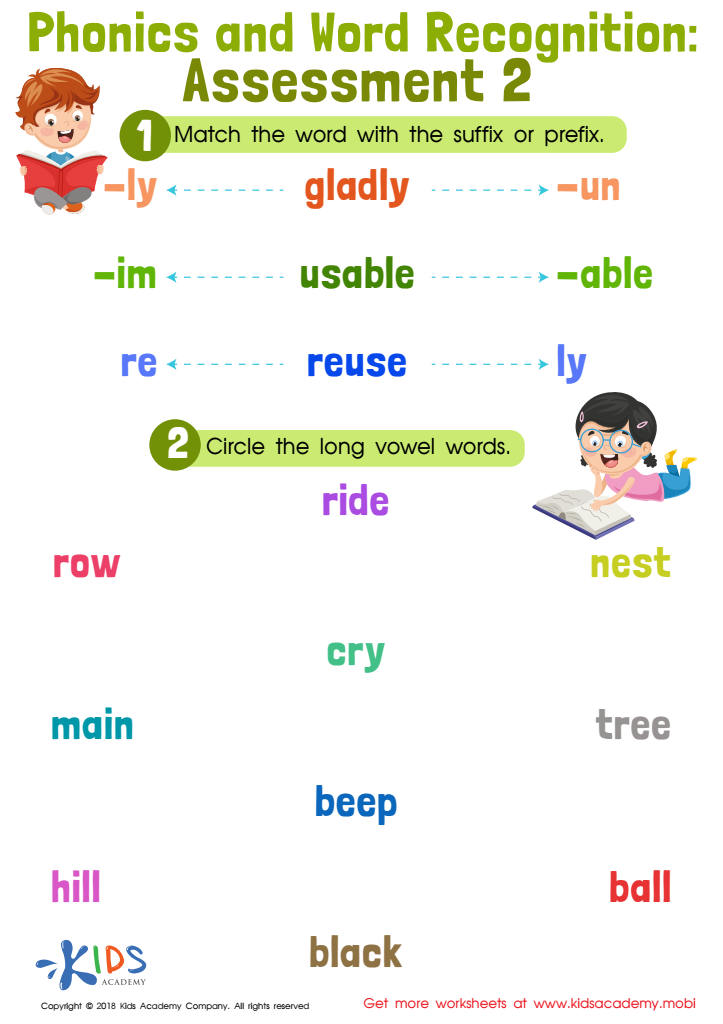
Phonics and Word Recognition: Assessment 2







Vowel activities are crucial for young learners aged 5-7 as they lay the foundation for reading and writing skills. At this stage, children are beginning to decode words and develop phonemic awareness, making vowels essential components of this process. Understanding vowels helps children recognize syllable patterns, and creates a pathway to better spelling and pronunciation.
Parents and teachers should prioritize vowel activities because they engage children in enjoyable and effective learning experiences. Interactive activities stimulate curiosity and reinforce learning through play. When children dovetail fun with education, their retention and understanding of vowel sounds improve dramatically.
Moreover, structured vowel activities provide immediate feedback, allowing both parents and teachers to identify areas in which a child may need additional support. These exercises help make learning tangible as they incorporate visual aids and hands-on techniques, accommodating different learning styles.
Ultimately, fostering a strong grasp of vowels solidifies a core literacy skill—reading fluency. This foundation not only prepares children for more complex literacy challenges but also instills a love for reading, paving the way for lifelong learning. By incorporating vowel activities, parents and teachers can create a more enriching educational journey for their children.








