Physical Science Worksheets Activities With Answers for Ages 6-8
6 filtered results
-
From - To
Unlock a world of discovery with our engaging Physical Science worksheets designed specifically for ages 6-8! These interactive activities help young learners explore fundamental concepts like matter, energy, and simple machines. Each worksheet includes clear instructions and comes with an answer key for educators and parents. Our fun and educational materials foster critical thinking and ignite curiosity in budding scientists. Perfect for classroom use, homeschooling, or enrichment programs, these Physical Science activities make learning enjoyable and accessible. Enhance your child’s understanding of the world around them while building foundational skills in science. Start exploring today and inspire a love for learning!
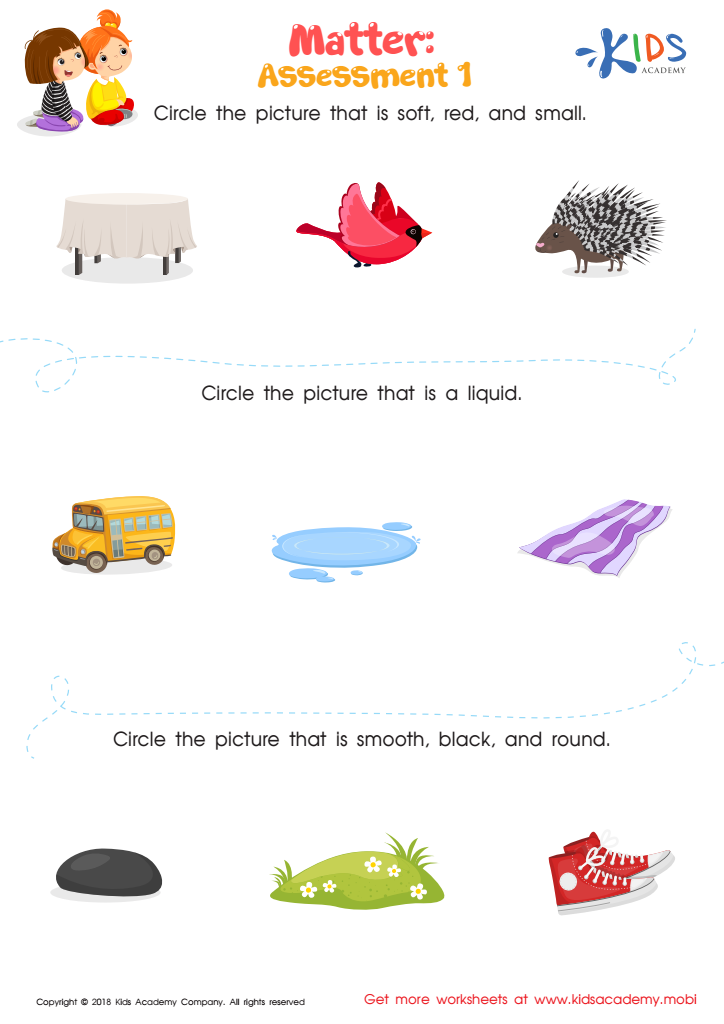
Matter: Assessment 1 Worksheet
 Assign to My Students
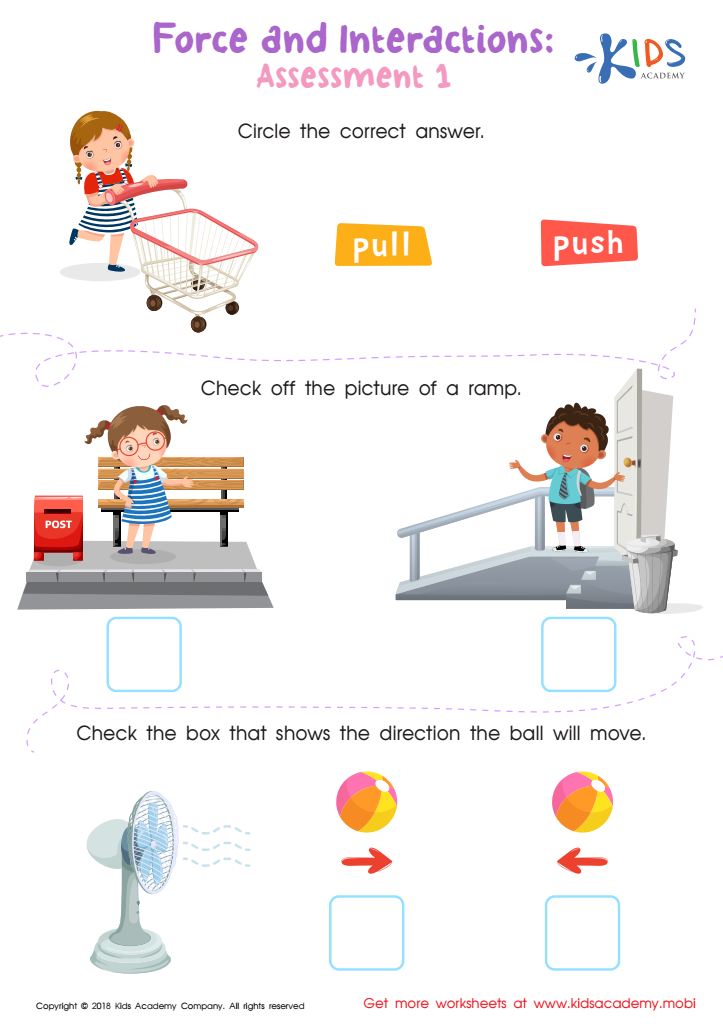
Force and Interactions: Assessment 1 Worksheet
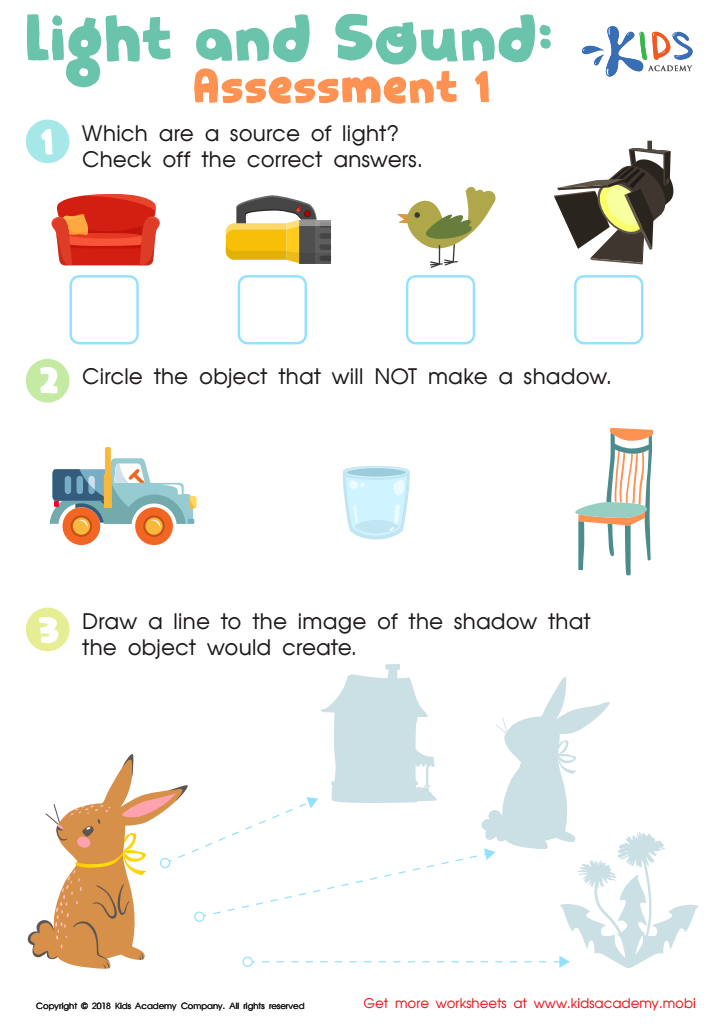
Light and Sound: Assessment 1 Worksheet
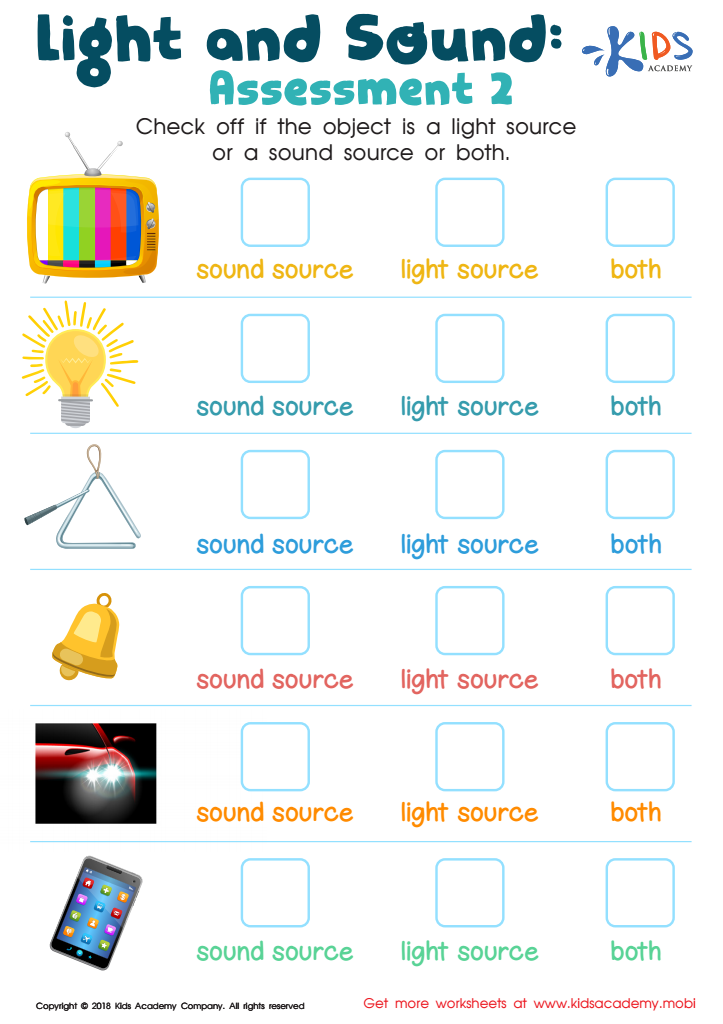
Light and Sound: Assessment 2 Worksheet
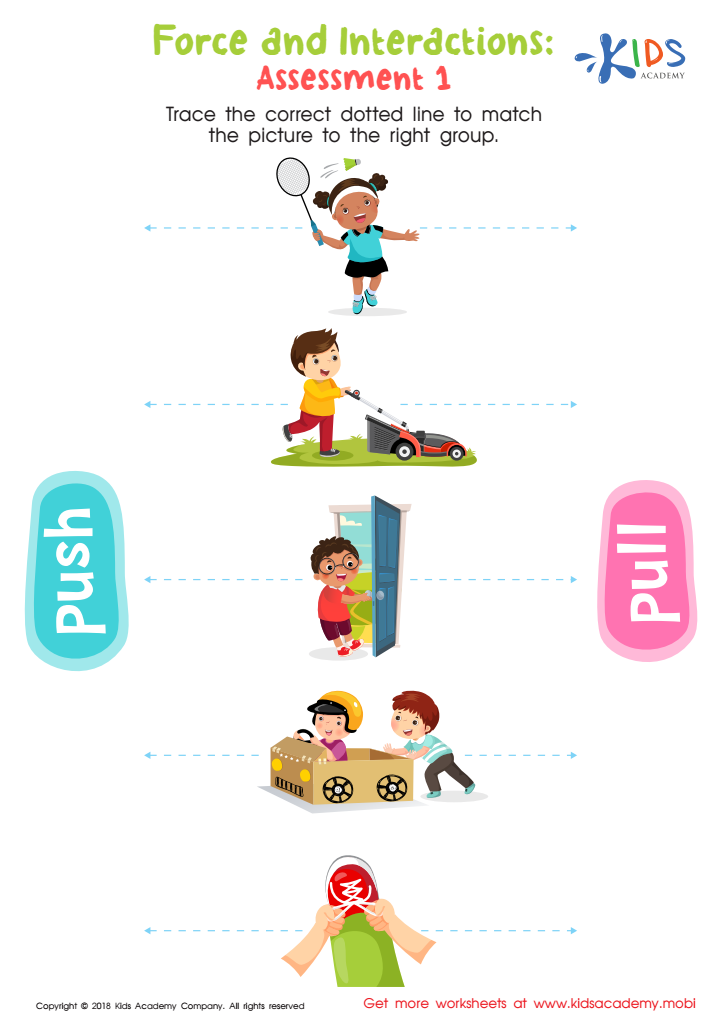
Force and Interactions: Assessment 2 Worksheet
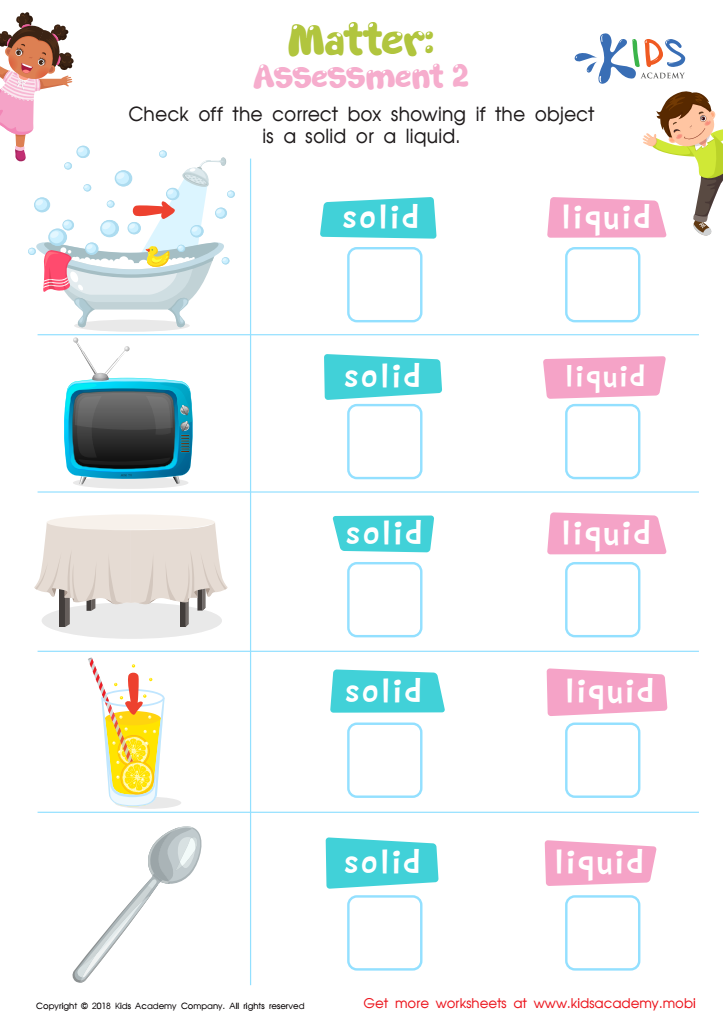
Matter: Assessment 2 Worksheet








Parents and teachers should prioritize Physical Science activities for ages 6-8 because they lay the foundation for early scientific literacy, critical thinking, and problem-solving skills. At this age, children are naturally curious and eager to explore their surroundings, making it an ideal time to introduce them to the basics of physical science, such as matter, force, motion, and energy. Engaging in hands-on activities encourages inquiry-based learning, allowing children to experiment, observe results, and draw conclusions, which fosters a deeper understanding of scientific concepts.
Moreover, these activities can enhance cognitive development and nurture creativity by integrating science with play. Providing structured activities with answers also serves to guide parents and teachers in facilitating effective learning experiences. This ensures that children do not only engage with the material but also gain confidence in their abilities to interpret and understand scientific principles.
Ultimately, focusing on Physical Science at this stage promotes a lifelong interest in science, preparing children for future academic challenges. It also helps them develop a sense of responsibility toward the environment and the world around them, which is vital for cultivating informed and conscientious global citizens. Thus, investing time in these activities can have lasting educational benefits.








