Tracing Worksheets Activities With Answers for Ages 6-8 - Page 7
147 filtered results
-
From - To
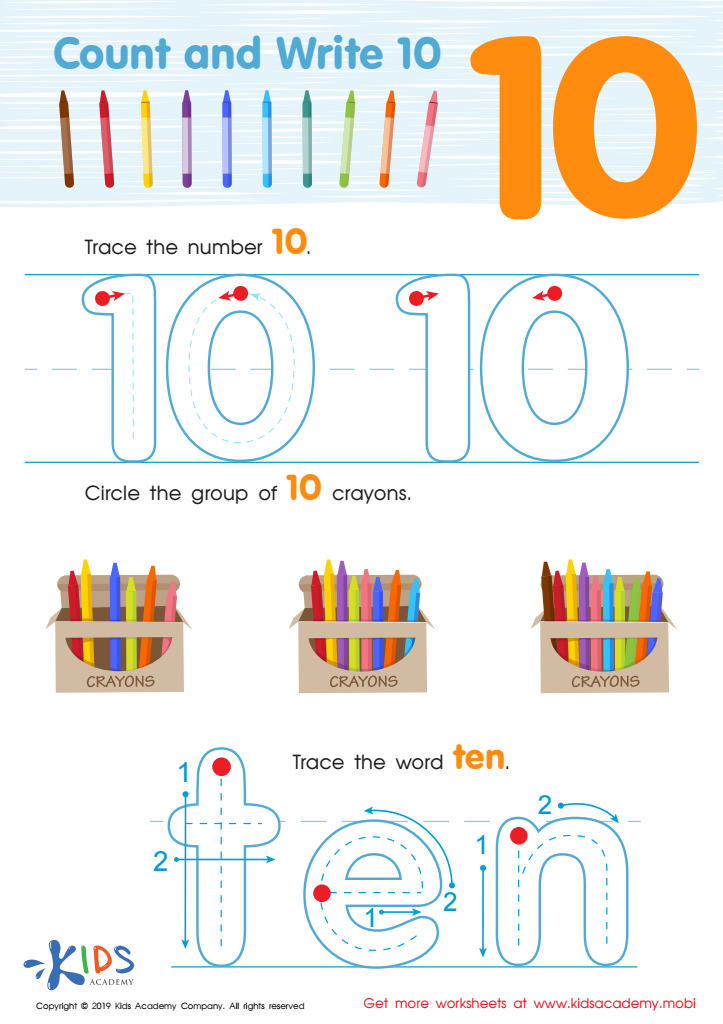
Count and Write 10 Worksheet
 Assign to My Students
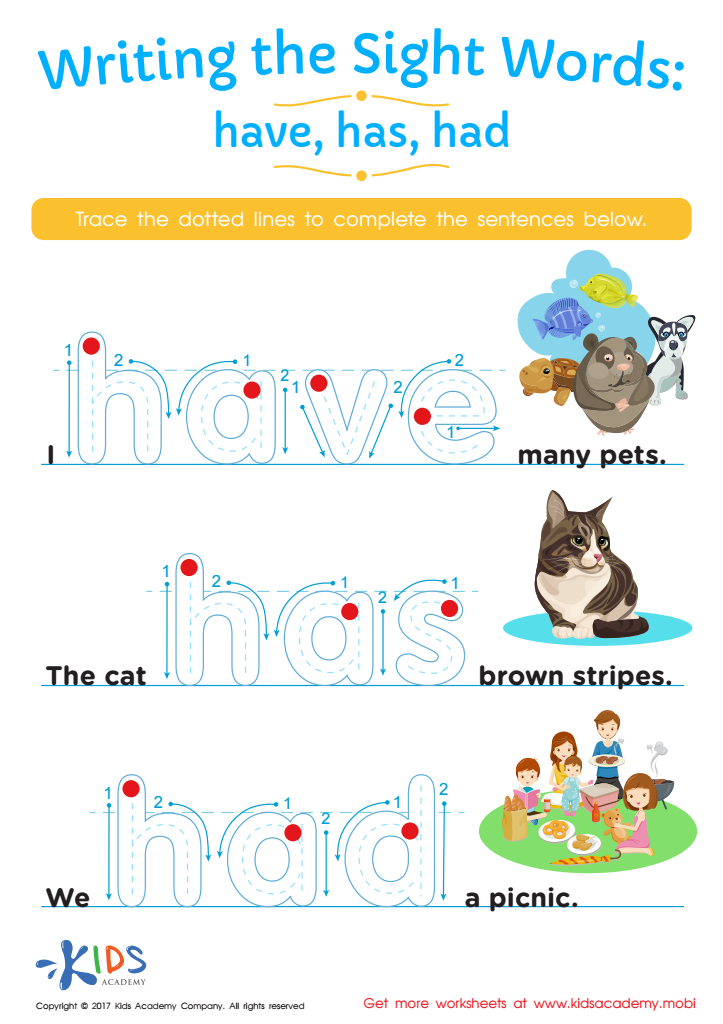
Have, Has, Had Worksheet Sight Words Worksheet
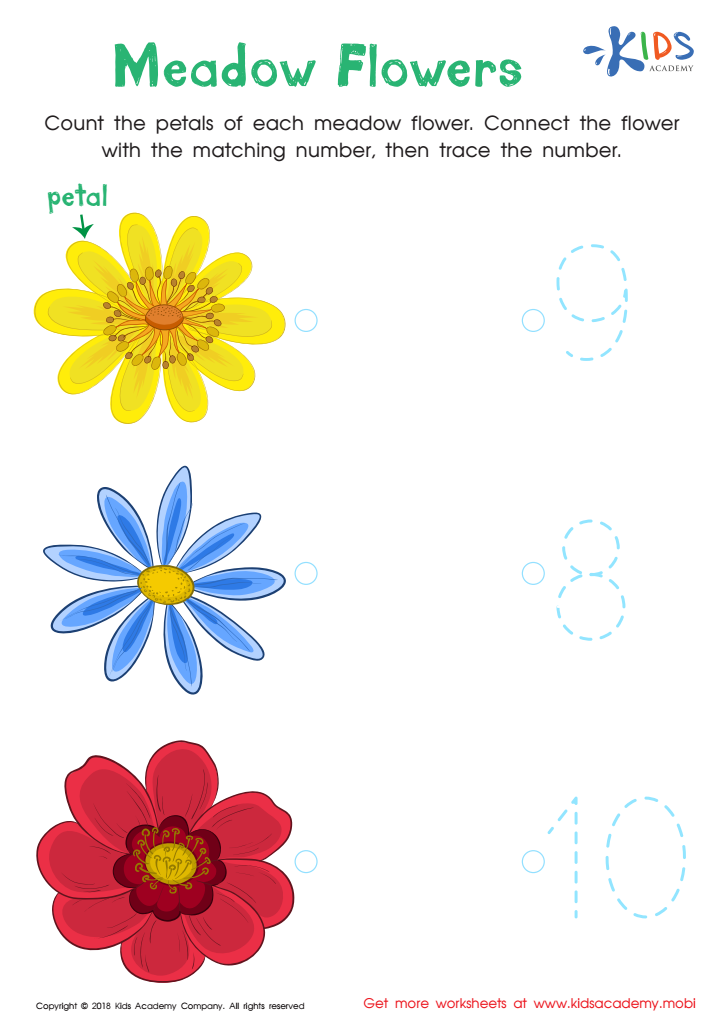
Kindergarten Number Tracing: Medow Flowers Worksheet







Tracing activities for children aged 6-8 offer numerous benefits that both parents and teachers should prioritize. Firstly, these activities enhance fine motor skills, vital for tasks like writing, drawing, and daily self-care routines. As children trace letters, shapes, and patterns, they strengthen the small muscles in their hands, promoting better control and coordination.
Furthermore, tracing supports literacy development. By tracing letters and words, children familiarize themselves with letter formation and word recognition, laying the groundwork for reading and writing. This practice also boosts their confidence; mastering the skill of writing can encourage a positive attitude toward learning.
Cognitively, tracing activities stimulate critical thinking and creativity. They foster the ability to focus and pay attention, essential skills for academic success. When children creatively engage in tracing art or patterns, they express their individuality, enhancing their self-esteem and creative development.
Additionally, these activities can be easily integrated into daily routines, making learning enjoyable and interactive. Ultimately, tracing activities provide essential developmental support and foster an environment where children can learn and explore freely. Parents and teachers should embrace these activities as a fun, educational tool that benefits growth across multiple domains.








