Middle Sounds Worksheets for Ages 3-8
4 filtered results
-
From - To
Discover our engaging Middle Sounds Worksheets designed specifically for children aged 3-8! These printable resources help young learners develop vital phonemic awareness by focusing on the middle sounds of words. Each worksheet features a variety of fun exercises, including word matching, fill-in-the-blank activities, and interactive games that make learning enjoyable. Ideal for both home and classroom settings, our materials support early literacy development and foster a love for reading. By incorporating these worksheets into your teaching toolkit, you’ll provide children with the skills they need to blend sounds and read confidently. Start exploring our Middle Sounds Worksheets today!
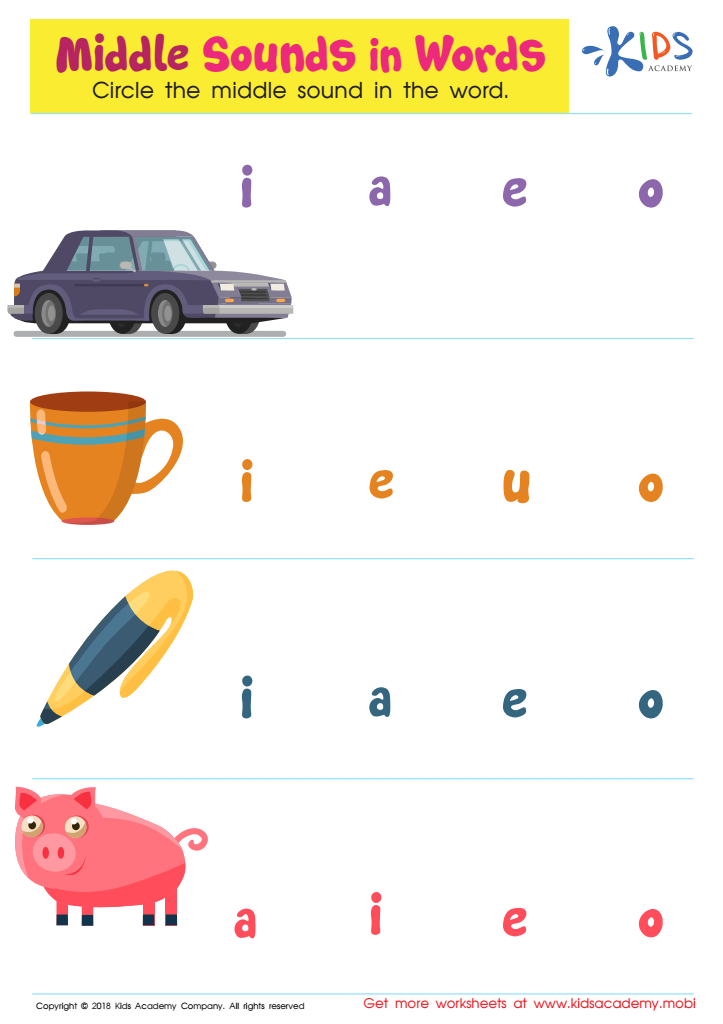
Middle Sounds in Words Worksheet
 Assign to My Students
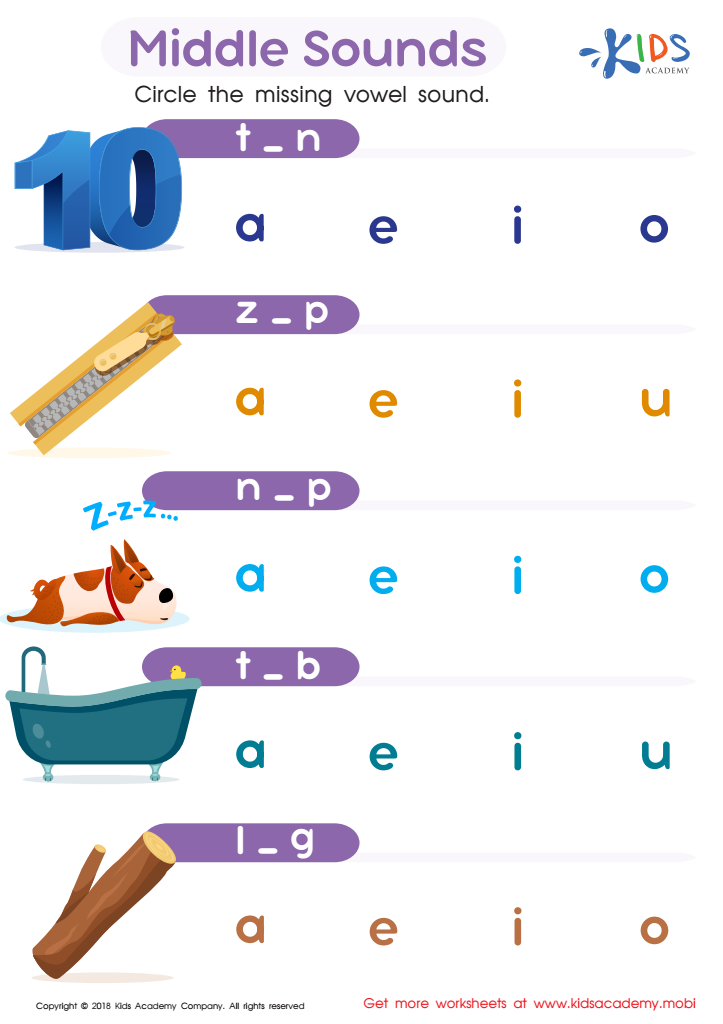
Middle Sounds Worksheet
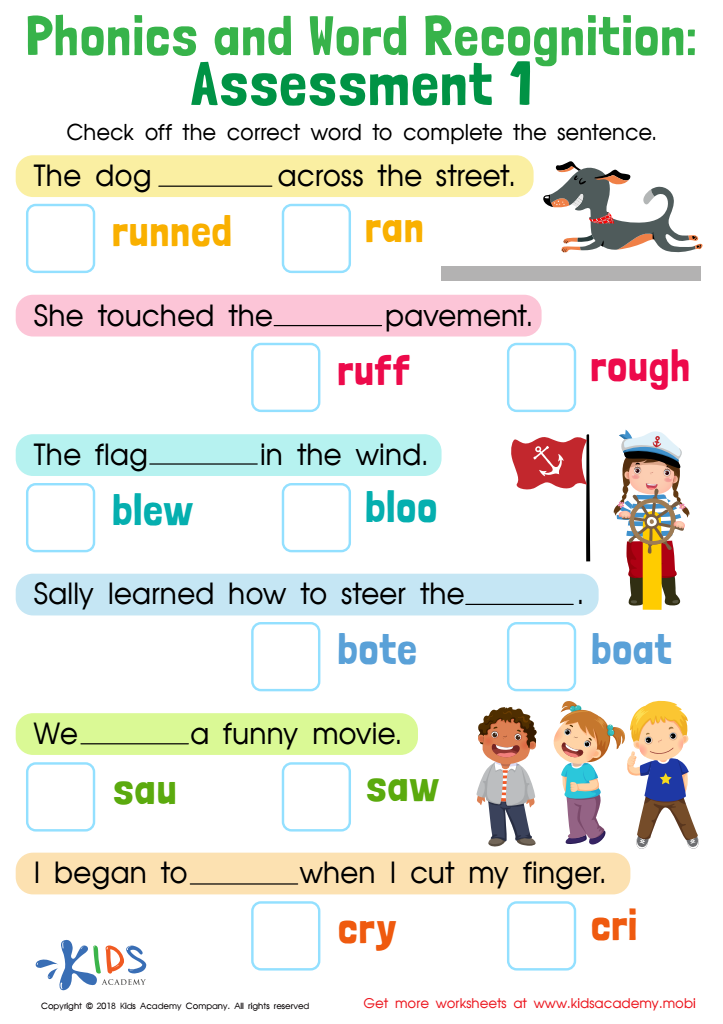
Phonics and Word Recognition: Assessment 1 Worksheet
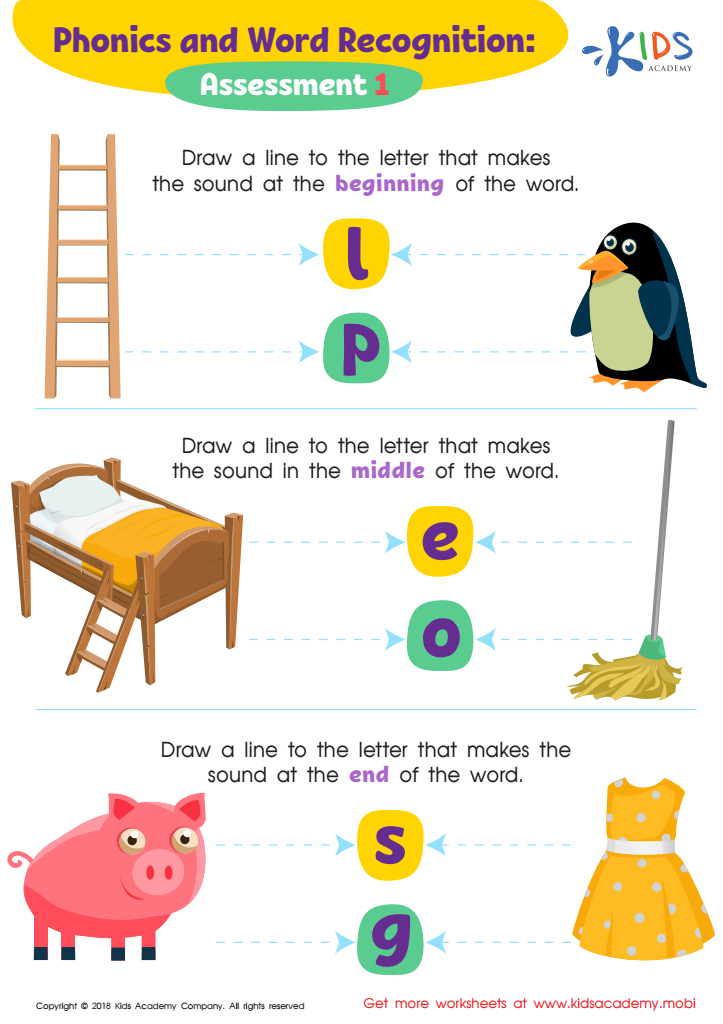
Phonics and Word Recognition: Assessment 1 ELA Worksheet





Middle sounds, often referred to as medial sounds, are the vowel or consonant sounds that occur in the middle of words. For children aged 3-8, understanding and articulating these middle sounds are critical components of early literacy development. Parents and teachers should prioritize middle sounds because they play a crucial role in phonemic awareness—the ability to hear, identify, and manipulate sounds in spoken words.
Recognizing middle sounds enhances a child’s reading skills. For instance, when a child can identify the central sound in words like “cat,” “bed,” or “dog,” they develop the skills to decode and spell other similar words. This built foundation facilitates more advanced reading comprehension, preparing them for future learning.
Additionally, focusing on middle sounds fosters vocabulary expansion. When children can manipulate sounds, they become more adept at playing with language and creating new words, which empowers their expression and creativity.
Overall, emphasizing middle sounds supports not just reading and writing, but also listening, speaking, and critical thinking skills. By nurturing this understanding early on, parents and teachers set a solid groundwork for their child's educational journey, ensuring they are better prepared for academic challenges ahead.








