Historical Knowledge Multiplication Worksheets for Ages 3-9
5 filtered results
-
From - To
Discover our engaging Historical Knowledge Multiplication Worksheets designed specifically for children ages 3-9. These unique worksheets combine essential multiplication skills with captivating historical facts, making learning both fun and educational. Each activity is crafted to enhance your child's math abilities while sparking their interest in history. Perfect for teachers and parents, our resources provide a rich, interactive experience that cultivates a love for numbers and historical understanding. Boost your child's confidence in math with our thoughtfully designed materials, ensuring they grasp multiplication concepts effortlessly. Transform learning into an exciting journey through time!
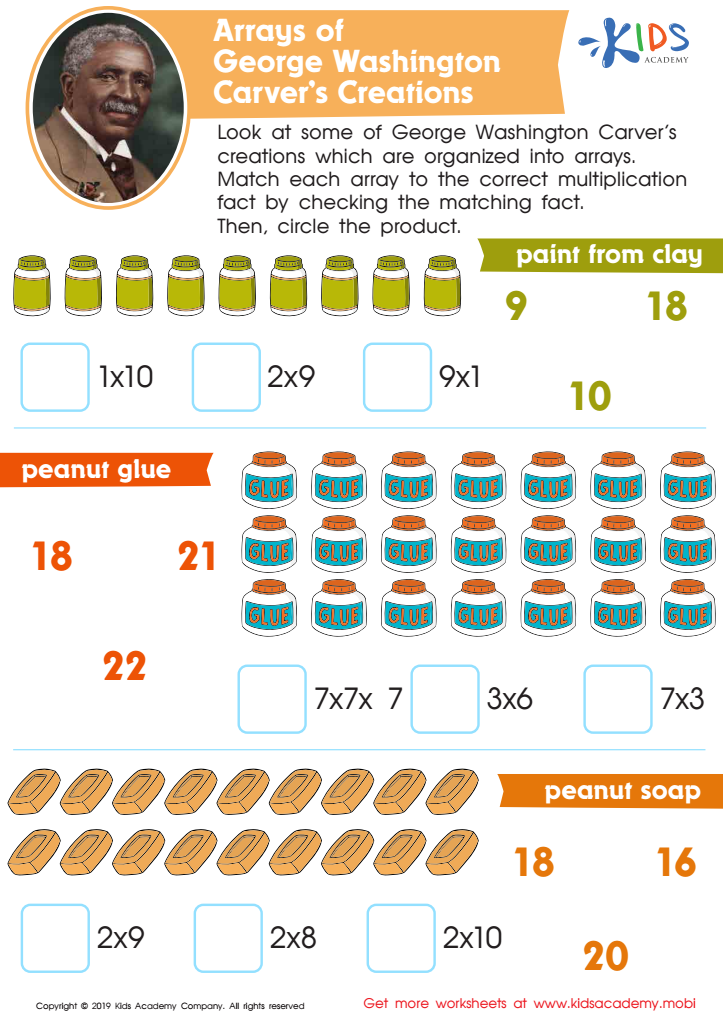
Arrays of George Washington Carver’s Creations Worksheet
 Assign to My Students
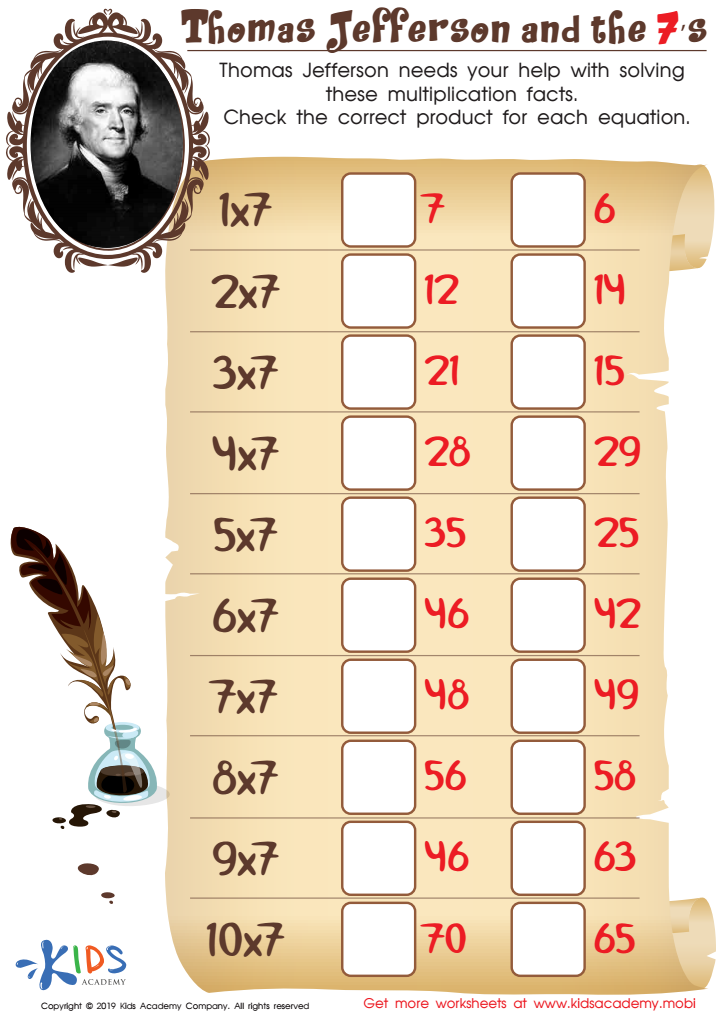
Thomas Jefferson and the 7’s Worksheet
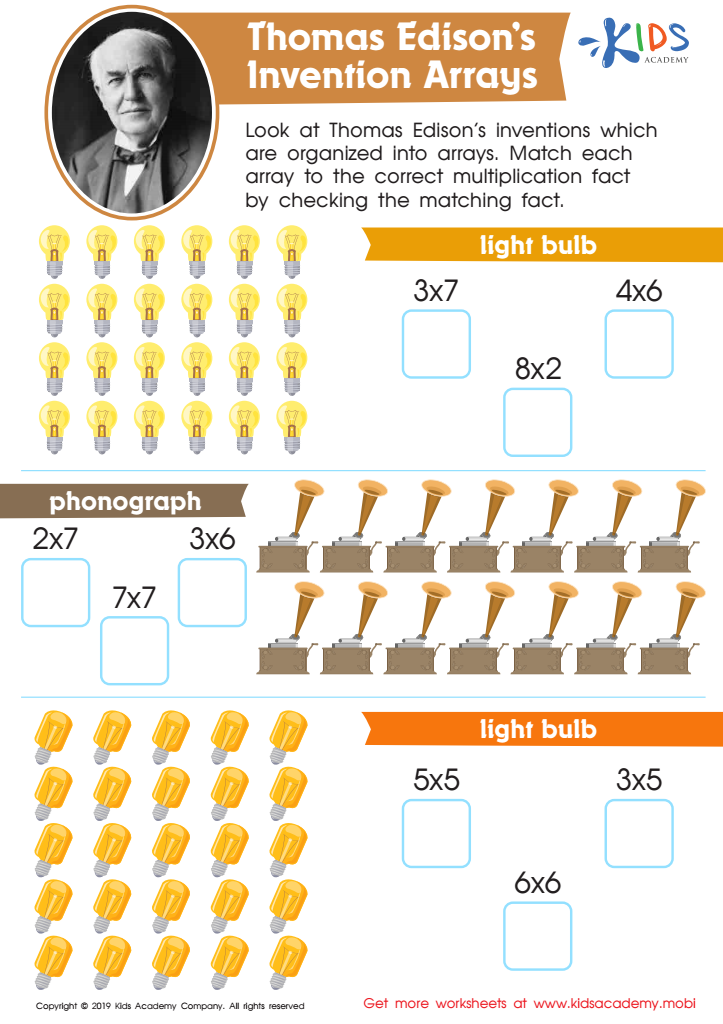
Thomas Edison’s Invention Arrays Worksheet
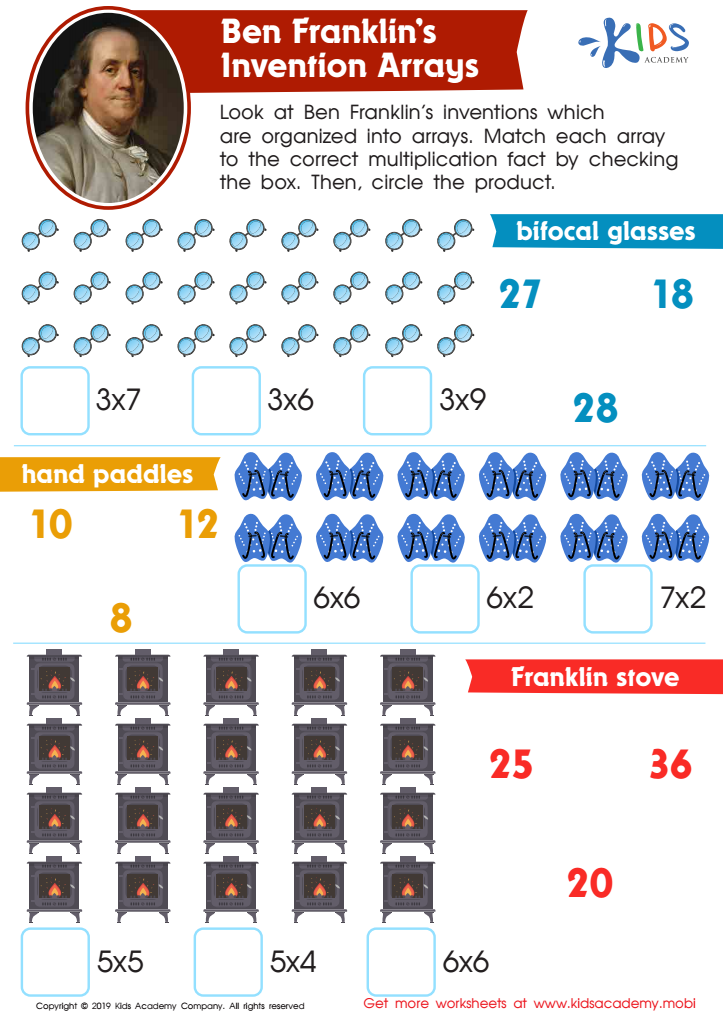
Ben Franklin’s Invention Arrays Worksheet
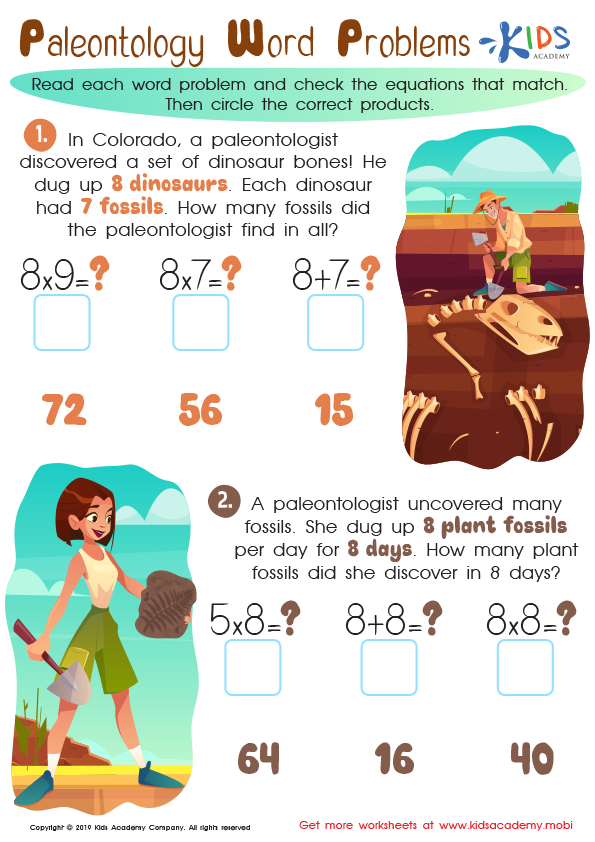
Archeology Word Problems Worksheet








Introducing Historical Knowledge Multiplication to children aged 3-9 enriches their cognitive and emotional development and provides a groundwork for lifelong learning. At such a formative age, children are highly receptive and curious, making it an ideal time to nurture an appreciation for history. Learning about past events, cultures, and significant figures not only expands their worldview but also enhances their understanding of the present.
These early lessons in history can develop critical thinking skills. When children compare different time periods, recognize cause-and-effect relationships, and see how past events shape today's world, they practice analytical thinking. Stories from history also improve their listening and comprehension skills while igniting imagination and empathy.
Furthermore, exposure to historical figures and cultural narratives instills values such as perseverance, justice, and the importance of diversity. Hearing about historical struggles and triumphs can spark a sense of inspiration and moral development. Adults can tailor historical content to be age-appropriate, using stories, multimedia resources, and activities to make learning engaging and interactive.
Overall, putting a strong emphasis on historical knowledge prepares children to become well-rounded individuals, capable of critical thought, empathy, and informed citizenship, laying a solid foundation for both personal and academic growth.








