Animals Worksheets for Ages 4-7 - Page 3
52 filtered results
-
From - To
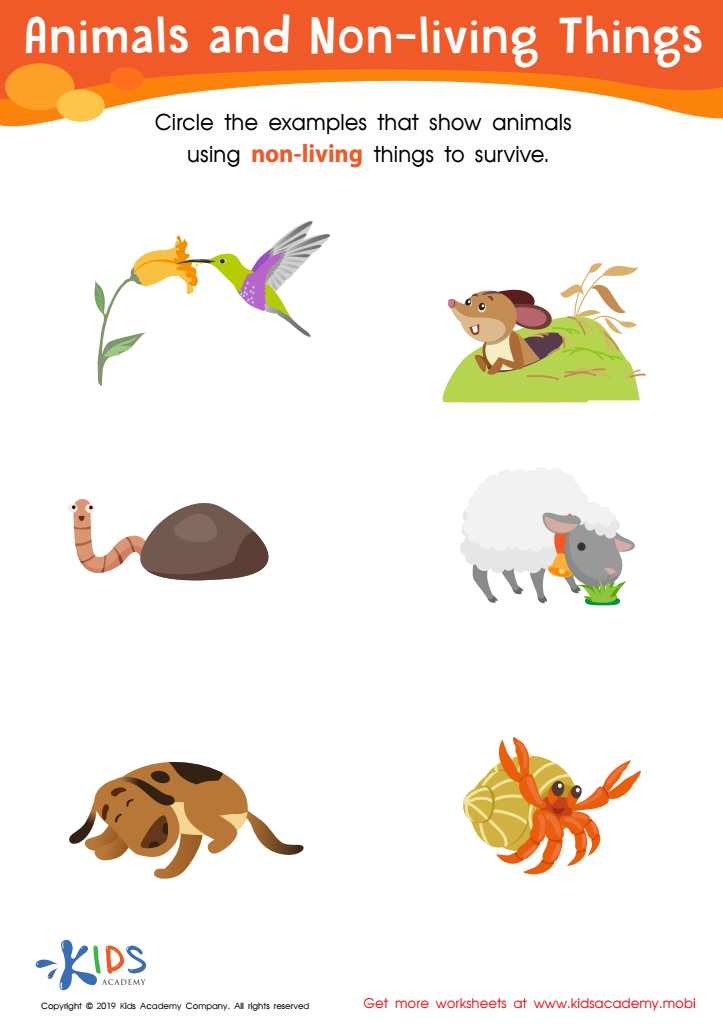
Animals and Non-Living Things Worksheet
 Assign to My Students
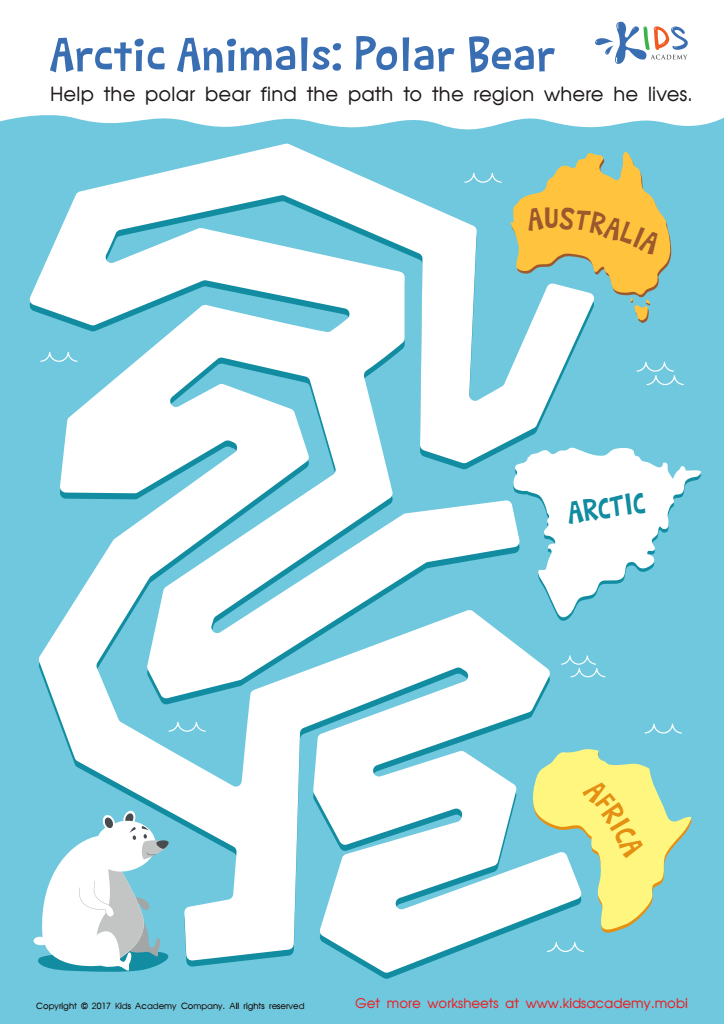
Arctic Animals: Polar Bear Worksheet
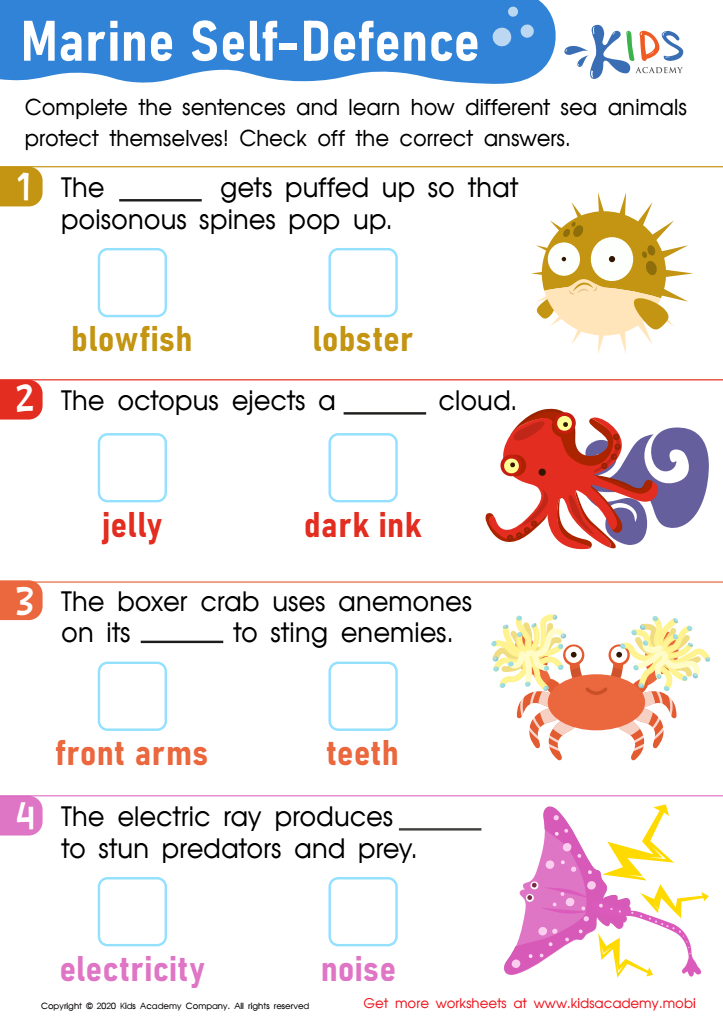
Marine Self-Defence Worksheet
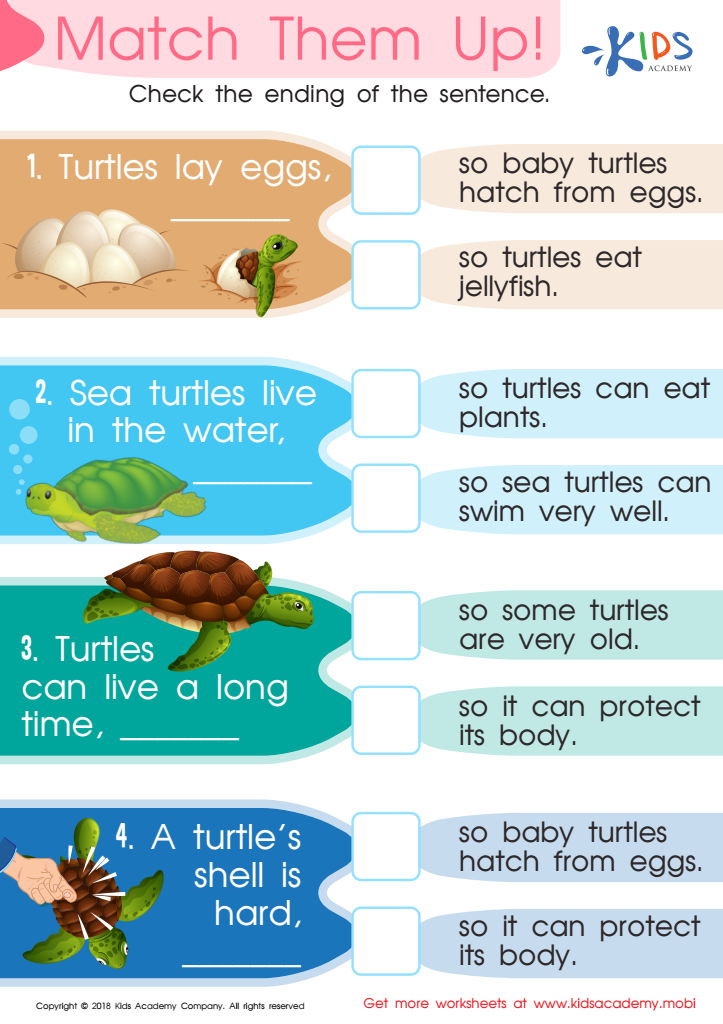
Match Them Up Worksheet








Parents and teachers should care about animals for children aged 4-7 because these early years are crucial for developing empathy, compassion, and responsibility. Interacting with animals can help children understand life processes and the environment, fostering a sense of connection to nature. By learning about different species, children can appreciate biodiversity and the roles animals play in our ecosystem.
Engaging with animals also aids in social and emotional development. Children who care for pets or learn about wildlife are often more empathetic and better at expressing their feelings. Activities related to animals, like nature walks or visits to zoos, inspire curiosity and motivate learning about biology, ecology, and even math through counting and measuring.
Furthermore, animals can be conduits for valuable life lessons, teaching children about friendship, respect, and the importance of caring for those who can't speak for themselves. Overall, incorporating animals into education encourages a well-rounded, compassionate approach to learning and help nurture responsible future citizens who respect all living beings. Thus, fostering a positive attitude towards animals can enrich a child’s worldview and instill values that last a lifetime.








