Reading Non-Fiction Worksheets for Ages 4-8 - Page 5
97 filtered results
-
From - To
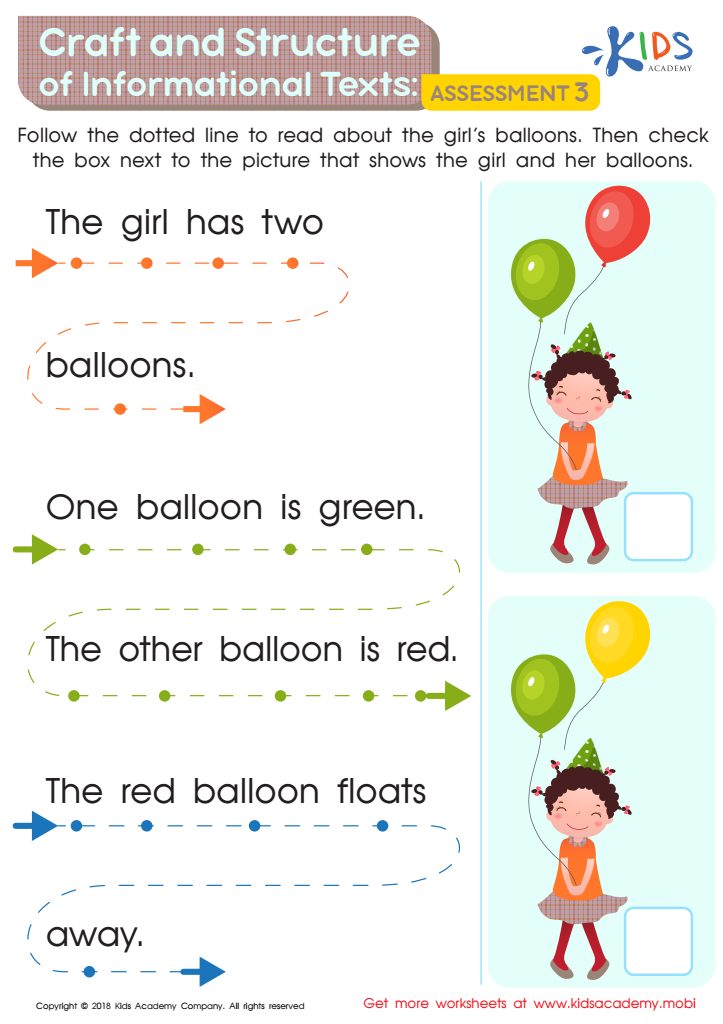
Craft and Structure of Informational Texts: Assessment 3 Worksheet
 Assign to My Students







Reading non-fiction to children aged 4-8 is incredibly valuable for their development. First, it broadens their understanding of the world. While fiction stimulates imagination and creativity, non-fiction introduces them to factual information about their surroundings, nature, history, and different cultures. For instance, a book about animals can ignite a lifelong interest in wildlife conservation.
Second, engaging with non-fiction helps develop critical thinking skills. Young children learn to differentiate between factual information and opinions, and to ask questions about what they’re learning—skills essential for their future education.
Additionally, non-fiction enhances vocabulary and comprehension skills. Children are exposed to specific terminology related to various subjects—science, geography, or technology—that they might not encounter in daily conversation or through fiction.
Reading non-fiction also inspires real-world applications. A book on simple machines, for instance, might motivate a child to build something themselves, thus integrating learning with hands-on experiences.
Emotionally, children gain confidence and independence when they can share accurate information with peers and adults. For these reasons, both parents and teachers should prioritize including non-fiction in reading routines. This blend of factual and imaginative content builds a balanced intellectual foundation and fosters lifelong learning habits.








