Upper & Lowercase Letters Worksheets for Ages 4-9 - Page 3
50 filtered results
-
From - To
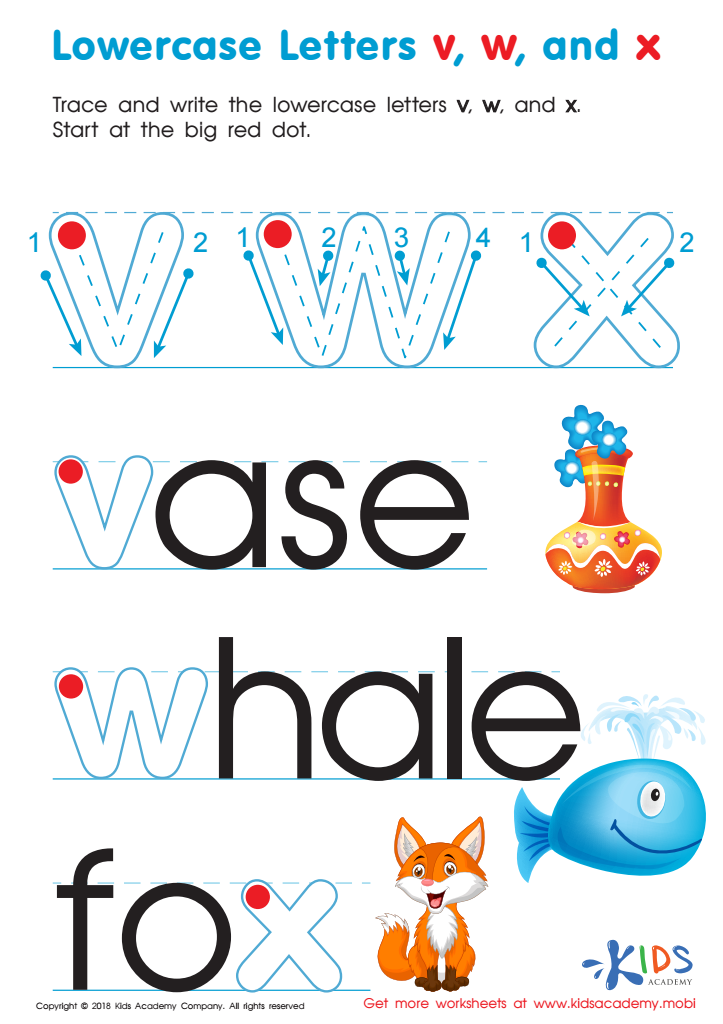
Lowercase Letters v w x Worksheet
 Assign to My Students


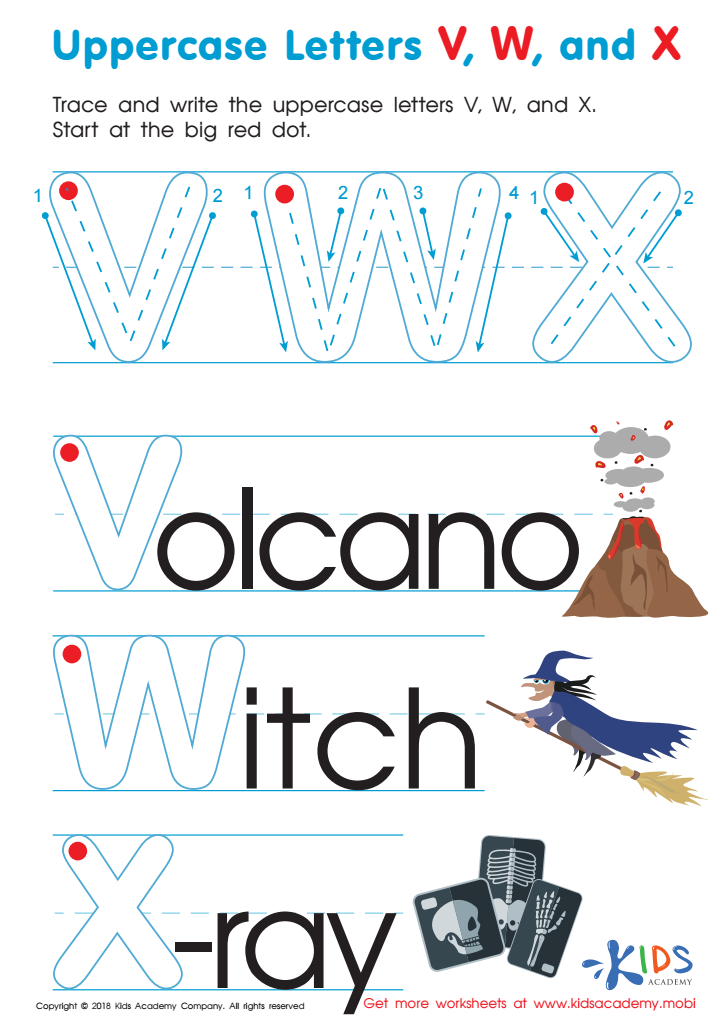
Uppercase Letters V, W, and X Worksheet






Understanding upper and lowercase letters is crucial for children aged 4-9, laying the foundation for reading and writing skills. Recognizing and differentiating between these letters helps children grasp the alphabet, essential for decoding words and understanding phonics. This early literacy skill supports their overall language development.
When children learn both upper and lowercase letters, they become aware of the different contexts in which each is used, such as at the beginning of sentences or in proper nouns. Teaching this distinction promotes better spelling and grammar, which are critical components of effective communication. In addition, familiarity with these letters fosters a sense of confidence in writing, as children can start to form their own sentences and express their thoughts.
Moreover, engaging with both letter cases enhances fine motor skills through writing practice. Teachers and parents can support this by providing fun activities, such as games and storytelling that incorporate both letter types. Overall, prioritizing upper and lowercase letter recognition ensures that children develop essential literacy skills, setting them up for academic success and fostering a lifelong love of reading and writing.







