Long Vowels Worksheets for Ages 5-7 - Page 2
29 filtered results
-
From - To
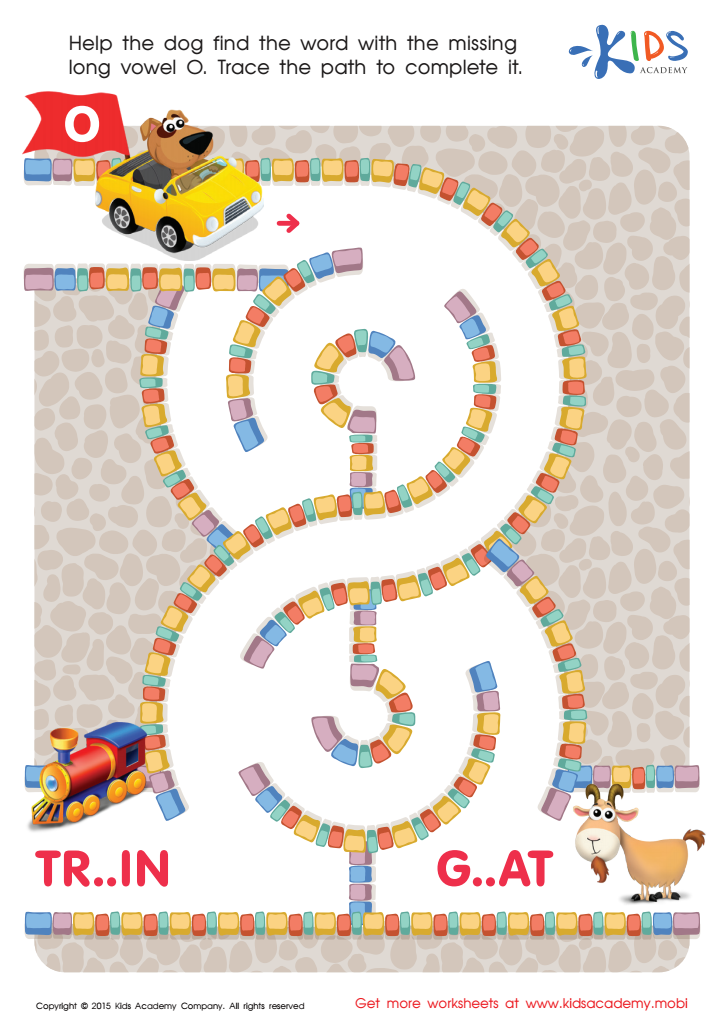
Long Vowel Sound O Worksheet
 Assign to My Students
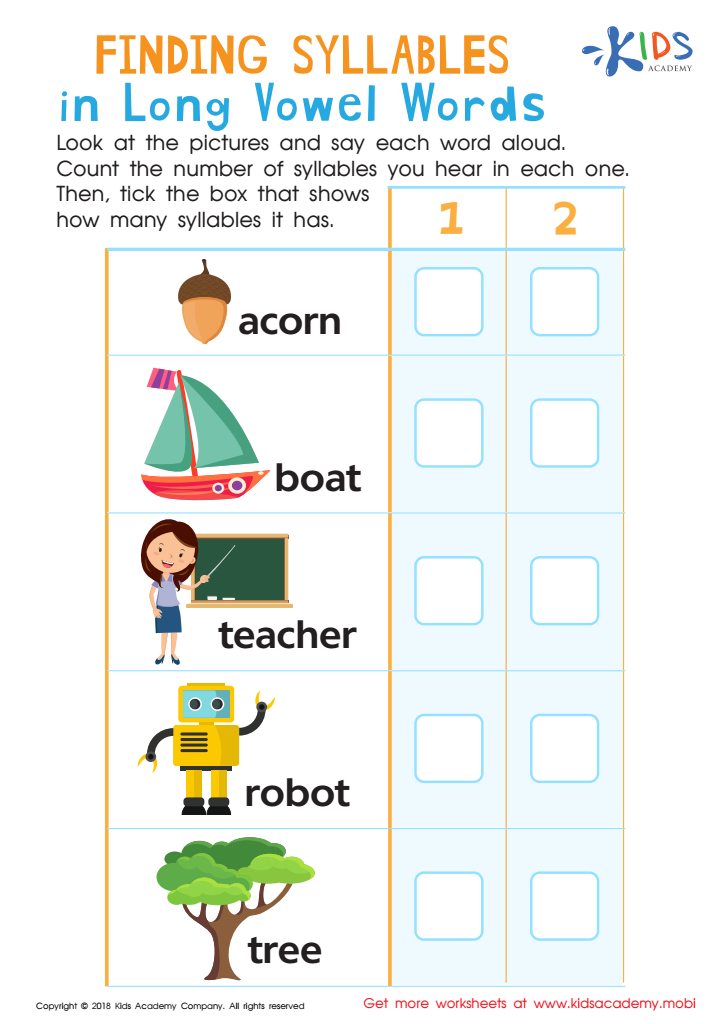
Finding Syllables in Long Vowel Words Worksheet
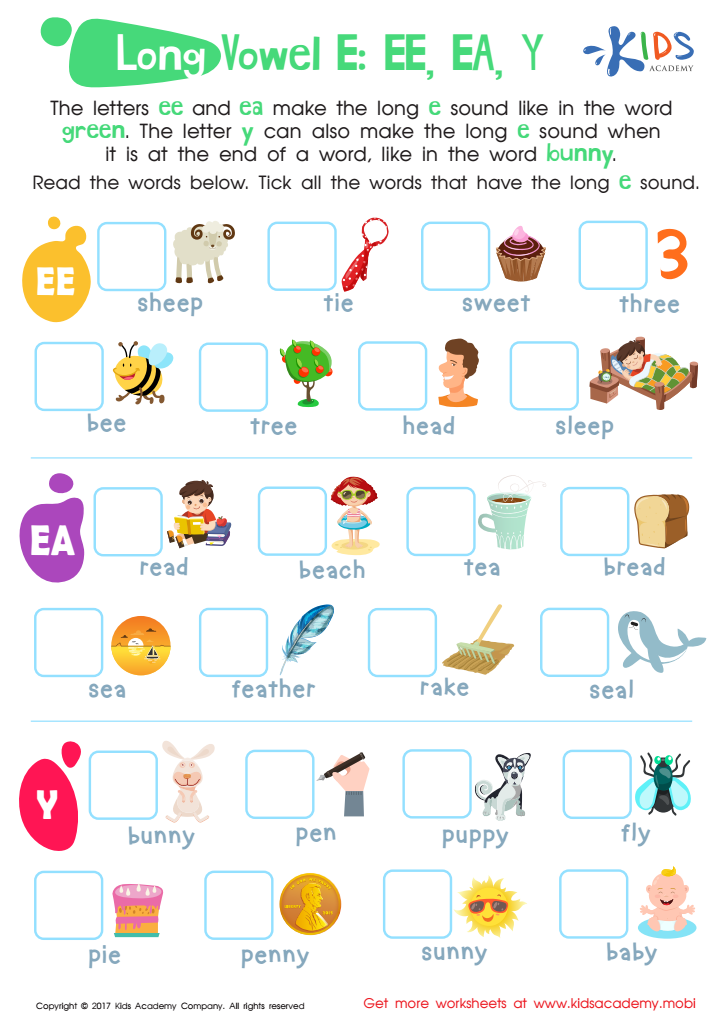
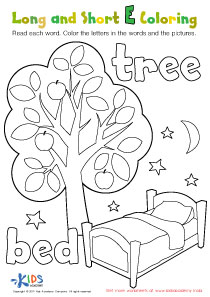
Long Vowel E Printable
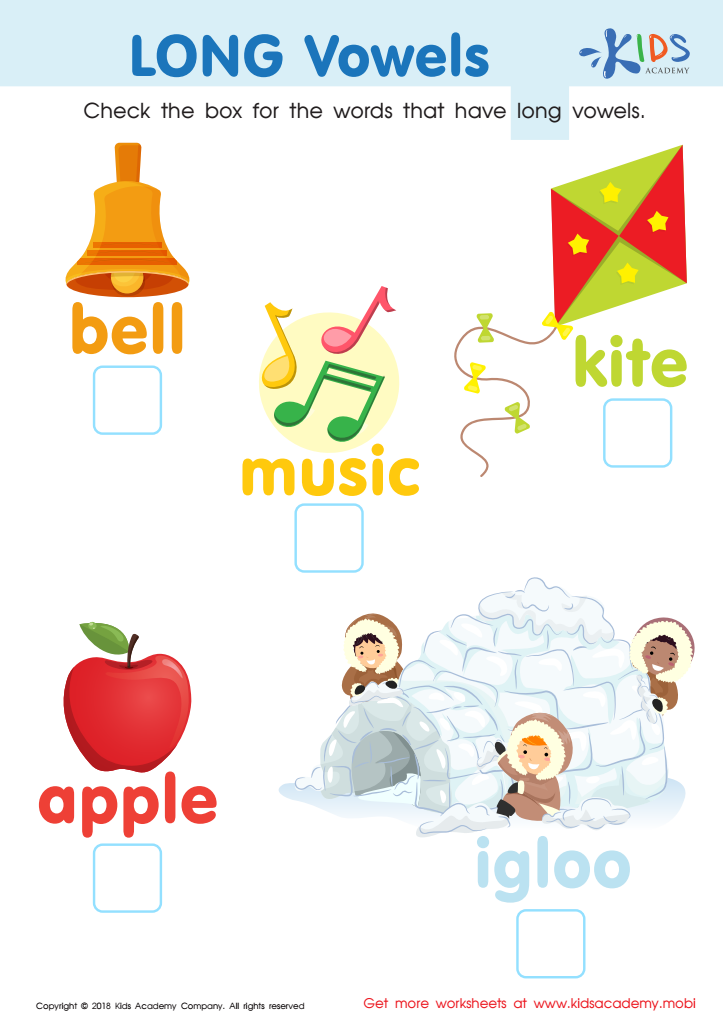
long vowels Worksheet
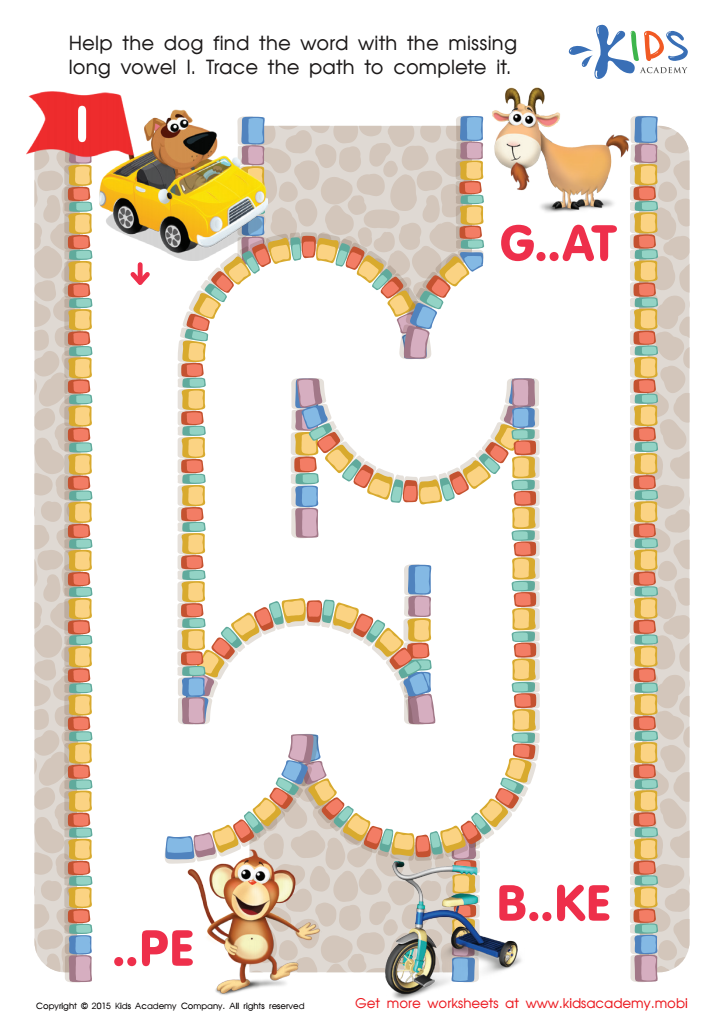
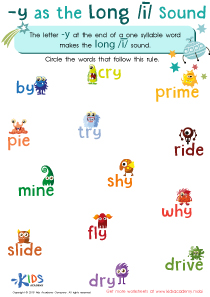
Long Vowel Sound I Worksheet



Long vowels play a crucial role in early literacy development for children aged 5-7, which is why parents and teachers should pay close attention to them. Understanding long vowels—vowel sounds that are pronounced the same as their letter names (like "a" in "cake" or "e" in "these")—is key to unlocking reading and writing skills. Mastering these sounds helps children become more proficient readers, as it allows them to decode words accurately and understand phonetic patterns.
Moreover, long vowels are integral to spelling. When children grasp the concept of long vowel sounds, they can spell various words more effectively, leading to improved writing skills.
In addition to academic benefits, learning about long vowels boosts a child’s confidence. As they successfully identify and apply these sounds, they develop a sense of accomplishment that motivates further learning.
In summary, parents and teachers should care about long vowel instruction because it builds essential foundations for literacy, supports spelling and writing, and fosters self-confidence in learners, setting them on a path to becoming successful readers and communicators.