Silent Vowels Worksheets for Ages 5-7
4 filtered results
-
From - To
Introduce young learners to the fascinating world of silent vowels with our "Silent Vowels Worksheets for Ages 5-7". Designed to enhance reading and spelling skills, these worksheets offer engaging exercises that help children recognize and understand silent vowels within words. Each activity features vibrant illustrations and easy-to-follow instructions to keep kids motivated and interested. Perfect for building a strong foundation in phonics, these worksheets prepare young readers for advanced literacy skills. Boost your child's confidence and make learning fun with our expertly designed silent vowel worksheets. Explore and download now to enrich your child's educational journey!
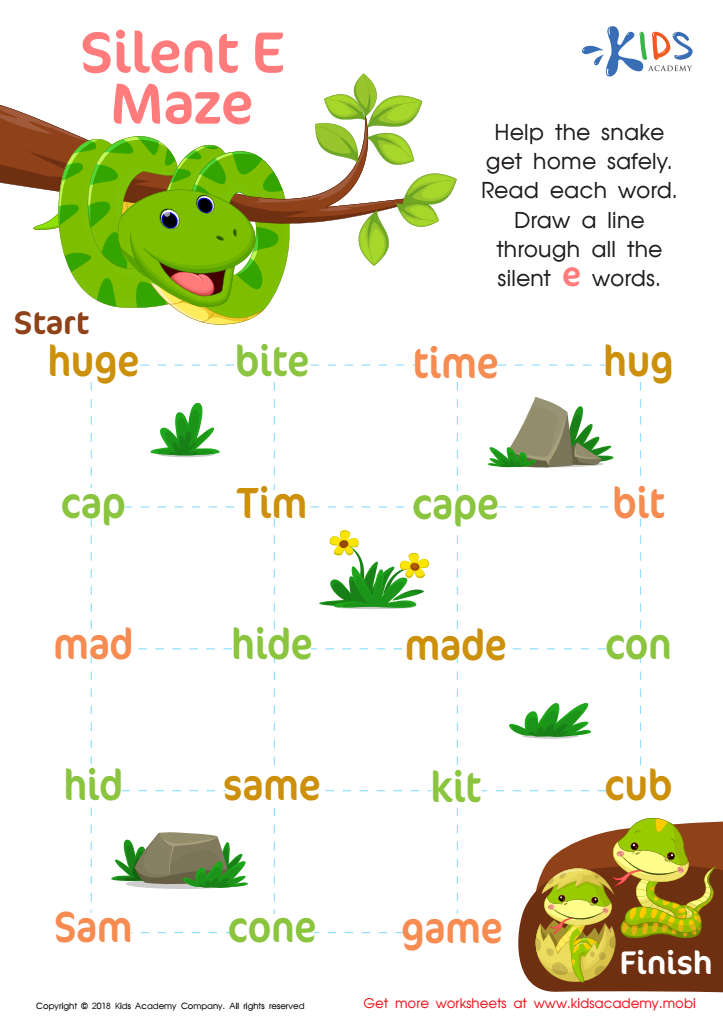
Silent E Maze Worksheet
 Assign to My Students
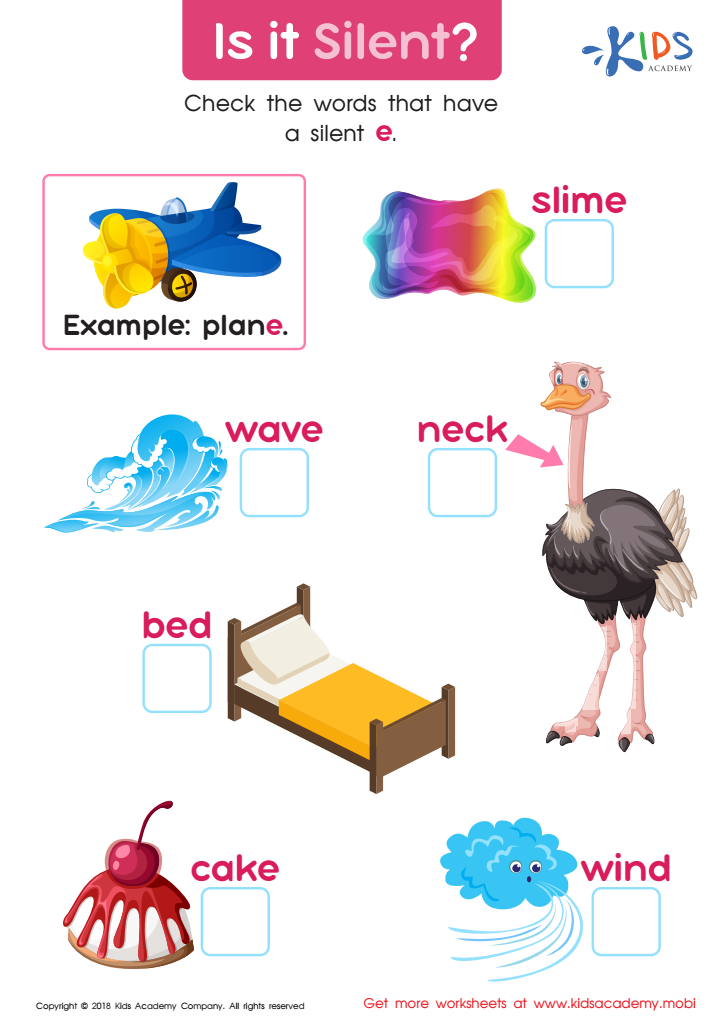
Is It Silent? Worksheet
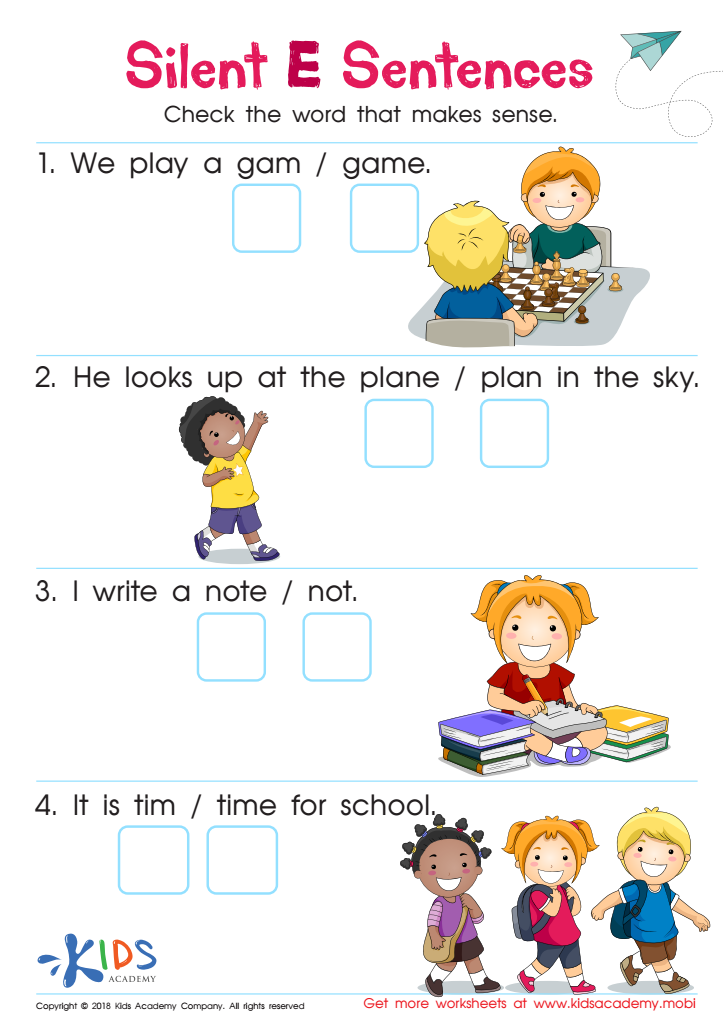
Silent E Sentences Worksheet
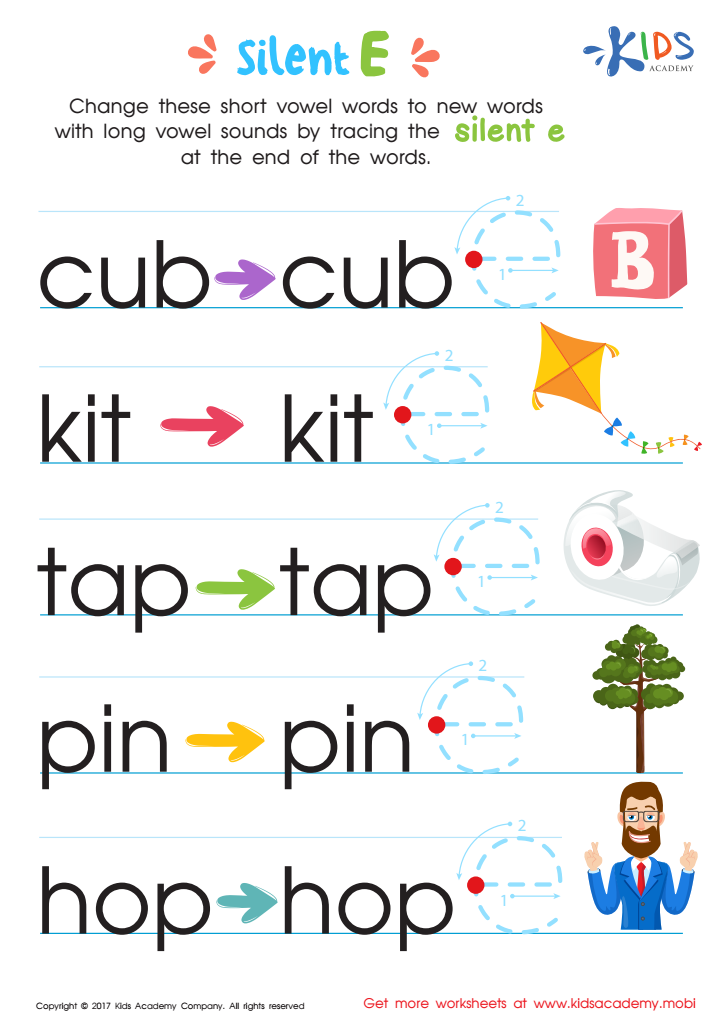
Silent E Words Worksheet


Silent vowels are an essential aspect of early literacy that parents and teachers should focus on for children aged 5-7. This age is a critical period for developing reading and writing skills, and understanding silent vowels can significantly aid in this process.
Silent vowels are vowels that appear in words but are not pronounced. For instance, the 'e' in 'cake' or the 'a' in 'beautiful' are not heard when speaking the word. Learning silent vowels helps children understand the relationship between written and spoken English. This understanding is crucial for decoding words and improving reading fluency. When children grasp the concept of silent vowels, they are better equipped to tackle unfamiliar words, enhancing their confidence and competence in reading.
Furthermore, grasping silent vowels can improve spelling skills. Knowing why certain letters are included in words, even if they're silent, aids in visual memory and reduces confusion over correct spelling. This can be particularly beneficial for children who struggle with irregular spellings and the numerous exceptions that exist in the English language.
In conclusion, paying attention to silent vowels can significantly boost a child's reading, writing, and spelling capabilities, providing a stronger foundation for future literacy development. Therefore, parents and teachers should prioritize this aspect of phonics instruction for young learners.