Middle Vowel Worksheets for Ages 5-8
4 filtered results
-
From - To
Unlock your child's reading potential with our engaging Middle Vowel Worksheets designed for ages 5-8! These interactive resources help young learners master the vital concept of middle vowels in words. With colorful illustrations and fun activities, students will practice identifying and working with middle vowel sounds, enhancing their phonemic awareness and boosting early literacy skills. Perfect for classroom settings or at-home learning, our worksheets make learning exciting and accessible. Parents and educators can easily print and use these materials to support phonics instruction. Dive into a world of literacy with our middle vowel worksheets and watch your child thrive!
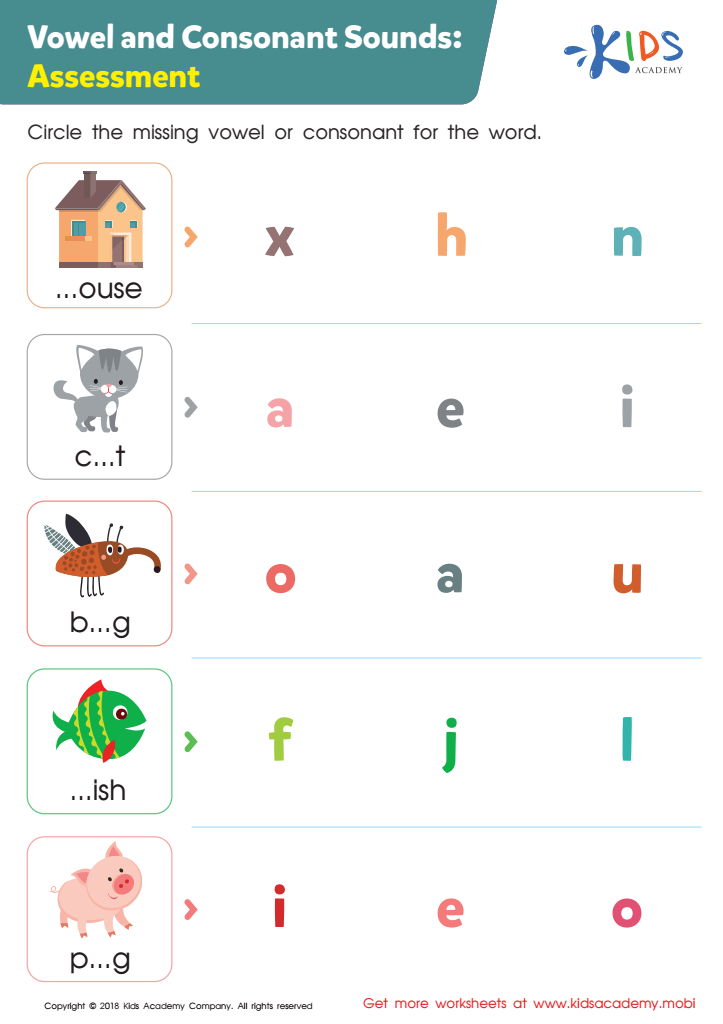
Vowel and Consonant Sounds: Assessment Worksheet
 Assign to My Students
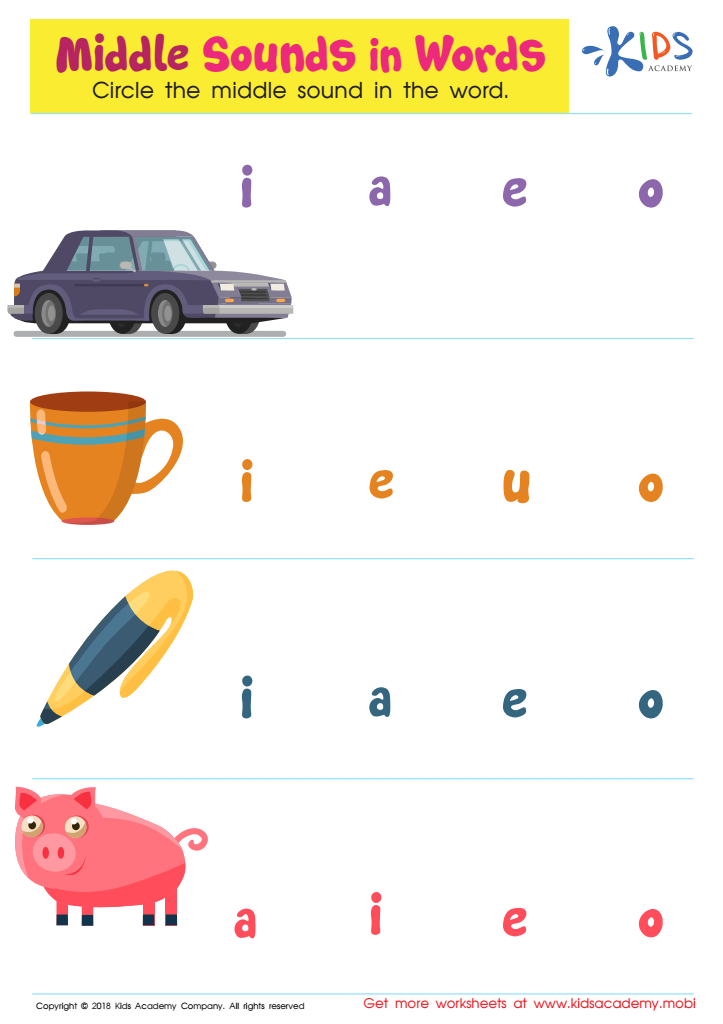
Middle Sounds in Words Worksheet
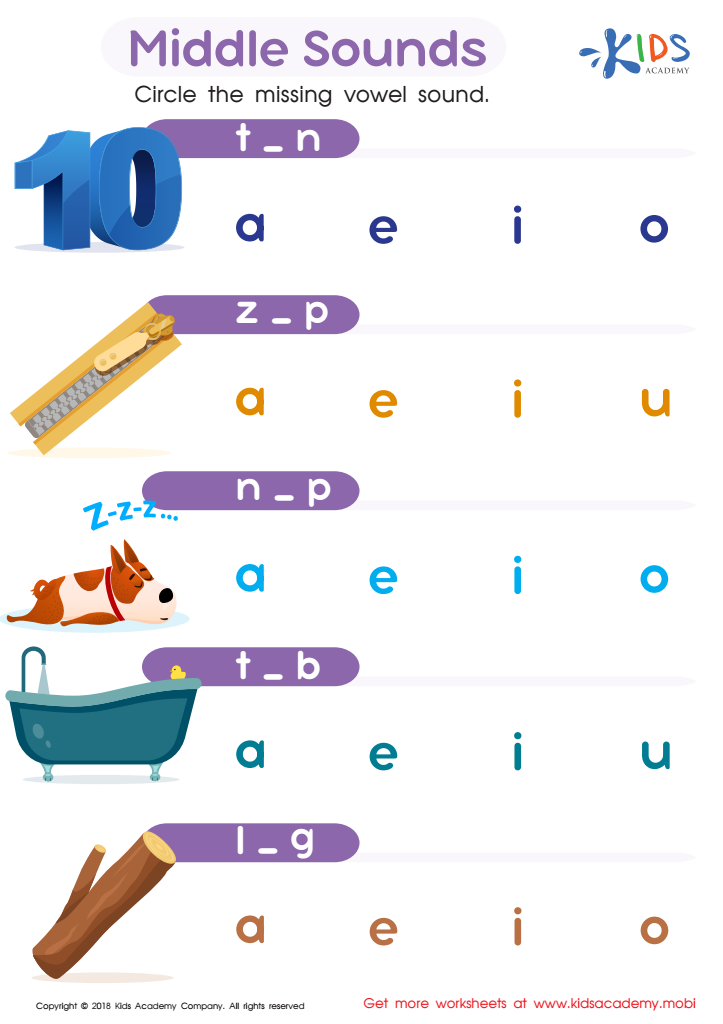
Middle Sounds Worksheet
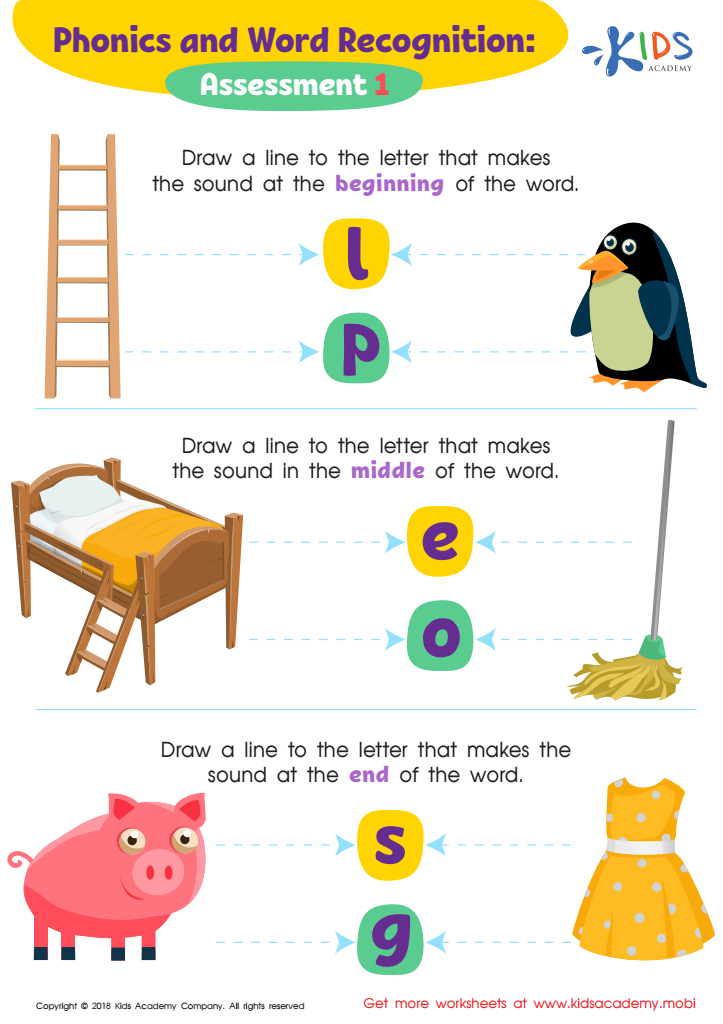
Phonics and Word Recognition: Assessment 1 ELA Worksheet



Middle vowels are essential phonetic components that help young learners develop their reading and writing skills. For children aged 5-8, understanding middle vowels—sounds produced by letters like 'a', 'e', 'i', 'o', and 'u' in the center of words—plays a crucial role in their literacy journey. These sounds form the basis of syllables and influence the pronunciation and meaning of words, which is vital for improving phonemic awareness.
Parents and teachers should prioritize middle vowel instruction because it aids children in decoding unfamiliar words and enhances their spelling ability. As children encounter more complex texts, a firm understanding of middle vowels allows them to read with greater fluency and comprehension. Furthermore, recognizing vowel patterns helps students write more effectively, fostering creativity and communication skills.
Engaging with mittresss or word games that incorporate middle vowels makes learning enjoyable, thus motivating children. By focusing on this foundational aspect of language, parents and teachers empower kids to become confident readers and writers. Ultimately, this knowledge not only supports academic success but also instills a lifelong love of learning and literacy in children.