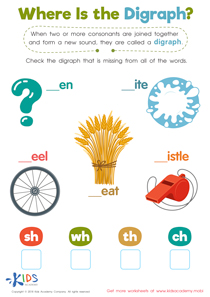
Beginning Consonants Worksheets for Ages 6-8
15 filtered results
-
From - To
Welcome to our Beginning Consonants Worksheets for Ages 6-8! These engaging, interactive worksheets are designed to help young learners enhance their phonics skills by focusing on the sounds made by initial consonants. Ideal for home and classroom use, our resources feature a variety of activities, including matching exercises, fill-in-the-blanks, and coloring fun to reinforce alphabetic understanding. Students will develop essential reading and writing abilities while enjoying the learning process. Perfect for reinforcing early literacy, these worksheets cater to various learning styles, ensuring that every child can advance confidently in their literacy journey. Download and spark your child's love for learning today!
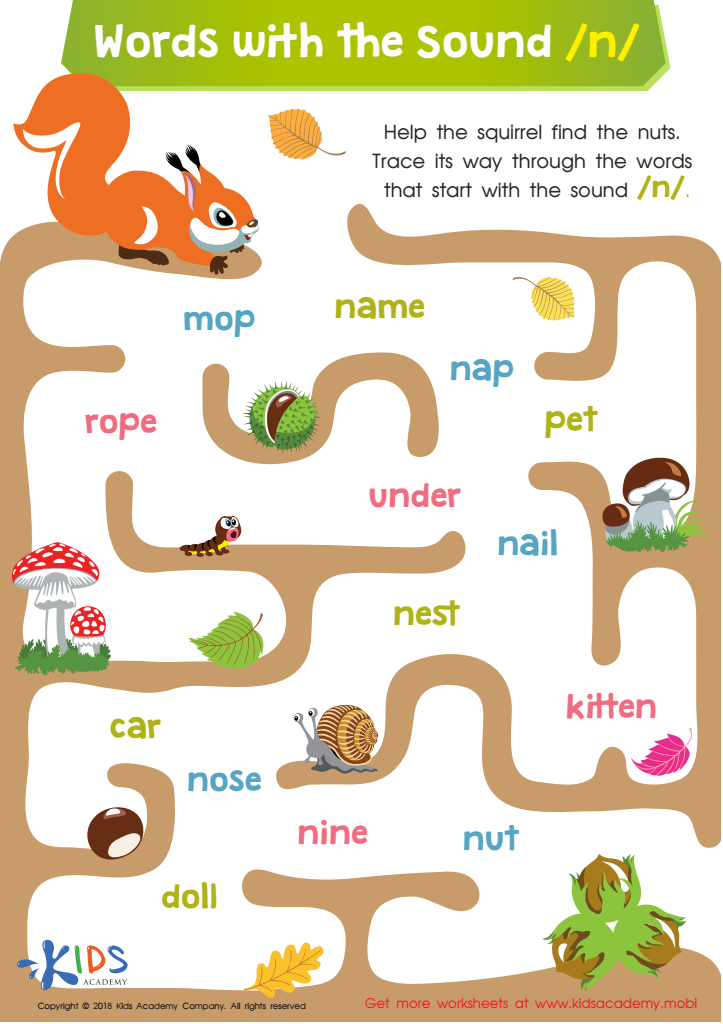
Words with Sound N Reading Worksheet
 Assign to My Students
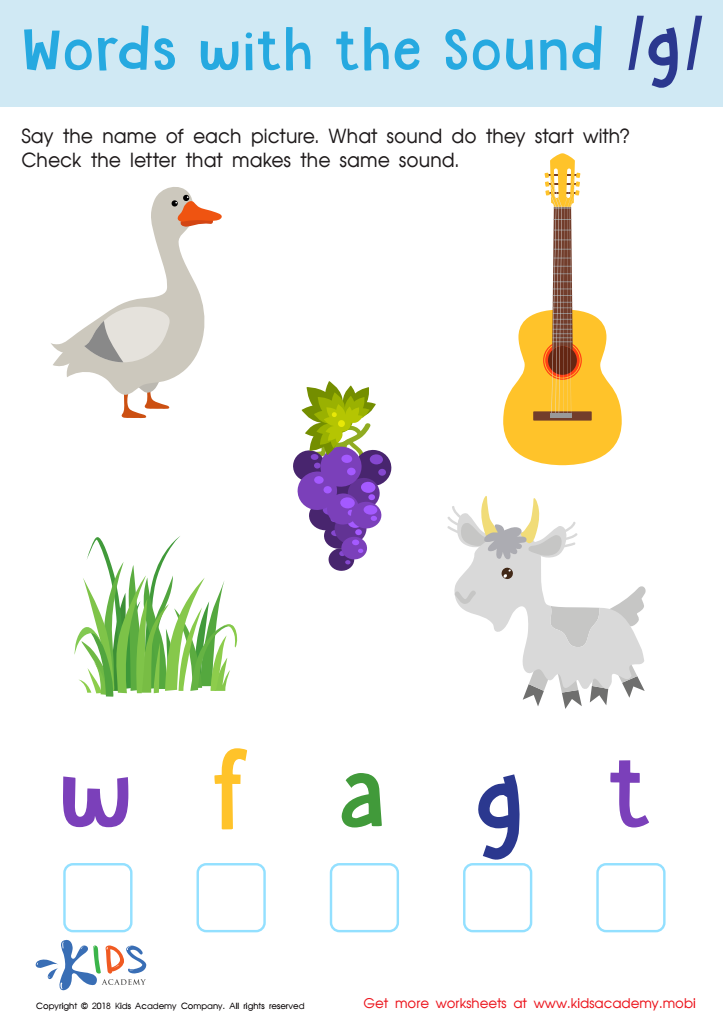
Words with sound g Reading Worksheet
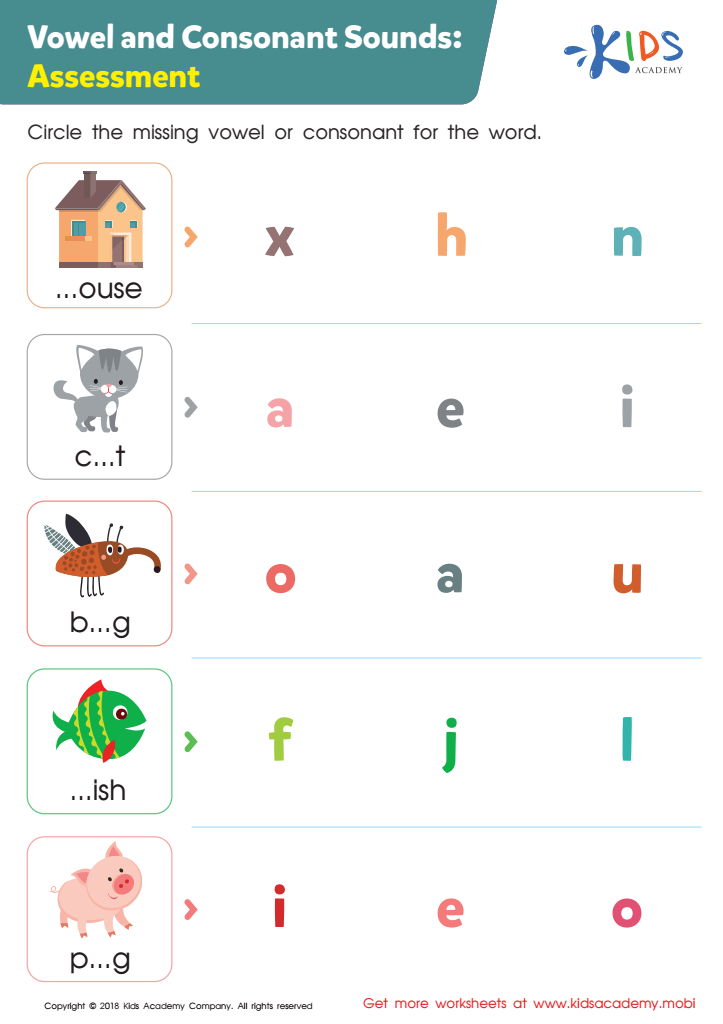
Vowel and Consonant Sounds: Assessment Worksheet
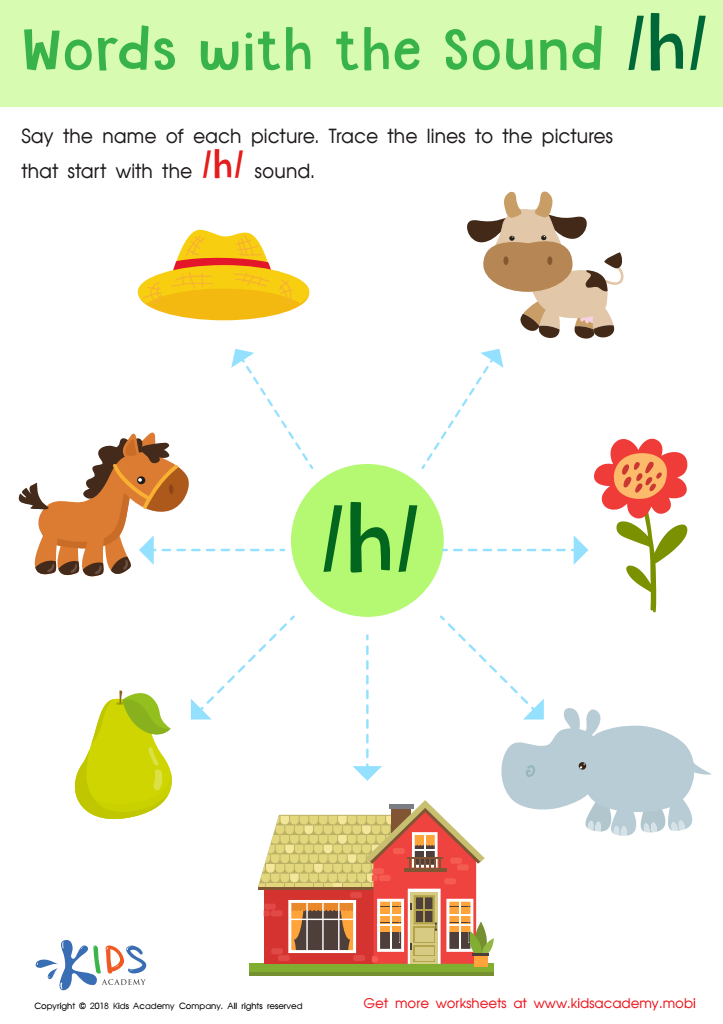
Words with sound h Reading Worksheet
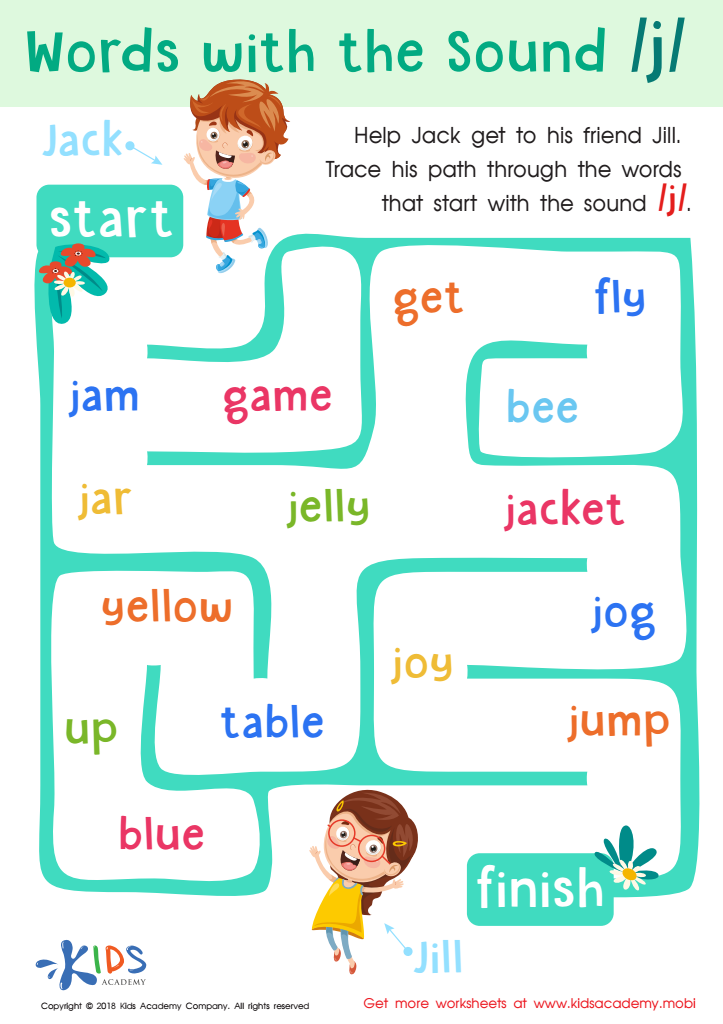
Words with sound j Reading Worksheet
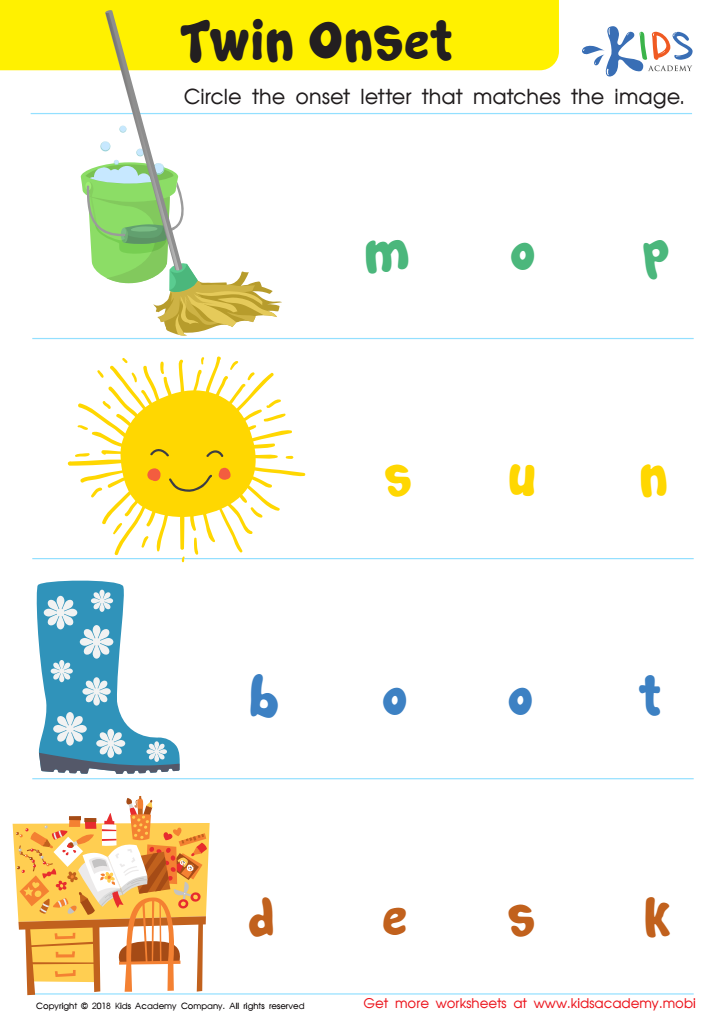
Twin Onset Worksheet
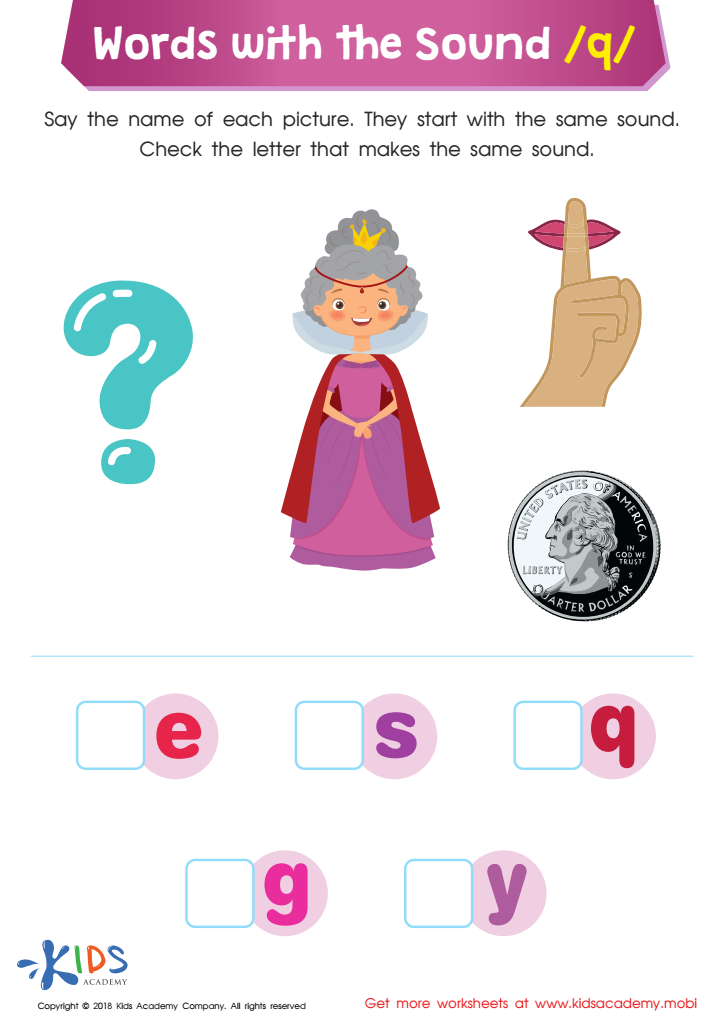
Words with Sound Q Reading Worksheet
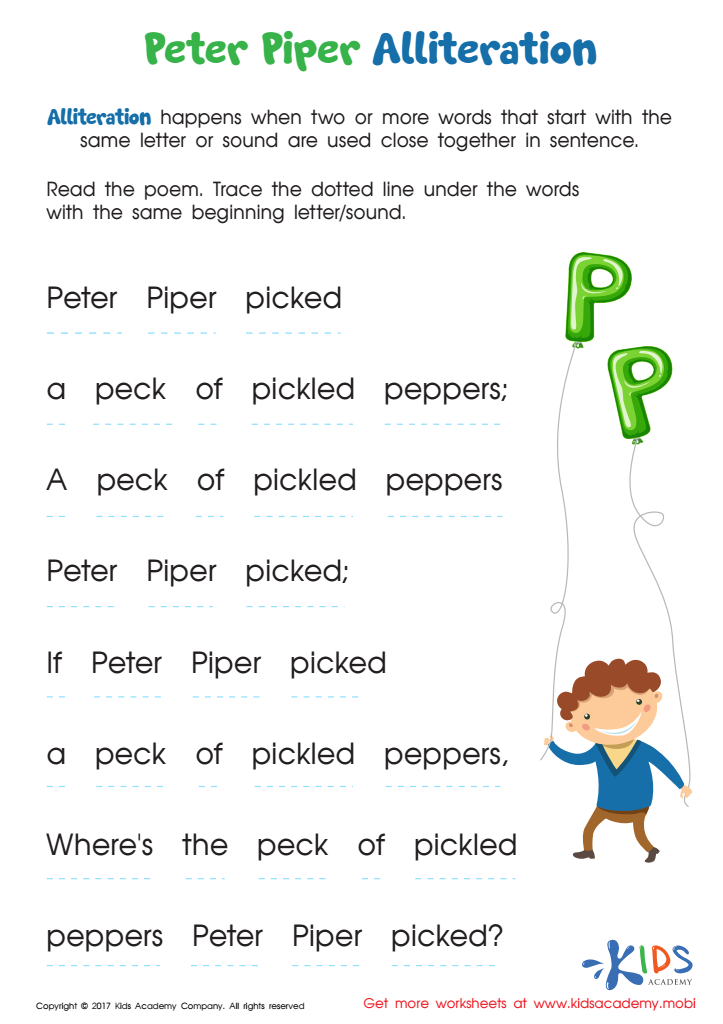
Peter Piper Alliteration Worksheet
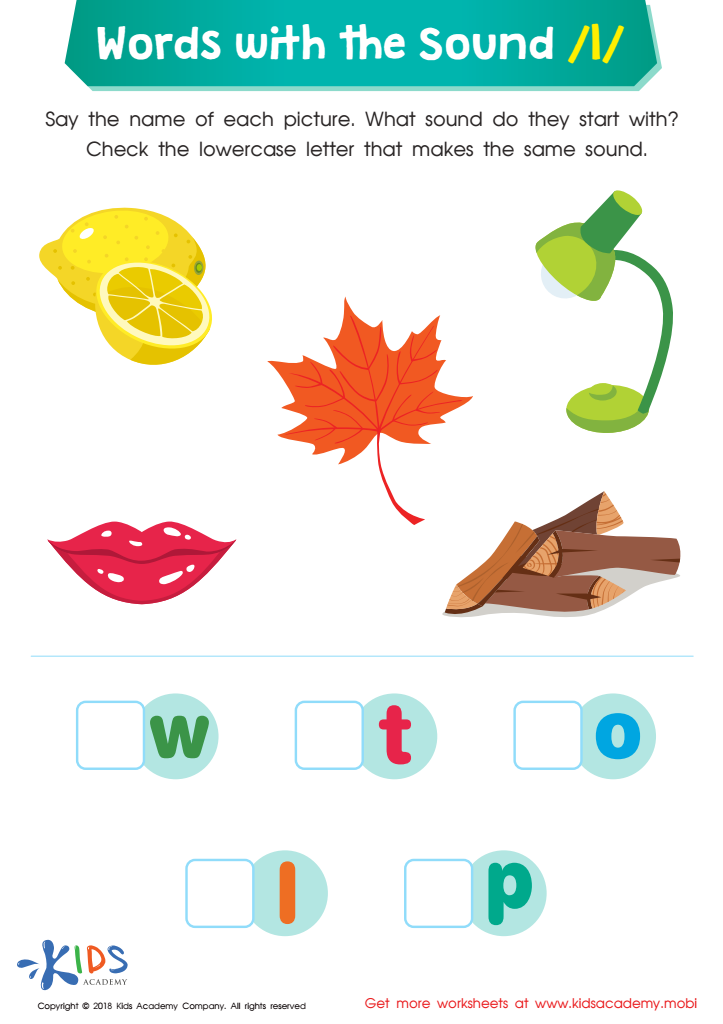
Words with Sound L Reading Worksheet
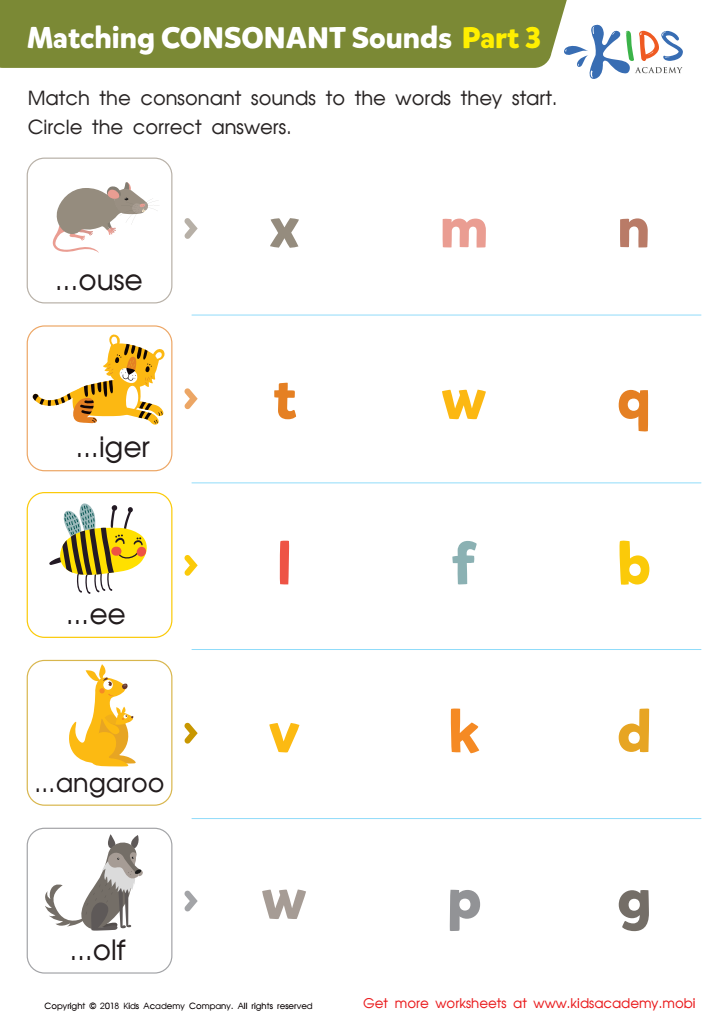
Matching Consonant Sounds: Part 3 Worksheet
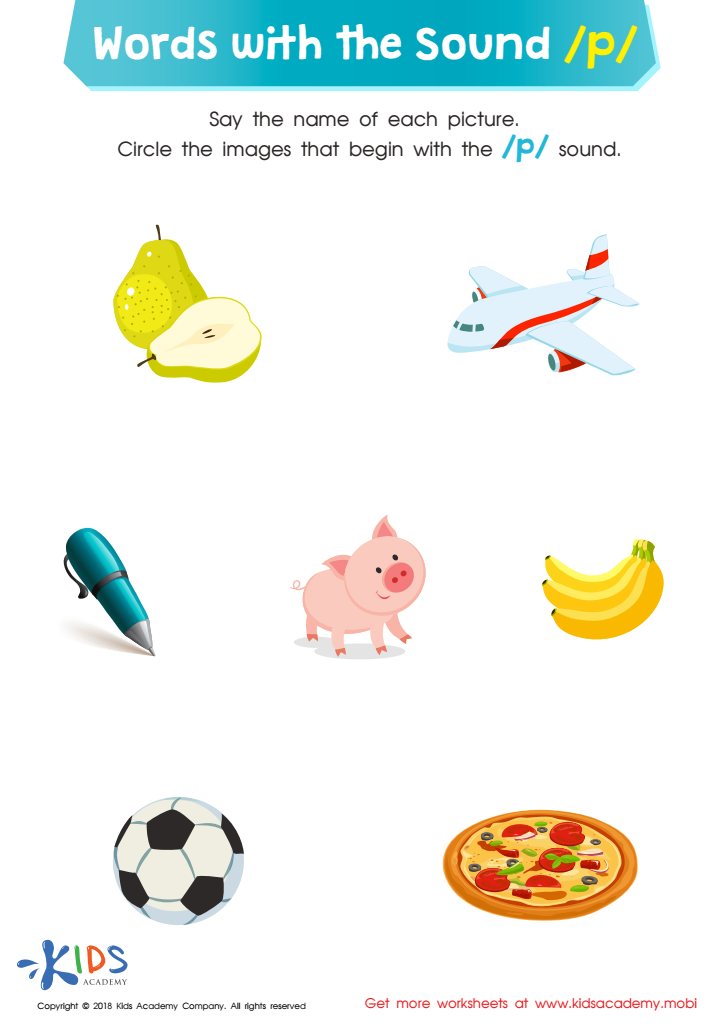
Words with sound p Reading Worksheet
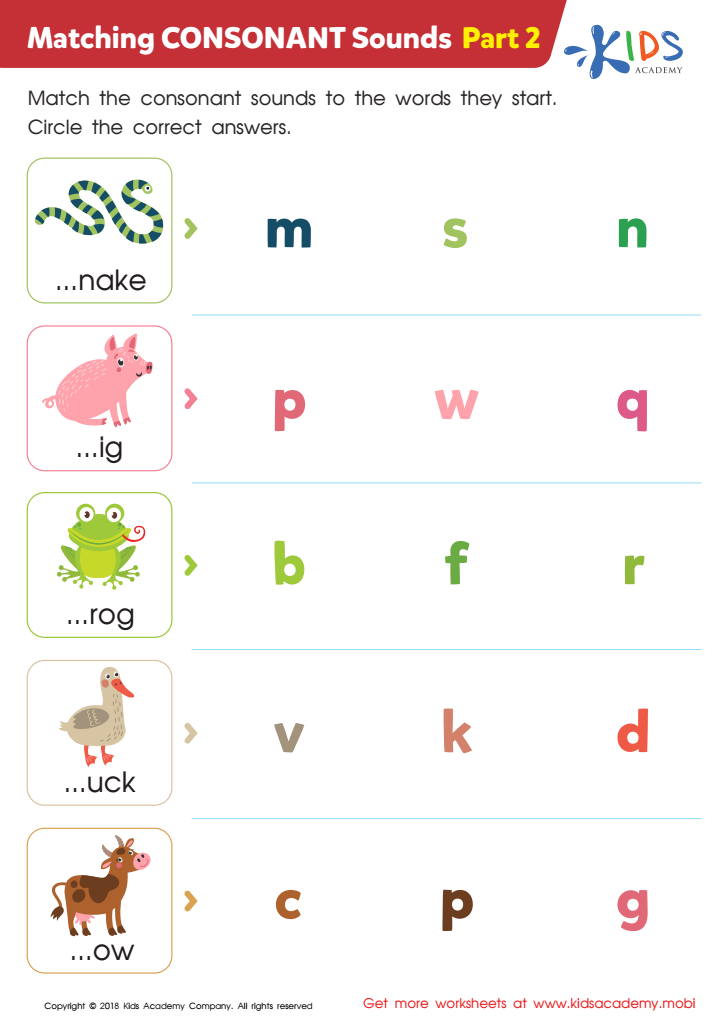
Matching Consonant Sounds: Part 2 Worksheet
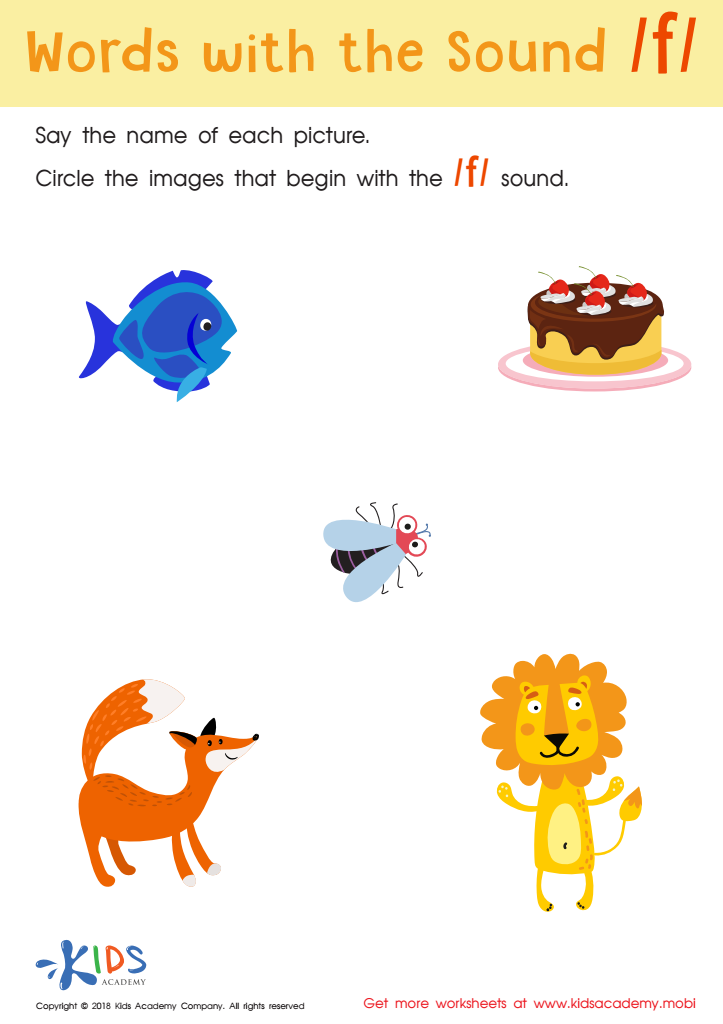
Words with sound f Reading Worksheet
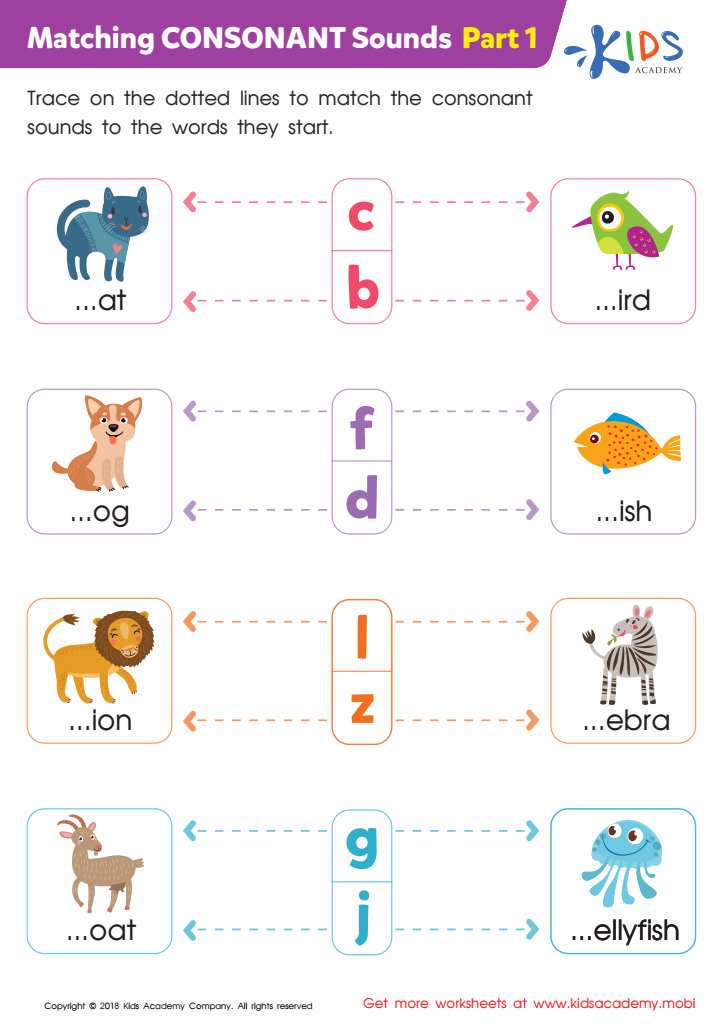
Matching Consonant Sounds: Part 1 Worksheet
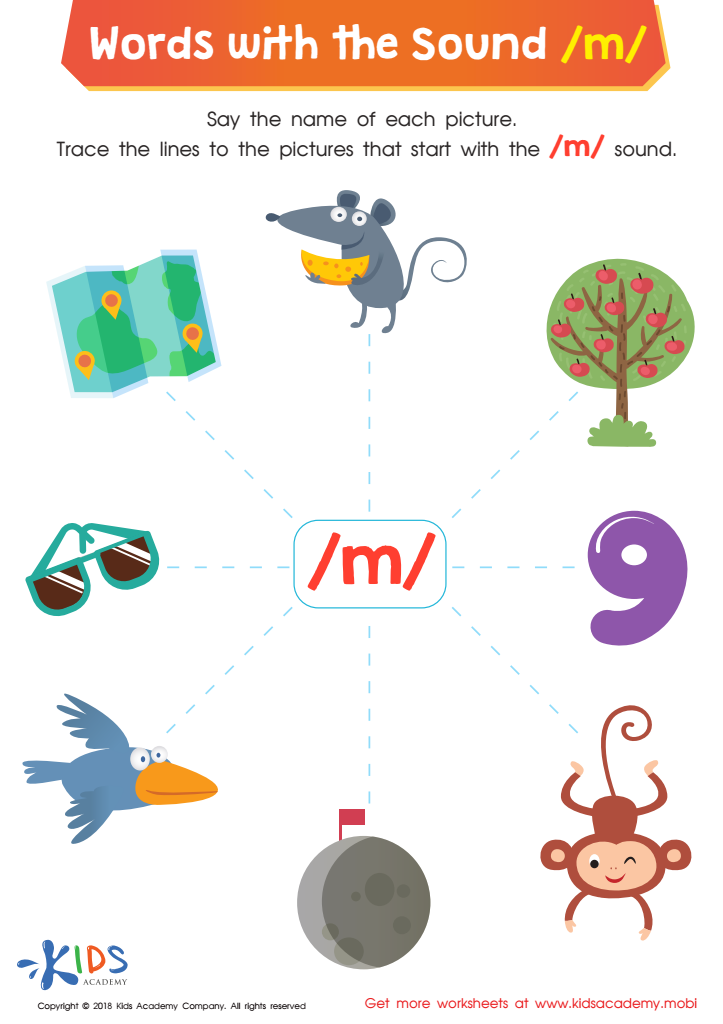
Words with Sound M Reading Worksheet


Beginning consonants are crucial for children ages 6-8 as they lay the foundation for reading and writing development. At this stage, children are transitioning from learning individual letter sounds to blending them into words. Understanding beginning consonants enhances their phonemic awareness, a vital skill for decoding and spelling. When children recognize and articulate these sounds, it boosts their confidence and fluency in reading.
Teachers and parents play a significant role in this crucial phase. Engaging in activities like sound matching, story reading, and phonics games can make learning about beginning consonants fun and interactive. When children can identify consonants at the start of words, they develop stronger vocabulary skills, enhancing comprehension and communication.
Moreover, learning beginning consonants is linked to improved writing abilities. As children grasp the sounds, they become better equipped to form words, thus progressing towards more complex literacy skills. Ultimately, fostering a solid understanding of beginning consonants supports essential academic growth and lays the groundwork for future literacy success. This foundation is not just about letter sounds; it’s about empowering children to express themselves confidently and connect with the world of stories, information, and ideas. Parents and teachers should prioritize this skill to nurture effective readers and communicators.