Silent Vowels Worksheets for Ages 6-8
5 filtered results
-
From - To
Discover our engaging Silent Vowels Worksheets designed specifically for children aged 6-8! Perfect for early grade teachers and parents alike, these worksheets provide a fun and interactive way for students to learn about silent vowels in words. Each activity is tailored to enhance phonetic awareness and improve spelling skills while keeping young learners motivated. With a variety of activities including fill-in-the-blanks and matching exercises, kids will enjoy working on their literacy skills. Download these printable worksheets today and help your child master silent vowels, making reading and writing a delightful experience! Perfect for home or classroom use.
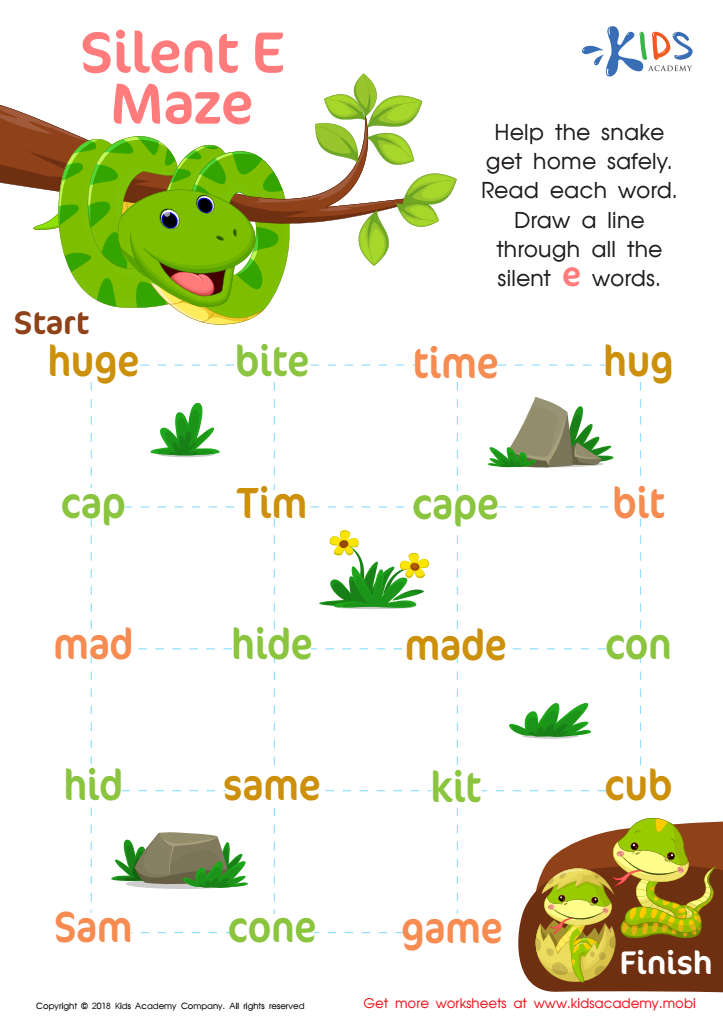
Silent E Maze Worksheet
 Assign to My Students
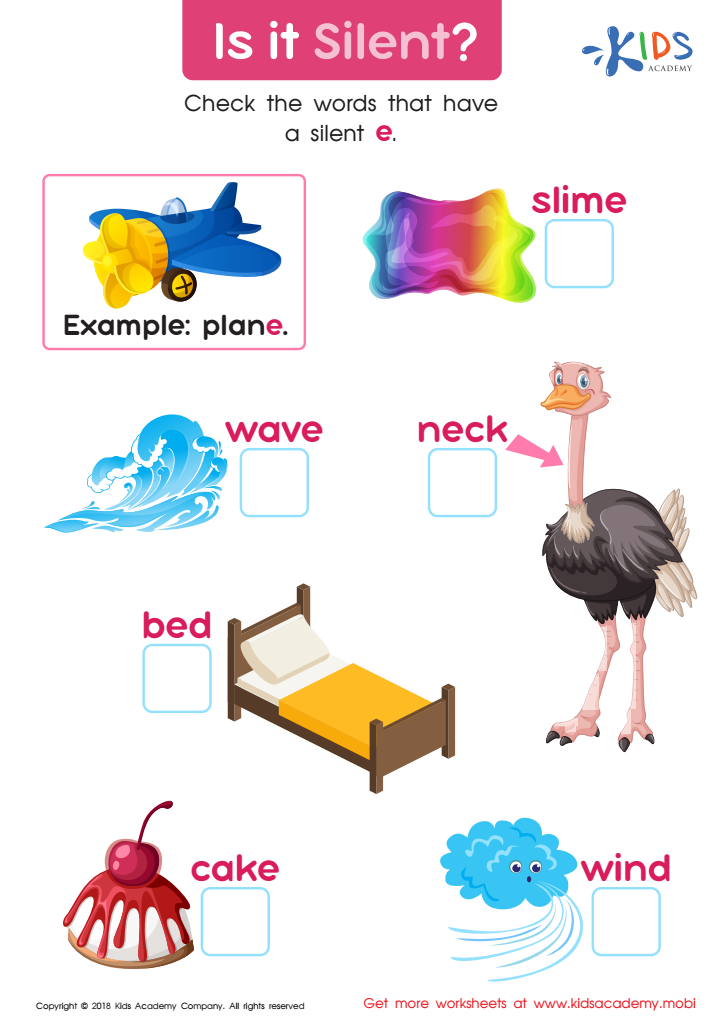
Is It Silent? Worksheet
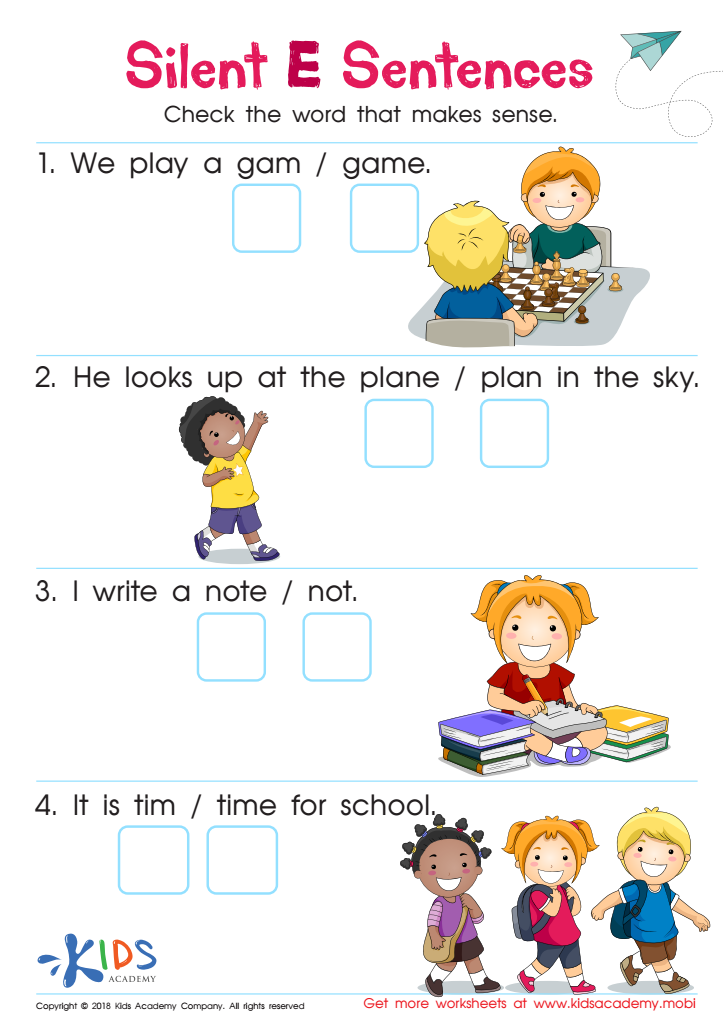
Silent E Sentences Worksheet
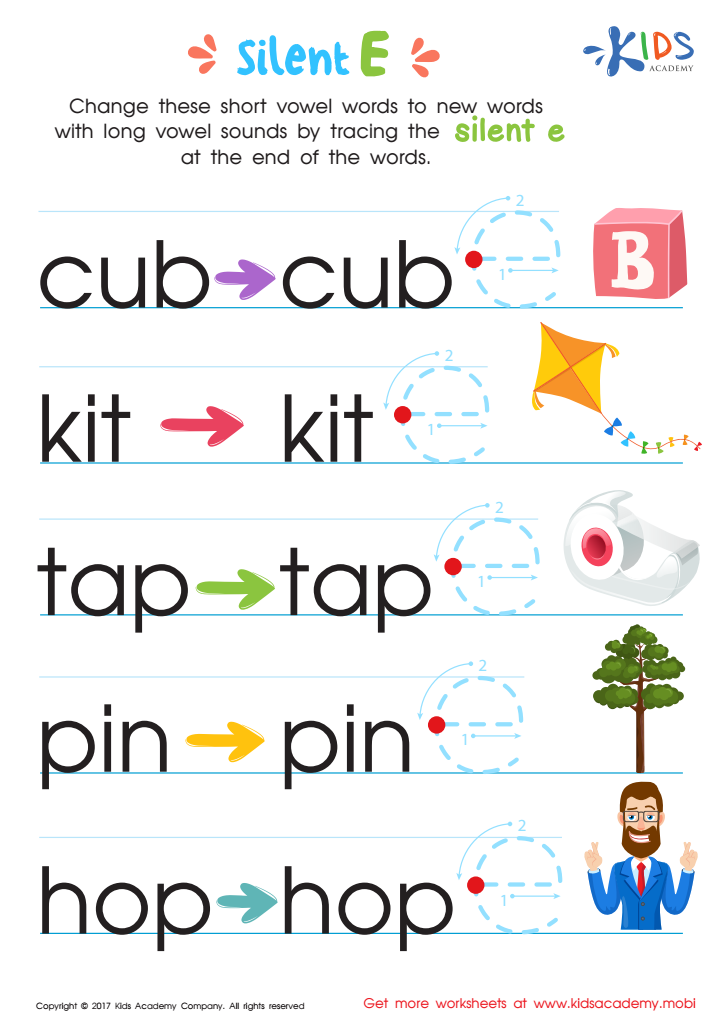
Silent E Words Worksheet
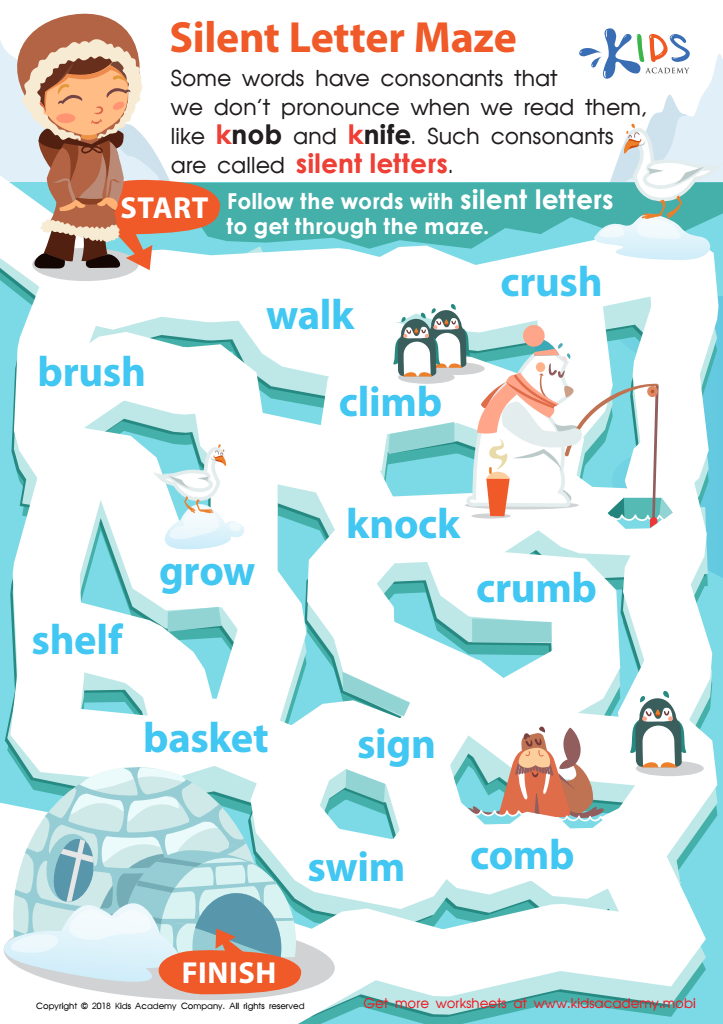
Silent Letter Maze Worksheet


Silent vowels are an important aspect of literacy that can significantly influence the reading and writing skills of children aged 6-8. Understanding silent vowels helps young learners decode words accurately, improve their pronunciation, and build their overall confidence in reading. When children encounter words with silent vowels, like “dance” or “name,” recognizing these letters, while also understanding their silent nature, aids them in grasping the complexities of English spelling and pronunciation.
Moreover, silent vowels often play a crucial role in phonics and spelling patterns, which are foundational skills in developing literacy. As children learn these nuances, they become better equipped to tackle more complex words, enhancing their vocabulary. Familiarity with silent vowels also cultivates critical thinking as they begin to apply their knowledge to unfamiliar words, which helps foster independence in reading.
For parents and teachers, emphasizing the importance of silent vowels through engaging activities and discussions can create a deeper interest in language and literacy among children. This approach not only prepares them for advanced linguistic concepts in the future but also instills a love for reading early on, ultimately setting a foundation for lifelong learning and communication skills. It’s essential for parents and educators to incorporate silent vowels into everyday learning.








