Graphs Worksheets for Ages 6-9 - Page 2
27 filtered results
-
From - To
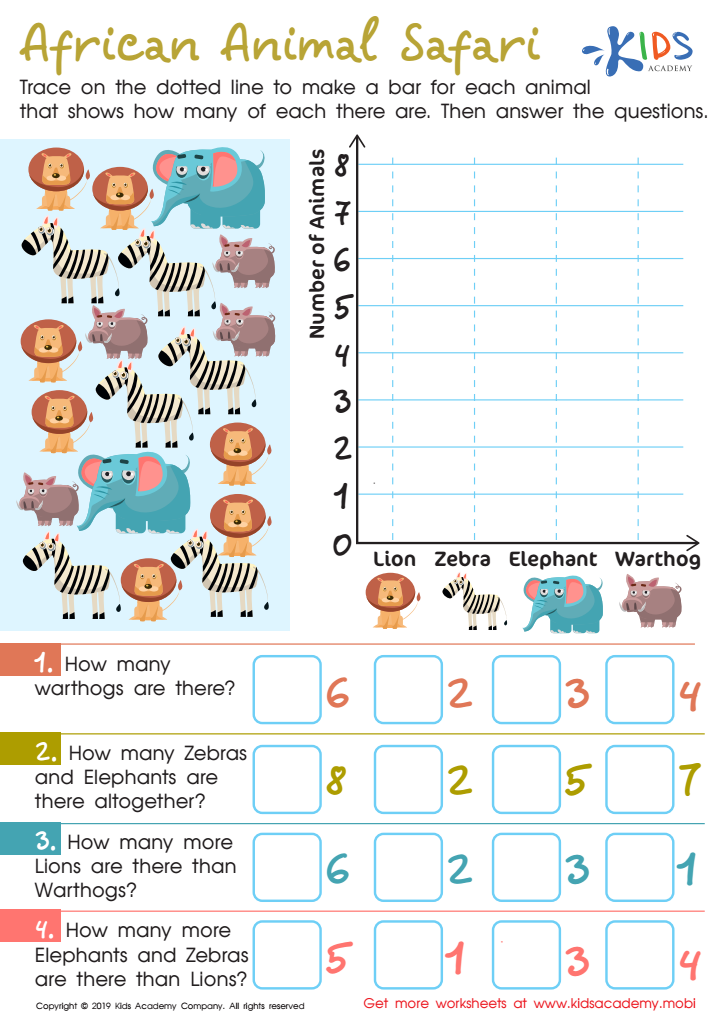
African Animal Safari Worksheet
 Assign to My Students
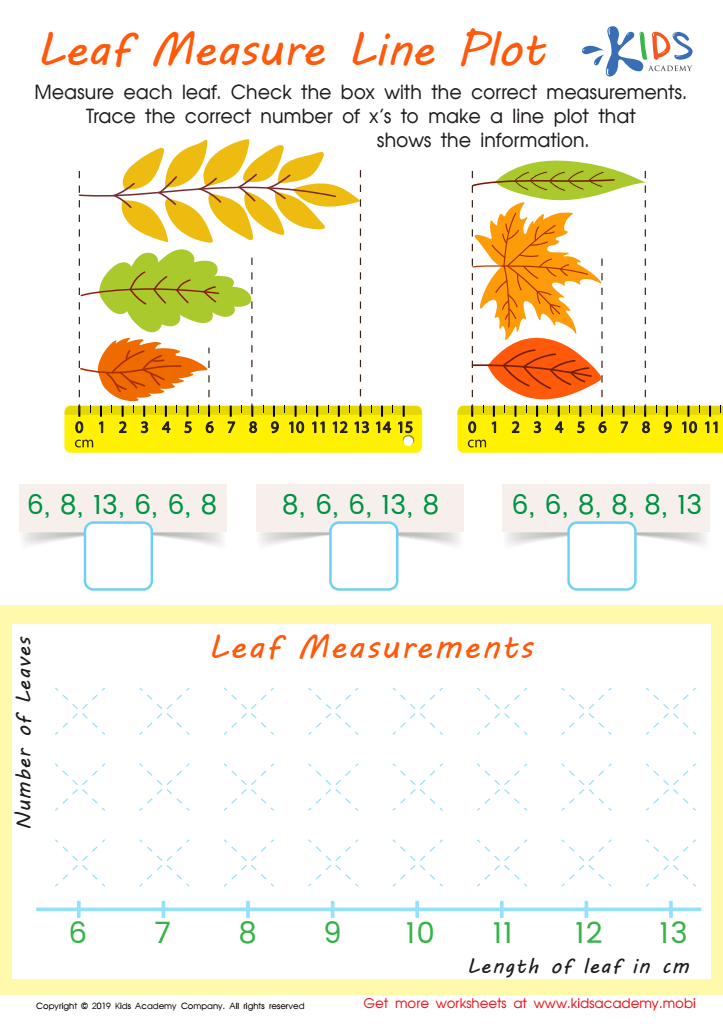
Leaf Measure Line Plot Worksheet
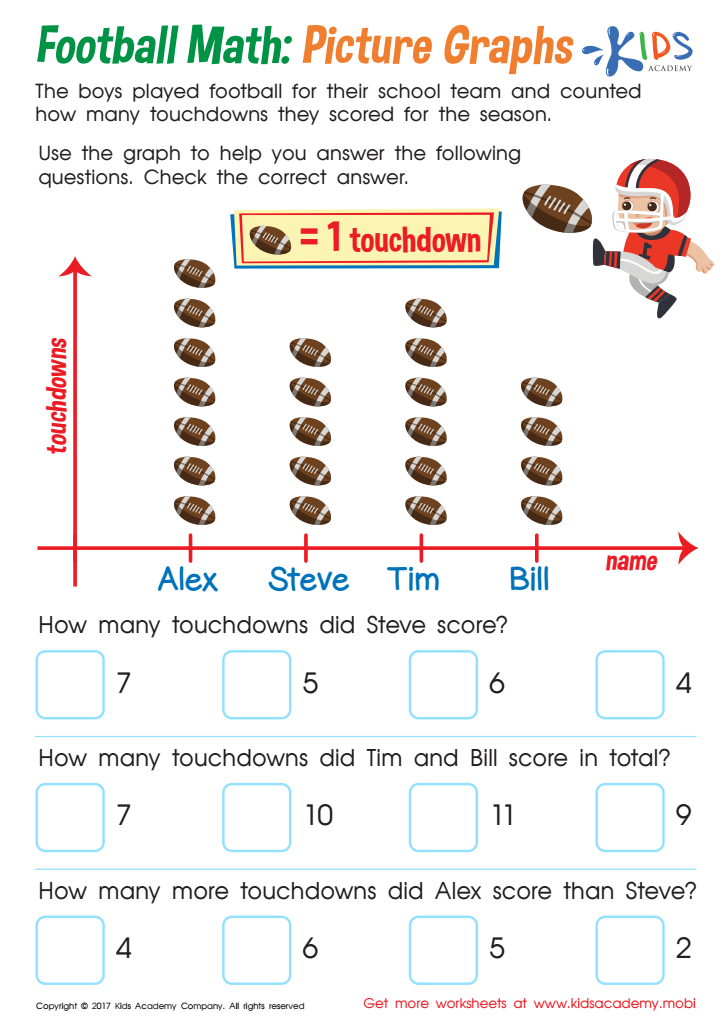
Football Math Worksheet








Graphs for children aged 6-9 hold immense educational value, making them a crucial tool for both parents and teachers. At this formative stage, kids are developing foundational skills in math and critical thinking. Introducing them to graphs helps sharpen these skills by enabling them to visualize and interpret data, fostering a deeper understanding of numbers and relationships.
Graphs are also instrumental in enhancing a child's problem-solving abilities and comprehension. For instance, when children create or analyze a simple bar or line graph, they practice counting, addition, and subtraction, which solidify their numeracy skills. Moreover, interpreting graph data can propel their reasoning and analytical capabilities. A picture is worth a thousand words, and colorful graph elements make complex information more digestible for young minds.
For parents, engaging in graph-related activities with their child offers a hands-on, stimulating way to support learning at home. Games, weather tracking, or chores completed can all be turned into graphing exercises, making learning both enjoyable and relevant to everyday life.
In a classroom, graphs are equally powerful. Teachers can incorporate them into various subjects such as science (tracking plant growth), social studies (population data), or language arts (charting book characters' appearances), creating interdisciplinary links and making lessons more interactive and engaging.
Overall, fostering graph literacy at an early age opens doors to future success in academic subjects and day-to-day decision-making processes.








