Identifying story elements Reading Fiction Worksheets for Ages 6-9
4 filtered results
-
From - To
Introduce your young readers to the essentials of storytelling with our Detecting Story Elements Reading Fiction Worksheets, tailored for ages 6-9. These engaging activities help kids grasp key components like characters, setting, plot, and resolution, fostering a deeper understanding of any narrative. Perfect for instilling crucial reading comprehension skills, our thoughtfully crafted worksheets are designed to captivate and educate. Children learn to identify and analyze fundamental story elements, enhancing their critical thinking while igniting a love for reading. Encourage curiosity and literacy with our comprehensive resources that make learning both fun and effective.
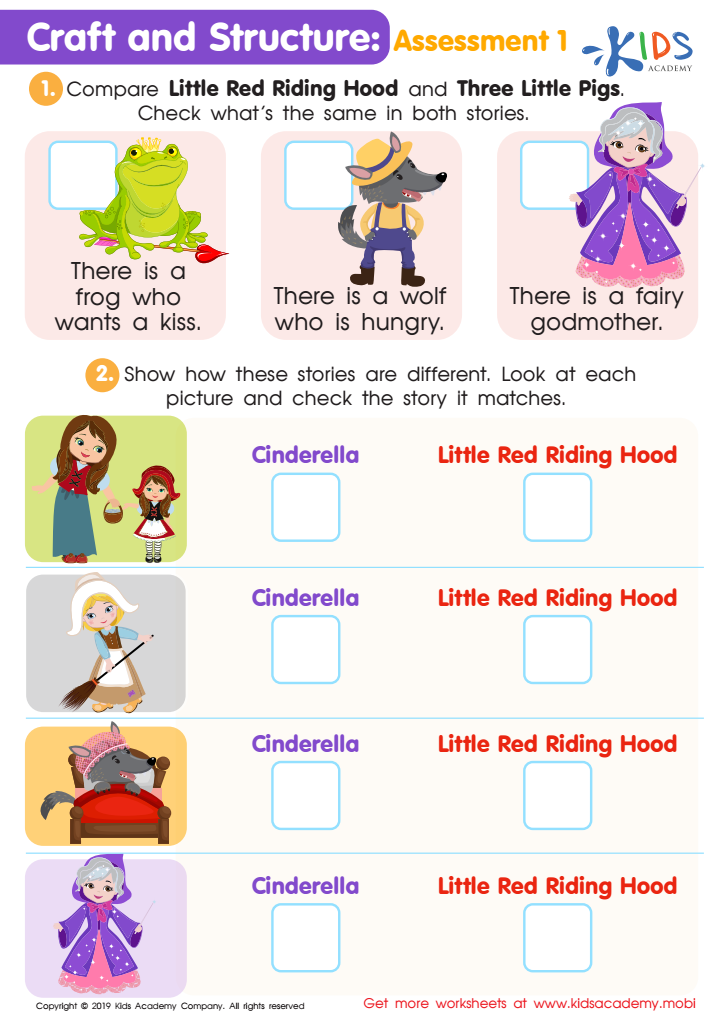
Craft and Structure: Assessment 1 Worksheet
 Assign to My Students
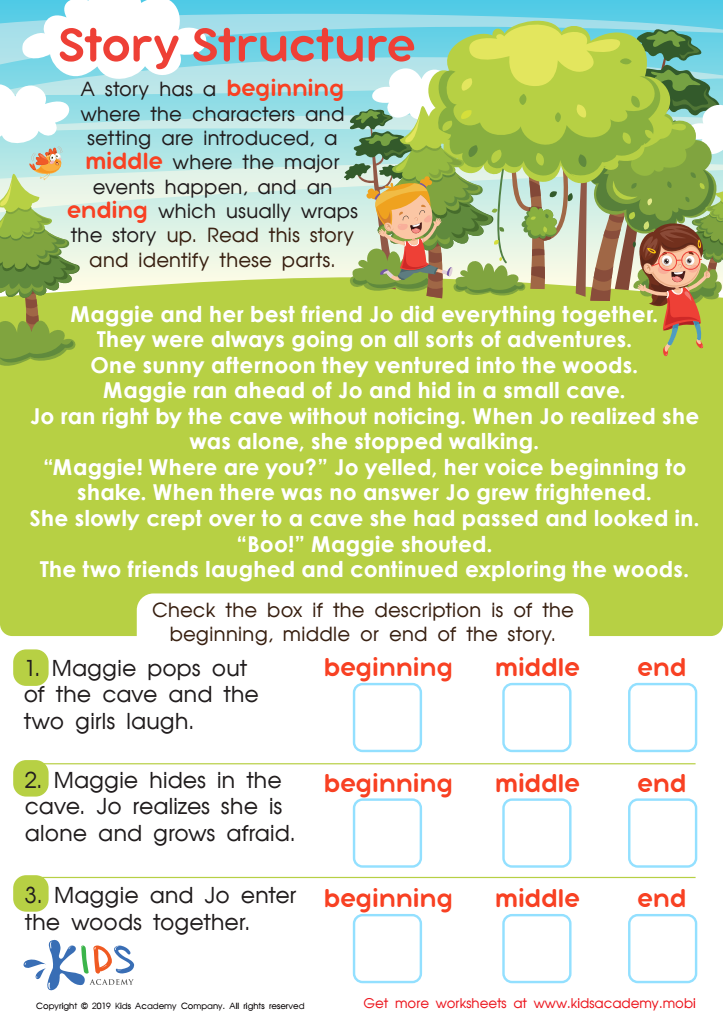
Story Structure Worksheet
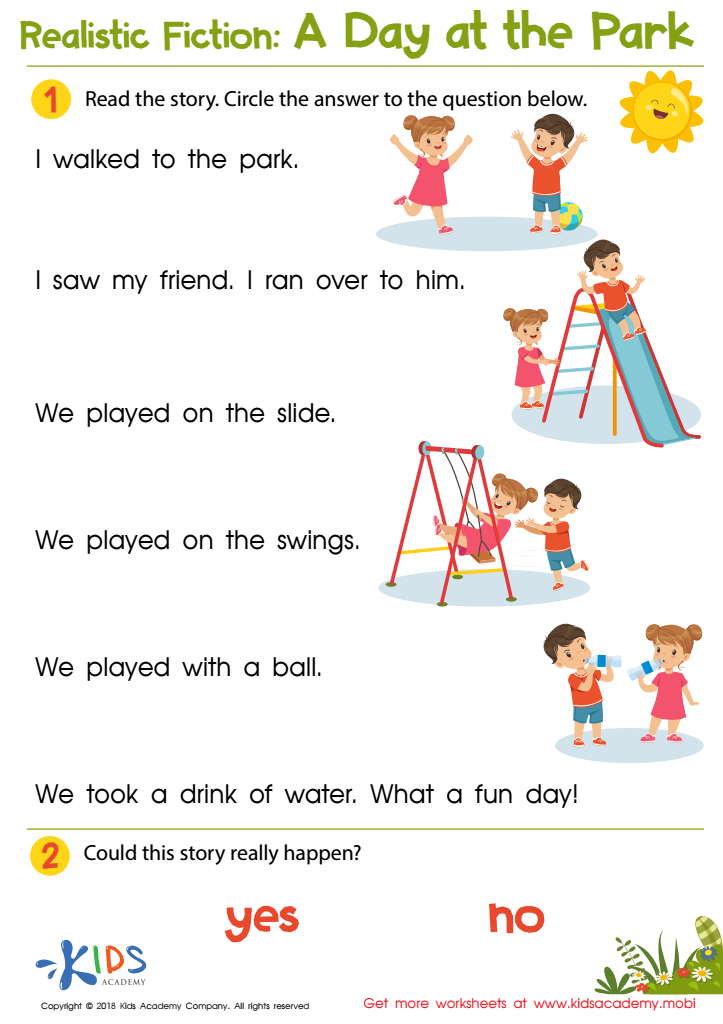
A Day at the Park Worksheet
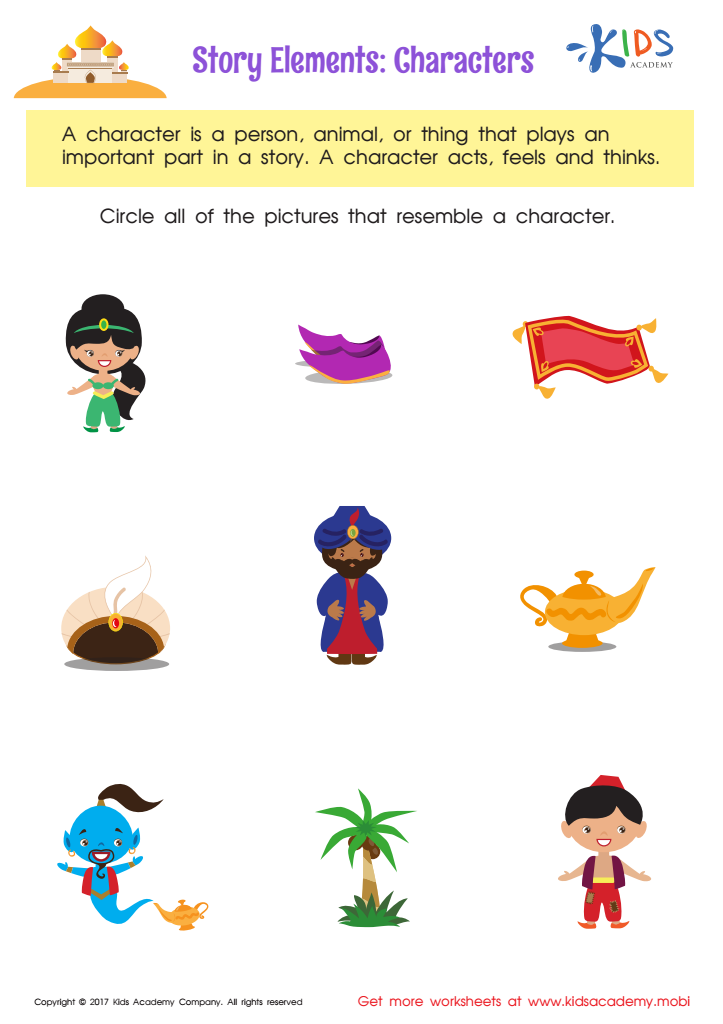
Story Elements Printable







Identifying story elements such as characters, setting, plot, conflict, and resolution is crucial for young readers aged 6-9 because it fosters comprehension and critical thinking skills. At this developmental stage, children are transitioning from decoding words to understanding meaning. By recognizing story elements, they learn to organize and connect details, which enhances memory and retention.
Understanding characters' motivations and feelings builds empathy and social awareness, key components in early social development. Identifying the setting helps children grasp the context, which aids in visualization and engagement. Recognizing the plot, including the conflict and resolution, teaches problem-solving skills, showing them how challenges can be navigated and resolved.
Engaging with these elements also provides a foundation for more sophisticated literacy skills such as summarizing, predicting, and inferencing. Parents and teachers play an essential role in guiding students through this process, making fiction more accessible and enjoyable. It also encourages a love of reading, an important factor in academic success and lifelong learning.
Investing time in this area provides children with tools to not only understand stories deeply but also to express their own thoughts and narratives more clearly. This collaborative effort between home and school supports a holistic approach to literacy that benefits children's overall development.








