Filters

79 filtered results

Clear all filters
Favorites
With answer key
Interactive

79 filtered results

Difficulty Level

Grade


Check out this FREE Trial Lesson on Reading Non-Fiction for age 7-9!

Text Features

Favorites
With answer key
Interactive
  • 7-9
  • With answer key
  • Reading Non-Fiction
Tractors Worksheet
Tractors Worksheet

Tractors Worksheet

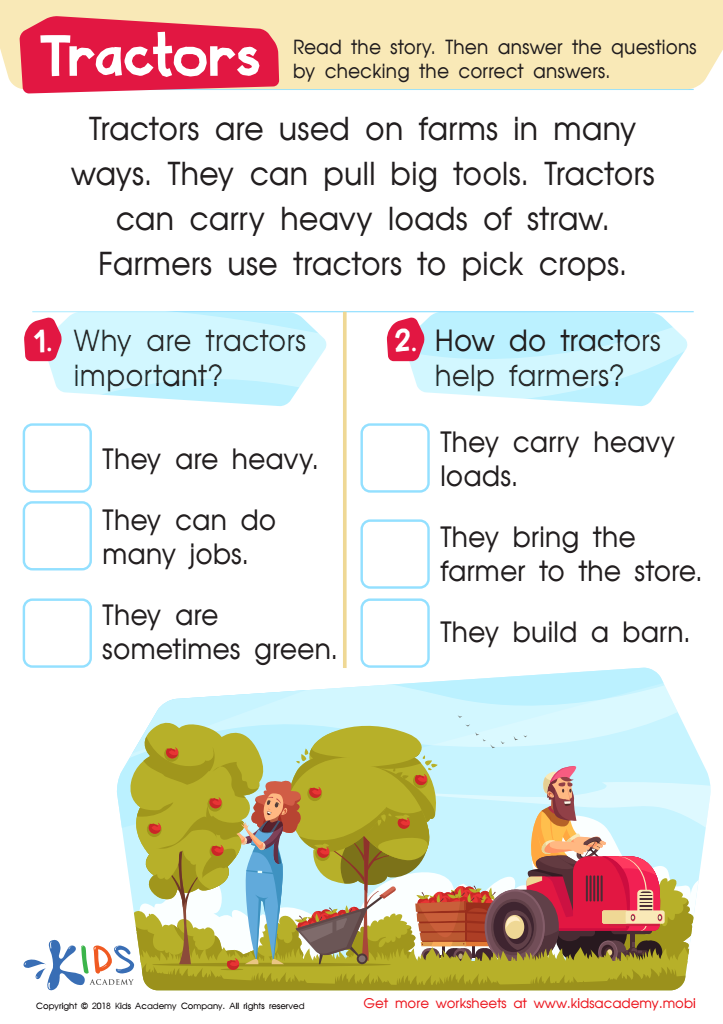
Kids love tractors! Let them read about what they do, what they use, and who uses them with this free worksheet. After reading, they can answer reading comprehension questions to test their knowledge; multiple choices make it easy! Little do they know, they're boosting their literacy skills along the way!
Tractors Worksheet
Worksheet
Ben Franklin Part 2 Worksheet

Ben Franklin Part 2 Worksheet

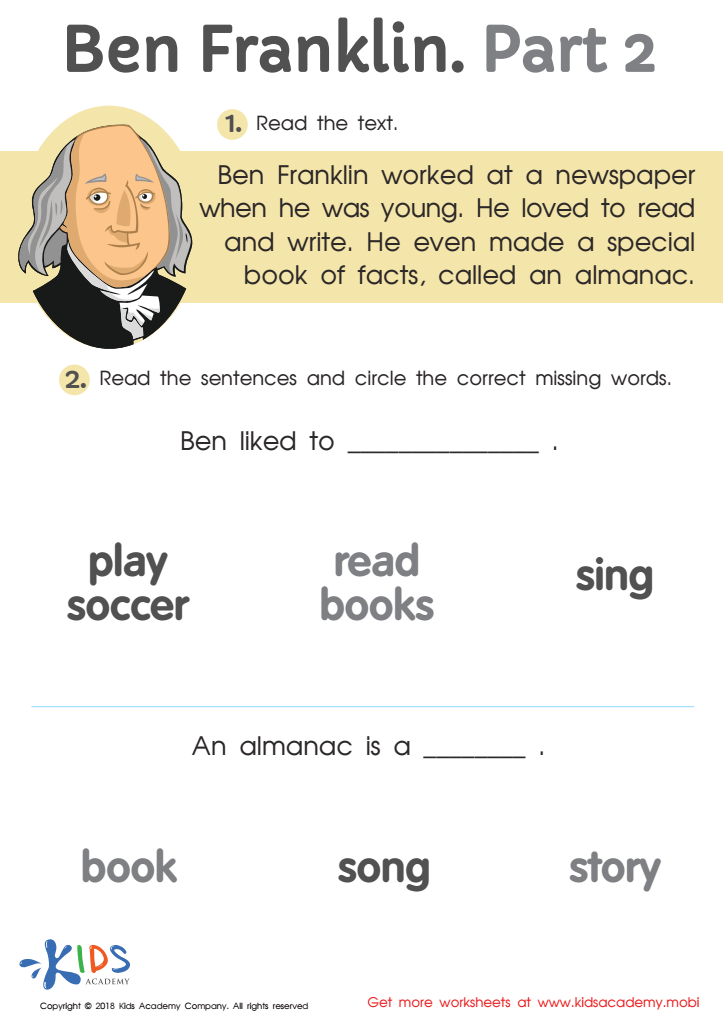
History is filled with great figures, like Benjamin Franklin. Let your kids in on the legacy by introducing them to the founder of the US fire department, diplomat, and inventor. Then, use a worksheet to have them fill in the blanks with the correct word to teach them more. Read the text, then read the sentences and have them circle the missing word.
Ben Franklin Part 2 Worksheet
Worksheet
How Use Index Worksheet

How Use Index Worksheet

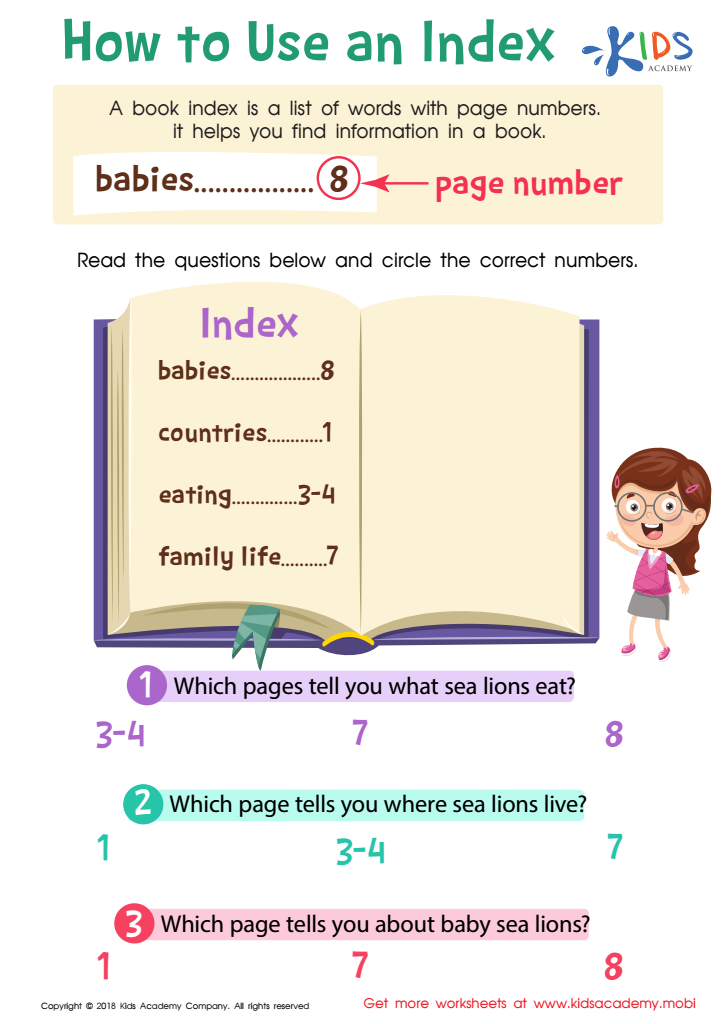
Hand your kids a book, point out the index and explain that it's a list of words with page numbers. Ask them to look at the index in the worksheet and circle the correct number to the questions. Every book must have an index to help readers find chapters or information they need.
How Use Index Worksheet
Worksheet
Match Them Up Worksheet

Match Them Up Worksheet

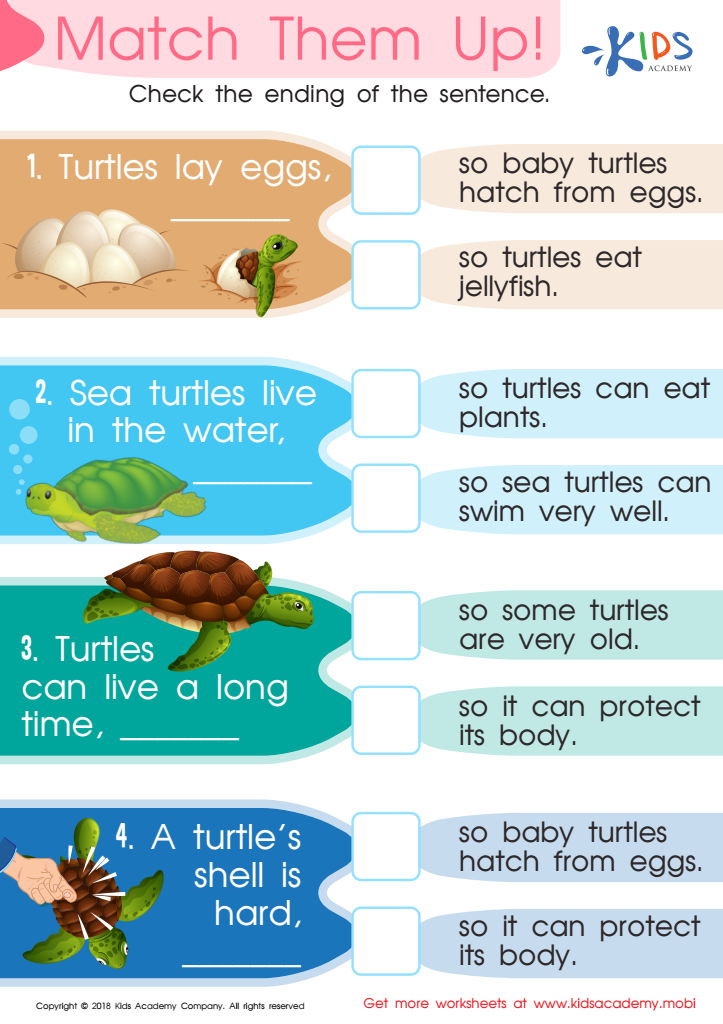
Reading offers a wealth of knowledge, but young readers may struggle to remember info from informational texts. Help your child practice comprehension with this fun turtle-related worksheet. Just read the sentence starters and select the correct ending from the options given. Check the box to indicate the right statement!
Match Them Up Worksheet
Worksheet
Food Chain Cause Worksheet

Food Chain Cause Worksheet

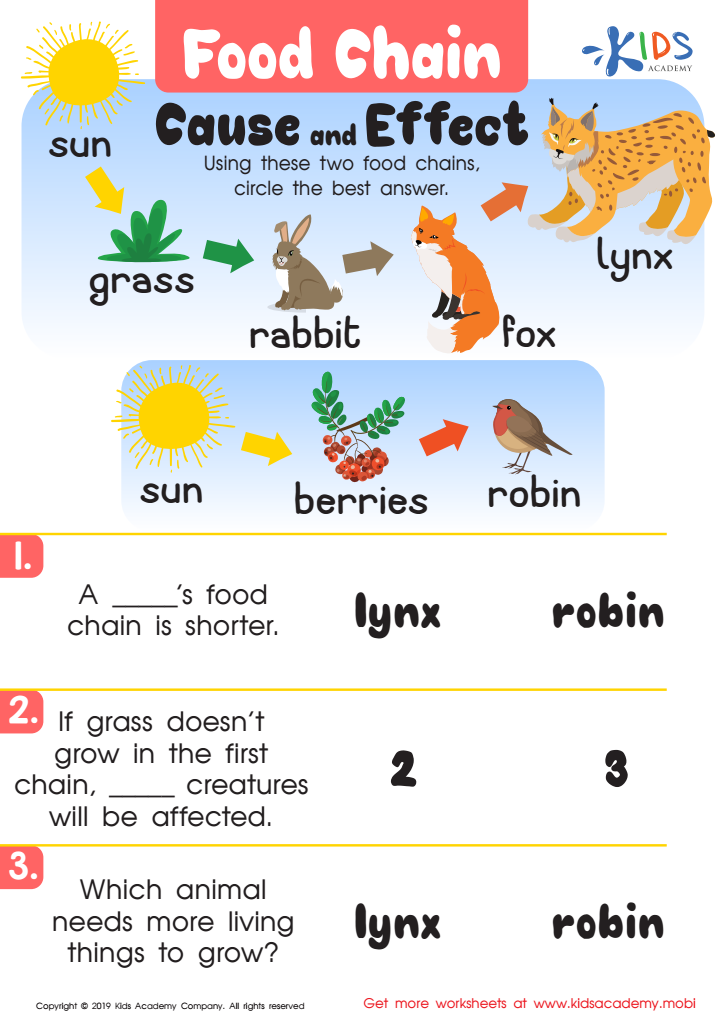
Help your little learner analyze ecosystems and compare food chains with this Kids Academy worksheet! Kids will compare a carnivore's and herbivore's food chain; which is longer and why? Questions at the bottom of the page will help them compare and circle the best answers. A great way to understand animal food chains!
Food Chain Cause Worksheet
Worksheet
Rabbit Facts Worksheet

Rabbit Facts Worksheet

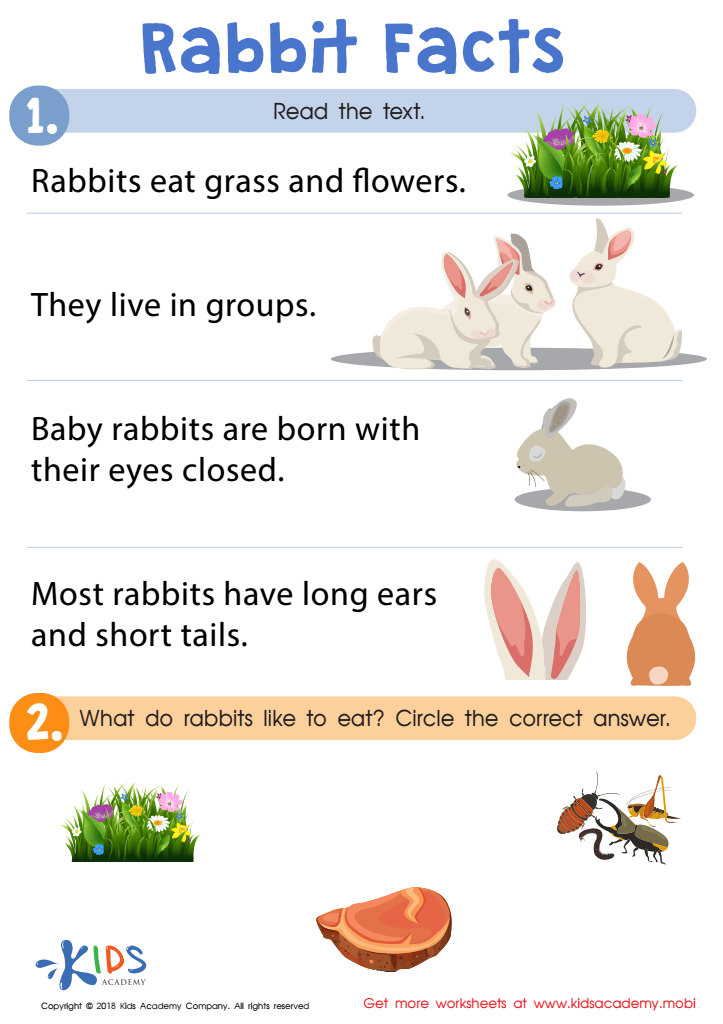
Informational texts offer great learning opportunities. Kids Academy's reading worksheet helps children read and recall important details from a text about bunnies. Kids will love it! Simply read the rabbit facts and circle the correct pictures to answer the questions.
Rabbit Facts Worksheet
Worksheet
Compare Two Sources Worksheet


Compare Two Sources Worksheet

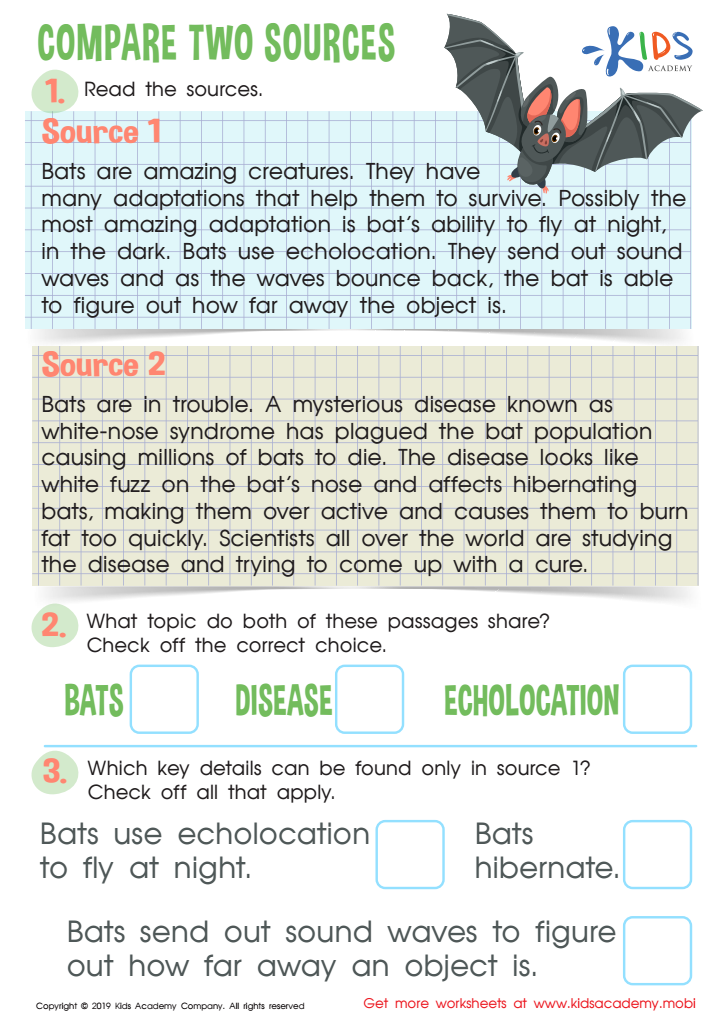
Reading exposes us to new words, spelling, and info about different topics. Kids can practice their reading skills, and learn about bats, with this worksheet. Read the two sources in the picture, then help your kids answer the questions at the bottom.
Compare Two Sources Worksheet
Worksheet


... 3 4

Reading non-fiction for ages 7-9 is incredibly important for children's development and learning. At this age, children are naturally curious and eager to explore the world around them. Non-fiction texts cater to this curiosity by providing factual information about various subjects, such as animals, history, science, and cultures. This helps them develop critical thinking skills, as they learn to distinguish between facts and opinions, and enhances their ability to ask questions and seek answers.

Moreover, reading non-fiction improves vocabulary and comprehension. Unlike fictional stories, non-fiction introduces students to new terminology and complex concepts, promoting literacy skills essential for future academic success. It also lays the groundwork for research skills, enabling children to engage in projects or presentations confidently.

Additionally, non-fiction texts can make connections to real-life experiences, fostering a sense of relevance and inspiration. This helps children understand the significance of the material and nurtures a love for learning and exploration. Consequently, parents and teachers who prioritize non-fiction reading from ages 7-9 support well-rounded intellectual development, encouraging children to become informed, inquisitive, and articulate individuals ready to tackle the challenges of a diverse world.