Easy Lowercase/Small Letters Worksheets for Ages 3-6
3 filtered results
-
From - To
Discover our Easy Lowercase Small Letters Worksheets designed specifically for children ages 3-6. These engaging, fun activities help young learners master the alphabet with user-friendly exercises tailored to their developmental stage. Our worksheets feature clear, simple instructions to guide children through letter recognition, tracing, and writing practices. By incorporating these printable activities into daily routines, kids build confidence and foundational literacy skills. Ideal for parents and educators alike, our worksheets support early learning initiatives and classroom environments. Visit now to explore and download easy lowercase letters resources that make learning an enjoyable adventure.
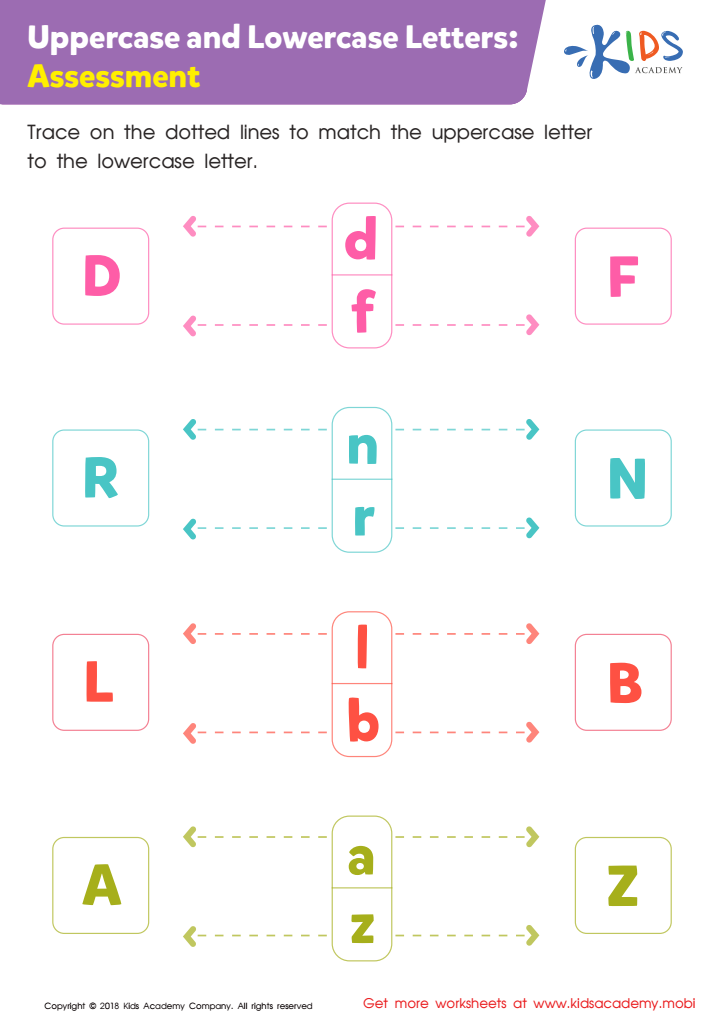
Uppercase and Lowercase Letters: Assessment Worksheet
 Assign to My Students
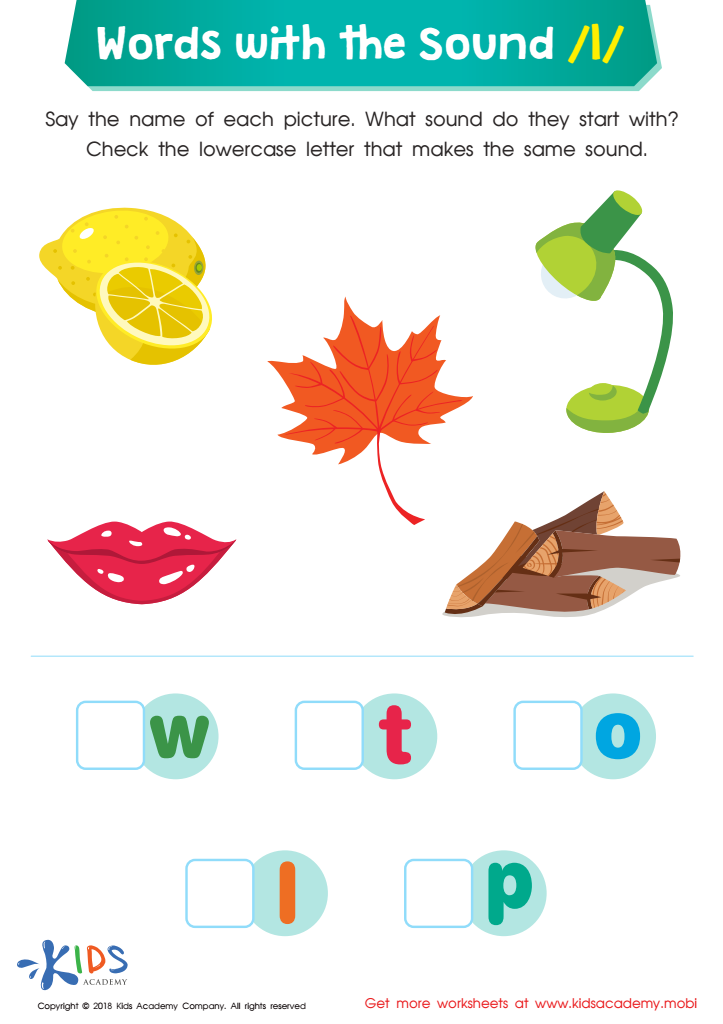
Words with Sound L Reading Worksheet
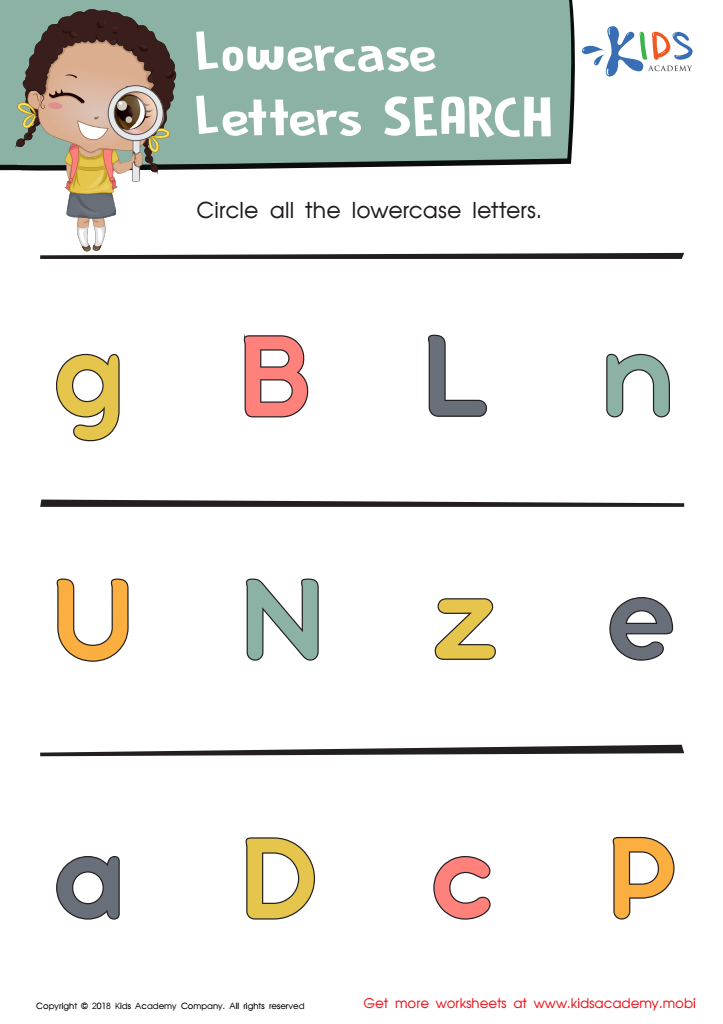
Lowercase Letters Search: Assessment Worksheet


Fostering familiarity and competence with lowercase letters during the ages of 3-6 is crucial for the early literacy development of children. At this formative stage, children are building the foundational skills necessary for reading and writing. Lowercase letters are most commonly found in printed text, typically accounting for about 95% of written language. By ensuring that children are comfortable recognizing and forming these letters, parents and teachers are equipping them with essential tools for literacy.
Early mastery of lowercase letters aids in the development of a seamless reading experience. When children can easily identify these shapes, they can focus on understanding the meaning of words, rather than getting stuck on letter recognition. This facilitates a smoother transition into reading whole words and sentences, building their comprehension skills.
Furthermore, practice with writing lowercase letters strengthens fine motor skills and hand-eye coordination, setting a strong foundation for consistent and legible handwriting. Since many educational activities and assignments require written responses, cultivated proficiency in lowercase letters ensures that children can effectively communicate their thoughts and knowledge.
Investing attention in lowercase letters during the ages of 3-6 builds a solid educational base, encourages a love for reading, and primes children for ongoing academic success. Therefore, parents and teachers should prioritize this aspect of early literacy.