Easy Time Worksheets for Ages 4-7
8 filtered results
-
From - To
Discover "Easy Time Worksheets for Ages 4-7," designed by education experts to make learning to tell time fun and engaging. These colorful, age-appropriate worksheets help your little ones master clock reading, understand hours and minutes, and develop essential time management skills. Through a variety of interactive exercises and activities tailored to young learners, children can practice recognizing both analog and digital clocks, setting times, and solving time-related problems. Perfect for parents and teachers wanting a comprehensive and enjoyable way to introduce time concepts, these worksheets support foundational math skills for early learners. Unlock the joy of learning time with these easy-to-use resources.
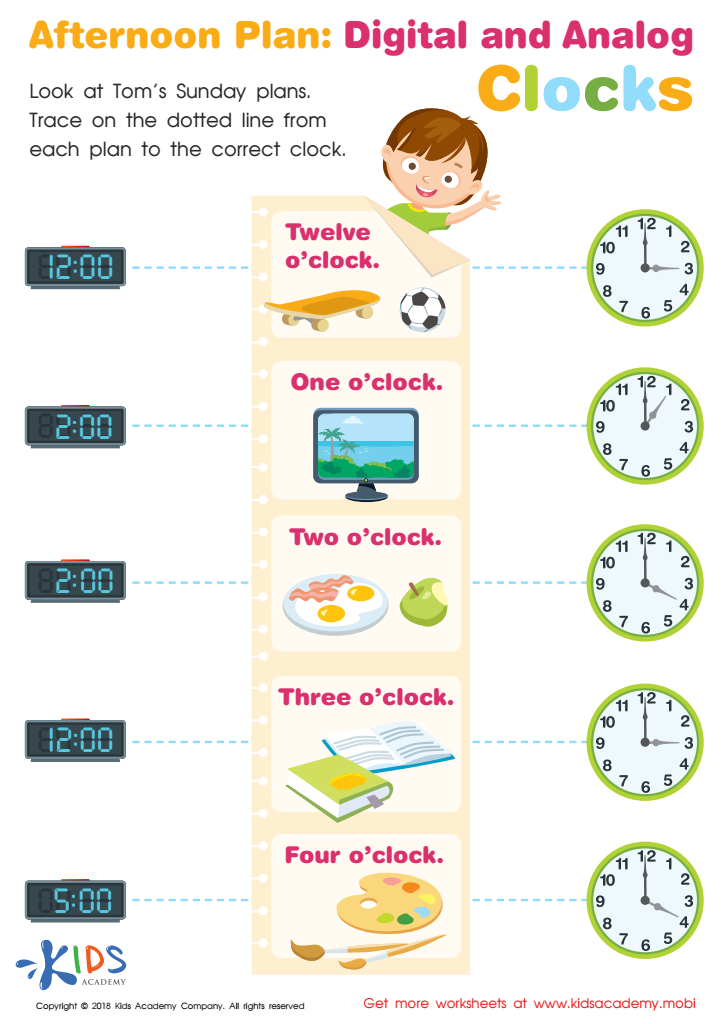
Afternoon Plan: Digital and Analog Clocks Worksheet
 Assign to My Students
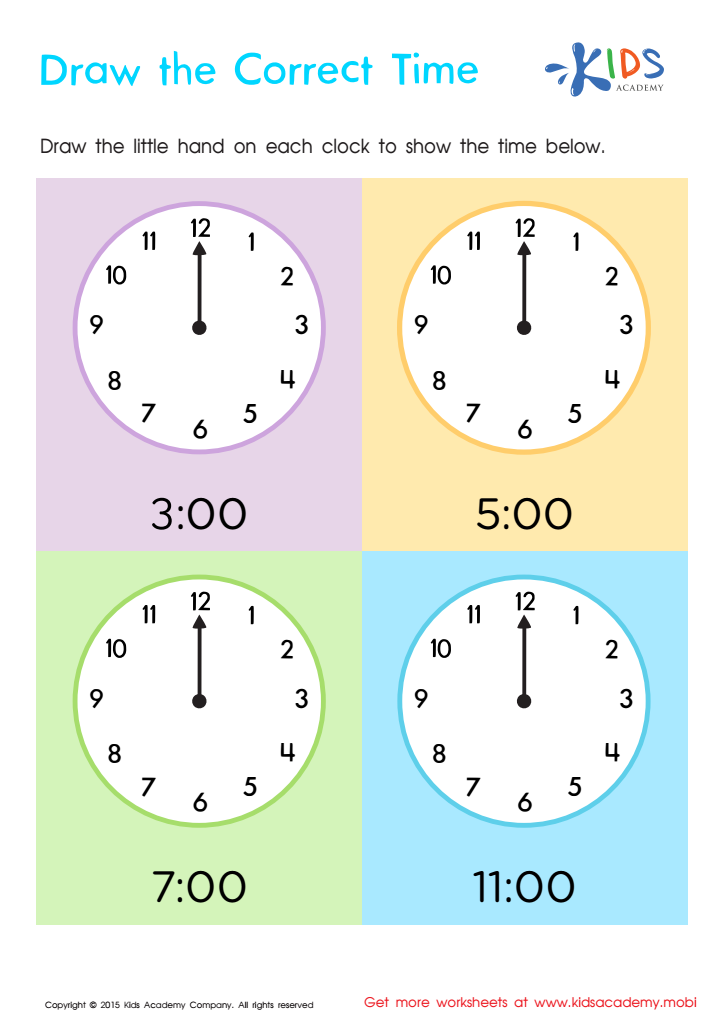
Telling The Time Worksheet: Part 1
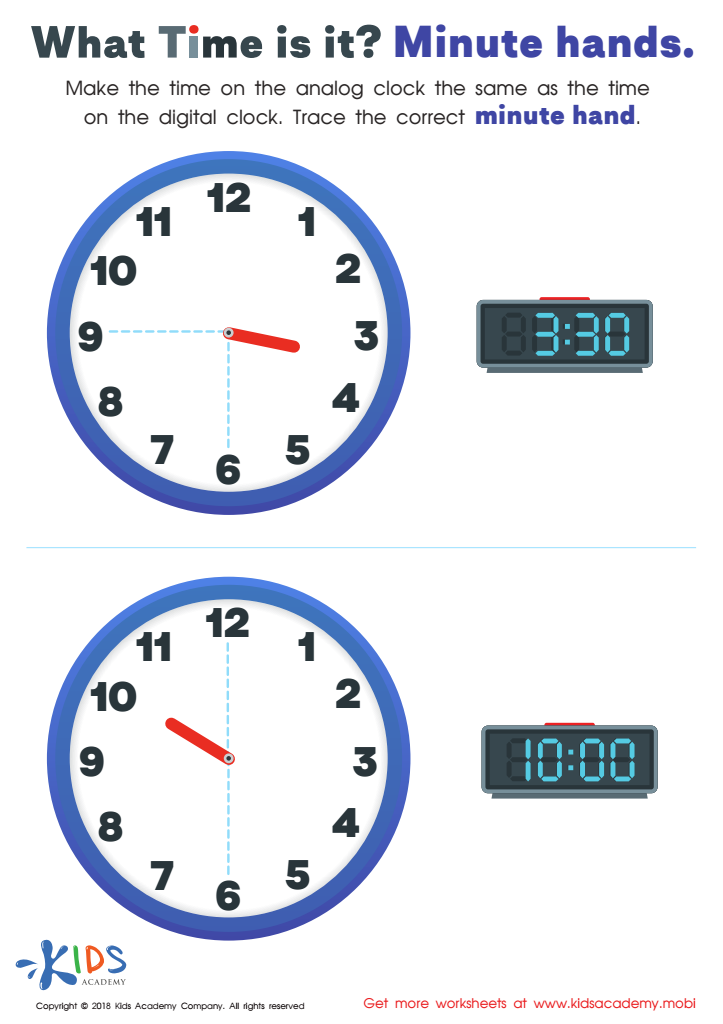
What Time Is it? Minute Hands Worksheet
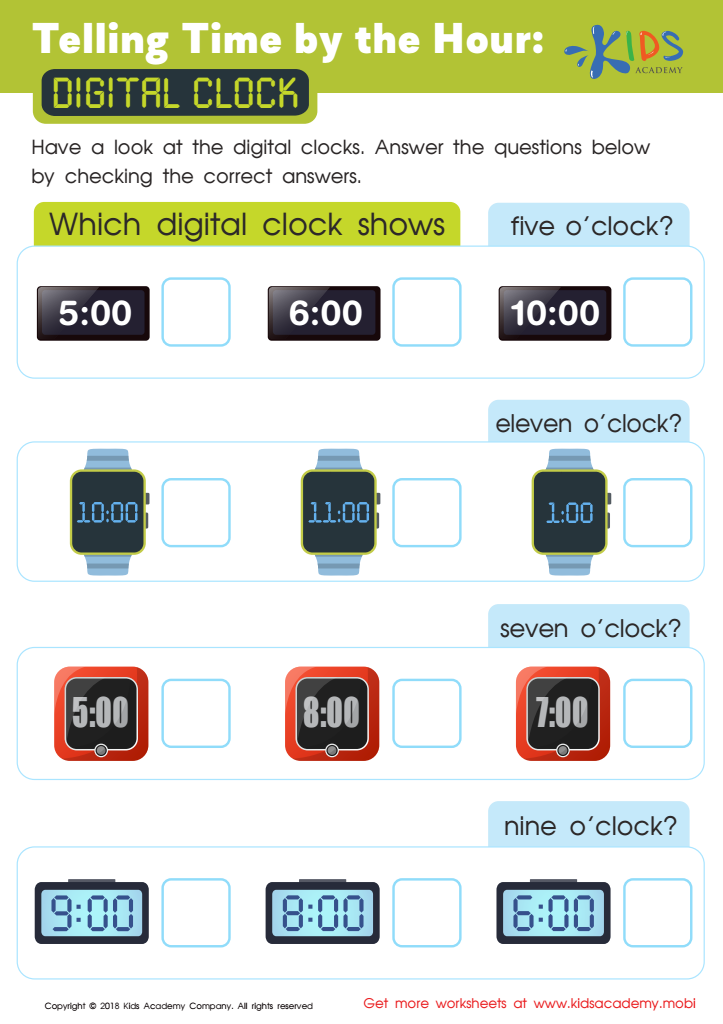
Telling Time by the Hour: Digital Clock Worksheet
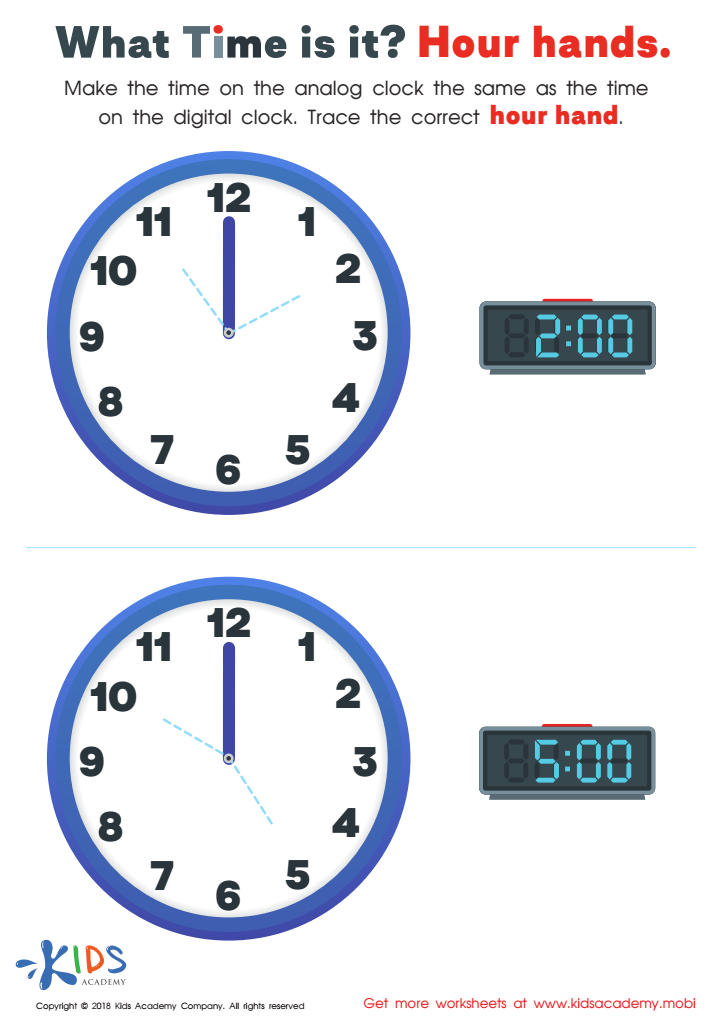
What Time Is it? Hour Hands Worksheet
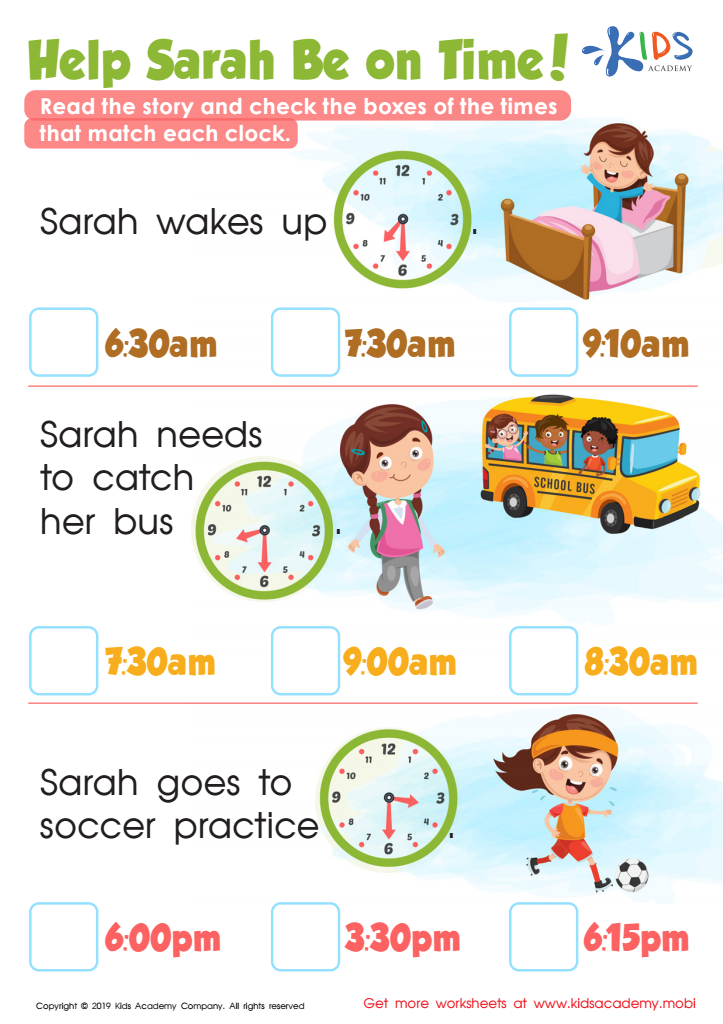
Help Sarah Be on Time! Worksheet
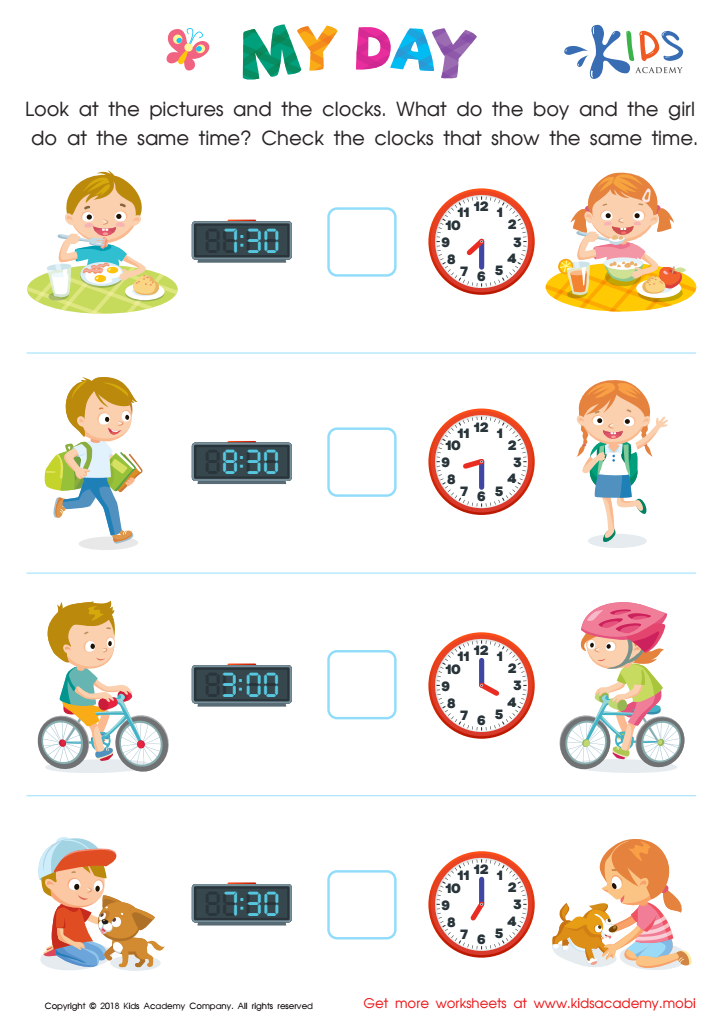
My Day Worksheet
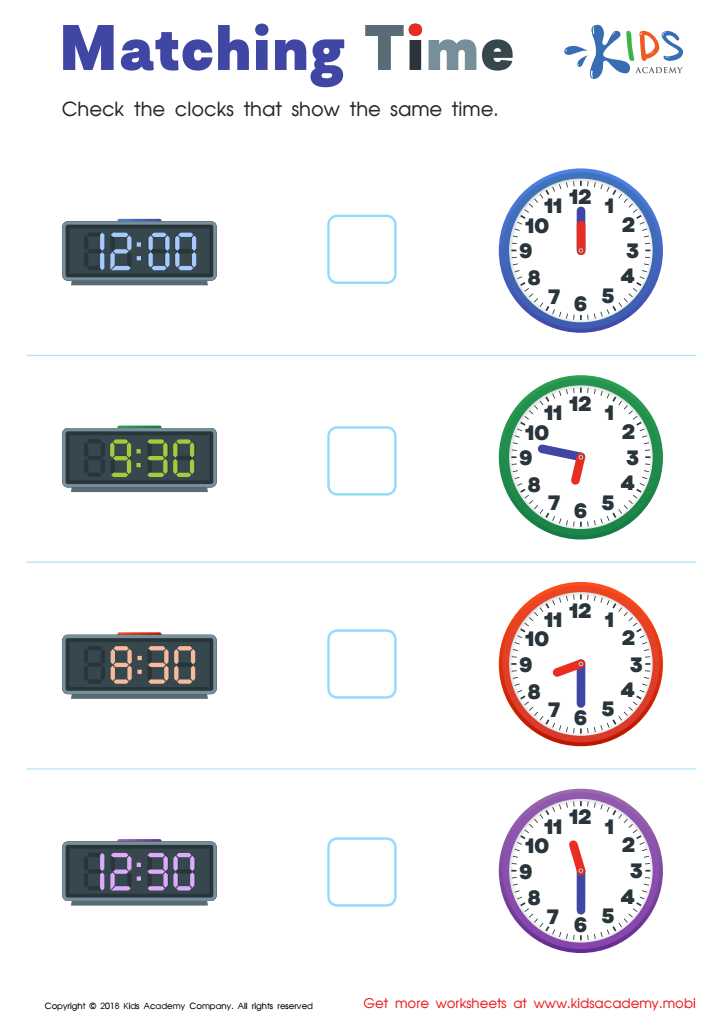
Matching Time Worksheet








Easy Time is a foundational program designed to teach young children aged 4-7 the basics of time management, organization, and the concept of time itself—an essential skill for lifelong success. Parents and teachers should be invested in Easy Time for several compelling reasons. Firstly, it fosters a sense of responsibility in children from an early age. By learning to manage their time, children can enhance their ability to complete tasks, be punctual, and meet deadlines. This leads to improved academic performance and establishes early habits that are crucial for personal growth.
Secondly, Easy Time supports emotional development. When children have structured routines, they tend to feel more secure and stable, reducing anxiety and improving overall well-being. This stability can facilitate better social interactions and cooperative play, enhancing their emotional intelligence.
Additionally, mastering time concepts aids cognitive development. Understanding sequences, schedules, and the passage of time helps build critical thinking and problem-solving skills. By introducing these concepts young, children can develop advanced organizational skills, which are beneficial both in school and daily life.
Finally, teaching time management in early grades lightens the educational load on teachers and parents in later years. Well-organized children tend to need less constant oversight and can undertake more independent, self-directed learning, promoting a more efficient and positive educational experience overall.








