Easy Punctuation Worksheets for Ages 4-7
4 filtered results
Difficulty Level
Grade
Age
-
From - To
Subject
Activity
Standards
Welcome to our collection of Easy Punctuation Worksheets for ages 4-7! Designed to make learning fun and accessible, these engaging worksheets help young learners grasp essential punctuation concepts such as periods, question marks, and exclamation points. Our colorful and interactive activities encourage children to practice writing sentences, answer questions, and complete creative tasks, reinforcing their understanding of how punctuation shapes meaning in writing. Ideal for classroom use or at-home learning, these resources promote early literacy skills while keeping kids entertained. Explore our variety of worksheets and watch your child's confidence grow as they master the basics of punctuation with ease!
Favorites
With answer key
Interactive
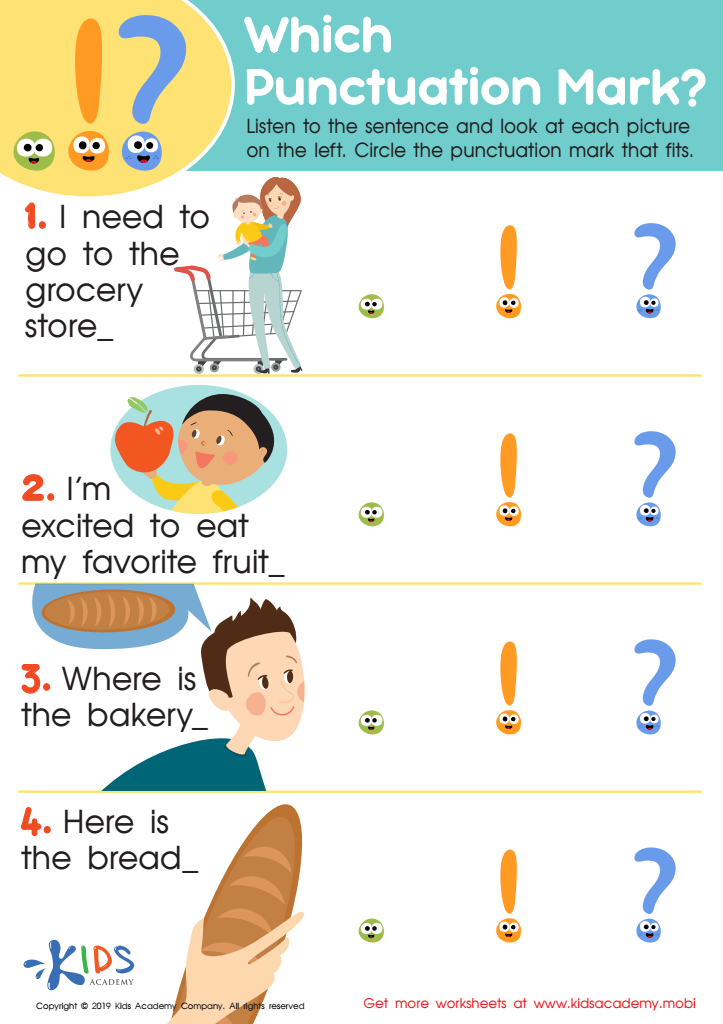
Which Punctuation Mark Worksheet
Punctuation marks are essential for expressing what we say. This worksheet asks your kindergarten student to circle the correct punctuation mark for each sentence. Read each sentence aloud and help them identify the expression needed. A picture accompanies each sentence. Enjoy! (79 words)
 Assign to My Students
Which Punctuation Mark Worksheet
Worksheet
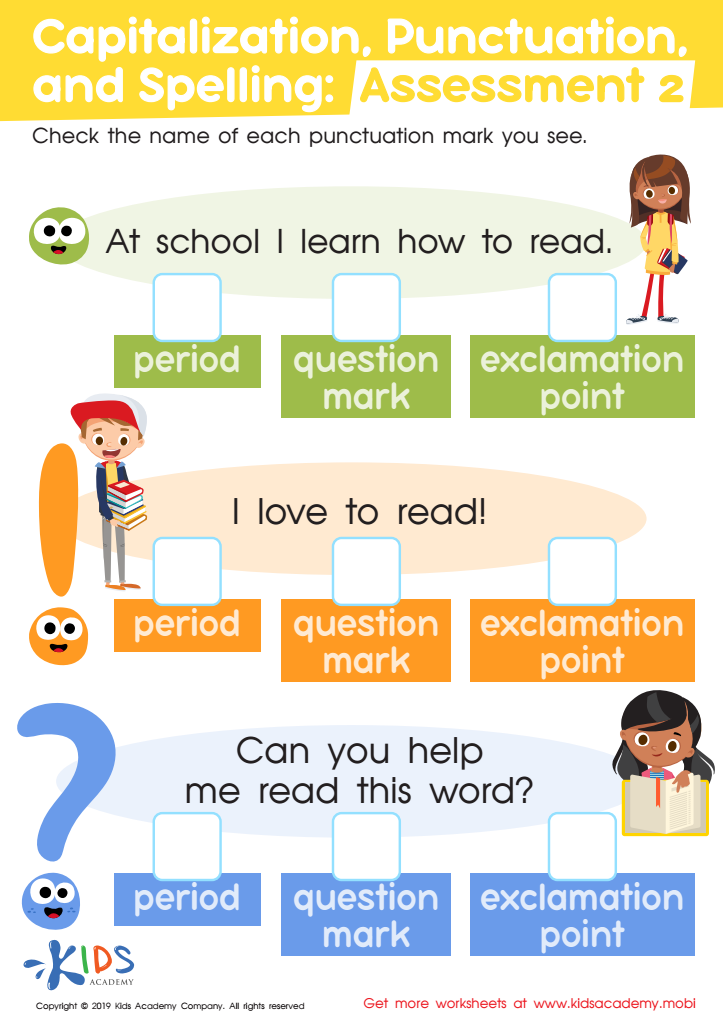
Capitalization. Punctuation. Spelling: Assessment 2 Worksheet
Teach your kids the basics of punctuation. Ask them to name the punctuation marks they know and review a worksheet together. Start with the full stop, question mark and exclamation mark. Show them examples and explain the differences between a comma and semi colon. Teaching proper use of punctuation marks is key to their development.
Capitalization. Punctuation. Spelling: Assessment 2 Worksheet
Worksheet
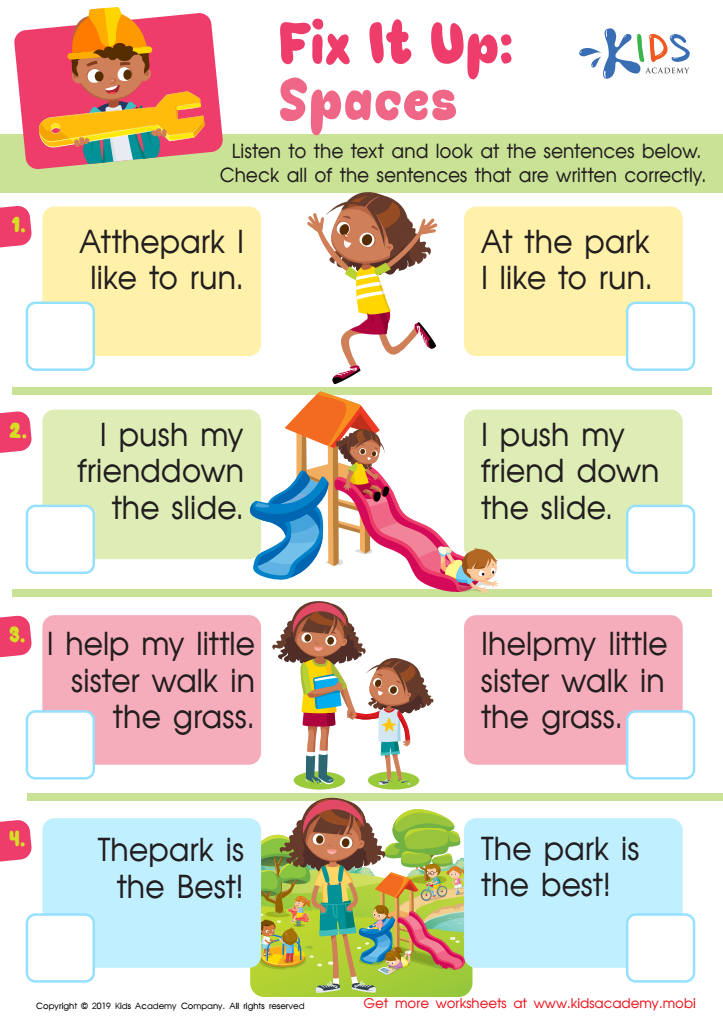
Fix Spaces Worksheet
Encourage kids to check sentences in the worksheet for proper spacing. Explain that clear, orderly writing needs spaces between words, otherwise words can become jumbled and hard to understand. Show them how to identify correctly spaced sentences.
Fix Spaces Worksheet
Worksheet
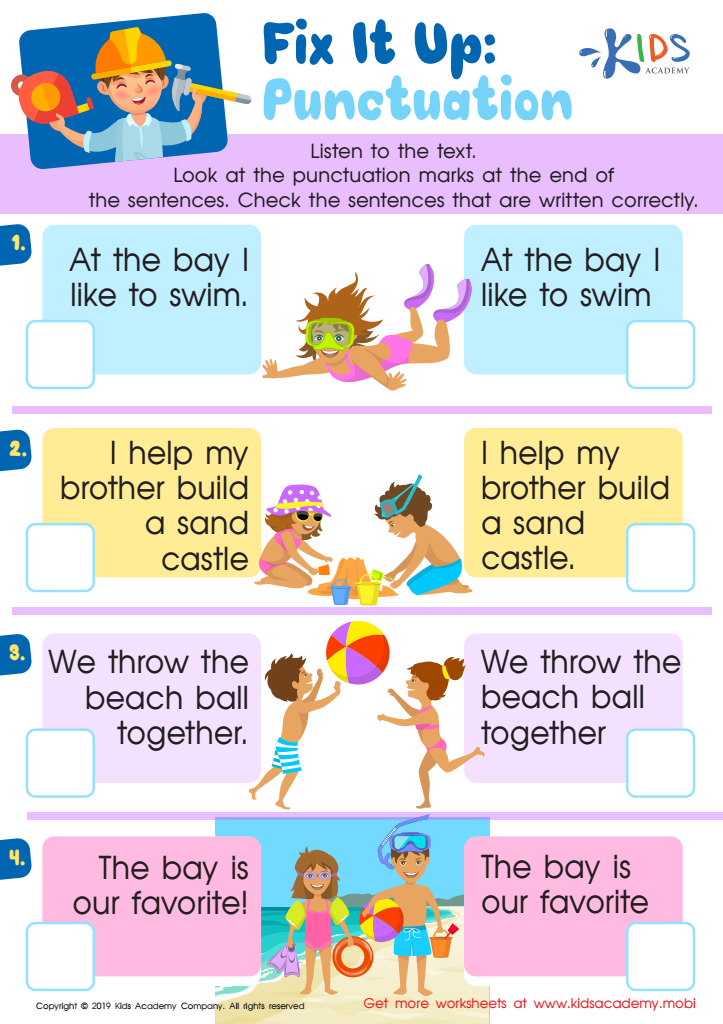
Fix Punctuation Worksheet
Have your kids tell you which punctuation marks they know before using this colorful worksheet. Read the sentences together and ask them to identify which are correctly punctuated. Guide them to check their answers. This simple activity helps teach kids to use punctuation correctly.
Fix Punctuation Worksheet
Worksheet
Join Kids Academy for Free
Who is primarily going to use this learning content?


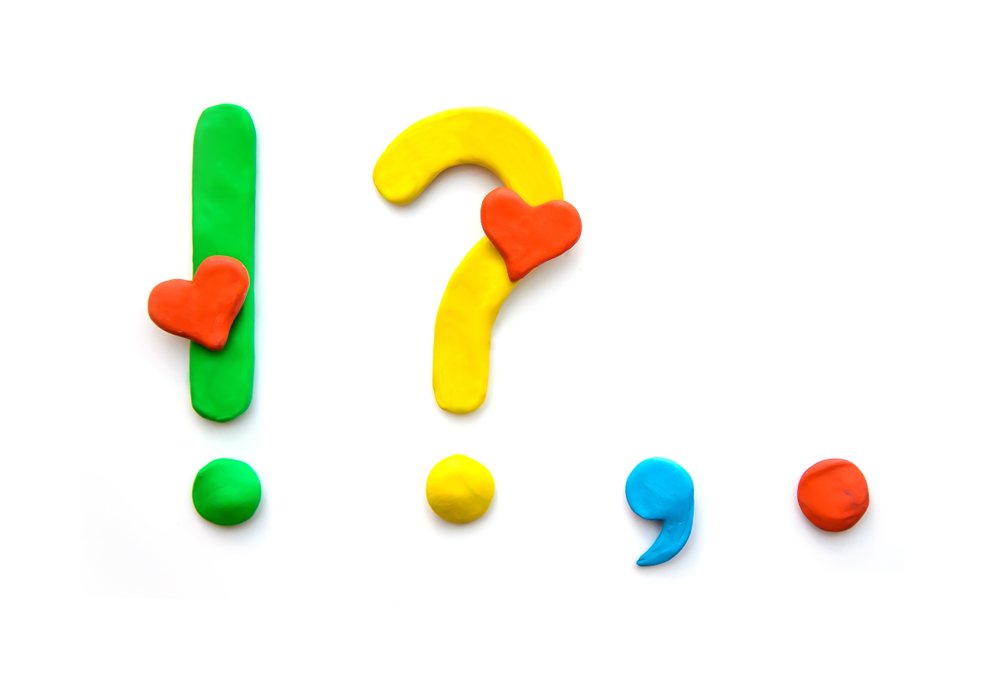





Easy Punctuation for Ages 4-7 is crucial for young learners as it lays the foundation for effective communication and literacy skills. At this age, children are developing their reading and writing abilities, and understanding punctuation is a key component. Parents and teachers should care about this because punctuation helps children express their thoughts clearly and understand the structure of sentences.
Introducing concepts like periods, question marks, and exclamation points encourages children to realize that written words convey not just information but emotion and tone. This understanding fosters better comprehension when they read, as they learn to recognize the rhythm and pauses dictated by punctuation. Additionally, learning punctuation at a young age enhances writing skills. Children who grasp these concepts early are more adept at organizing their writing and conveying their messages accurately, laying the groundwork for future academic success.
Moreover, engaging children with easy and playful punctuation exercises can spark their interest in language, making learning enjoyable. This foundation helps create proficient readers and writers, boosting confidence and setting them on a path toward lifelong literacy skills. Ultimately, investing in easy punctuation education early ensures that children are well-equipped to navigate the complexities of written language as they grow.