Easy Consonants Worksheets for Ages 4-8
3 filtered results
-
From - To
Discover our "Easy Consonants Worksheets for Ages 4-8" at Kids Academy! Perfect for young learners, these worksheets are designed to make the introduction to consonants fun and engaging. Our vibrant, age-appropriate activities help children identify, recognize, and practice consonant sounds through enjoyable exercises. Ideal for preschool to early elementary students, these resources support foundational literacy skills with clear instructions and playful illustrations. Whether for in-class use or home practice, each worksheet aims to build confidence and phonemic awareness. Start your child's reading journey with our easy-to-use and captivating consonants worksheets!
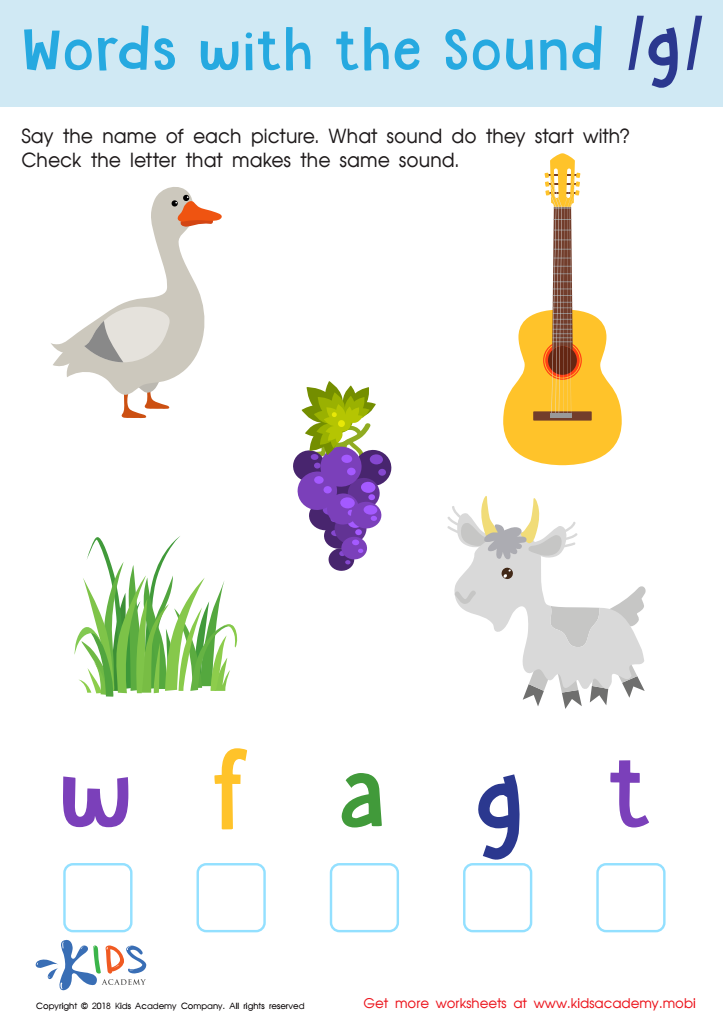
Words with sound g Reading Worksheet
 Assign to My Students
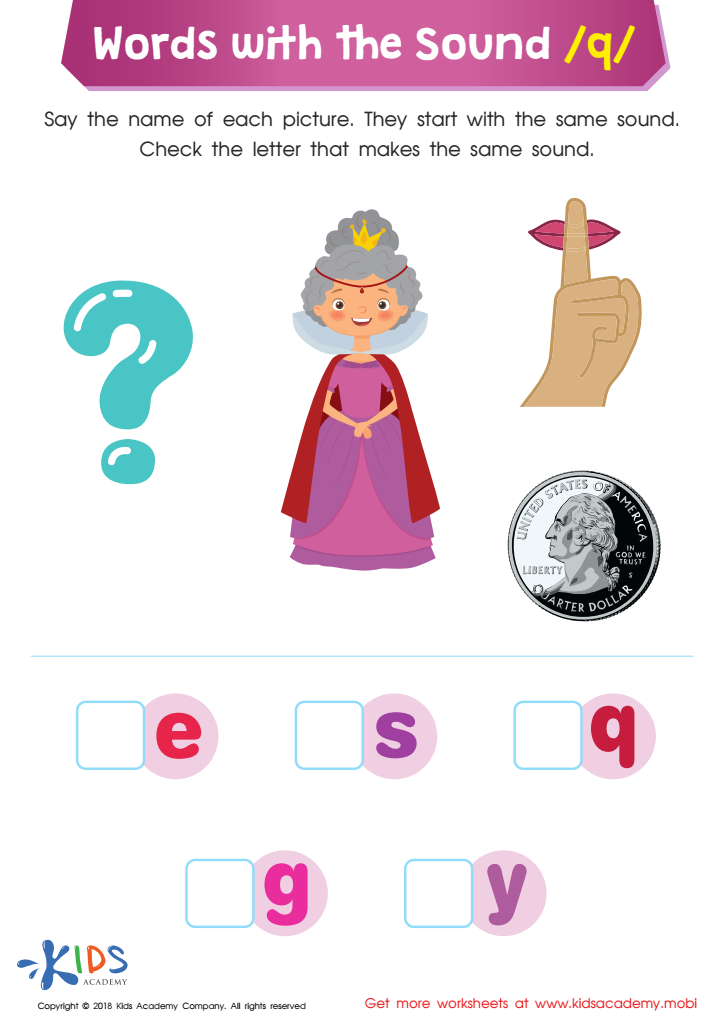
Words with Sound Q Reading Worksheet
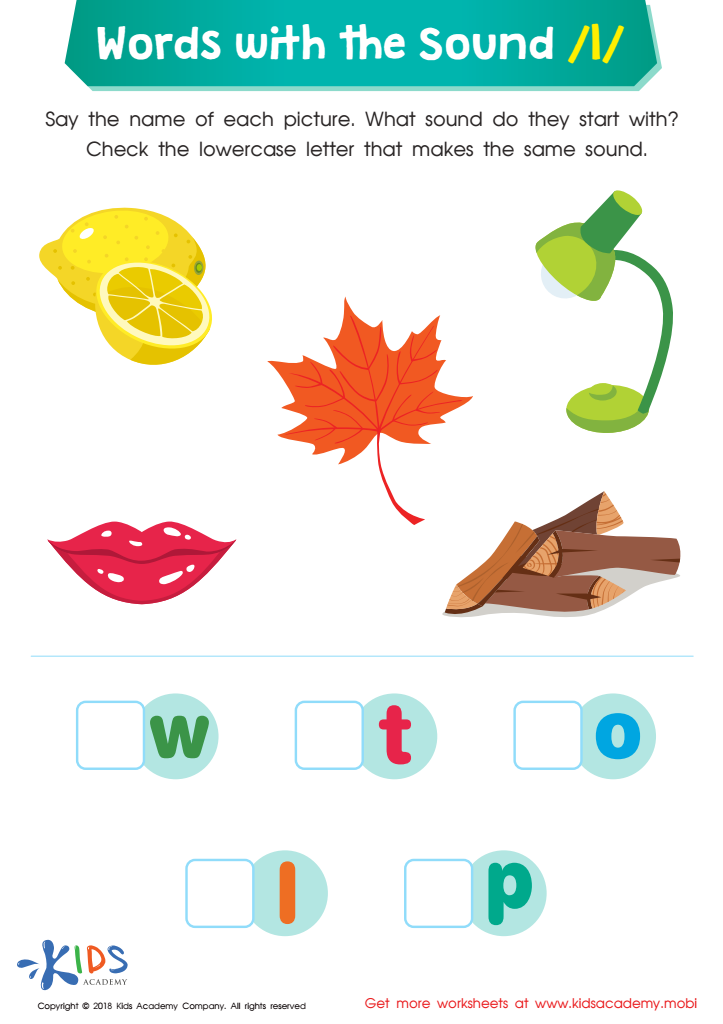
Words with Sound L Reading Worksheet



Parents and teachers should pay close attention to "Easy Consonants" for children aged 4-8 because mastering consonants is a foundational step in early literacy. At this crucial developmental stage, children are beginning to develop their phonemic awareness—the ability to hear, identify, and manipulate individual sounds in spoken words. Consonants form the building blocks of words and understanding their sounds helps children decode unfamiliar words and improve their reading fluency.
Learning consonants through playful and engaging activities can also boost children's confidence in their language abilities, making the process enjoyable rather than a chore. For instance, games that involve matching objects with beginning consonant sounds or singing songs featuring repetitive consonant patterns can make learning these important sounds feel like a game rather than a lesson.
Furthermore, early mastery of consonants aids in spelling and writing skills. When children grasp how consonants combine with vowels to form words, they can start writing simple words and sentences. This, in turn, enhances their expressive abilities and overall communication skills.
In essence, focusing on Easy Consonants not only lays a critical literacy foundation but also shapes a child's love for reading and learning, positively affecting their long-term educational journey. Thus, parents and teachers have a significant role in supporting this aspect of early education.