Easy Letter Sounds Worksheets for Ages 4-9
6 filtered results
Difficulty Level
Grade
Age
-
From - To
Subject
Activity
Standards
Our Easy Letter Sounds Worksheets for Ages 4-9 are the perfect resource for early learners to master the basics of phonics. Designed by educational experts, these fun and engaging activities help children recognize, hear, and replicate letter sounds. Each worksheet offers age-appropriate, colorful exercises and interactive tasks ensuring kids remain motivated and confident in their learning journey. These printables incorporate playful images and simple instructions that make the learning experience enjoyable and effective. Ideal for parents and educators, our worksheets will set a strong foundation for your child's reading and pronunciation skills. Explore our collection and boost your child’s early literacy today!
Favorites
With answer key
Interactive
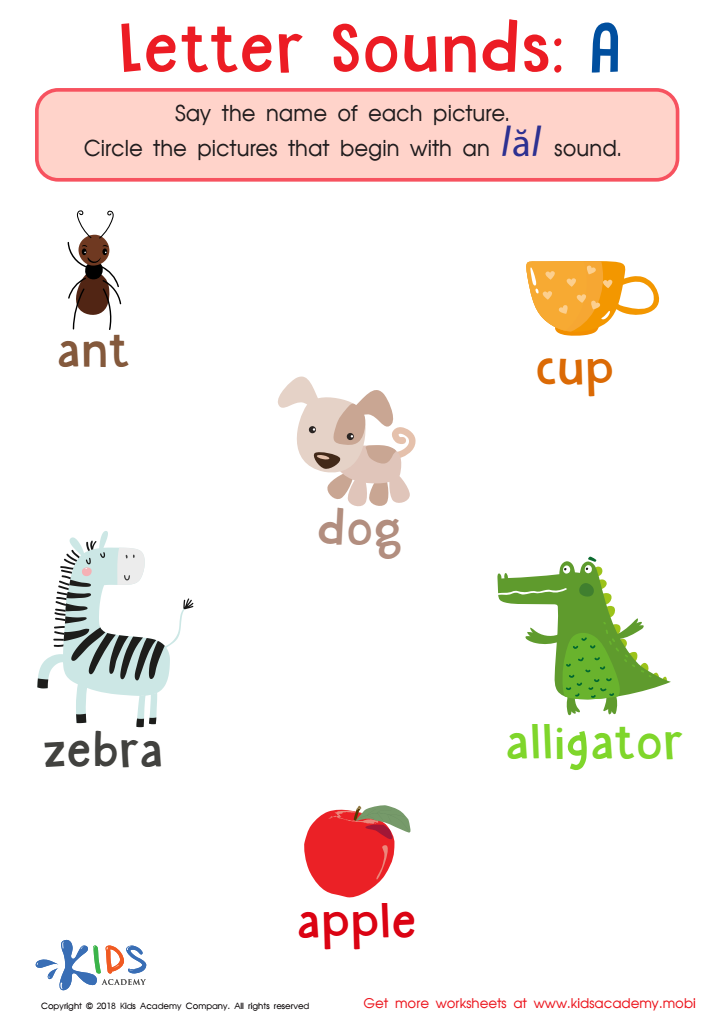
Letter A Sounds Worksheet
Encourage your new reader to practice the «ă» sound with this fun, free PDF worksheet. With the help of picture clues, they'll say the name of each word and trace circles around the items that start with «ă». This worksheet is an effective way to boost beginning sound skills while having fun!
 Assign to My Students
Letter A Sounds Worksheet
Worksheet
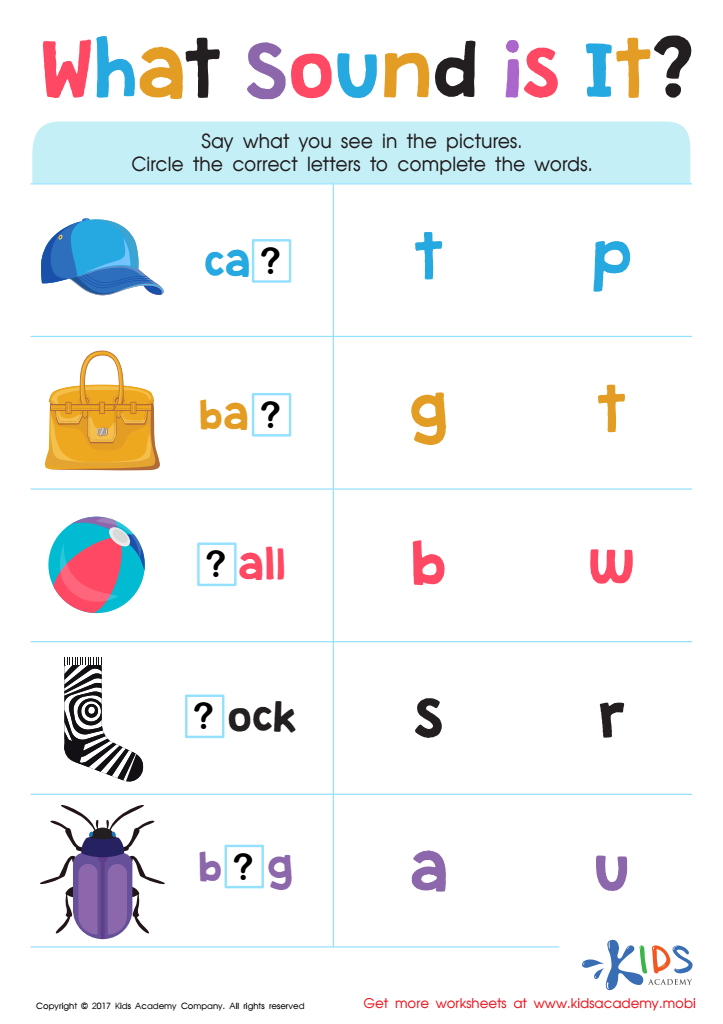
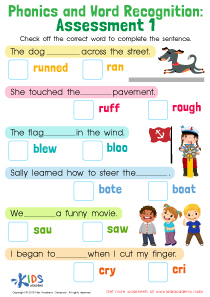
What Sound Is it? Worksheet
Have your child say the words for the pictures on this fun worksheet. As he or she sounds out the word, your child will use the provided letter choices to complete it, building reading and phonics skills. Visual cues make it easier to identify the correct beginning, middle, or end sound.
What Sound Is it? Worksheet
Worksheet
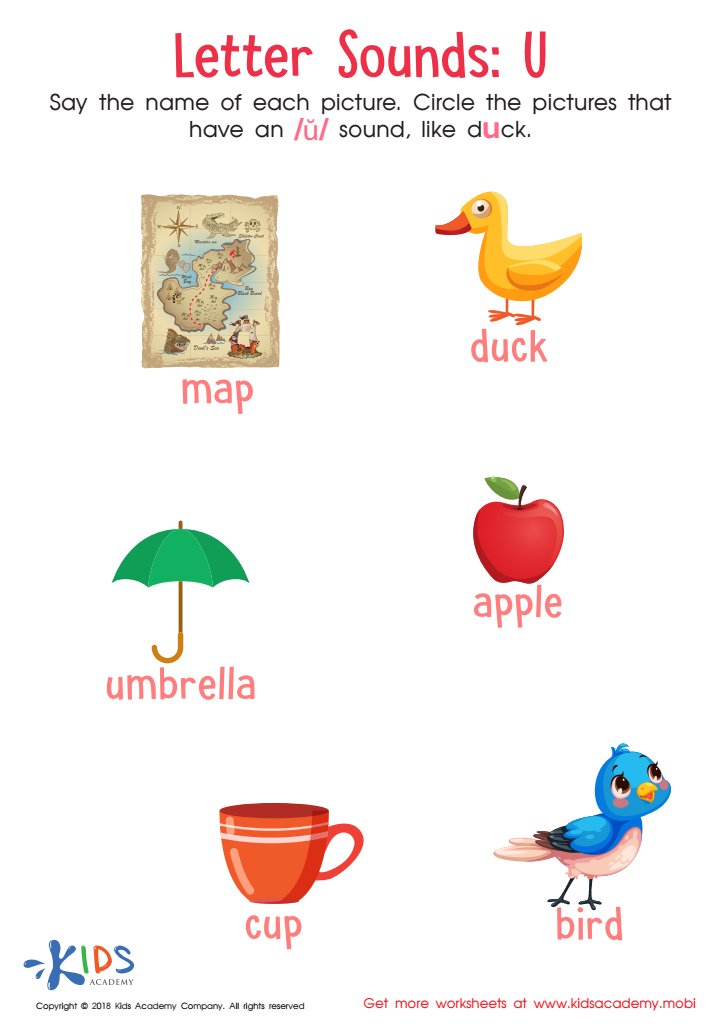
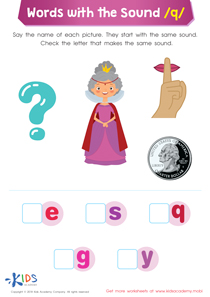
Letter U Sounds Worksheet
The letter U is special with multiple pronunciations. This worksheet helps kids identify the short «u» in words like duck and cup. Read the words aloud and listen closely to the sounds. Circle only words with the correct sound to complete the sheet. Kids will quickly know that words like "map" don't contain a U.
Letter U Sounds Worksheet
Worksheet
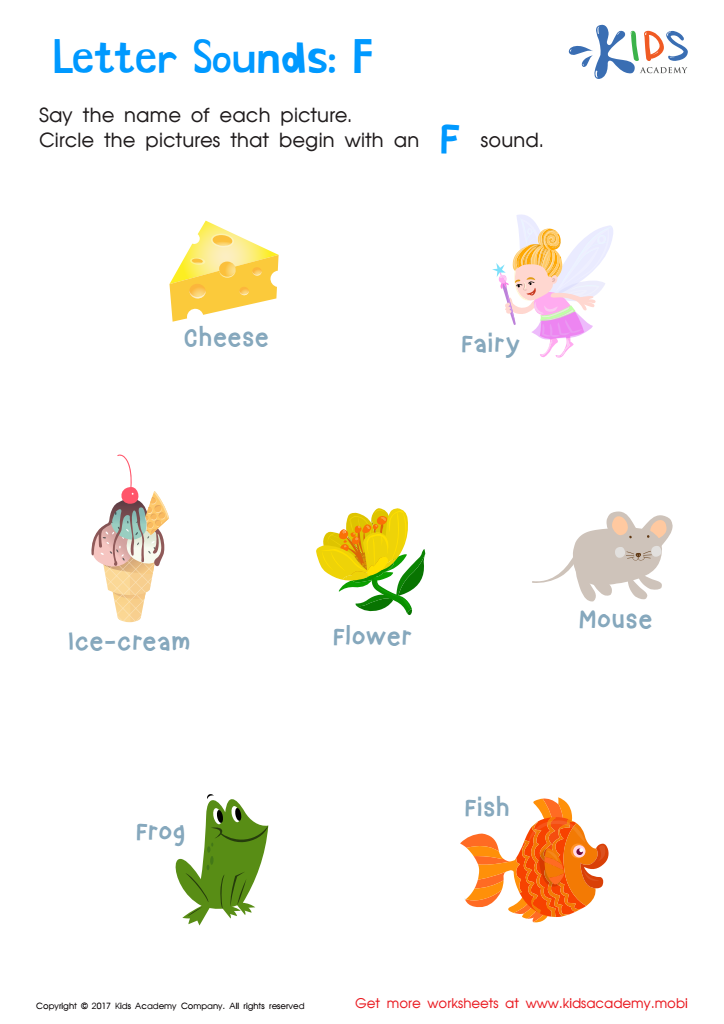
Letter F Sounds Worksheet
Kids will practice identifying 'f' words, tracing, and coloring the letter F for a great way to learn phonics.
Help your child discover the wonders of the letter 'F' with this fun worksheet! Kids will practice identifying 'F' words, tracing and coloring the letter, and building early reading skills. Stimulate their learning and let them connect letter sounds to words they know. An enjoyable way to practice phonics!
Letter F Sounds Worksheet
Worksheet
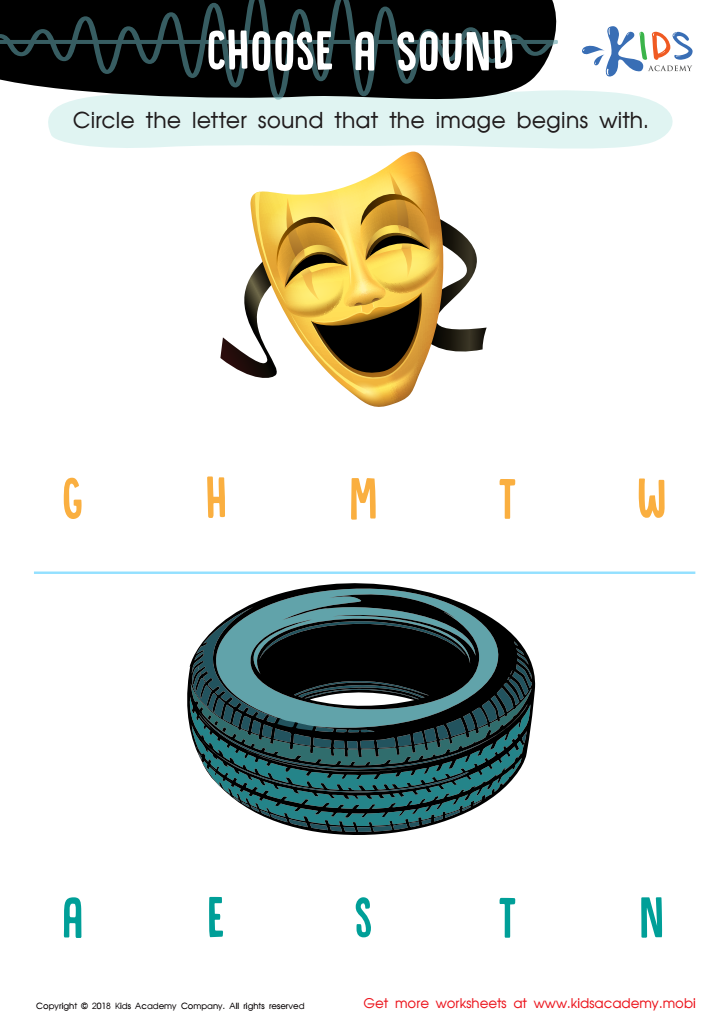
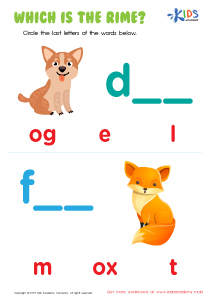
Choose a Sound Worksheet
Help your child hone pre-reading skills with this colorful worksheet! They'll practice tracing letter sounds, develop phoneme awareness, and gain confidence. Plus, it's a fun way to work on their fine motor skills.
Choose a Sound Worksheet
Worksheet
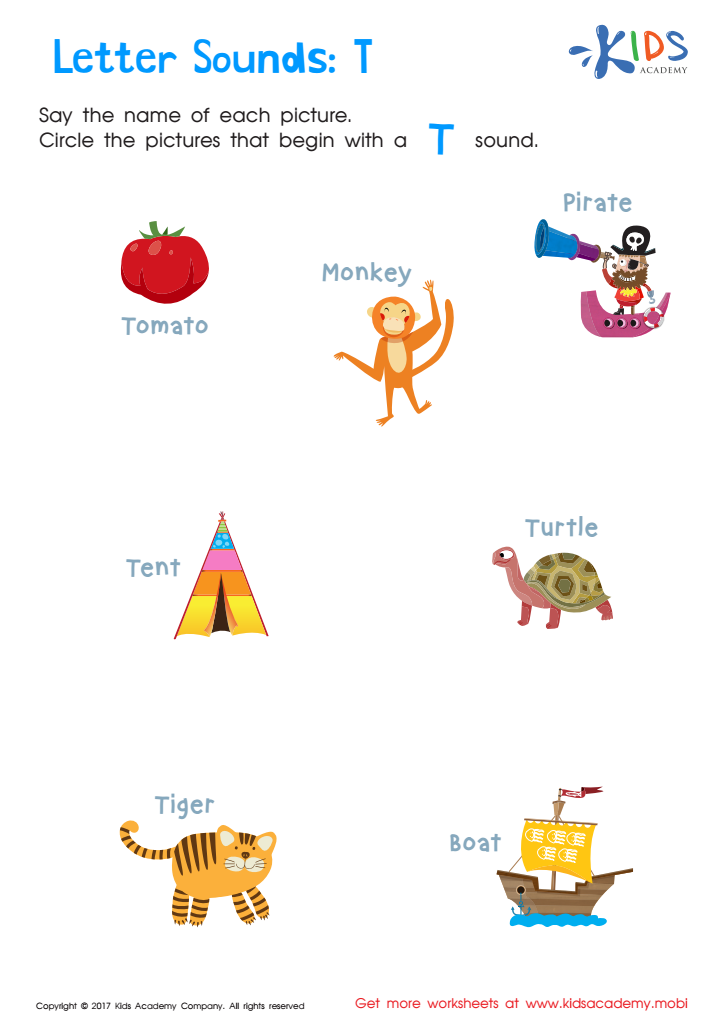
Letter T Sounds Worksheet
This worksheet is a fun way to help kids learn the t sound. It has familiar pictures and an easy-to-follow format, so kids can quickly recognize and learn the letter t.
Letter T Sounds Worksheet
Worksheet
Join Kids Academy for Free
Who is primarily going to use this learning content?








Parents and teachers should care about Easy Letter Sounds for children aged 4-9 because these foundational skills are crucial for early literacy development. Understanding letter sounds, also known as phonemic awareness, is the building block for reading and writing. When children grasp the sounds that letters and combinations of letters make, they begin to decode words more effectively. This decoding process is essential for fluent reading and spelling.
Engaging with letter sounds at an early age enhances vocabulary acquisition and comprehension skills. It enables children to sound out unfamiliar words, boosting their confidence and fostering a love for reading. Moreover, early mastery of letter sounds has been linked to better performance in later grades, as it underpins other literacy skills such as phonics, word recognition, and syllable segmentation.
From a socio-emotional perspective, success in reading can significantly impact a child's self-esteem and motivation to learn. Interacting with letter sounds through playful activities, songs, and games makes the learning process enjoyable and less daunting for young children. Therefore, prioritizing easy letter sounds in early education sets the stage for lifelong learning and academic success, making it a critical aspect of a child's developmental journey.