Easy Lowercase/Small Letters Worksheets for Ages 6-7
3 filtered results
-
From - To
Introduce your child to the world of letters with our "Easy Lowercase/Small Letters Worksheets for Ages 6-7". Designed specifically for little learners, these fun and engaging printables help develop essential handwriting and literacy skills. Each worksheet features clear instructions, colorful visuals, and plenty of practice opportunities to make learning enjoyable and effective. Perfect for early grade students, these worksheets foster confidence and mastery in writing lowercase letters. Download now from Kids Academy and start your child's educational journey with a strong foundation in alphabet knowledge! Ideal for both classroom use and at-home practice.
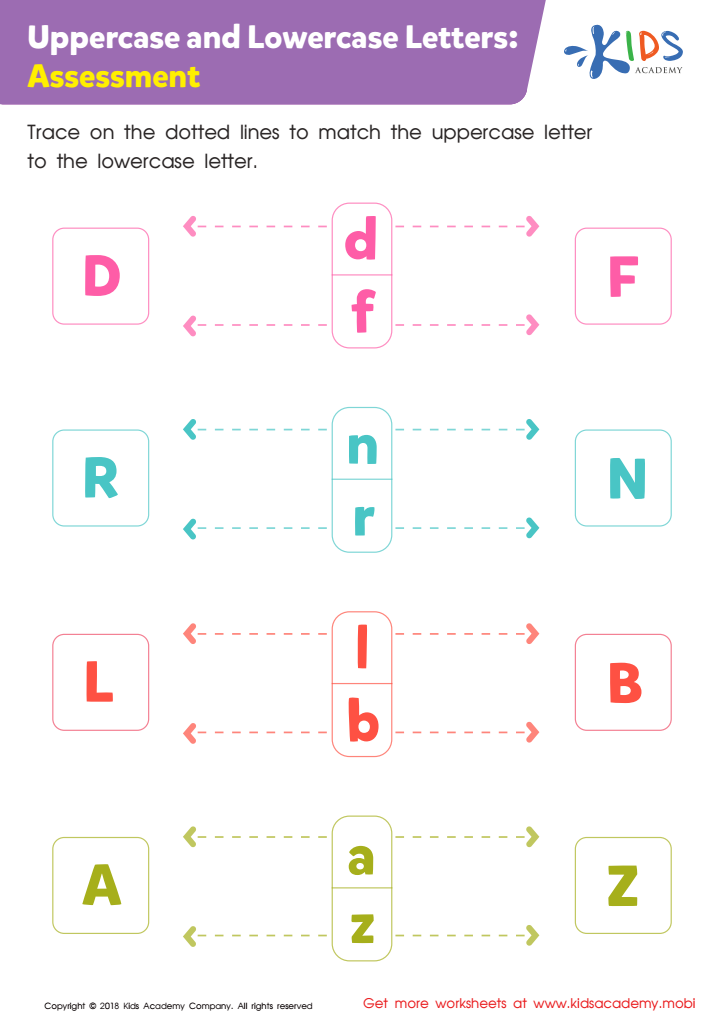
Uppercase and Lowercase Letters: Assessment Worksheet
 Assign to My Students
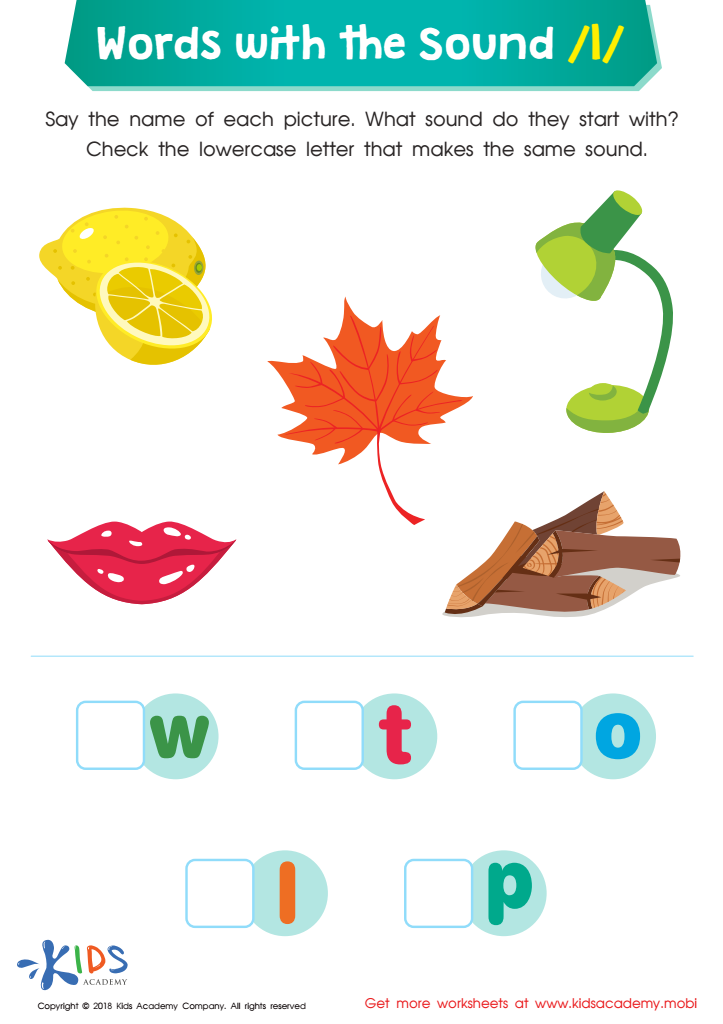
Words with Sound L Reading Worksheet
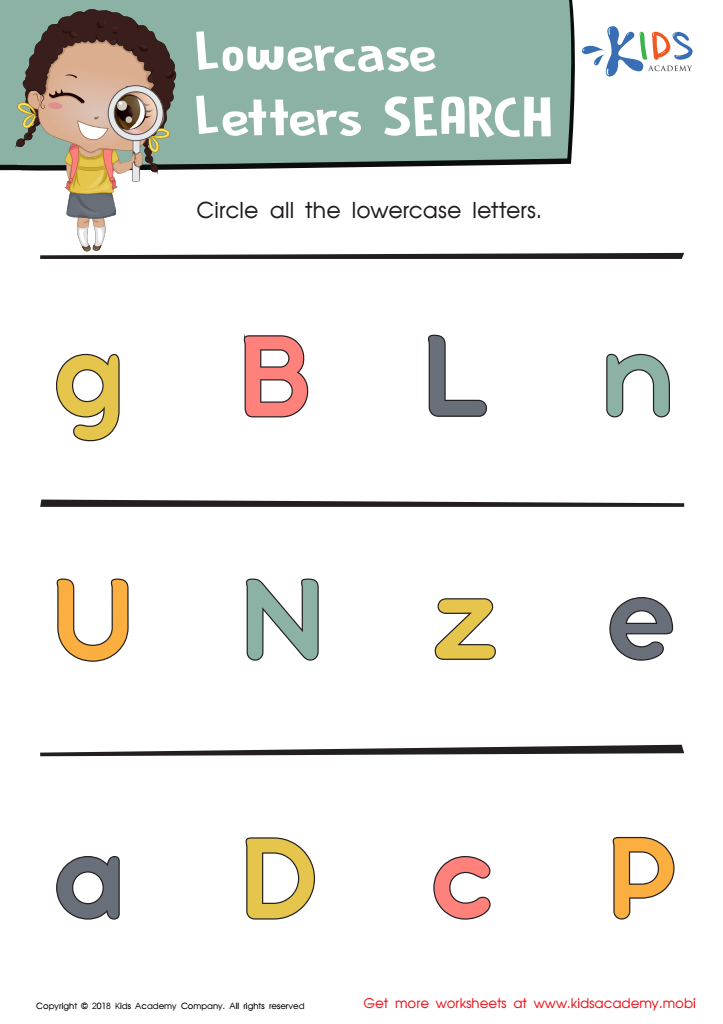
Lowercase Letters Search: Assessment Worksheet


Parents and teachers should care about teaching easy lowercase letters to children aged 6-7 because this foundational skill is critical for literacy development. At this age, children transition from recognizing individual letters to reading and writing effectively. Mastering lowercase letters, which dominate written texts, is crucial for fluency. Approximately 95% of written words are in lowercase, so familiarity helps children decode and comprehend text naturally.
Lowercase letter proficiency directly impacts a child's ability to compose written language. It enables them to write legibly and express their thoughts, boosting their confidence and academic performance. Understanding the distinct forms and sounds of lowercase letters enhances phonetic skills, facilitating smoother reading progression.
Neglecting this aspect of early education can lead to struggles with reading comprehension, particularly because mixed-case text requires differentiation between uppercase and lowercase letters. Thus, fluent knowledge of lowercase letters leads to a quicker and more robust acquisition of sight words, contributing to more effective reading strategies.
For both parents and teachers, prioritizing easy lowercase letters means fostering essential cognitive and motor skills. By engaging children with interactive activities like tracing, matching games, and reading sessions, they provide a foundation that supports lifelong learning and academic success. Investing time in this area ultimately bridges early education with future achievement, underscoring its importance.