Easy Two-step Word Problems Worksheets for Ages 6-9
5 filtered results
-
From - To
Our "Easy Two-step Word Problems Worksheets for Ages 6-9" are crafted to boost young learners' math skills and critical thinking. Each worksheet presents engaging scenarios that require children to solve two-step word problems using addition, subtraction, multiplication, or division. With colorful illustrations and relatable themes, these worksheets make learning fun and effective. Ideal for classrooms and homeschooling, they help kids develop confidence and problem-solving abilities. The answer keys ensure parents and teachers can easily check progress and provide feedback. Download these worksheets to turn math practice into an enjoyable adventure!
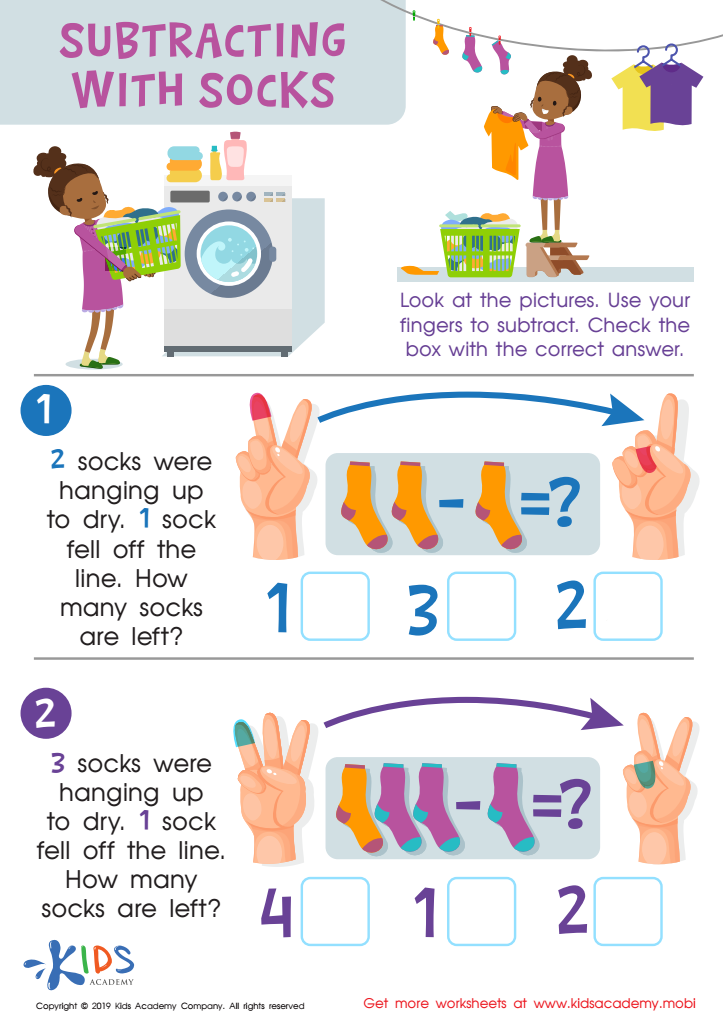
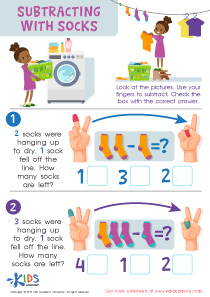
Subtracting Socks Worksheet
 Assign to My Students
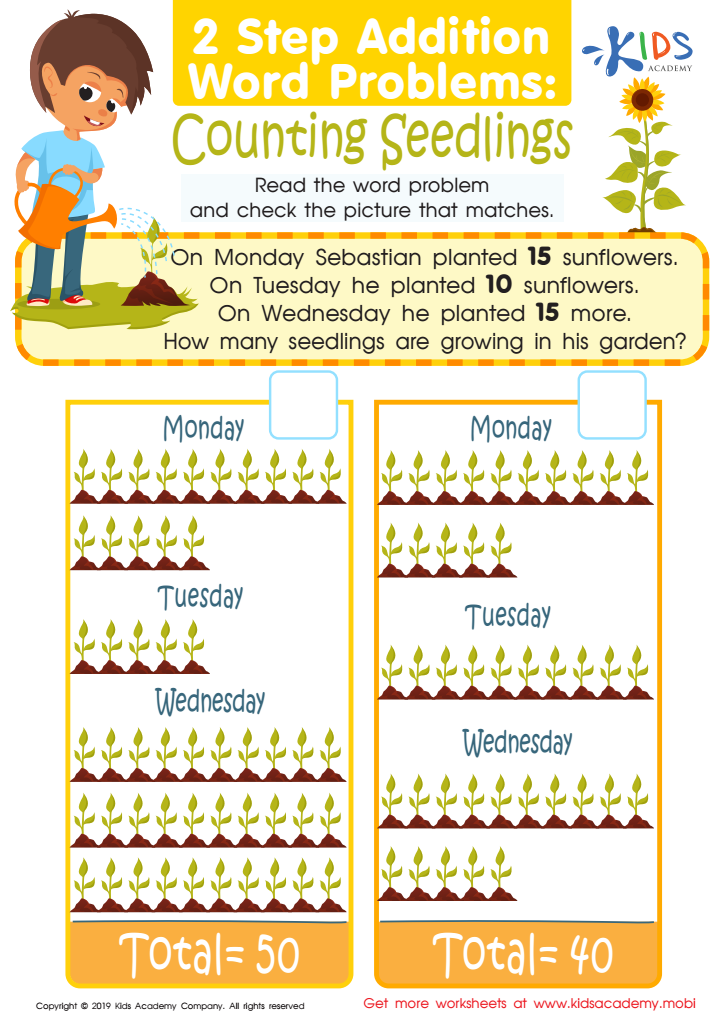
Counting Seedlings Worksheet
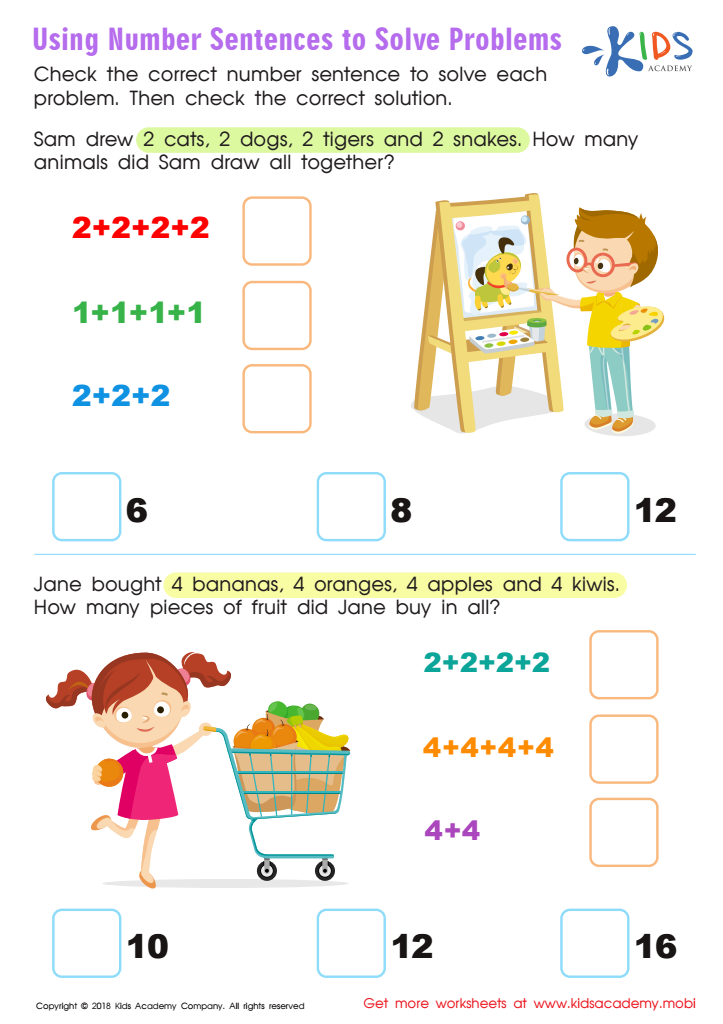
Using Number Sentences to Solve Problems Worksheet
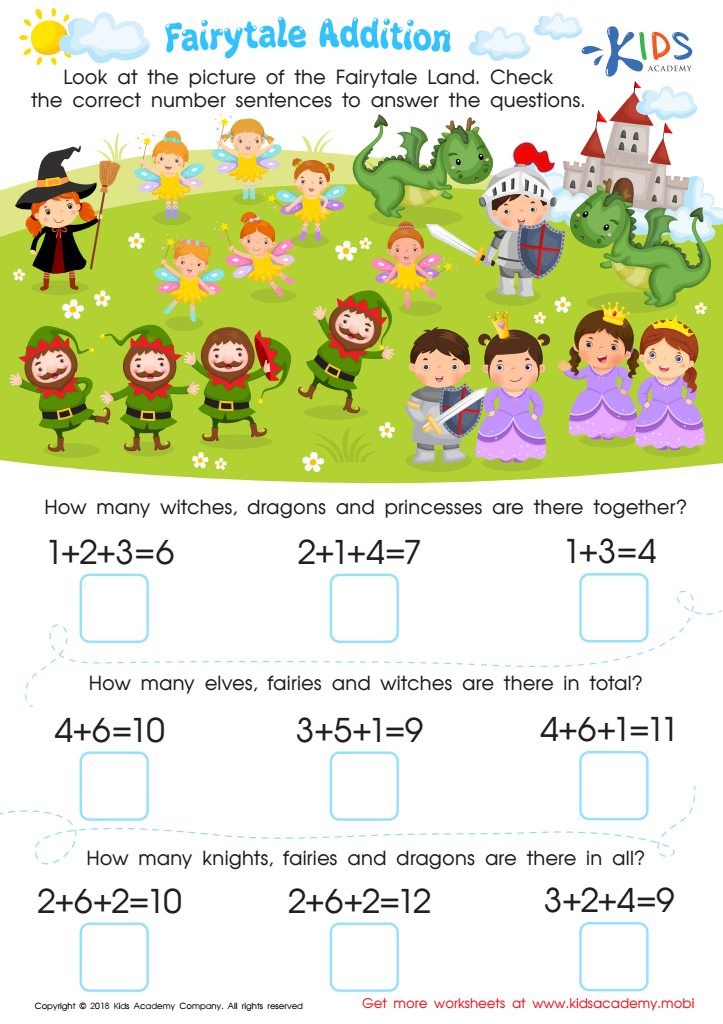
Fairytale Addition Worksheet
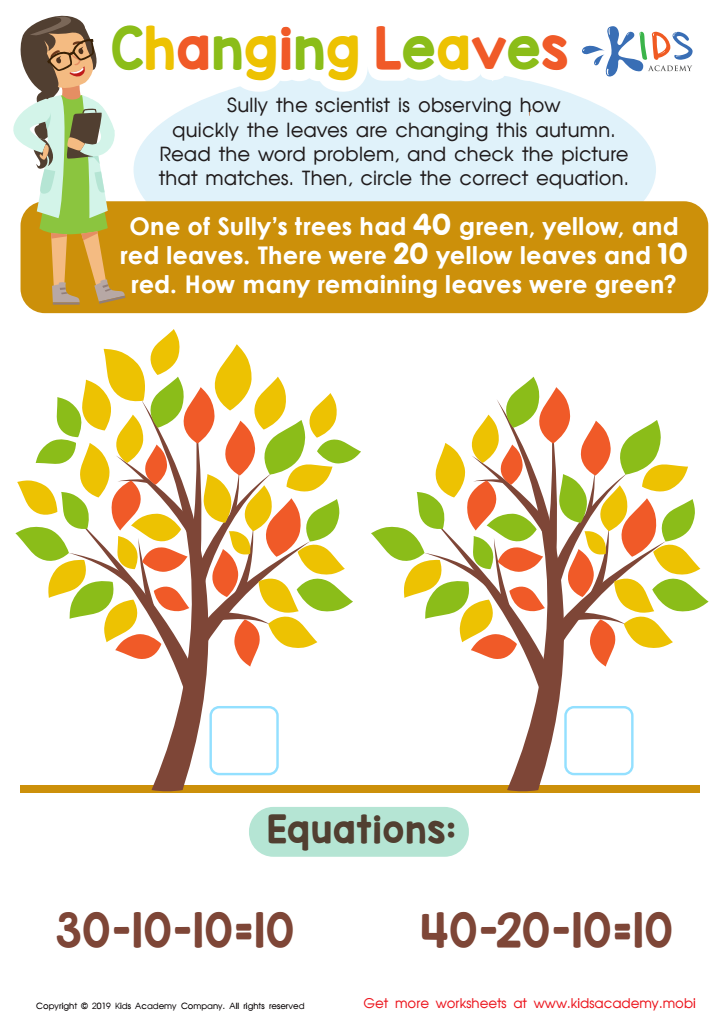
Changing Leaves Worksheet



Easy two-step word problems are crucial for children aged 6-9 as they form a foundational part of early math education, bridging the gap between basic arithmetic and more complex problem-solving. Firstly, these problems encourage children to apply their understanding of addition, subtraction, multiplication, and division practically. By handling two-step problems, kids enhance their cognitive abilities, fostering critical thinking and logical reasoning skills.
Parents and teachers should note that solving these problems requires comprehension beyond simple computation. Students must read and understand the question, determine the necessary steps, and execute them correctly. This multifaceted challenge helps in developing reading comprehension and analytical skills concurrently.
Moreover, establishing a strong foundation in problem-solving can build children's confidence in their mathematical abilities, making them more likely to tackle challenging problems in the future. Consistently engaging with these problems aids in recognizing patterns and improves their perseverance and attention to detail.
Finally, the skills gained from practicing two-step word problems are interdisciplinary. They lay the groundwork not just for future mathematics but for subjects like science, where problem-solving and analytical skills are paramount. Thus, ensuring that children grasp this concept is investing in their overall educational development and success.