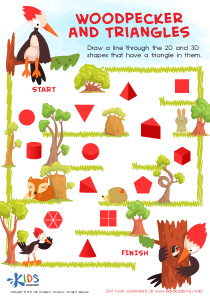
Extra Challenge Fractions of Shapes Worksheets for Ages 5-6
6 filtered results
-
From - To
Introduce your child to the exciting world of fractions with our Extra Challenge Fractions of Shapes Worksheets, designed for ages 5-6. Perfect for young learners ready for advanced tasks, these worksheets provide engaging activities to help them grasp the concept of dividing shapes into equal parts. Each worksheet features vibrant illustrations and interactive problems tailored to develop your child’s understanding of fractions while keeping them entertained. Whether in the classroom or at home, these worksheets are a fantastic resource to challenge and enhance your child’s mathematical skills, making learning fractions a fun and rewarding experience.
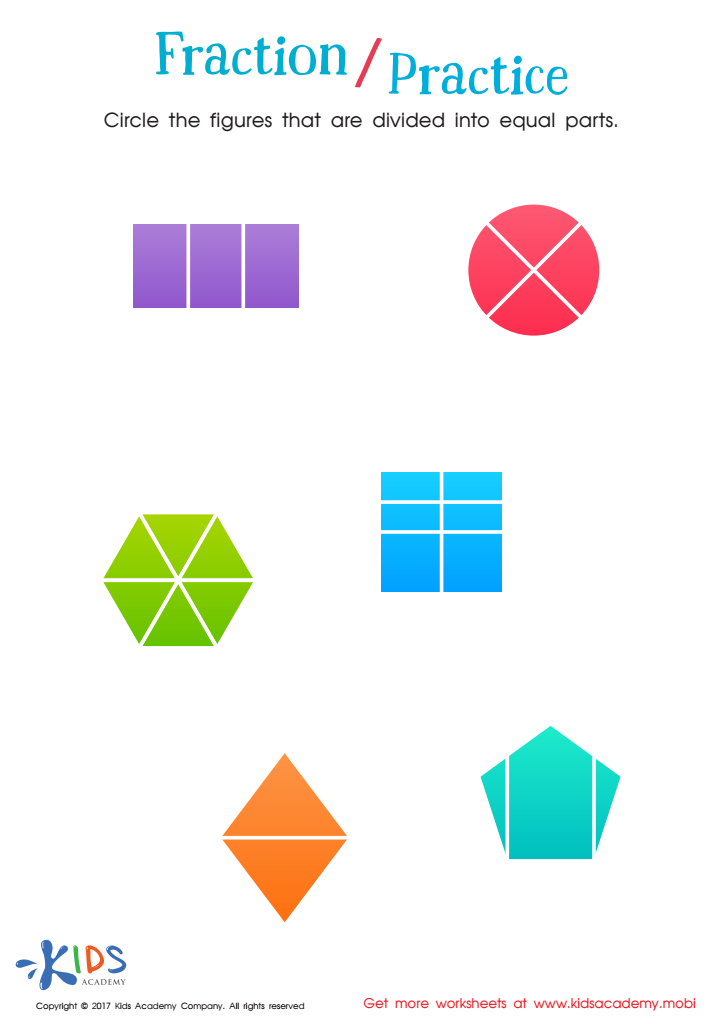
Fractions: Shapes Worksheet
 Assign to My Students
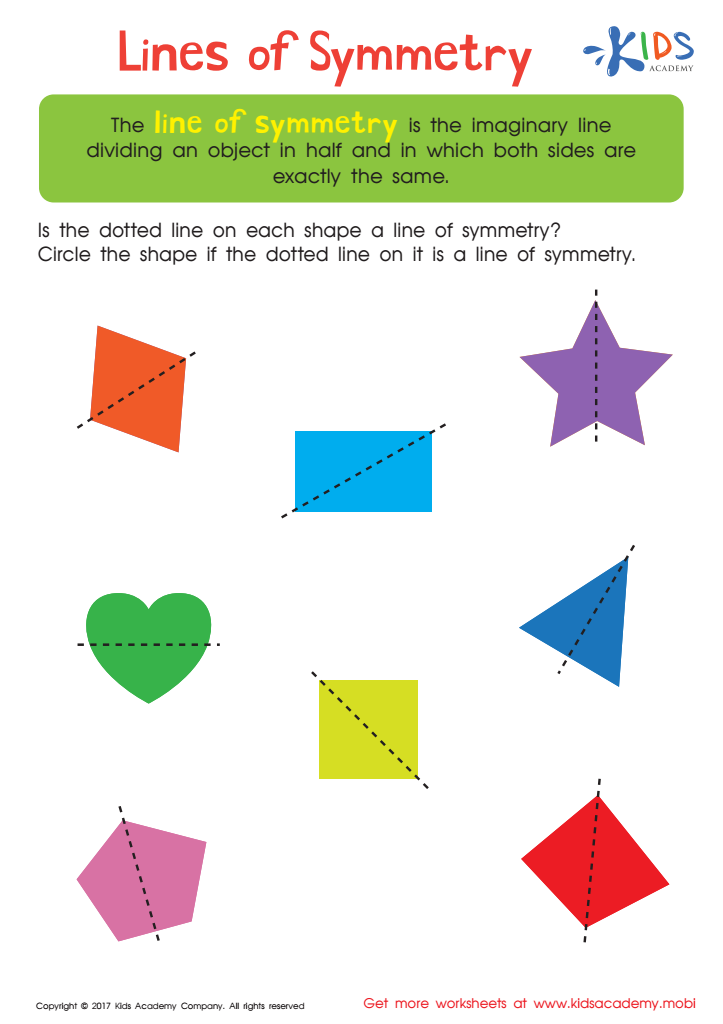
Lines of Symmetry Printable
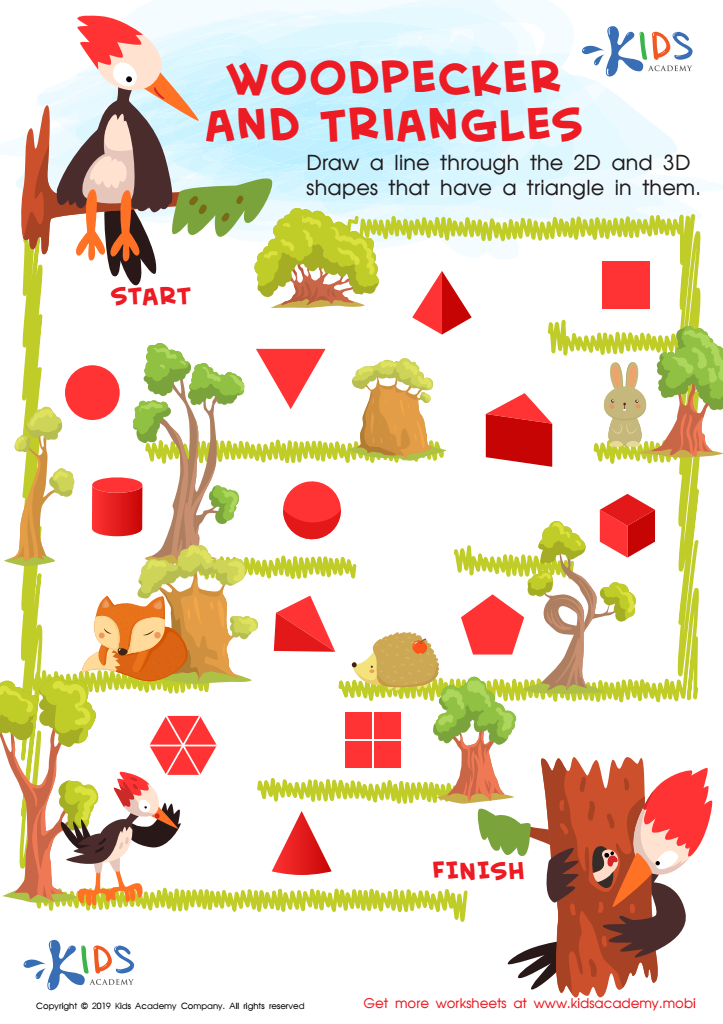
Woodpecker and Triangles Worksheet
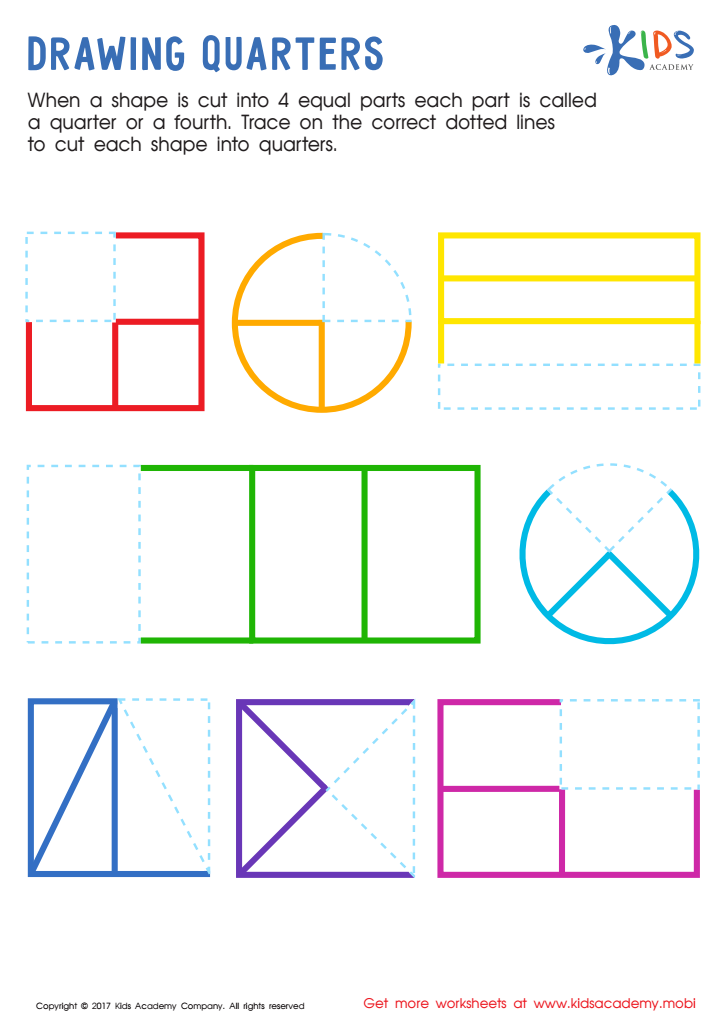
Drawing Quarters Worksheet
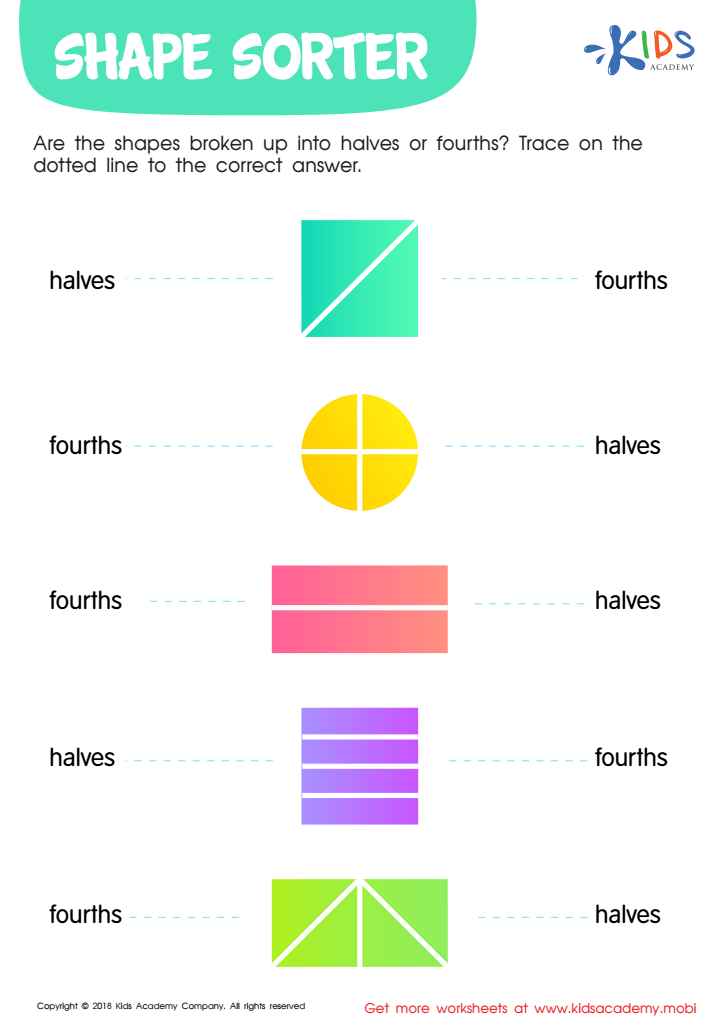
Shape Sorter Worksheet
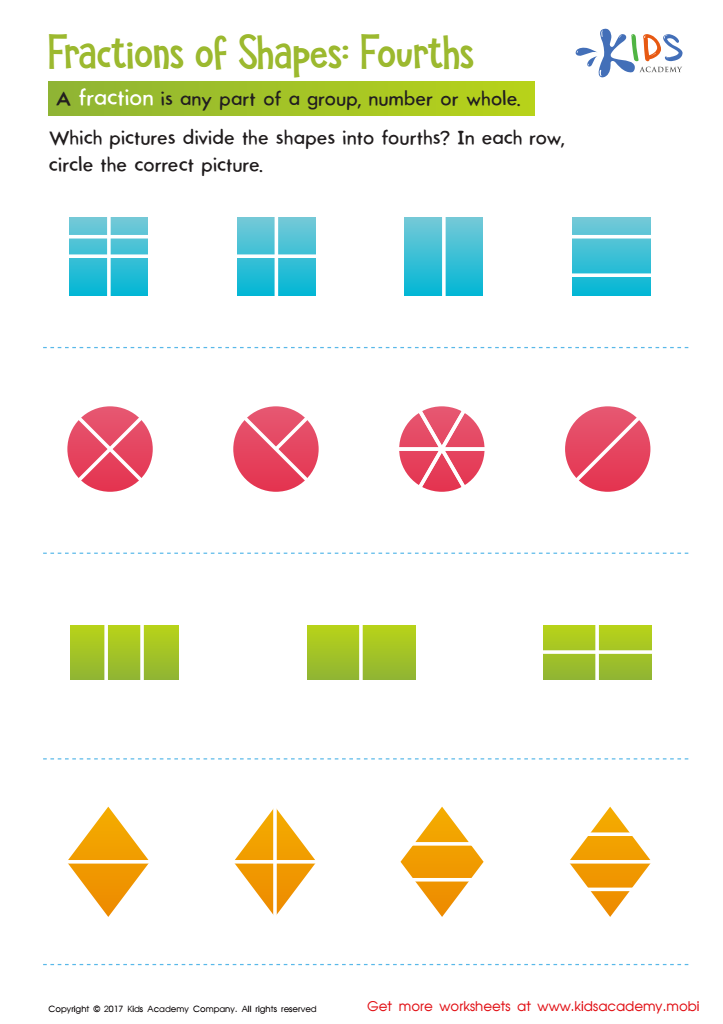
Fractions of Shapes Worksheet








Introducing extra challenge fractions of shapes to children aged 5-6 is essential for several reasons that benefit their cognitive and academic growth. First, grasping fractions at an early age lays a robust foundation for more complex mathematical concepts they will encounter later. Engaging with fractions of shapes helps pupils develop spatial awareness and gives them a tangible, visual understanding of how parts relate to a whole.
Moreover, challenging activities stimulate critical thinking and problem-solving abilities. When children tackle problems slightly above their comfort level, it nurtures a growth mindset, teaching them the value of perseverance and pushing beyond perceived limits. This kind of early exposure to complex problems can foster resilience and adaptability, skills that are invaluable throughout life.
Additionally, understanding fractions through playful and engaging activities can make learning fun and interesting, promoting a positive attitude towards mathematics. Children who enjoy math in their early years are likely to maintain that enthusiasm and perform better academically in the subject.
Parents and teachers focusing on these foundational skills not only support immediate cognitive development but also set the stage for continued academic success. Encouraging young learners to confront and conquer academic challenges helps them build confidence and a sense of achievement that contributes to lifelong learning.