Extra Challenge Numbers 11–20 Worksheets for 6-Year-Olds
3 filtered results
-
From - To
Introducing our latest collection in foundational mathematics: the Extra Challenge Numbers 11–20 worksheets, meticulously designed for 6-Year-Olds. This exciting set offers a unique series of engaging activities tailored to challenge and enhance the numerical skills of young learners. As they embark on adventures through the realms of numbers 11 to 20, children will develop a deeper understanding and proficiency that goes beyond the basics. These worksheets are crafted to intrigue, inspire, and elevate the mathematical journey of 6-year-olds, turning challenges into achievements. Ensure your child stands ahead in their mathematical journey with this essential set. Perfect for home or classroom use.
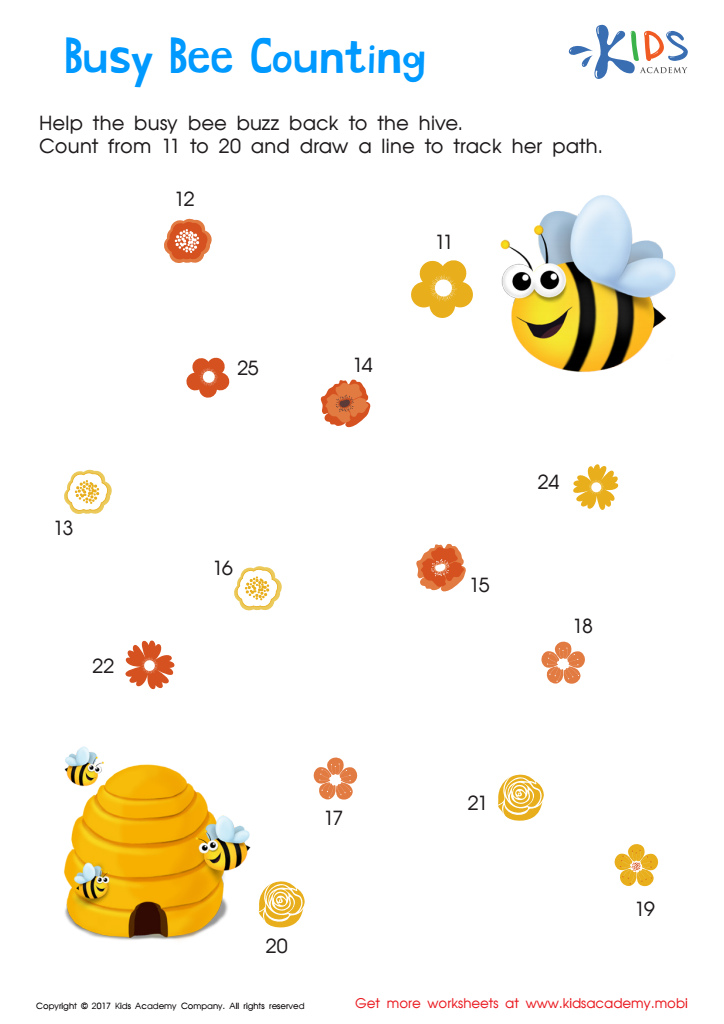
Ordering 11–20: Busy Bee Counting Worksheet
 Assign to My Students
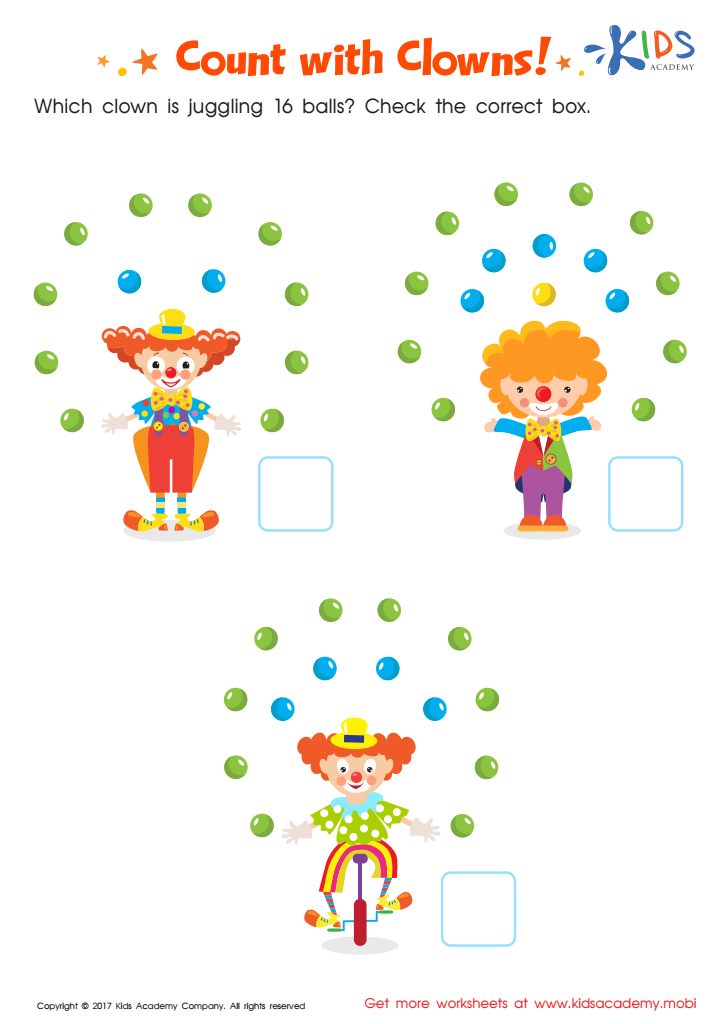
Count with Clowns Worksheet



Extra Challenge Numbers 11–20 for 6-Year-Olds worksheets are a fantastic educational tool that serves a crucial purpose in the developmental learning process of children. At the age of 6, children are at a pivotal stage where they transition from recognizing basic numbers to understanding and working with higher numbers. The introduction of numbers 11 through 20 can be a significant leap for many children, and this is where the Extra Challenge worksheets come into play.
These worksheets are meticulously designed to cater to the curious and rapidly developing minds of 6-year-olds. They present a variety of problems that challenge the children just enough to push their boundaries without overwhelming them. This balance is critical in maintaining their interest and encouraging a love for learning.
Moreover, the Extra Challenge Numbers 11–20 for 6-Year-Olds worksheets cover a range of concepts from simple counting to more complex operations like addition and subtraction within this number range. This comprehensive approach ensures that children not only memorize these numbers but also understand their value and how they interact with each other.
By engaging with these worksheets, children enhance their numerical fluency, boost their problem-solving skills, and build a solid foundation for future mathematical learning. Such an early investment in their education fosters confidence, promotes academic success, and opens doors to understanding more advanced mathematical concepts as they grow.