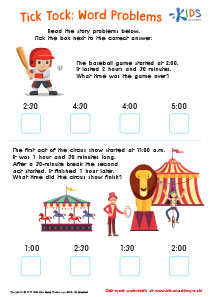
Extra Challenge Two-step Word Problems Worksheets for 6-Year-Olds
3 filtered results
Difficulty Level
Grade
Age
-
From - To
Subject
Activity
Standards
Introducing our Extra Challenge Two-step Word Problems worksheets, designed especially for six-year-olds ready to enhance their problem-solving skills! These learning homework sheets offer a series of engaging and creatively formulated problems that require children to think critically and apply their math knowledge in two phases. Perfect for boosting cognitive abilities and understanding complex concepts, our worksheets make learning an exciting adventure. Tailored to align with educational standards, these sheets ensure a comprehensive learning experience. Dive into our worksheets and watch your child embrace the joy and challenge of mathematics, setting a strong foundation for future academic success!
Favorites
With answer key
Interactive
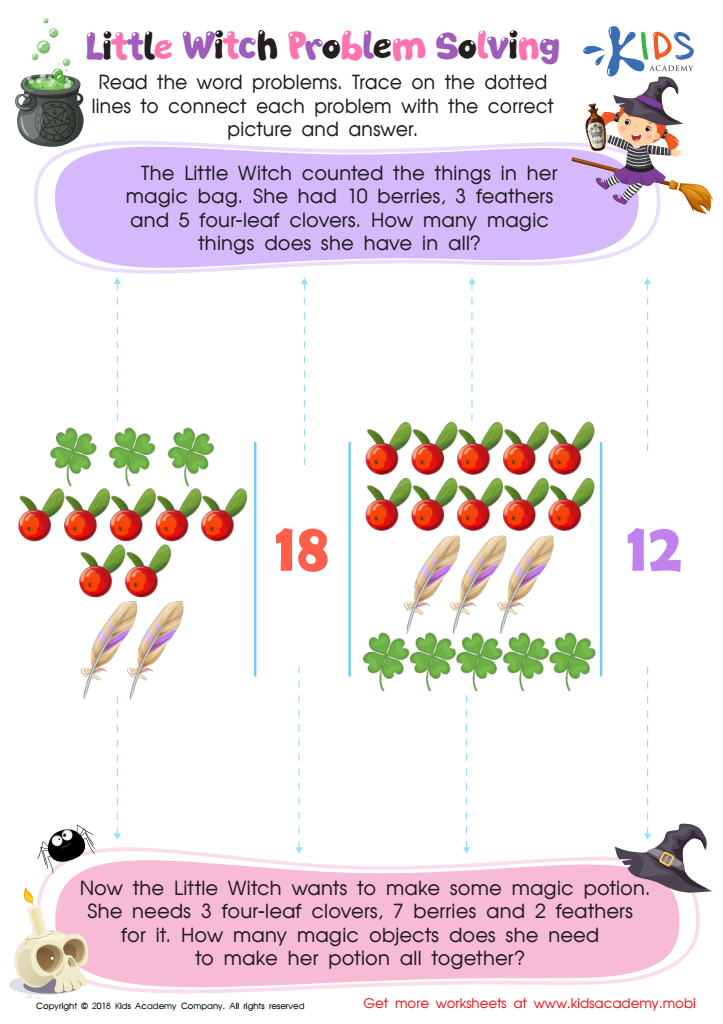
Little Witch Problem Solving Worksheet
Help this sweet little witch! Download this worksheet and use traceable lines to connect the problems with the correct answers. Practise basic addition involving three addends and have fun doing it!
 Assign to My Students
Little Witch Problem Solving Worksheet
Worksheet
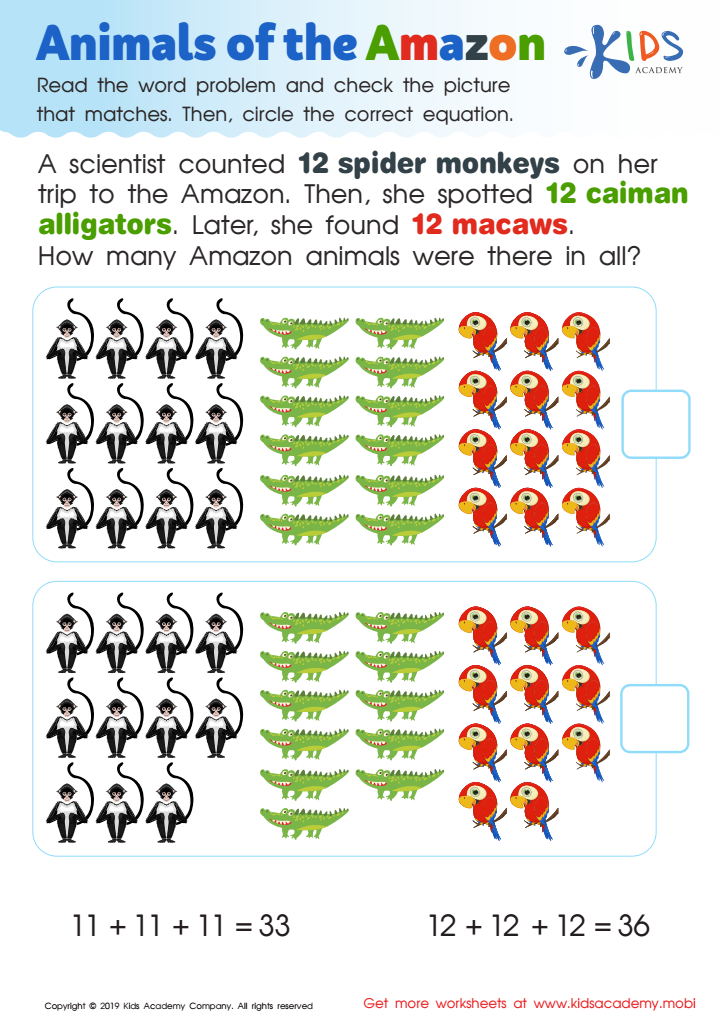
Animals of Amazon Worksheet
Kids will love exploring the Amazon while solving addition problems on this colorful PDF worksheet. They need to pay attention to the bolded info in each word problem to figure out the equation picture that matches. It's an exciting way to learn about the Amazon and practice adding multiple numbers!
Animals of Amazon Worksheet
Worksheet
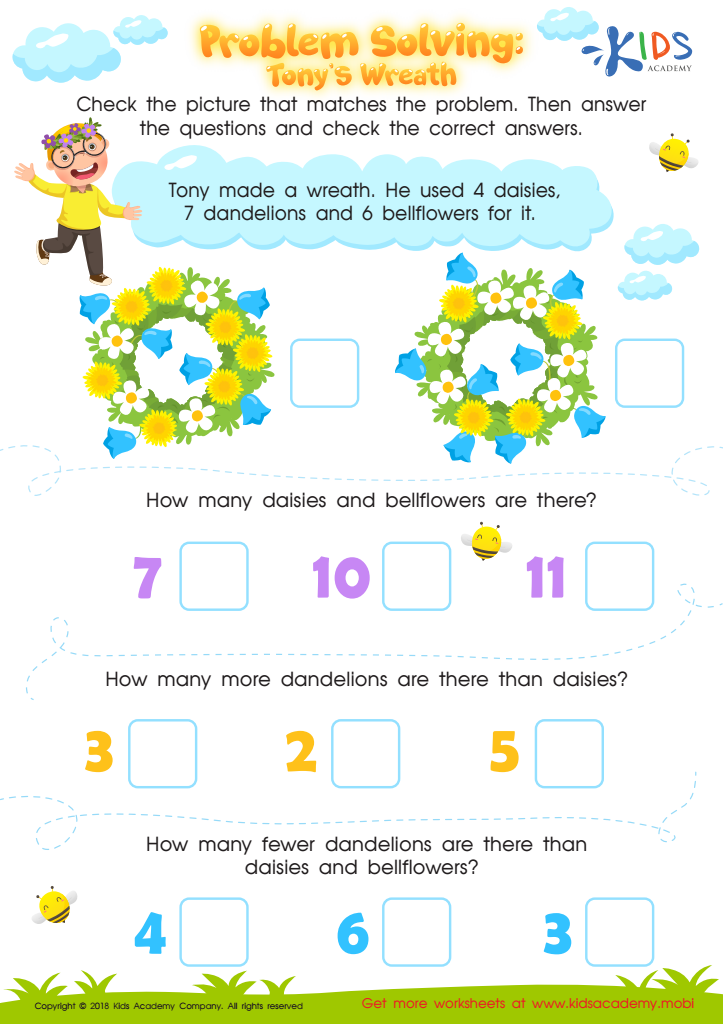
Problem Solving: Tony's Wreath Worksheet
Tony needs help! He's made a beautiful, colorful wreath and needs help counting the flowers. Your math student can read the word problems, match answers to the problems and solve basic addition and subtraction. They'll practice with two and three addends, minuends and subtrahends to find sums and differences and help Tony and his bee friends.
Problem Solving: Tony's Wreath Worksheet
Worksheet
Join Kids Academy for Free
Who is primarily going to use this learning content?



The Importance of Educational Worksheets on Two-Step Word Problems for Six-Year-Olds
In the foundational years of a child's education, it is imperative to equip them with the skills necessary to navigate both the academic world and everyday life. One of the critical tools in achieving this are educational worksheets, particularly those focusing on two-step word problems. These worksheets are not just sheets of paper; they are stepping stones toward advanced cognitive development and problem-solving skills for children as young as six years old.
Building Block for Advanced Math Skills
Mathematics is a cumulative subject where early concepts form the base for more complex ones. Two-step word problems are an excellent introduction to this layered learning. At six years old, children are typically familiar with basic addition and subtraction, which these worksheets use in practical scenarios. By engaging with two-step word problems, children learn to perform two sequential operations, which is a crucial skill as they progress to higher levels of math. These educational worksheets help solidify the foundation upon which their future math skills are built.
Enhancing Reading and Comprehension Skills
Two-step word problems require a child to read, understand, and then process what the problem asks of them. This is an excellent exercise in reading comprehension. By working through the sentences structured in these problems, children learn to pick out key details necessary for solving the problem. This skill transcends mathematics and touches all other subjects as well, where comprehension is essential.
Developing Critical Thinking and Reasoning
Educational worksheets on two-step word problems are not just about finding the right answers; they are about understanding the process of reaching that answer. Such problems require a child to think critically about the steps necessary for solving the problem and choosing the right operations to use in each step. This kind of reasoning is a critical life skill, enabling children to make logical decisions and solve problems efficiently.
Promoting Independent Learning and Confidence
As children work through these worksheets, they gain the opportunity to solve problems independently. This independence in learning fosters self-confidence, as they realize that they can tackle and solve complex problems on their own. With each worksheet they complete, their confidence in their ability to handle challenging tasks grows, setting a positive tone for their entire educational journey.
Practical Life Application
Two-step word problems often mimic real-life situations, such as shopping scenarios, cooking measurements, or planning travel. Working on these worksheets helps children apply math in real-life contexts, making the learning experience more relevant and engaging. Understanding the relevance of math in everyday activities enhances a child’s motivation and appreciation for the subject. This connection between abstract concepts and practical application ensures that children see math not just as a subject to be learned in school, but as a useful tool in their daily lives.
Preparation for Standardized Testing
Educational worksheets on two-step word problems also play a crucial role in preparing children for standardized testing, which is a common evaluation method in many educational systems. These tests often include multi-step problems to assess students' abilities to think logically and solve problems efficiently. Regular practice with two-step word problems can give children a significant advantage by familiarizing them with the format and complexity of standardized test questions, reducing anxiety and improving performance when they face actual tests.
Encouraging Collaboration and Discussion
While worksheets can be done individually, they also offer opportunities for collaborative learning. Children working together on two-step word problems can discuss their thought processes, share different methods of solving the same problem, and collectively reason through the steps. This collaboration fosters social skills and teaches children the value of different perspectives and teamwork in problem-solving.
Customizable Learning Experiences
Another significant advantage of educational worksheets is their adaptability. Teachers and parents can choose worksheets based on the child's learning level and the complexity of the problems. This customization ensures that each child is challenged just enough to stretch their skills without causing frustration or disinterest.
Feedback and Improvement
Worksheets provide a tangible record of a child’s performance that teachers and parents can review. This feedback is crucial for identifying areas where a child excels or needs more support. It also allows for timely intervention to address any learning gaps, ensuring continuous and balanced academic growth.
In conclusion, educational worksheets on two-step word problems are a vital educational tool for six-year-olds. They not only build foundational math skills but also enhance reading comprehension, critical thinking, and problem-solving abilities. These worksheets foster independence, build confidence, prepare children for future academic challenges, and tie mathematical concepts to real-world situations. With all these benefits, it’s clear that such educational resources are indispensable in nurturing capable and confident young learners.