Normal Vowel Diphthongs Worksheets for Ages 3-9 - Page 2
25 filtered results
-
From - To
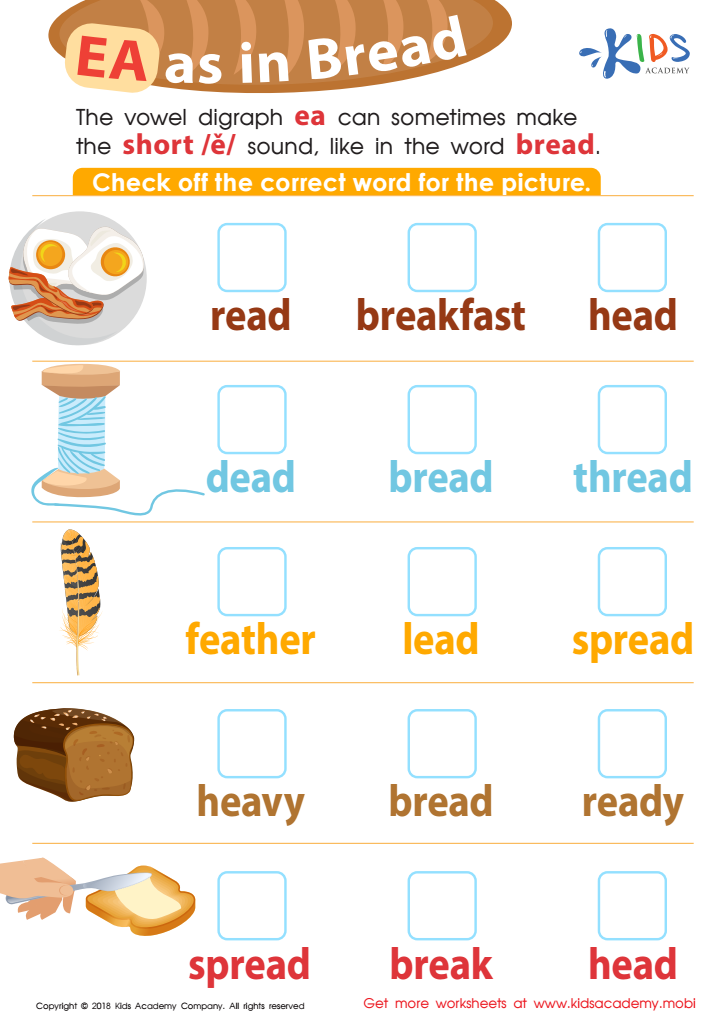
Reading: EA as in Bread Worksheet
 Assign to My Students


Normal vowel diphthongs are essential for early literacy development in children aged 3-9. These are complex vowel sounds that begin with one vowel sound and glide into another within the same syllable, such as in "coin" (oi) or "loud" (ou). Understanding and recognizing these vowel sounds enhance phonemic awareness, which is crucial for reading and writing fluency.
For parents and teachers, fostering an awareness of normal vowel diphthongs supports language development and articulation skills. Young children with a strong grasp of vowel diphthongs are better equipped to decode new words, improving their confidence and enjoyment in reading. Furthermore, their correct pronunciation facilitates clearer communication, aiding social interactions and language comprehension.
Engaging children through fun activities that incorporate diphthongs—like songs, rhymes, and word games—can make learning enjoyable and impactful. By integrating these sounds into daily routines or educational experiences, caregivers can help build a robust foundation for literacy. Ultimately, caring about normal vowel diphthongs ensures that children develop essential reading and communication skills, paving the way for lifelong learning and engagement in language-rich activities. This emphasis on language development can significantly influence a child’s academic trajectory and self-expression.