Normal Vowels and Consonants Worksheets for Ages 3-9 - Page 2
26 filtered results
-
From - To
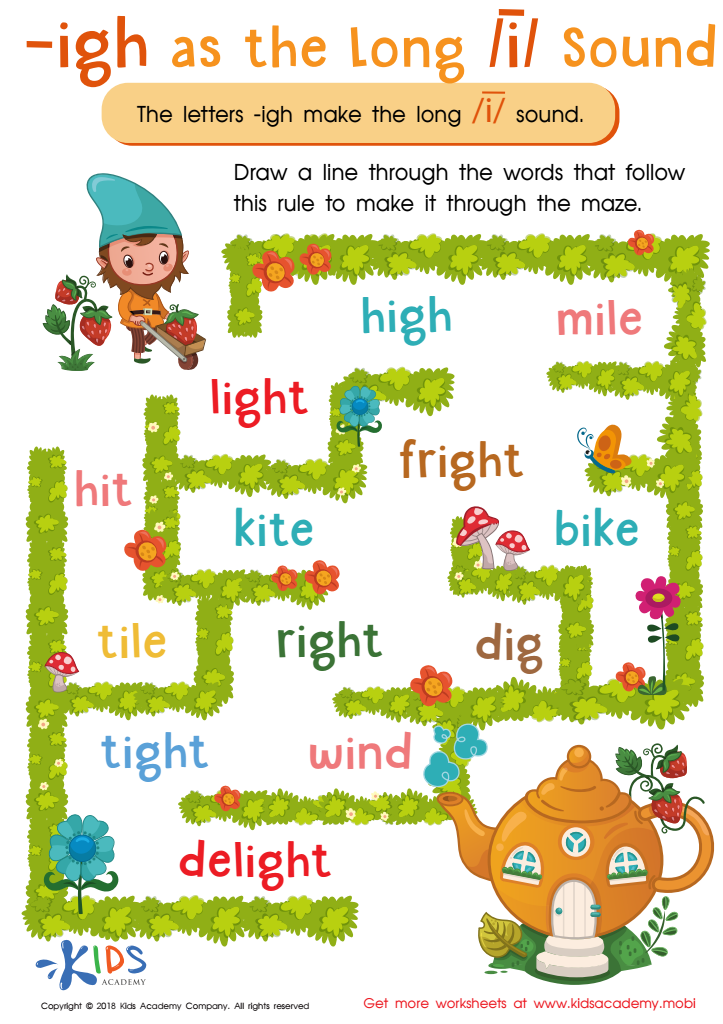
Reading: IGH as Long I Worksheet
 Assign to My Students
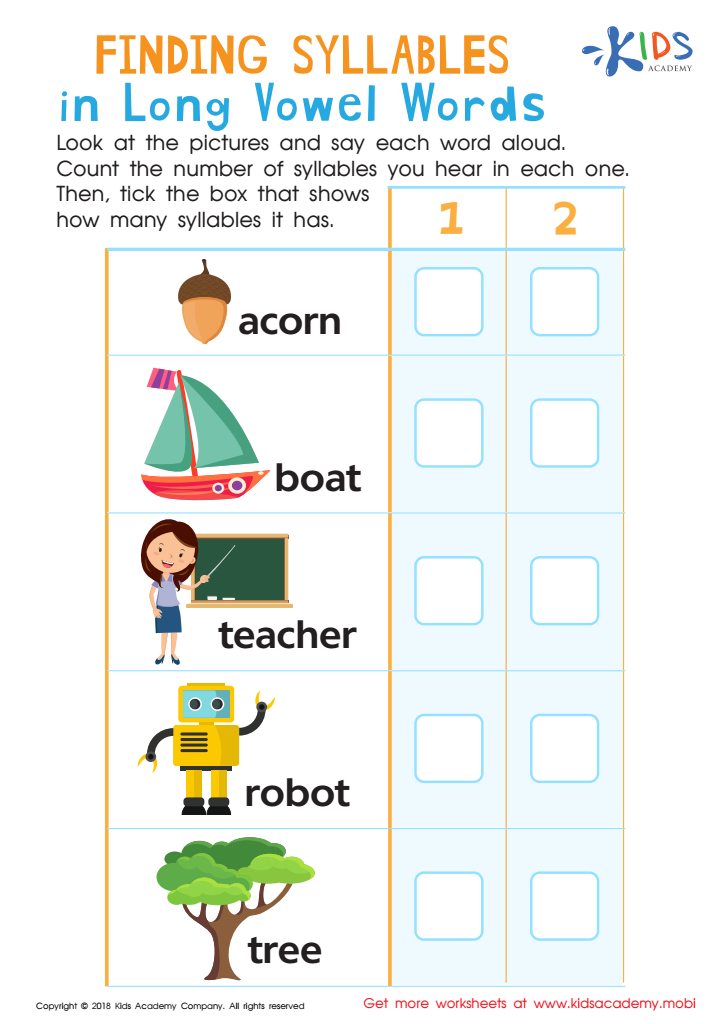
Finding Syllables in Long Vowel Words Worksheet



Understanding normal vowels and consonants is essential in the early literacy development of children aged 3-9. Parents and teachers should prioritize this knowledge because it forms the foundation of language acquisition and communication skills. Vowels and consonants are the building blocks of word formation, and grasping their sounds enables children to decode and read more effectively.
From ages 3-5, children begin to engage with sounds through playful activities, such as singing and rhyming. This is crucial for developing phonemic awareness, which helps them identify and manipulate sounds in words. Once they reach ages 5-9, learners start developing reading fluency and handwriting skills. Recognizing and correctly producing vowel and consonant sounds directly impacts their ability to spell and understand language structures.
Furthermore, fostering this understanding promotes confidence in children as they explore language. Engaged parents and teachers can create rich linguistic environments through storytelling, conversations, and interactive play, grounding children in both vocabulary and proper pronunciation. In essence, awareness of normal vowels and consonants is not just a linguistic tool; it is a passport to effective communication, paving the way for academic success and personal expression in the years to come.






