Normal Tracing Words Worksheets for Ages 3-9 - Page 2
34 filtered results
-
From - To
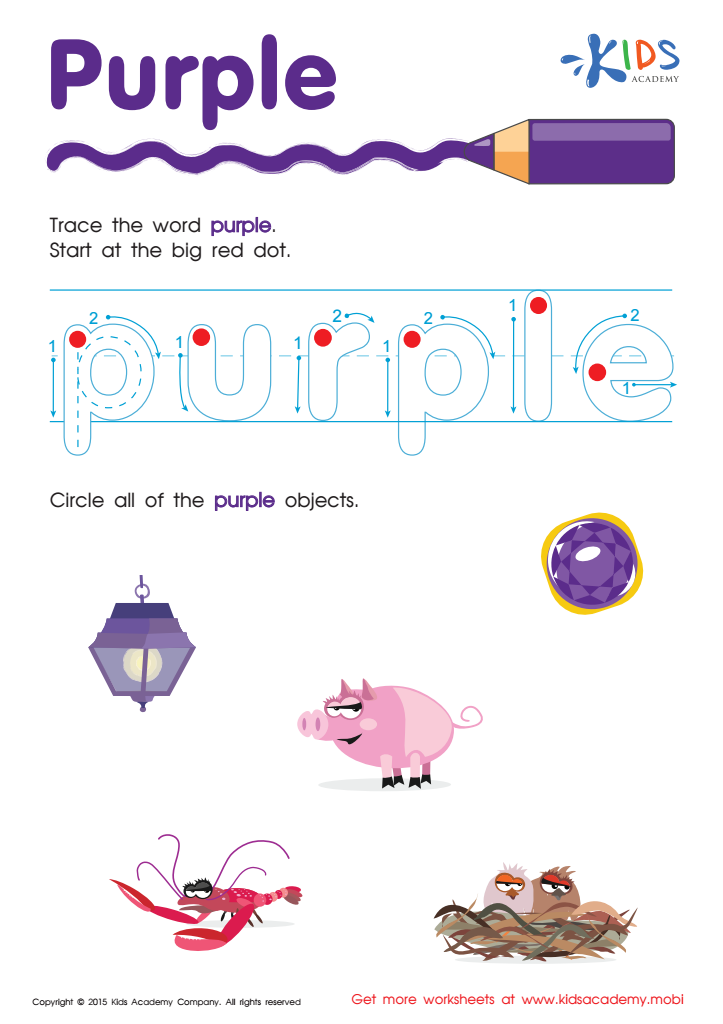
Purple Tracing Color Words Worksheet
 Assign to My Students
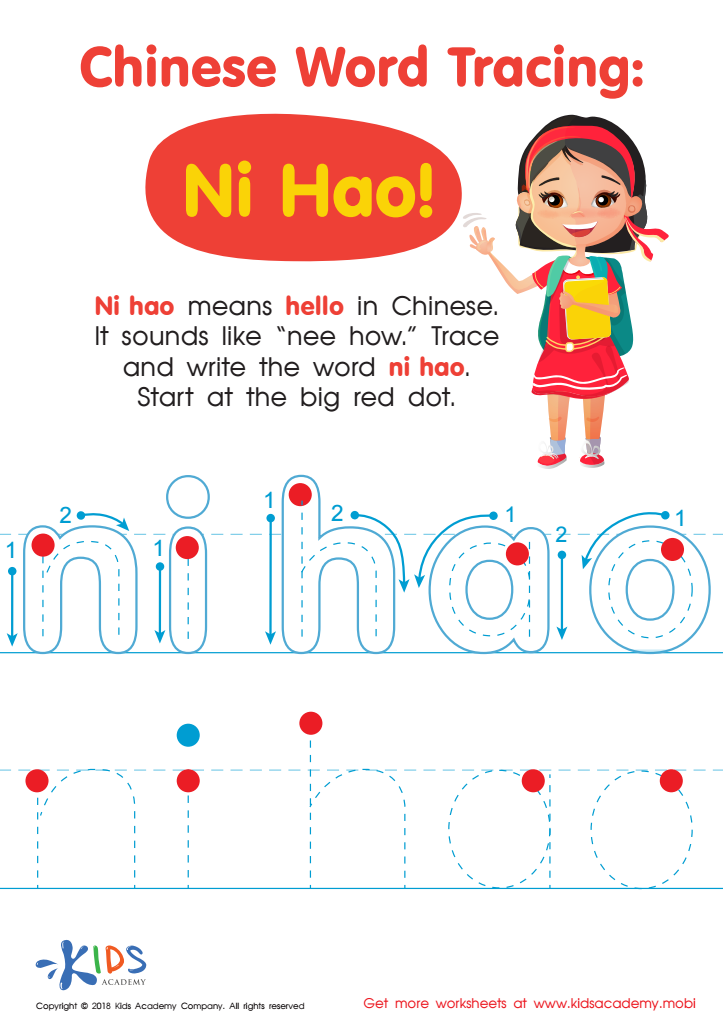
Chinese Word Tracing: Ni Hao Worksheet
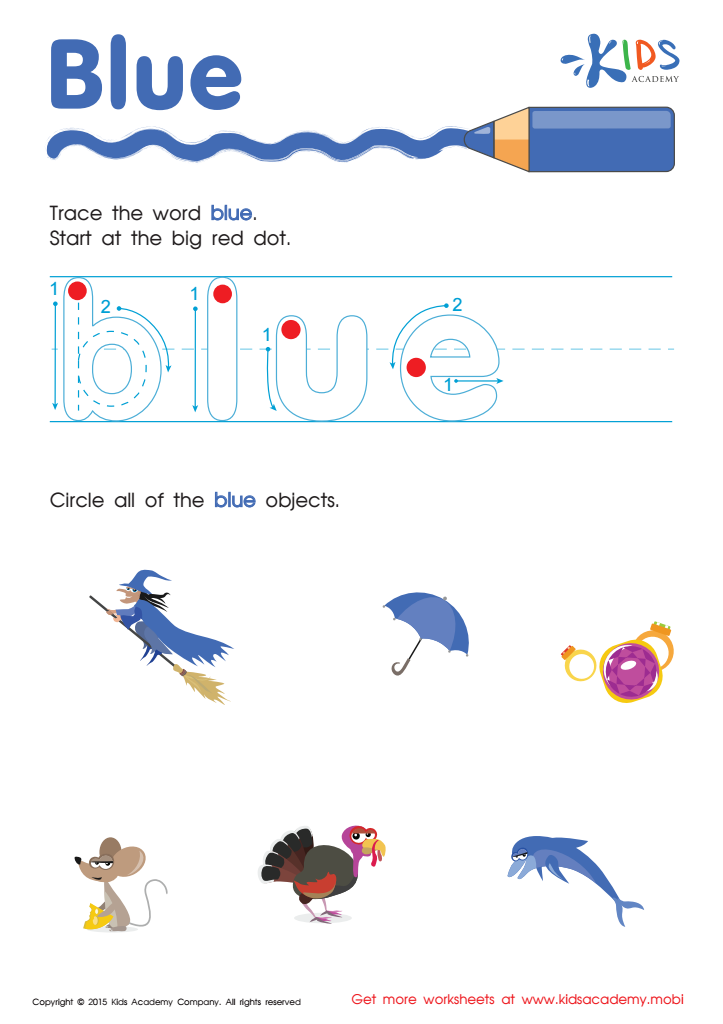
Blue Tracing Color Words Printable
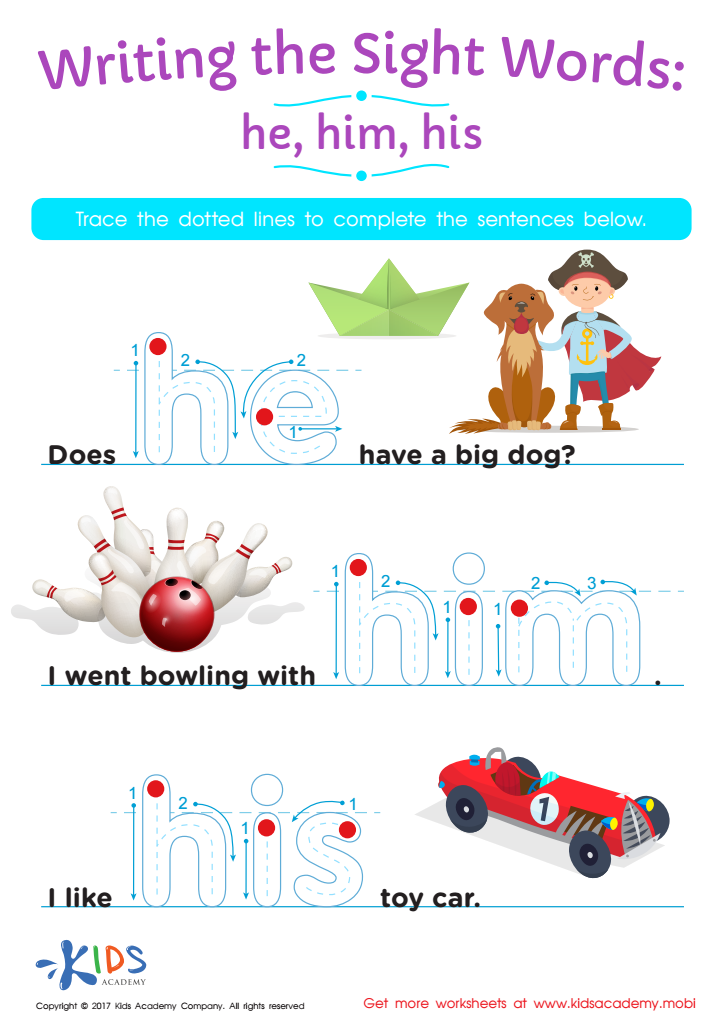
He, Him, His Printable Sight Words Worksheet
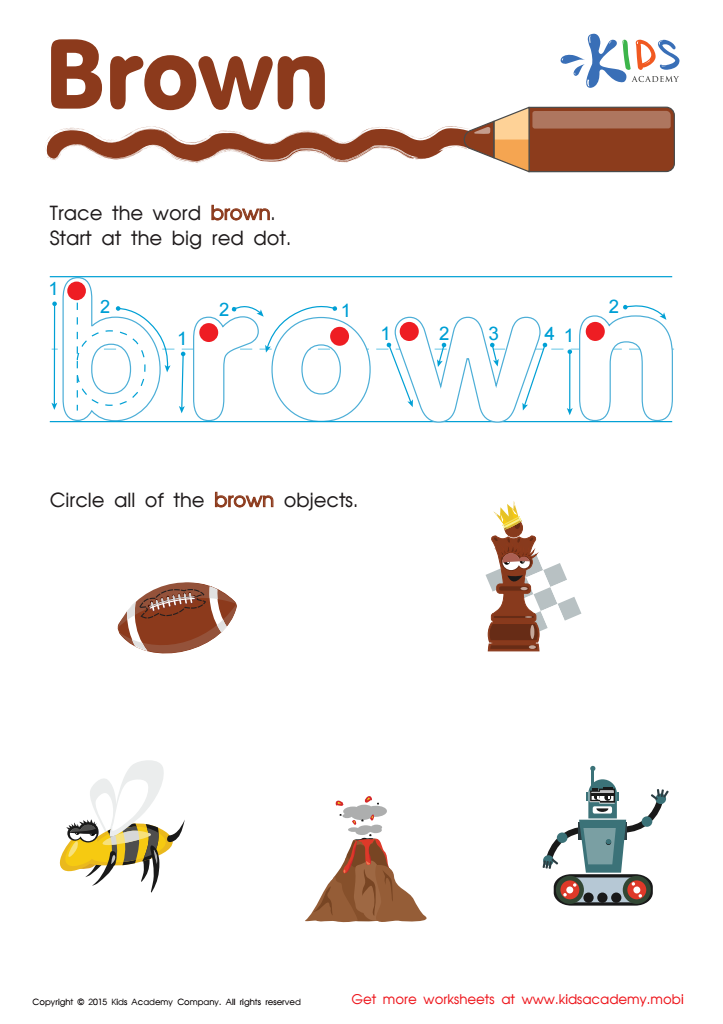
Brown Tracing Color Words Worksheet
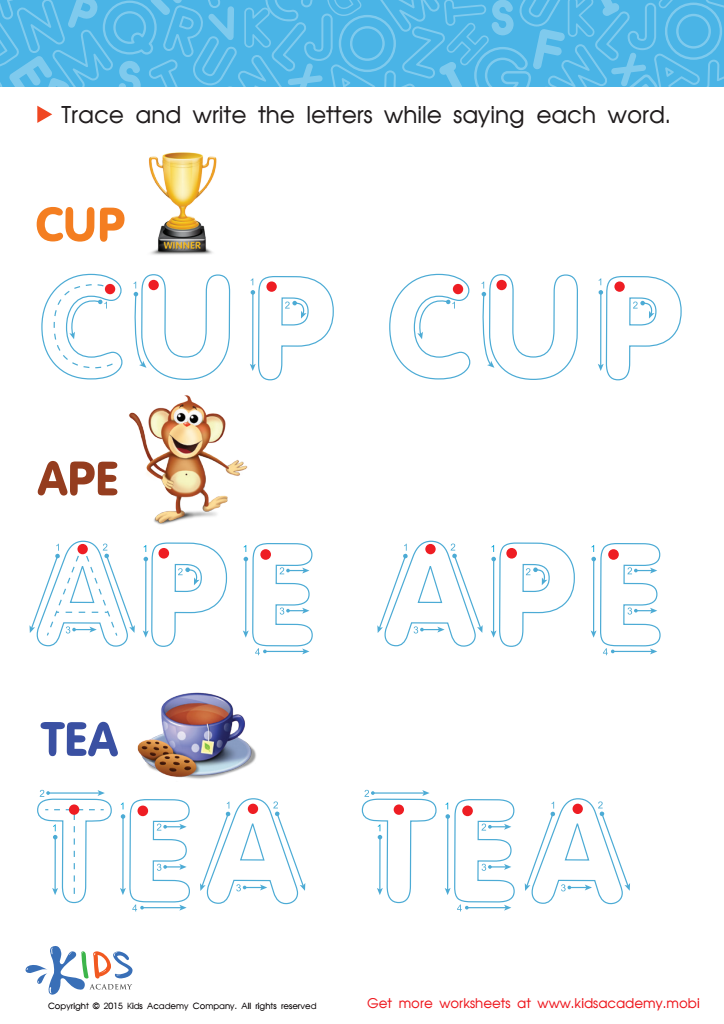
A Cup, an Ape and Tea Spelling Worksheet
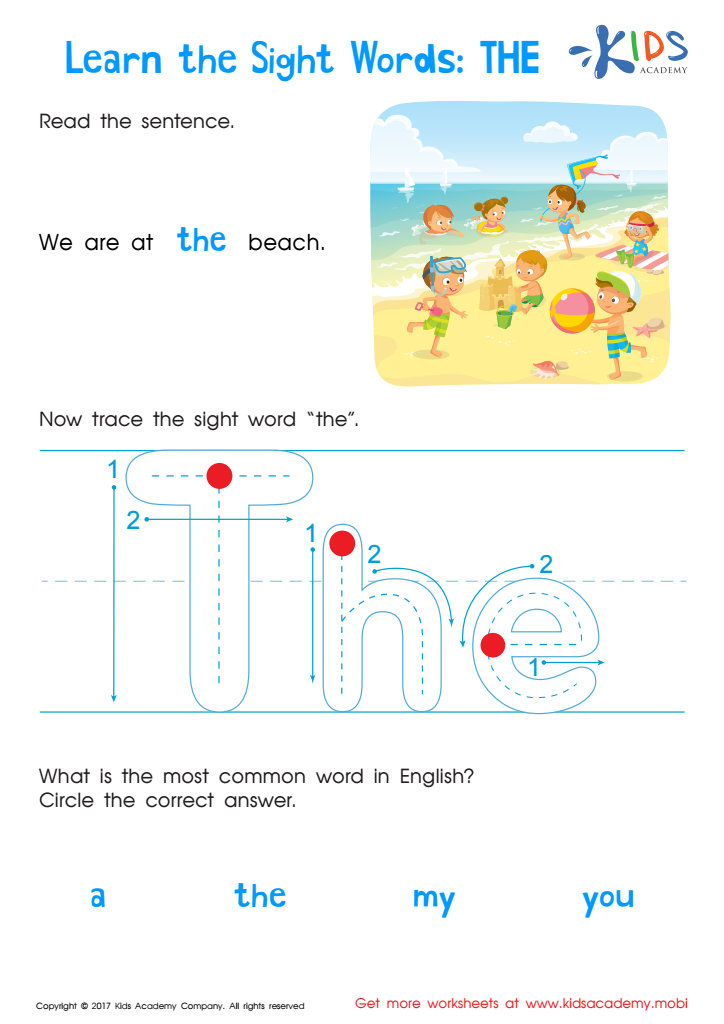
Sight Words: The Worksheet
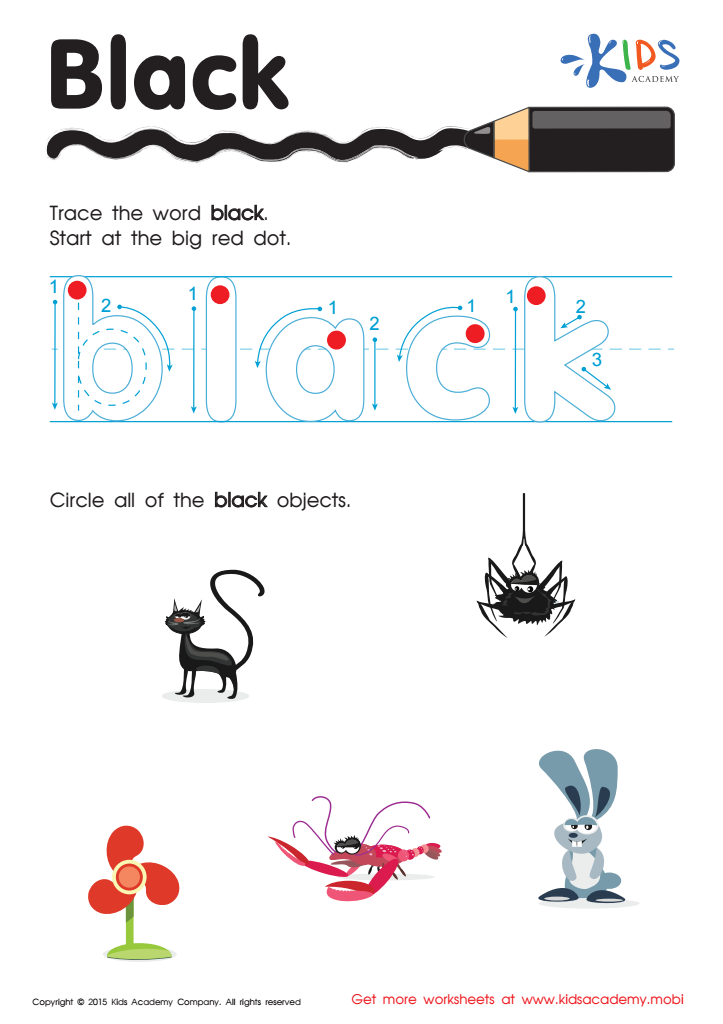
Black Tracing Color Words Printable
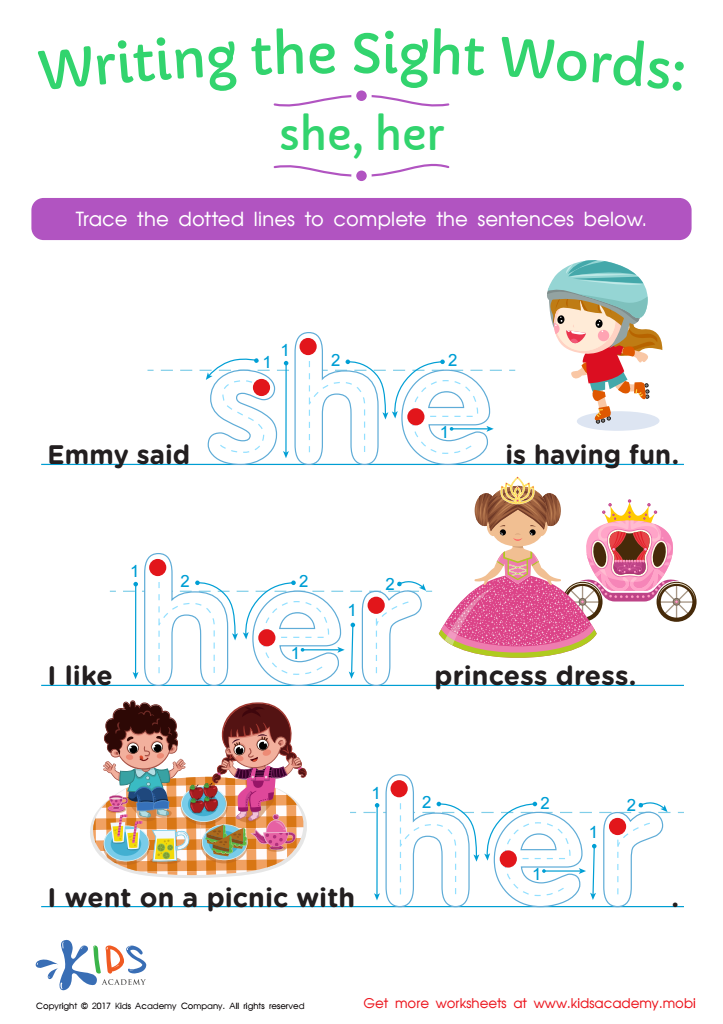
She, Her Printable Sight Words Worksheet
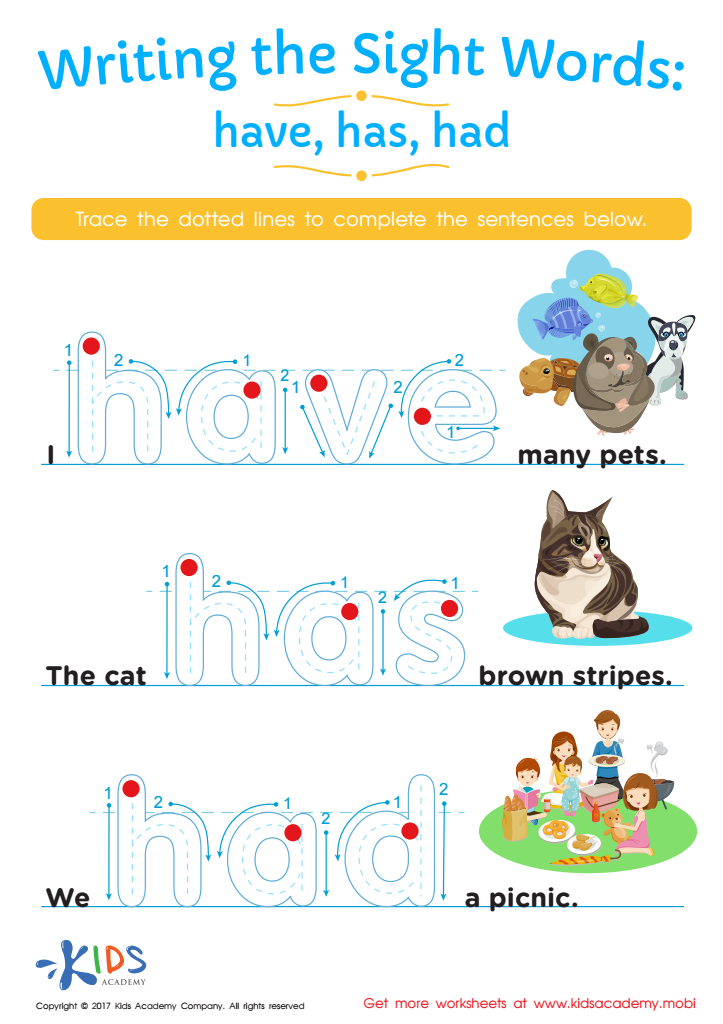
Have, Has, Had Worksheet Sight Words Worksheet








Normal tracing words for ages 3-9 are crucial in the foundational stages of a child's education. First, they enhance fine motor skills, like hand-eye coordination and pencil grip, essential for writing proficiency. Through tracing, children learn letter structures and patterns, aiding in letter recognition and, subsequently, word formation and spelling.
Engaging in tracing exercises also fosters cognitive development. It supports language acquisition, enabling children to connect sounds with letters (phonics). When kids trace and repeat words, they reinforce memory pathways, which is integral to early literacy. This repetitive practice builds confidence and a sense of achievement, promoting a positive attitude towards learning.
Social-emotionally, tracing activities provide focused tasks that can improve concentration and patience. These qualities are beneficial for classroom behavior and task completion. Additionally, early success in tracing can bolster self-esteem, making children more eager to engage in further learning activities.
For teachers and parents, integrating tracing into daily routines offers a systematic and effective method to monitor and support a child’s progress. Customized tracing exercises can address individual needs, making learning more personal and effective. Ultimately, these activities play a significant role in laying the solid groundwork necessary for academic success and the development of lifelong learning skills.