Normal Vowel Diphthongs Worksheets for Ages 5-9 - Page 2
25 filtered results
-
From - To
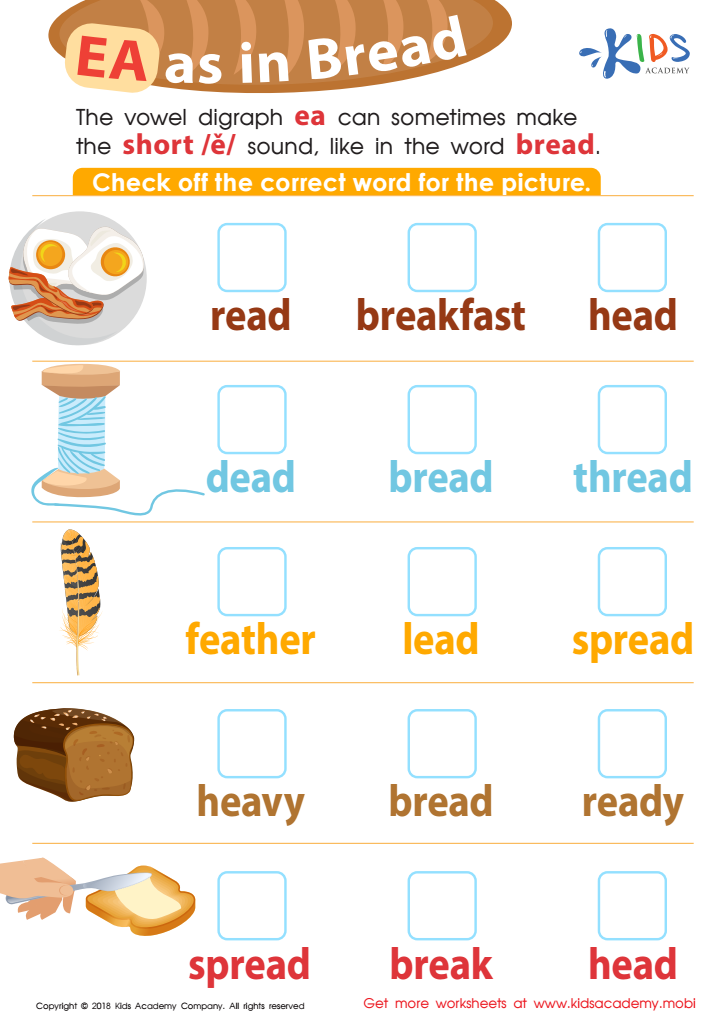
Reading: EA as in Bread Worksheet
 Assign to My Students


Normal vowel diphthongs, combinations of two vowel sounds blended into one syllable, are crucial for young learners aged 5-9 as they lay the foundation for reading, writing, and overall language development. Understanding diphthongs enhances phonemic awareness, helping children to decode words more effectively. When children grasp how diphthongs work, their reading fluency improves, allowing them to engage more deeply with texts and enhancing their comprehension.
Moreover, knowing diphthongs aids in spelling, as many words incorporate these vowel combinations. This understanding promotes better writing skills, enabling children to express their thoughts clearly and confidently. Additionally, mastering phonetic elements like diphthongs contributes to proper pronunciation, which is essential in developing strong communication skills.
Through engaging activities and games centered around diphthongs, teachers and parents can foster a love for language in children. This playful learning approach encourages collaboration and enhances the relationship between students and their caregivers. Ultimately, focusing on normal vowel diphthongs is vital because it equips children with essential linguistic tools that facilitate their academic success and lifelong appreciation for language. Thus, nurturing these skills during early education can lead to a more competent and enthusiastic future reader and communicator.