Normal Initial and Final Consonant Blends Worksheets for Ages 6-9
5 filtered results
-
From - To
Discover engaging worksheets focused on initial and final consonant blends for children aged 6-9. These expertly designed activities from Kids Academy's vast library encourage young learners to practice and master blending sounds at both the start and end of words. Perfect for developing phonemic awareness, each worksheet combines fun illustrations with interactive exercises, helping kids improve their reading, spelling, and pronunciation skills. Ideal for both classroom settings and homeschooling, these resources support the foundational literacy journey with structured, age-appropriate guidance tailored to spark curiosity and boost confidence in young readers. Explore our collection and unlock your child's potential today!
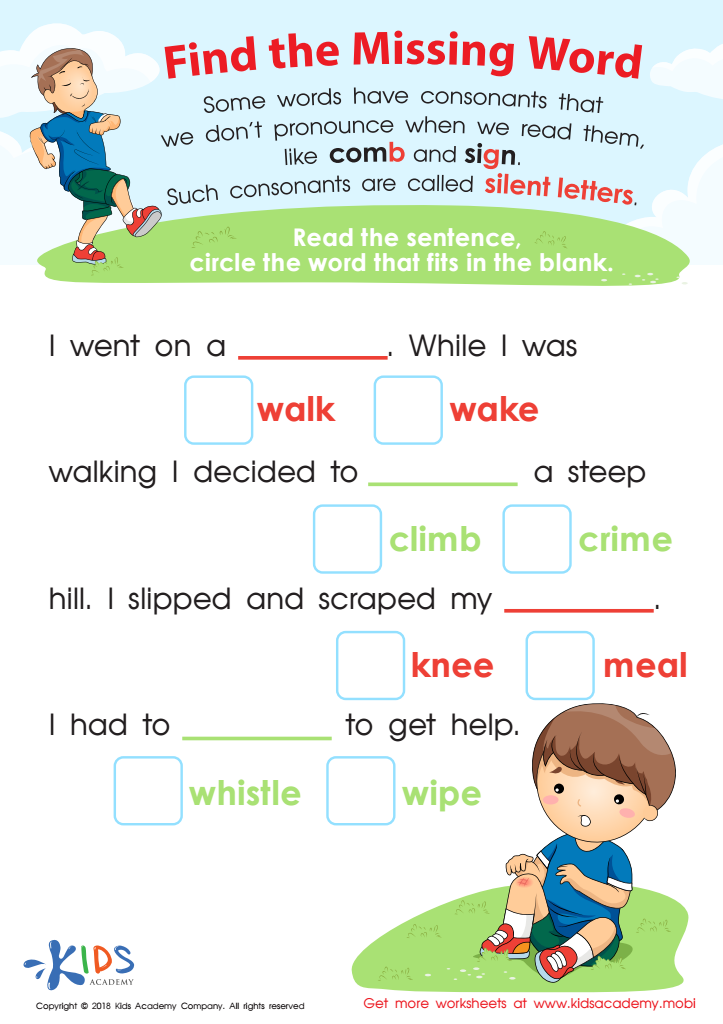
Find The Missing Word Worksheet
 Assign to My Students
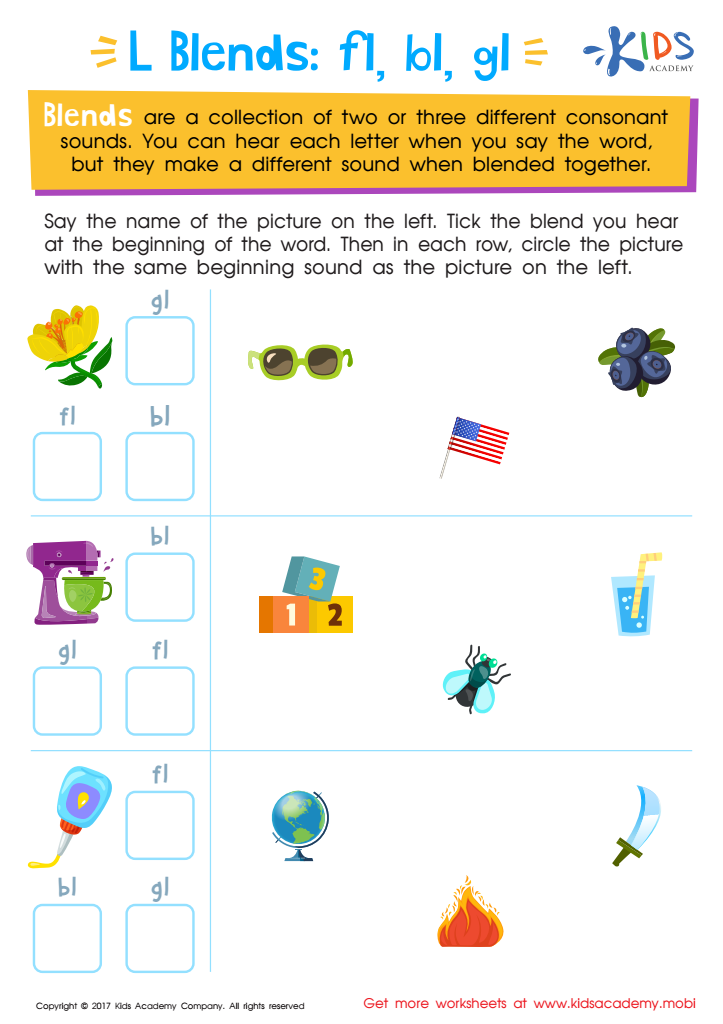
Blending Consonants: "Fl", "Bl" and "Gl" Printable
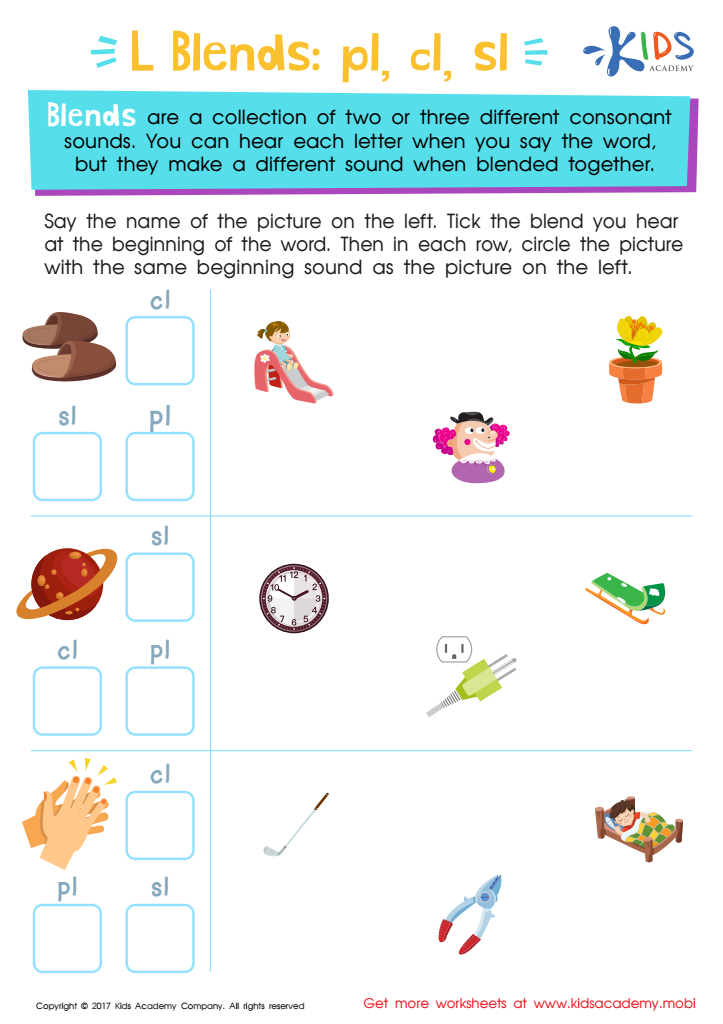
L Blends: "Pl", "Cl" and "Sl" Printable
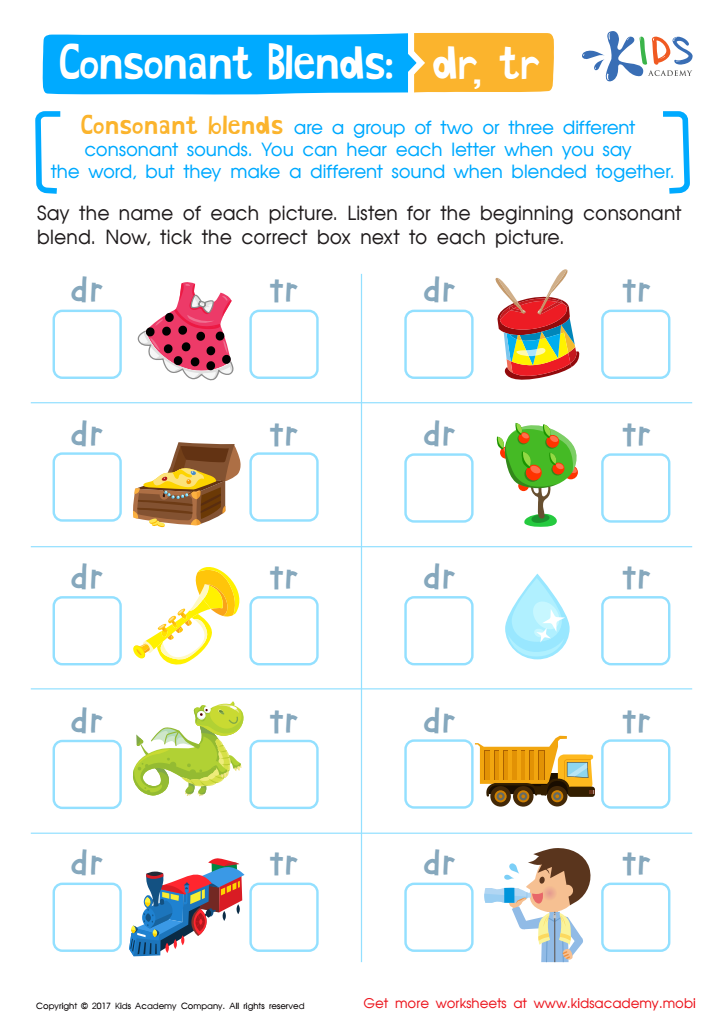
Consonant Blends: "Dr" and "Tr" Printable
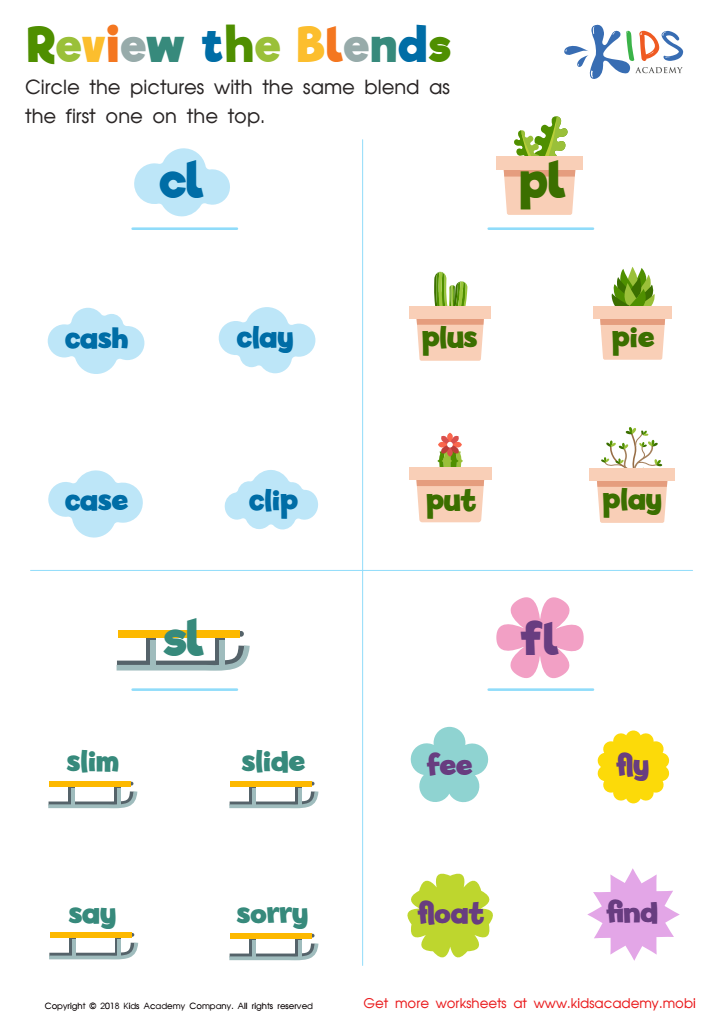
Review the Blends Worksheet


At ages 6-9, children are rapidly developing their reading and writing skills, and understanding Normal Initial and Final Consonant Blends is crucial during this stage. Consonant blends, such as "st" in "star" or "nd" in "stand," combine the sounds of two or more consonants without losing their individual sounds. Mastery of these blends significantly enhances a child's phonological awareness, an essential skill for decoding words and developing fluent reading abilities.
When children grasp consonant blends, they can more easily recognize patterns in words, which boosts their ability to read unfamiliar words and improves their spelling. This foundational skill predicts future success in reading comprehension, as it allows children to focus more on understanding texts rather than merely decoding words.
For parents and teachers, supporting children in learning these blends means providing a solid foundation for their literacy development. Activities like reading aloud, phonics games, and targeted worksheets can all help children practice and master these blends. Encouraging this early literacy skill not only fosters a love for reading but also sets children up for academic success and confidence in communication. Investing time and effort in this area yields long-term educational benefits, making it an essential part of early childhood education.








