Problem-solving abilities Chess Worksheets
3 filtered results
-
From - To
Enhance your child's critical thinking with our Problem-solving Abilities Chess Worksheets, designed to make learning both fun and educational. Our engaging activities will introduce kids to strategic planning, logical reasoning, and advanced cognitive skills through the classic game of chess. Each worksheet, crafted with age-appropriate challenges, aims to boost confidence and problem-solving expertise, developing lifelong skills applicable both in and out of the classroom. Perfect for beginners and young chess enthusiasts alike, our worksheets are an excellent resource for parents and educators seeking to nurture a love for chess and enhance intellectual growth. Explore now and watch as your child's strategic mind flourishes!
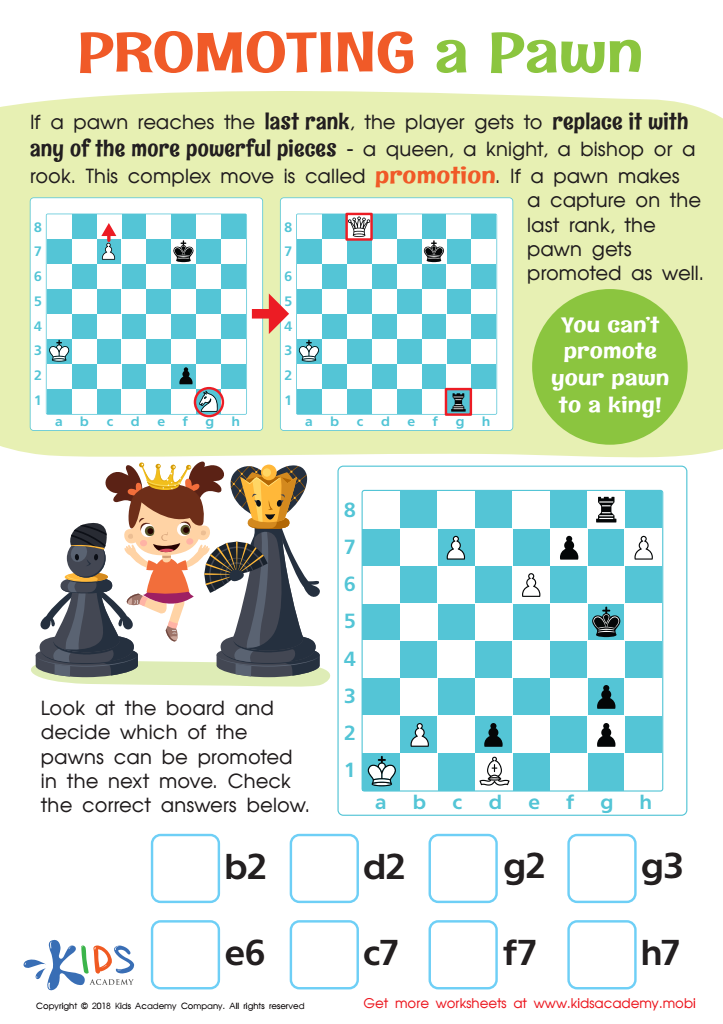
Promoting a Pawn Worksheet
 Assign to My Students
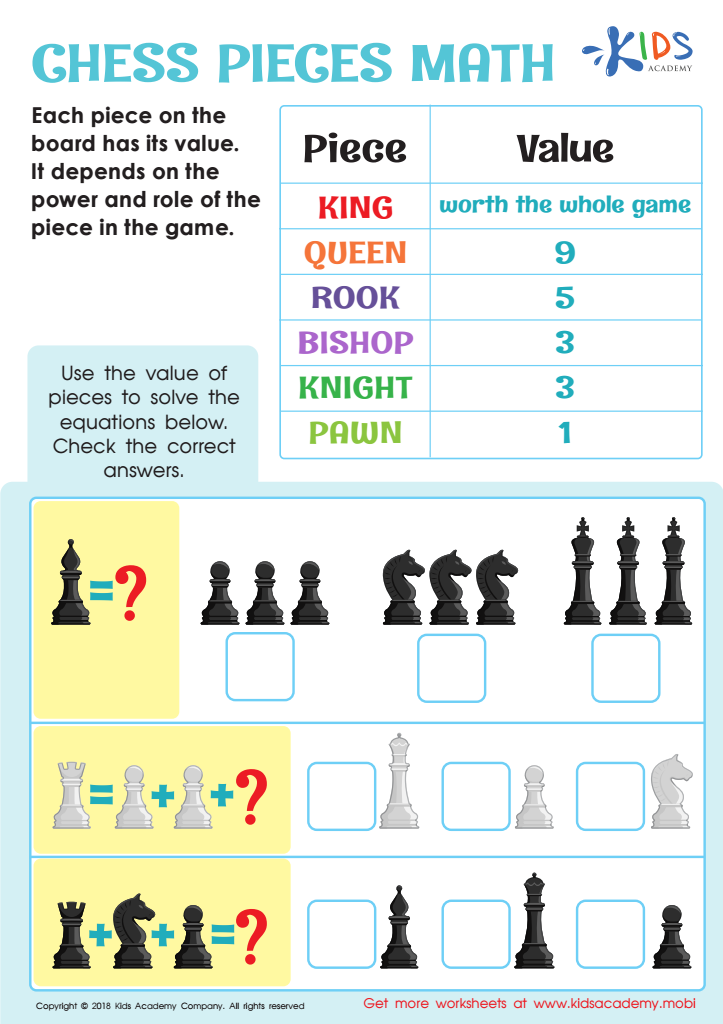
Chess Pieces Math Worksheet
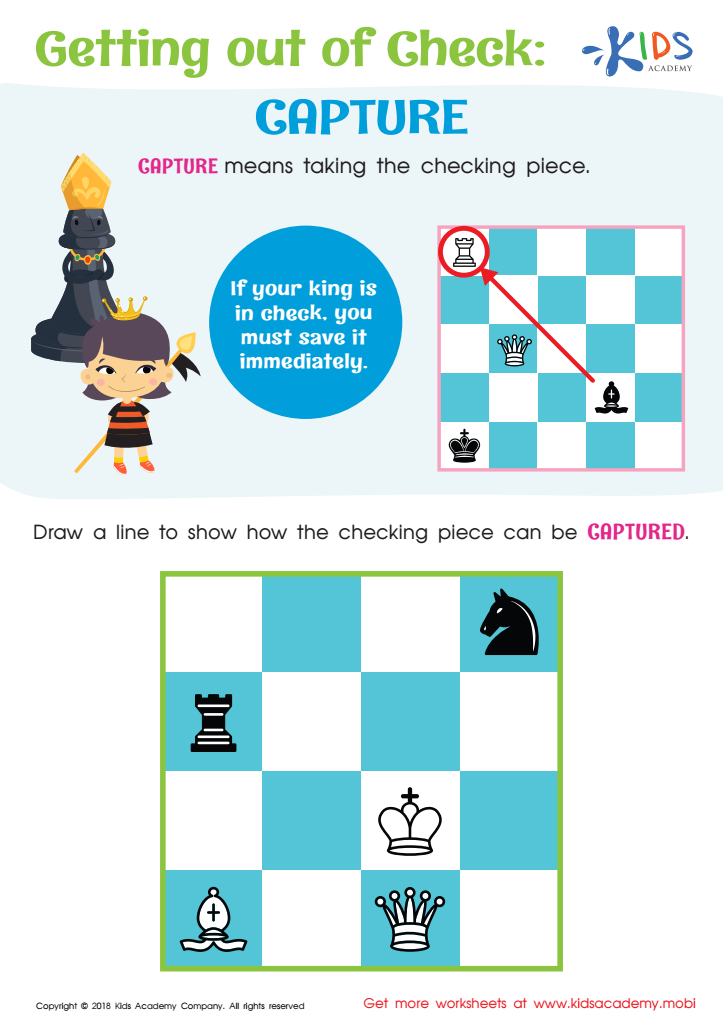
Getting out of Check: Capture



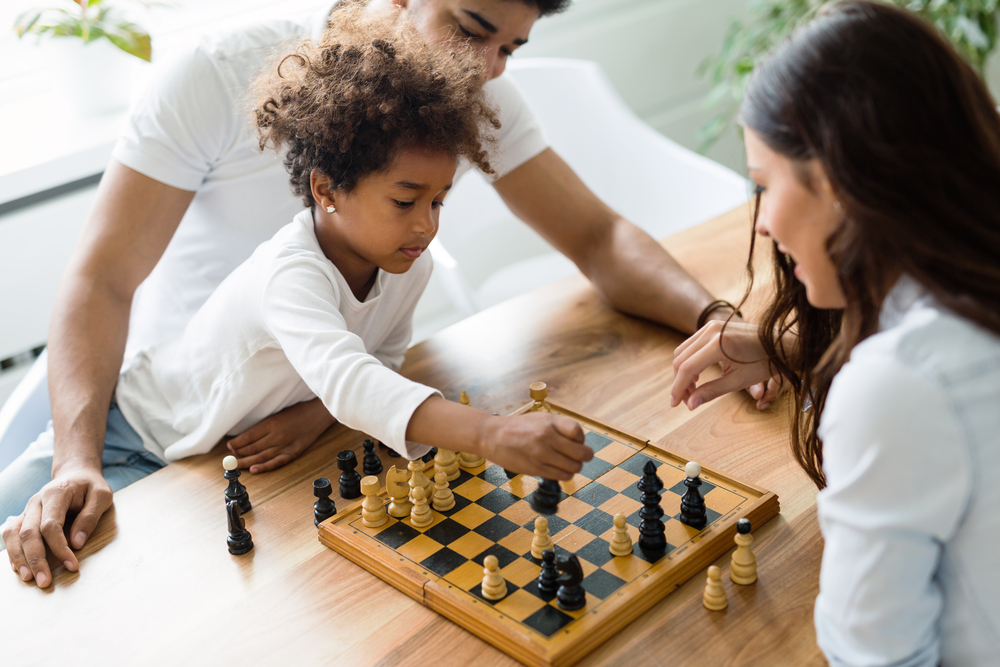

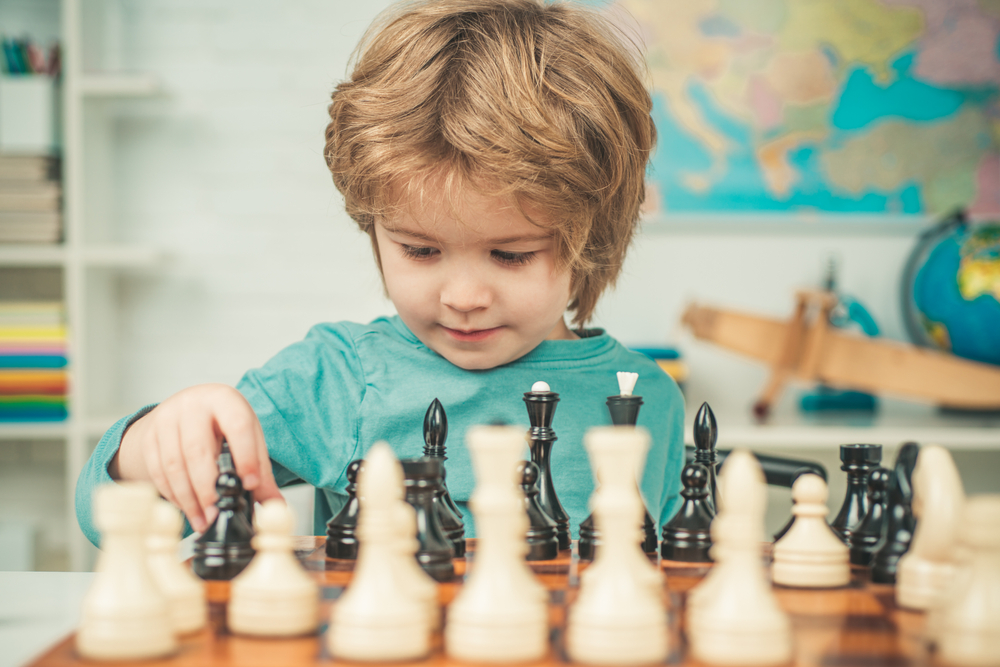

Problem-solving skills are vital for children's cognitive development, and chess serves as an excellent medium to cultivate these abilities. Through the game of chess, children learn to think critically and strategically. Each move presents a problem that requires careful consideration and forethought, encouraging kids to weigh their options and predict outcomes. This nurtures their ability to evaluate situations and make informed decisions, a skill applicable across various life aspects.
Beyond critical thinking, chess enhances concentration and patience. In a world filled with constant distractions, teaching children to focus on a single task is invaluable. The game requires sustained attention and the persistence to navigate complex positions, thus improving their attention span and resilience.
Chess also fosters creativity and adaptability. Players must brainstorm novel strategies and quickly adapt to their opponent's moves, promoting flexible thinking. These cognitive advancements translate into improved academic performance, problem-solving in social situations, and better management of real-life challenges.
Furthermore, playing chess can boost self-esteem and confidence. Successfully solving the intricate problems presented by the game gives children a sense of accomplishment. This experiential learning, coupled with practical application, makes chess an effective tool for educators and parents aiming to bolster children's problem-solving abilities and overall mental agility.