
Color Identification Easy Worksheets for Ages 3-4
5 filtered results
Difficulty Level
Grade
Age
-
From - To
Subject
Activity
Standards
Discover a fun and engaging way to help your child learn colors with our "Color Identification Easy Worksheets" designed for ages 3-4. These printable worksheets from Kids Academy are perfect for preschoolers and toddlers, offering a variety of activities that make learning colors enjoyable. Each sheet is thoughtfully crafted to enhance your child's color recognition skills through matching, coloring, and other interactive tasks. Ideal for both home and classroom settings, our color identification worksheets support early learning and development, fostering creativity and cognitive skills. Download now to give your little one a vibrant head start on their educational journey!
Favorites
With answer key
Interactive
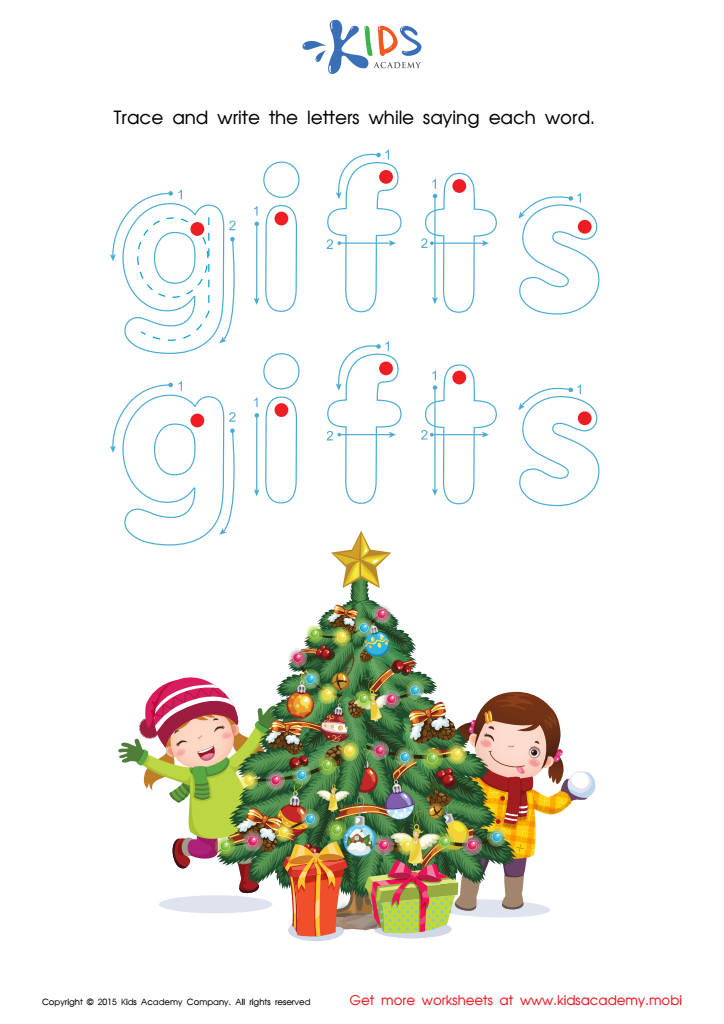
Christmas Tree Tracing Winter Words Worksheet
Print it and let your child trace the word and follow the arrows. Red dots mark the starting points. Have a blast!
Christmas Tree Tracing Winter Words Worksheet
Worksheet
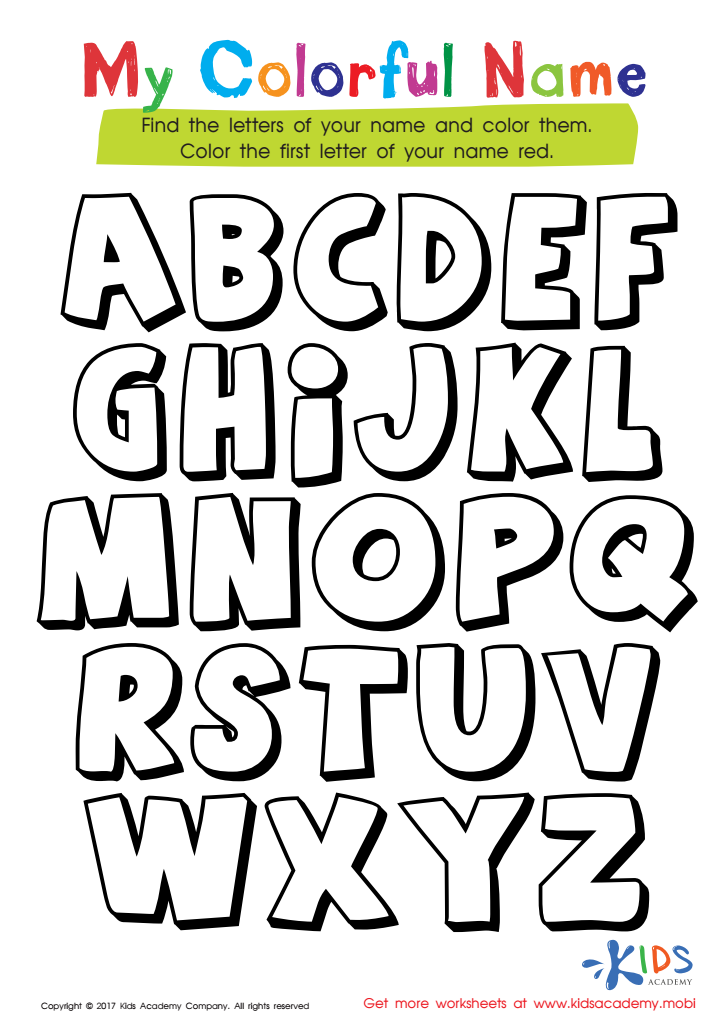
My Colorful Name Worksheet
Writing their names is a milestone for children. With this worksheet, they recall the letters in their name and color the letters one at a time. Spelling and alphabet order are reinforced as they find each letter. Use this fun printable to help kids learn to write their names!
Download (PDF)
 Assign to My Students
Assign to My Students
My Colorful Name Worksheet
Worksheet
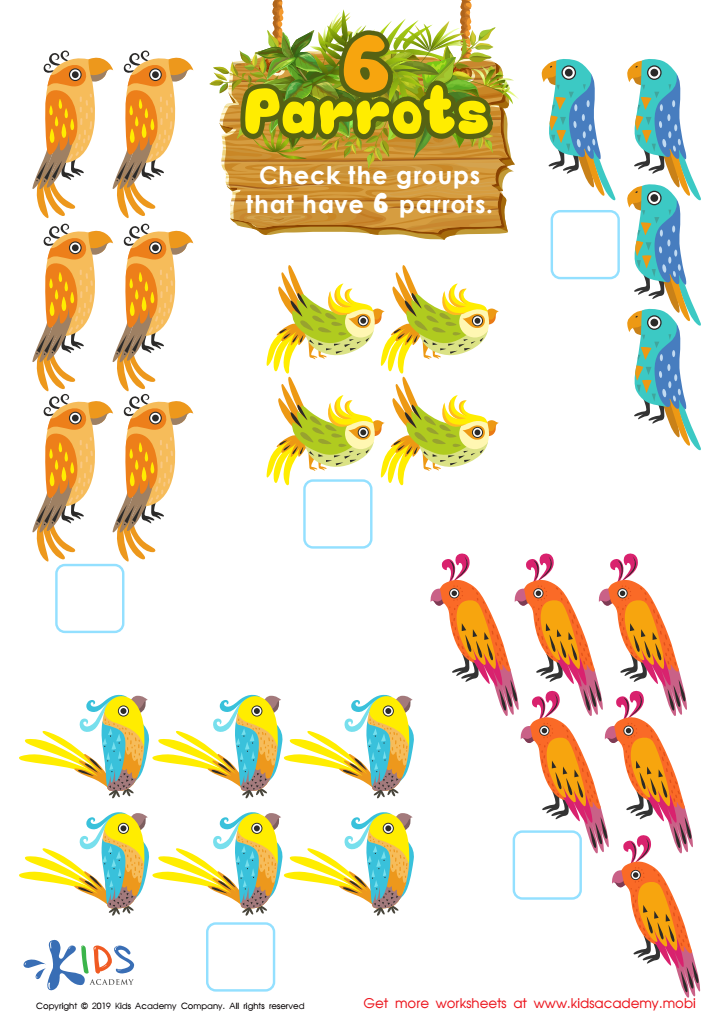
6 Parrots Worksheet
Love parrots? Here's a free worksheet to help your children practice counting to six with colorful parrot representations! Kids will adore counting the parrots and checking off groups of six - and it won't even feel like math! Just a fun way to make some new and exciting friends.
6 Parrots Worksheet
Worksheet
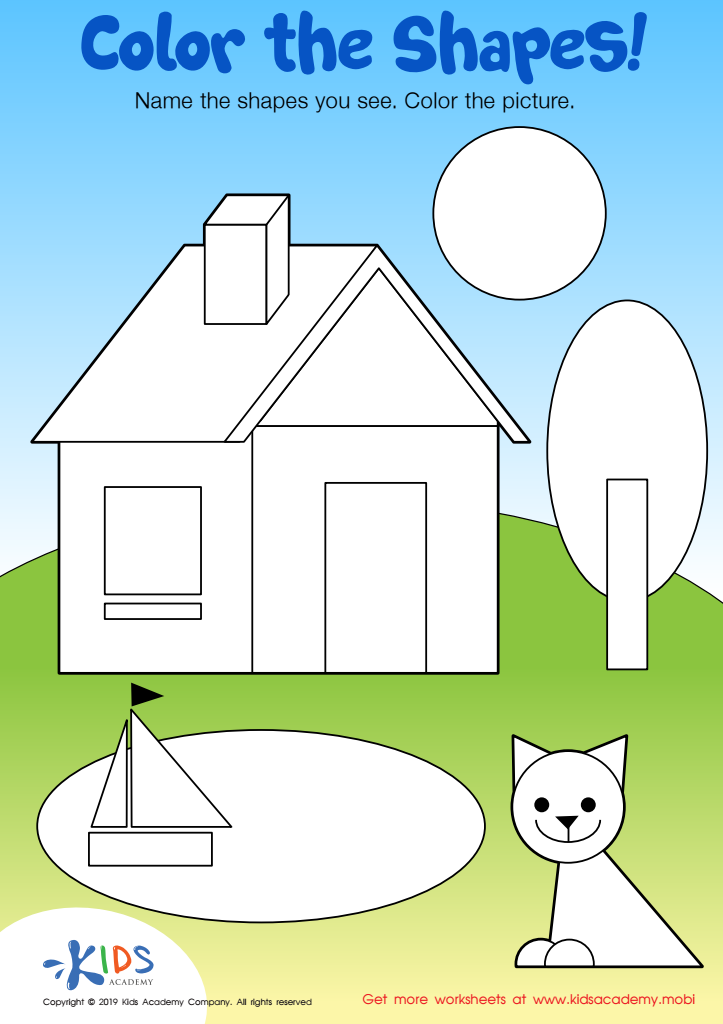
Color the Shapes Worksheet
Help your student master shape identification with this fun worksheet. Ask them to name the shapes in the picture, then color it! Ask questions like "How many squares do you see?" and "How many triangles?" to extend the learning. Identify squares, circles, triangles and rectangles with this enjoyable coloring page.
Download (PDF)
Assign to My Students
Assign to My Students
Color the Shapes Worksheet
Worksheet
Join Kids Academy for Free
Who is primarily going to use this learning content?








Color identification plays a crucial role in the early developmental stages of children, particularly for those aged 3-4. At this age, kids are in the process of developing essential cognitive, linguistic, and motor skills, and recognizing colors can significantly bolster this growth.
Firstly, learning colors enhances cognitive abilities. It prepares children for more complex subjects like math and science, where categorizing and sorting by color can lay the foundation for understanding patterns and sequences. This basic skill aids in developing their problem-solving abilities and memory.
Secondly, color identification boosts linguistic development. Every new color a child learns adds to their vocabulary, helping them articulate and describe their world more accurately. This can enhance communication skills and encourage more engaging conversations, facilitating better social interactions.
Furthermore, identifying colors can improve a child's visual perception and fine motor skills. Activities such as coloring or playing with colored blocks require precise hand-eye coordination, which is vital for writing and other intricate tasks they'll encounter later on.
Lastly, recognizing colors foster creativity and confidence in children. It allows them to express their emotions and ideas through various mediums like drawing and painting.
Overall, focusing on color identification in early years not only equips children with foundational skills useful in academic settings, but also supports their holistic development, preparing them for future learning and everyday life.








