Observational skills Easy Worksheets for Ages 3-4
3 filtered results
-
From - To
Enhance your child's observational skills with our engaging "Observational Skills Easy Worksheets" designed specifically for ages 3-4. These worksheets provide fun and interactive activities that promote keen observation and attention to detail. Children will engage in tasks such as matching objects, identifying differences, and spotting hidden items, all while enjoying colorful illustrations and creative themes. As young learners develop these essential skills, they improve their ability to focus, process visual information, and strengthen critical thinking. Perfect for parents and educators, these worksheets ensure a joyful learning experience that lays the foundation for academic success. Start exploring today!
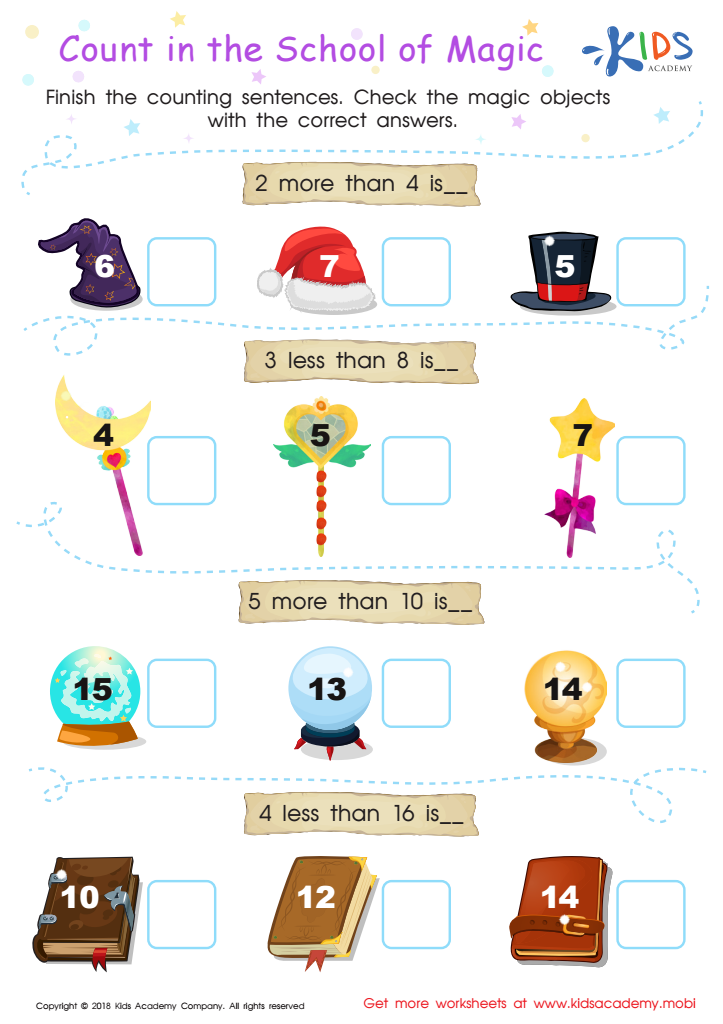
Count in the School of Magic Worksheet
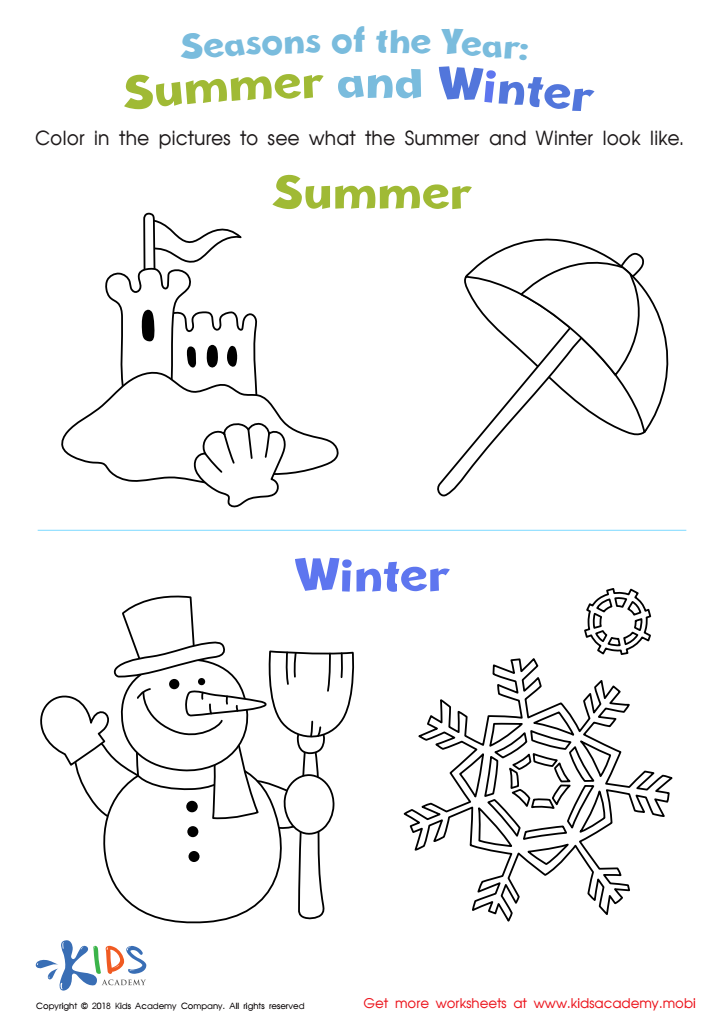
Summer and Winter Worksheet
 Assign to My Students
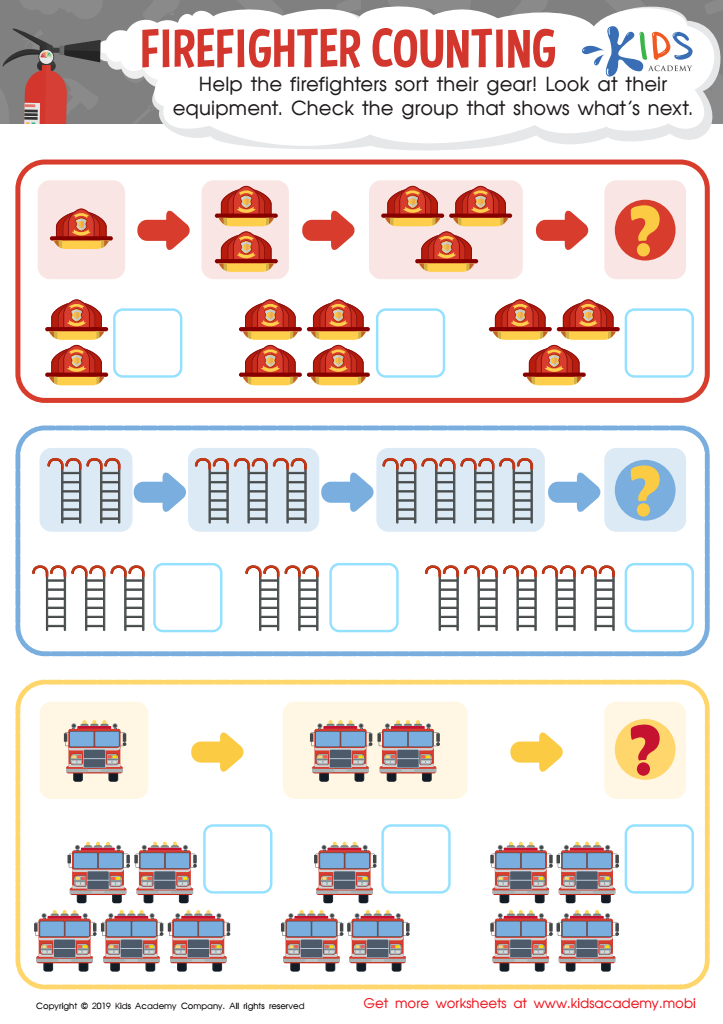
Firefighter Counting Worksheet




.jpg)



Observational skills are crucial for children aged 3-4 as they form the foundation for learning and development. Parents and teachers should care about nurturing these skills because observational abilities impact a child's cognitive, social, and emotional growth.
At this age, children are naturally curious, exploring their surroundings and learning through their senses. By fostering observational skills, caregivers can encourage critical thinking, problem-solving, and creativity. For example, when children observe and describe what they see, they enhance their vocabulary and language skills, building a stronger communication foundation.
Moreover, observational skills foster social development. As children learn to notice and understand the feelings and behaviors of their peers, they become more empathetic and enhance their ability to interact positively with others. Equally important, observing their environment helps children develop safety awareness, as they learn to identify potential dangers.
Engaging in activities that promote observation, such as nature walks or simple games, can boost a child’s confidence and independence. In this way, fostering observational skills not only enriches the child’s learning experiences but also prepares them for future academic success and healthy social interactions. Overall, nurturing these skills helps children to observe, inquire, and engage with the world around them meaningfully.








