
Punctuation understanding Easy Worksheets for Ages 3-4
3 filtered results
Difficulty Level
Grade
Age
-
From - To
Subject
Activity
Standards
Introduce your little learners to the basics of punctuation with these fun and engaging worksheets, tailored specifically for ages 3-4. Easy-to-follow exercises help young children grasp essential punctuation marks, including periods, question marks, and exclamation points. These carefully designed activities enhance early literacy skills by teaching the importance of punctuation in everyday communication. Using colorful illustrations and simple instructions, these worksheets make learning a delightful adventure, laying a strong foundation for future grammatical understanding. Perfect for preschoolers, these resources are ideal for both classroom environments and at-home practice, ensuring every child enjoys the journey to mastering punctuation.
Favorites
With answer key
Interactive
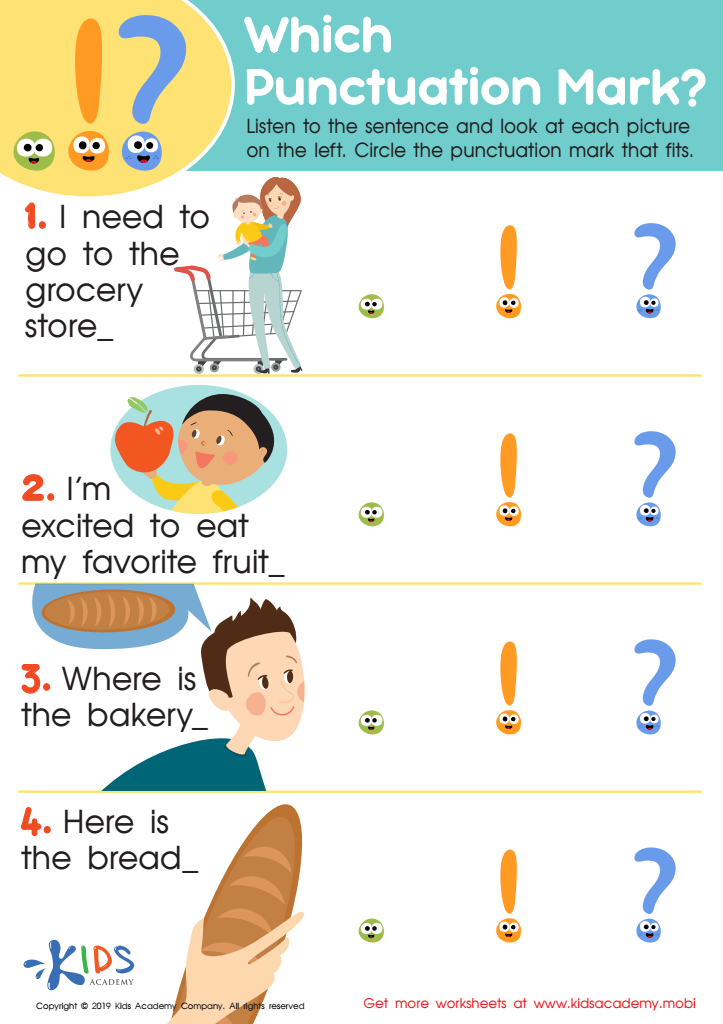
Which Punctuation Mark Worksheet
Punctuation marks are essential for expressing what we say. This worksheet asks your kindergarten student to circle the correct punctuation mark for each sentence. Read each sentence aloud and help them identify the expression needed. A picture accompanies each sentence. Enjoy! (79 words)
 Assign to My Students
Which Punctuation Mark Worksheet
Worksheet
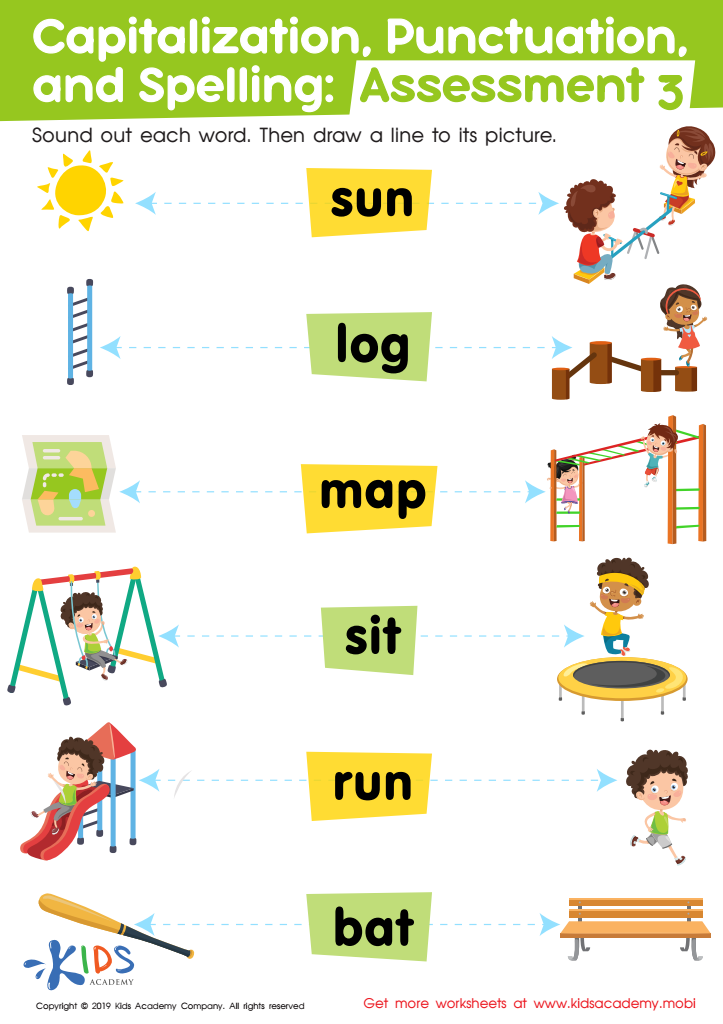
Capitalization. Punctuation. Spelling. Assessment 3 Worksheet
Before starting this worksheet, have your kids spell some simple words. Correct if wrong and show the right spellings. Then, ask them to link the pictures to the words you read out. Spelling is key for a good writer, and kids need to know how to spell to read texts easily.
Capitalization. Punctuation. Spelling. Assessment 3 Worksheet
Worksheet
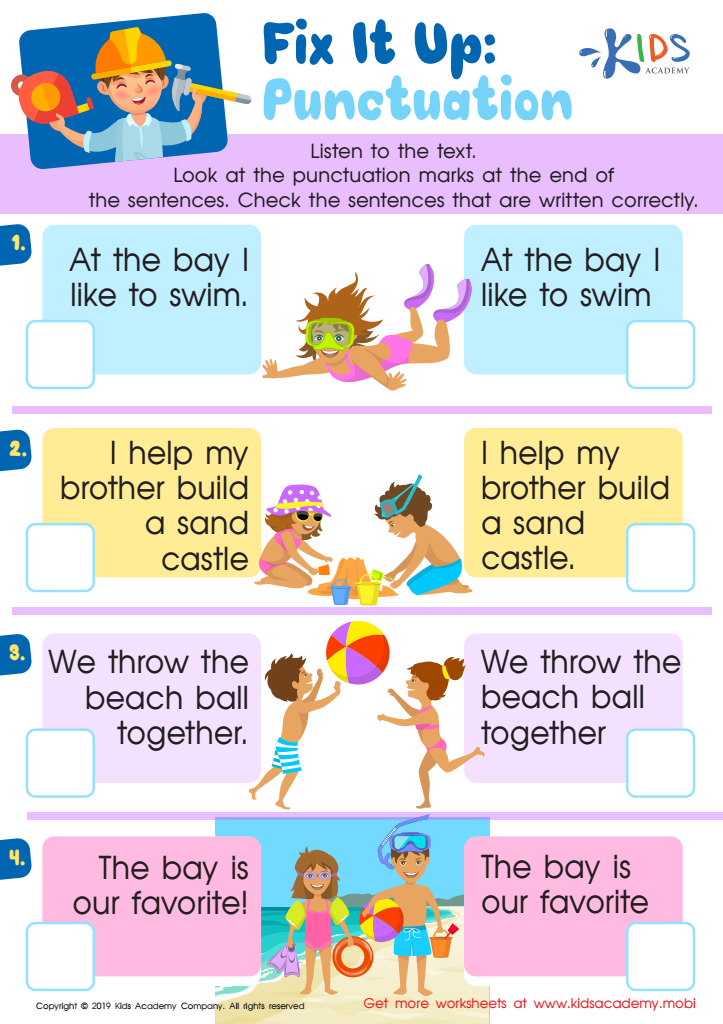
Fix Punctuation Worksheet
Have your kids tell you which punctuation marks they know before using this colorful worksheet. Read the sentences together and ask them to identify which are correctly punctuated. Guide them to check their answers. This simple activity helps teach kids to use punctuation correctly.
Fix Punctuation Worksheet
Worksheet
Join Kids Academy for Free
Who is primarily going to use this learning content?






Understanding punctuation is a fundamental aspect of early language development that can significantly benefit children ages 3-4. At this formative stage, young minds are like sponges, absorbing everything around them. Introducing basic punctuation—like periods, exclamation points, and question marks—helps them grasp the concept of sentence structure and improves their overall communication skills. Knowing when a thought ends (periods), something exciting happens (exclamation points), or a question is asked (question marks) aids in clearer expression and comprehension.
Parents and teachers should care because these early lessons lay the groundwork for future literacy. Proper punctuation comprehension helps prevent reading difficulties later on and fosters confident readers and writers. When children learn in an engaging, fun way—perhaps through interactive books or games—they begin to associate punctuation with storytelling and communication. This early familiarity makes subsequent language arts education less abstract and more intuitive.
Furthermore, understanding punctuation enhances listening skills. Kids recognize the natural pauses and tonal changes when someone's speaking, making conversations more meaningful. By investing in their punctuation proficiency early, parents and teachers are setting the stage for a lifetime of effective communication, strong academic performance, and a love for reading and writing.








