Sorting skills Easy Worksheets for Ages 3-4
5 filtered results
-
From - To
Introduce your little ones to the wonderful world of sorting with our "Sorting Skills Easy Worksheets" designed for ages 3-4. These engaging and educational worksheets from Kids Academy help children develop essential cognitive skills, such as categorization and organizational abilities, through fun activities. Featuring colorful and kid-friendly illustrations, these exercises make learning enjoyable. Perfectly tailored for young learners, these worksheets encourage hands-on exploration and critical thinking. Ideal for both classroom and home use, our sorting skills worksheets lay a strong foundation for early childhood education, paving the way for academic success and a lifelong love of learning!
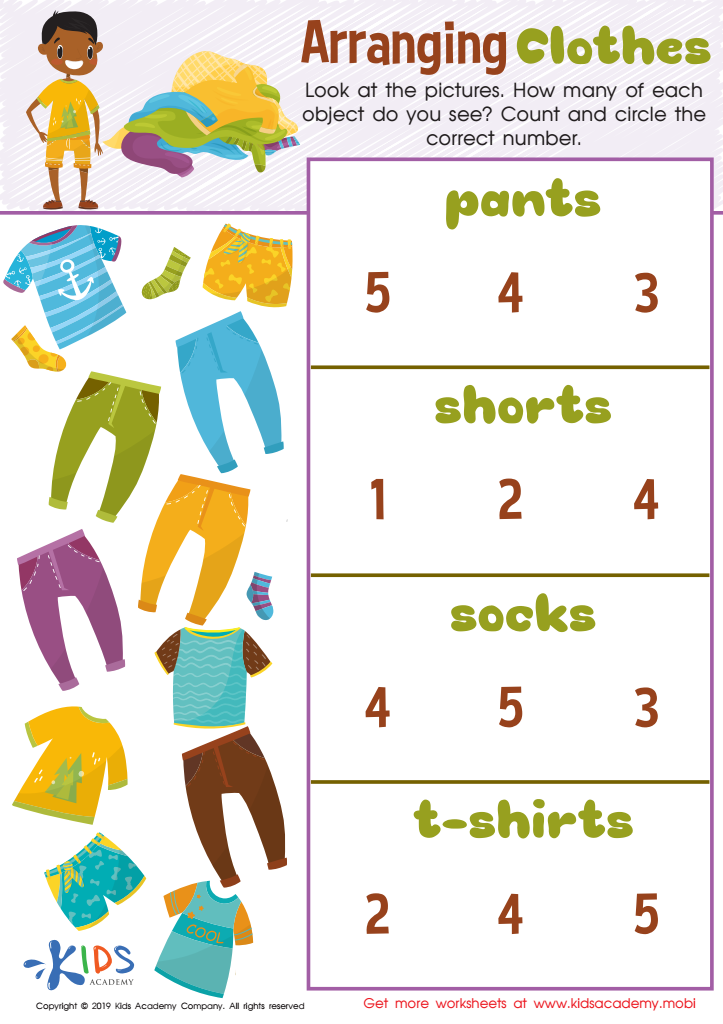
Arranging Clothes Worksheet
 Assign to My Students
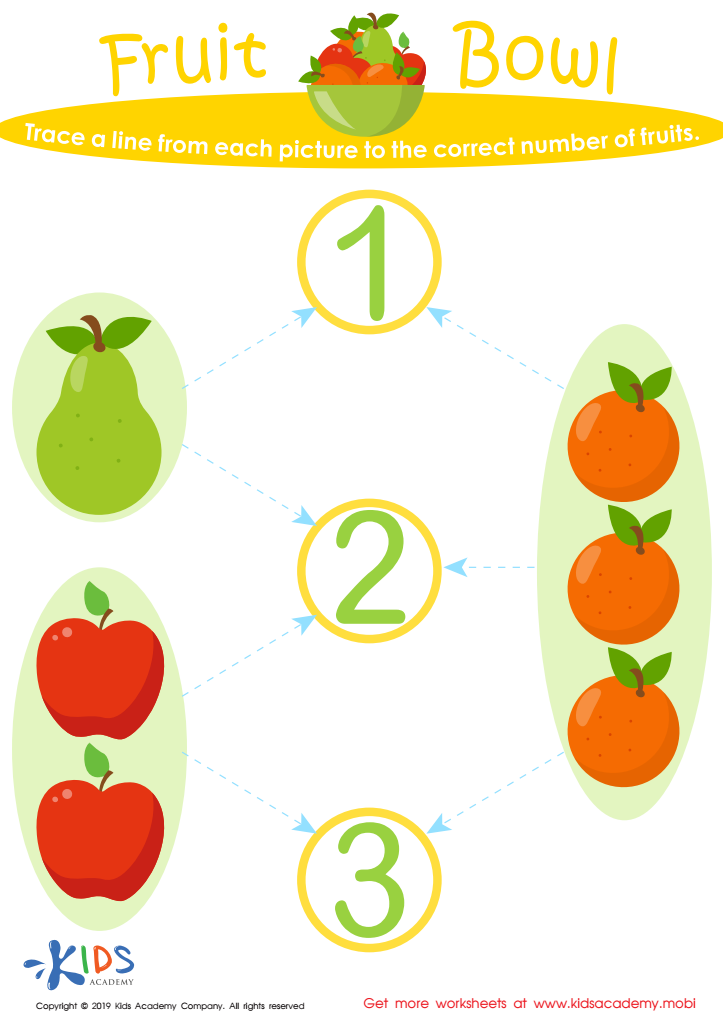
Fruit Bowl Worksheet
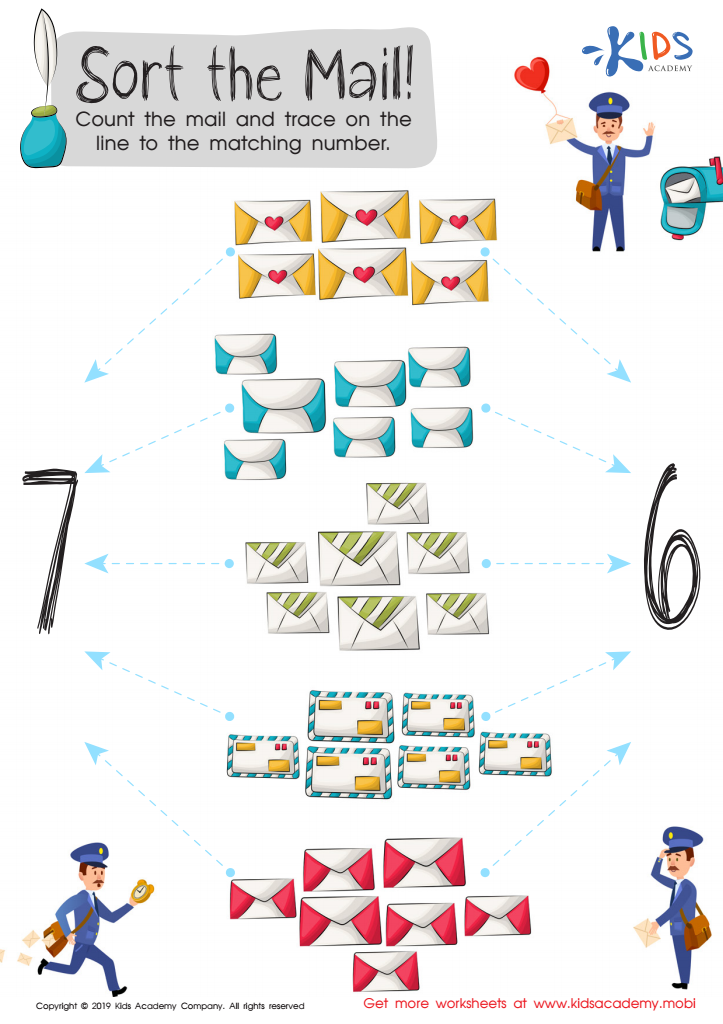
Sort the Mail Worksheet
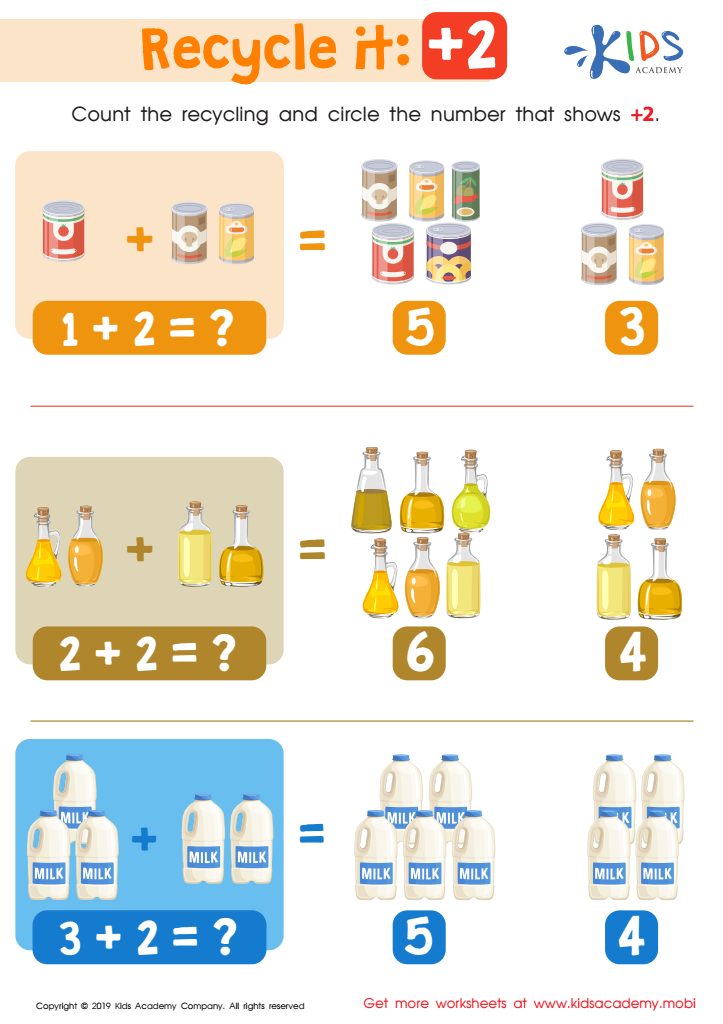
Recycle It: +2 Worksheet
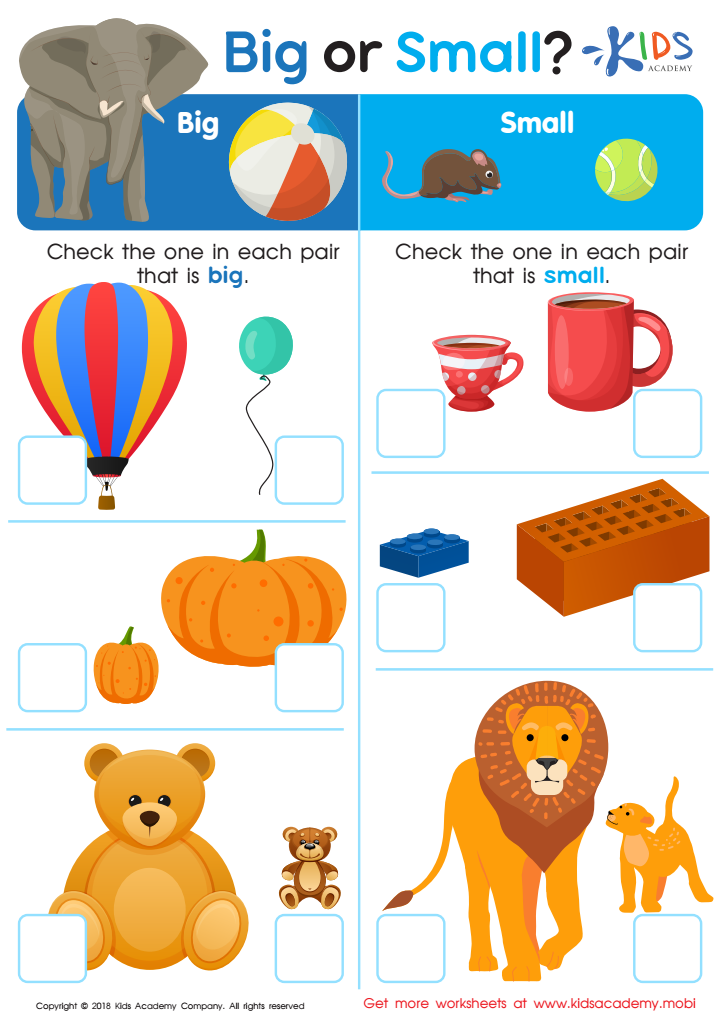
Big or Small? Worksheet






Sorting skills are foundational for young children's cognitive development, especially around ages 3-4. At this developmental stage, children are naturally curious about their environment and eager to learn new concepts. By engaging in sorting activities, children enhance their reasoning and critical thinking abilities.
Sorting involves categorizing objects based on similarities and differences, such as color, shape, size, or type. This practice sharpens observational skills, as children learn to notice attributes and patterns in objects. It also sets the groundwork for early math skills, like organizing data and understanding groups, both of which are crucial for more advanced mathematical concepts later on.
Moreover, sorting helps young children develop language skills as they learn to describe what they see and explain their choices. For instance, they might say, "These are all blue blocks," which enriches their vocabulary and sentence structure.
Fine motor skills are another benefit. Handling objects to sort them improves coordination and dexterity. Additionally, sorting tasks often encourage social skills, providing opportunities for cooperation and sharing when done in groups.
Overall, sorting activities support holistic development by intertwining cognitive, language, motor, and social skills, making it essential for parents and teachers to foster these skills early on.








