
Sound Association Easy Worksheets for Ages 3-4
5 filtered results
Difficulty Level
Grade
Age
-
From - To
Subject
Activity
Standards
Discover engaging "Sound Association Easy Worksheets for Ages 3-4" designed to foster early phonetic skills in young learners. These worksheets offer a fun and interactive way for children to connect sounds with pictures and words, enhancing their auditory discrimination and early reading abilities. Each activity is crafted to boost confidence and prepare children for future literacy success through playful exercises. Perfect for parents and educators, our printable worksheets make learning entertaining and effective, ensuring a solid foundation in sound recognition and language development. Let your child embark on an educational adventure today!
Favorites
With answer key
Interactive
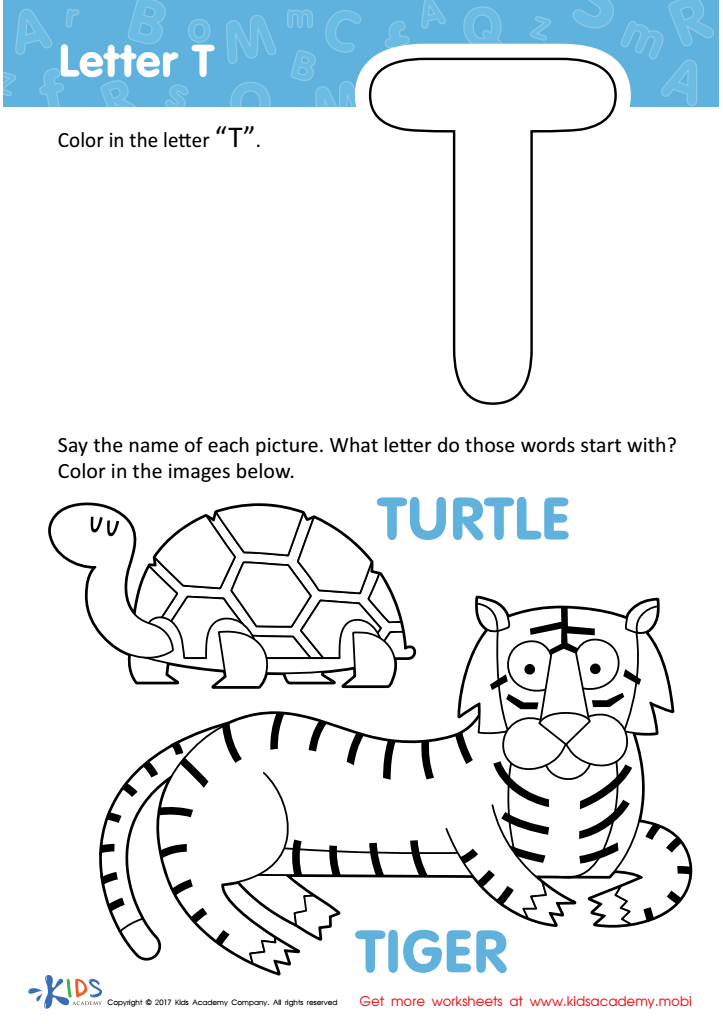
Letter T Coloring Sheet
Introduce your child to the letter "T" and its animals – turtles and tigers! With this coloring page, you can stimulate your child's imagination and creativity, while helping them recognize the letter "T". Have fun with your child and get coloring!
Download (PDF)
 Assign to My Students
Assign to My Students
Letter T Coloring Sheet
Worksheet
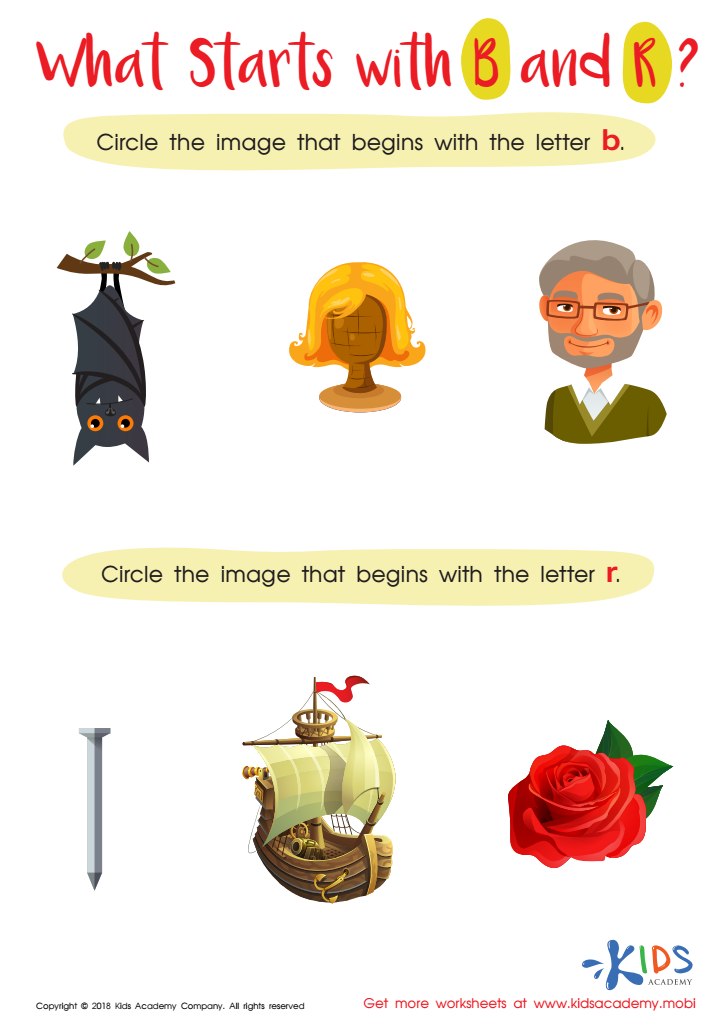
What Starts with B and R? Worksheet
Download this worksheet to help young readers practice visual and motor skills! They'll enjoy matching pictures with "B" and "R" letters while tracing the images. Bright and colorful, this engaging activity will help kids differentiate between words and have fun doing it.
What Starts with B and R? Worksheet
Worksheet
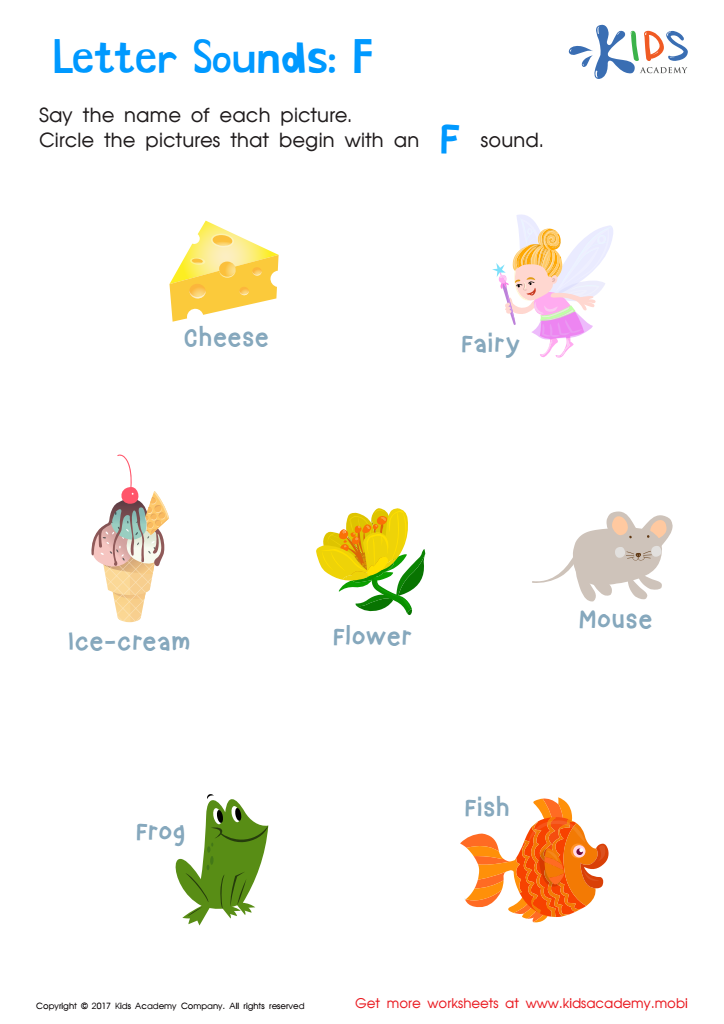
Letter F Sounds Worksheet
Kids will practice identifying 'f' words, tracing, and coloring the letter F for a great way to learn phonics.
Help your child discover the wonders of the letter 'F' with this fun worksheet! Kids will practice identifying 'F' words, tracing and coloring the letter, and building early reading skills. Stimulate their learning and let them connect letter sounds to words they know. An enjoyable way to practice phonics!
Letter F Sounds Worksheet
Worksheet
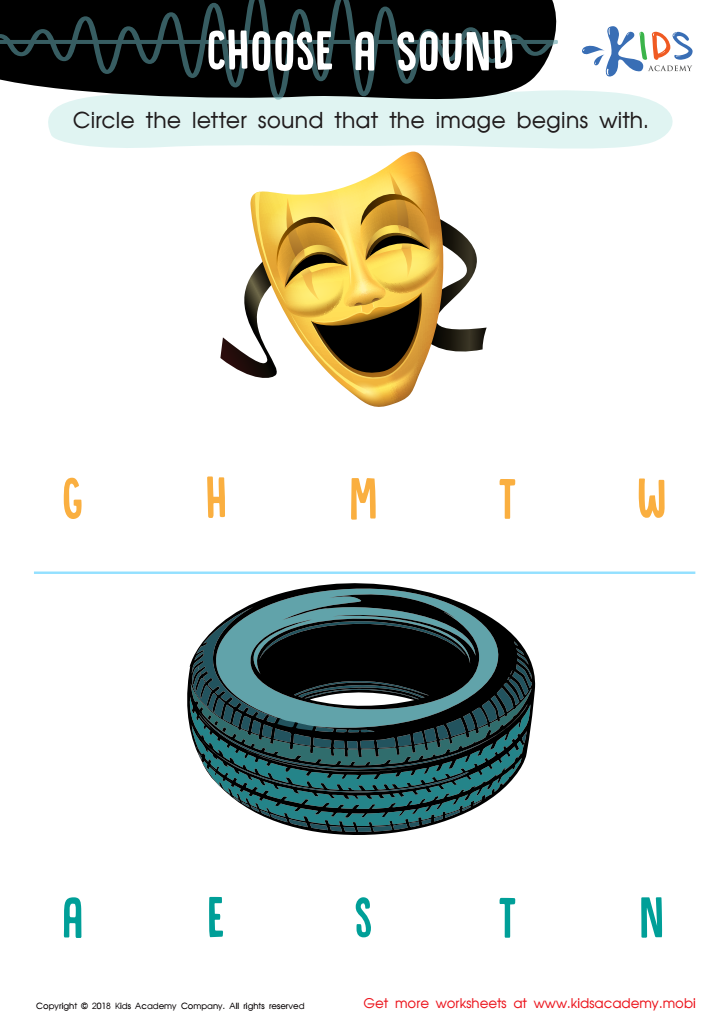
Choose a Sound Worksheet
Help your child hone pre-reading skills with this colorful worksheet! They'll practice tracing letter sounds, develop phoneme awareness, and gain confidence. Plus, it's a fun way to work on their fine motor skills.
Choose a Sound Worksheet
Worksheet
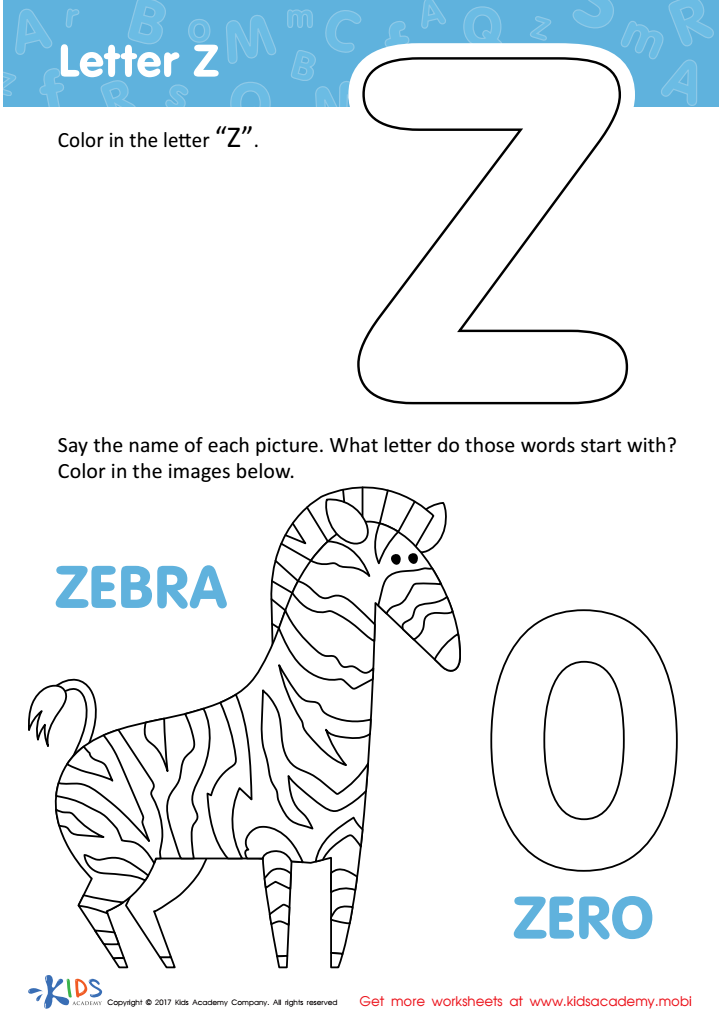
Letter Z Coloring Sheet
This coloring page featuring the letter "Z" is perfect for your child to practice letter recognition! Help them learn the unique sound it makes as they color. It'll be a fun and easy activity they won't have trouble with!
Download (PDF)
Assign to My Students
Assign to My Students
Letter Z Coloring Sheet
Worksheet
Join Kids Academy for Free
Who is primarily going to use this learning content?








Sound association is essential for children aged 3-4 as it lays the foundation for early literacy and language development. At this age, kids are highly receptive and capable of learning through play and interaction. Sound Association Easy activities involve matching sounds to letters or objects, making the learning process both engaging and effective.
Parents and teachers should care about this activity because it enhances phonemic awareness, which is the ability to hear, identify, and manipulate individual sounds in words. This skill is crucial for reading readiness, as children who can recognize and differentiate between sounds are better equipped to decode words and understand their meanings. It also supports vocabulary development by helping kids associate sounds with specific objects, actions, or ideas, broadening their understanding of language.
Furthermore, these activities can be fun and interactive, incorporating games, songs, and hands-on activities that keep young children engaged while they learn. Early success in sound association can boost a child's confidence and motivation to read, setting a positive tone for future learning experiences.
In summary, focusing on sound association at an early age equips children with foundational literacy skills, enhances cognitive development, and prepares them for a successful educational journey, making it a vital component of early childhood education.








